
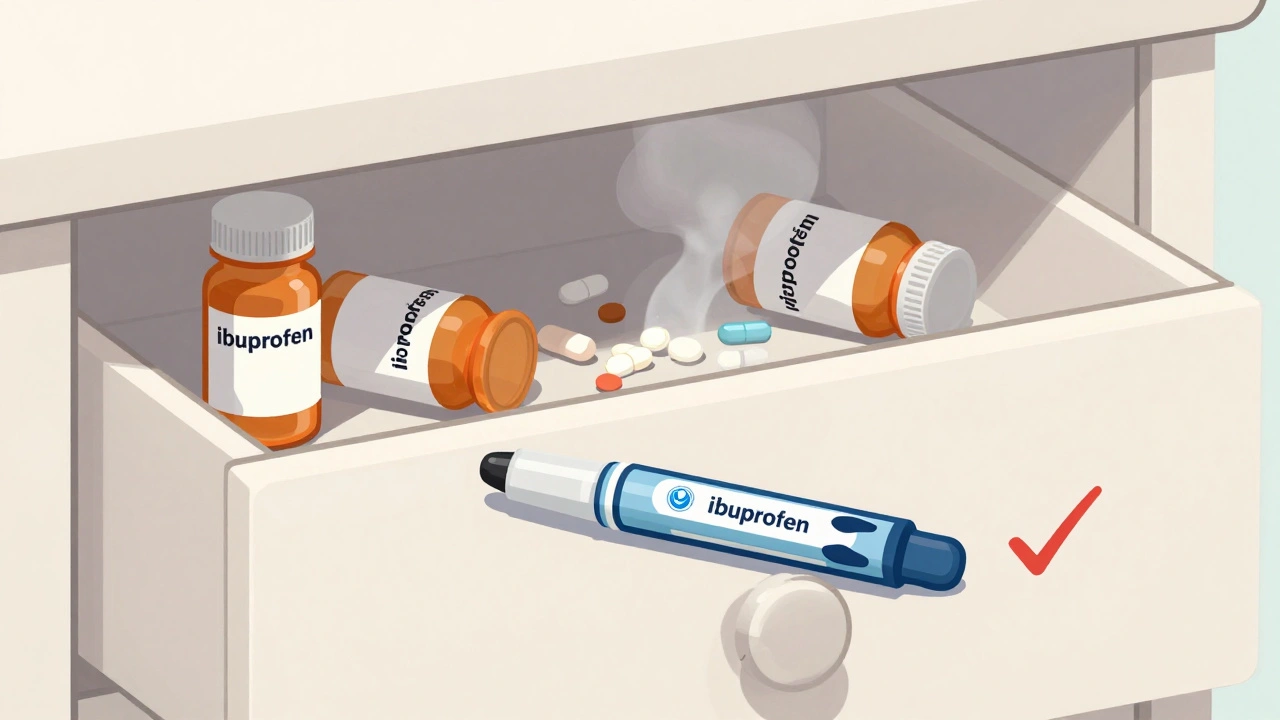
Most people have a drawer full of old pills-maybe leftover antibiotics from last year’s cold, an old bottle of ibuprofen, or that EpiPen you forgot to replace after your child’s allergic reaction. You look at the date on the label and wonder: is it still safe to take?
What Does an Expiration Date Really Mean?
The date on your medicine bottle isn’t just a suggestion. It’s the last day the manufacturer guarantees the drug will work as intended and stay safe under proper storage conditions. This isn’t arbitrary. The U.S. Food and Drug Administration (FDA) requires all prescription and over-the-counter drugs to undergo strict stability testing before they’re allowed on shelves. These tests measure how the medicine holds up over time under heat, light, and humidity. If a pill still has at least 90% of its labeled strength at the expiration date, it passes. After that? No guarantees.Do Expired Medications Still Work?
The short answer: sometimes. But it depends on the drug, how it’s stored, and how long it’s been past the date. Solid pills and capsules-like acetaminophen, ibuprofen, or aspirin-tend to last the longest. Studies show many of these can retain their potency for years after expiration, especially if kept in a cool, dry place. One study from the University Hospitals found ibuprofen still had 90% of its strength five years after the expiration date. That’s why so many people reach for their old painkillers when a headache hits. But not all medications behave the same. Liquid forms, like antibiotics or eye drops, break down much faster. Eye drops, for example, can become contaminated with bacteria within 30 days after expiration. The American Academy of Ophthalmology reports a 60% contamination rate in expired eye drops. Using those could mean risking an eye infection that could cost you your vision. Then there are the critical ones. Insulin, epinephrine (EpiPen), nitroglycerin, and thyroid meds like levothyroxine? Don’t risk it. These drugs need precise dosing. Even a 10% drop in potency can be dangerous. A person with severe allergies who uses an expired EpiPen might get only half the dose they need. That could mean the difference between surviving anaphylaxis and ending up in the ER. Same with insulin-using degraded insulin can spike blood sugar dangerously, leading to diabetic ketoacidosis. And then there’s tetracycline. This older antibiotic doesn’t just lose strength-it turns toxic. When it breaks down, it forms compounds that can damage your kidneys. There are documented cases of people developing acute kidney failure after taking expired tetracycline. This isn’t a myth. It’s in the Journal of the American Medical Association.Storage Matters More Than You Think
Your bathroom cabinet is the worst place for medicine. Humidity from showers and heat from hair dryers speed up degradation. A study from the FDA found medications stored in bathrooms degrade up to 40% faster than those kept elsewhere. The ideal spot? A cool, dry place-like a bedroom drawer or kitchen cabinet away from the stove. Keep pills in their original bottles with the childproof cap tightly closed. Amber glass bottles block more light than plastic, helping protect light-sensitive drugs like nitroglycerin. If you live in a hot climate like Brisbane, where summer temperatures regularly hit 30°C, storing meds in the fridge (not the freezer) can help extend their life-unless the label says not to.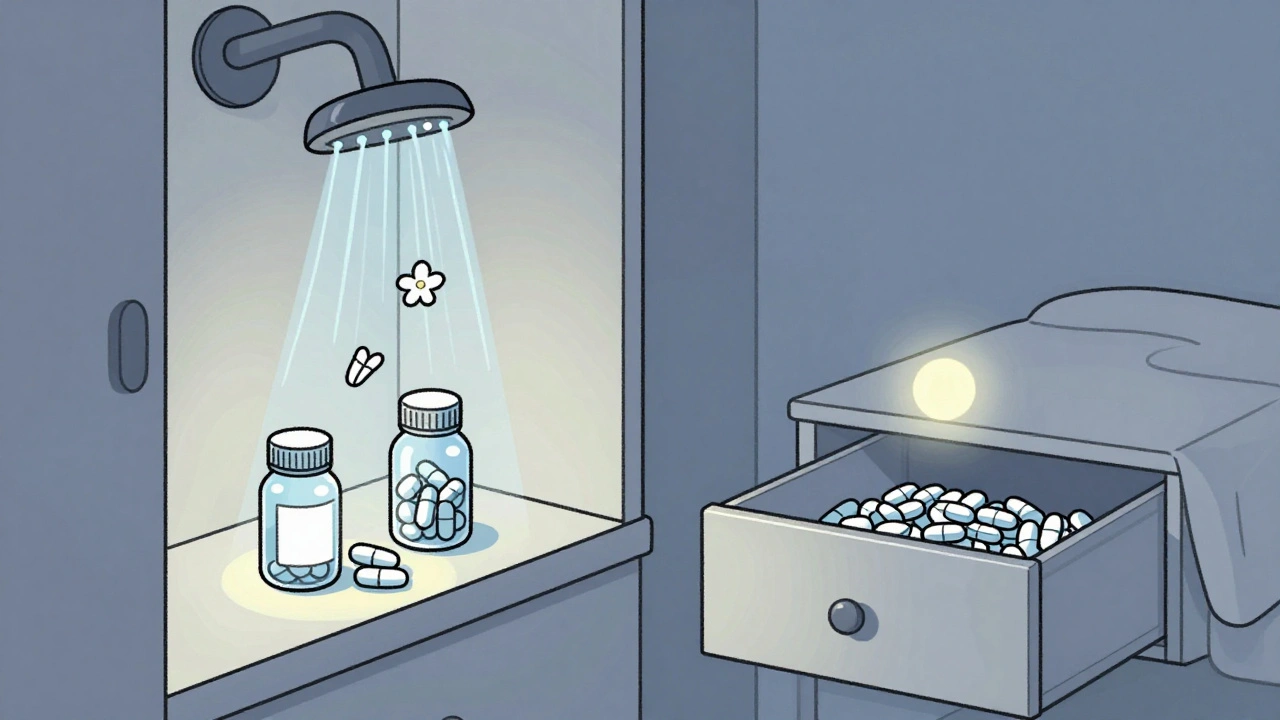
When Is It Okay to Use an Expired Medicine?
There’s no blanket rule, but experts agree on some gray areas. For minor, non-life-threatening issues-like a headache, mild allergy, or heartburn-it’s generally low risk to use a pill that expired a few months ago, as long as it looks and smells normal. The American Medical Association says it’s fine to use an expired bottle of ibuprofen for occasional pain until you can replace it. But here’s the catch: if you’re taking a drug daily for a chronic condition-like high blood pressure, epilepsy, or heart disease-don’t wait. Even a small drop in potency can cause serious harm. Warfarin, for example, needs exact dosing. Too little, and you risk a clot. Too much, and you bleed. Expired warfarin isn’t worth the gamble. In emergencies, the advice flips. If you’re having a severe allergic reaction and your EpiPen is expired, use it anyway. Same with nitroglycerin for chest pain or albuterol for an asthma attack. These drugs may be weaker, but they’re better than nothing. Just call 911 or head to the ER immediately after.What Happens When Medications Expire?
Most drugs don’t turn into poison. They just lose strength. But some change chemically. Epinephrine breaks down into adrenochrome, which is less effective at opening airways. Tetracycline becomes nephrotoxic. Liquid antibiotics can grow mold or bacteria. Eye drops can become breeding grounds for germs. And insulin? It can form clumps or turn cloudy-signs it’s no longer safe to inject. You can’t always tell by looking. Some pills look perfect but have lost potency. Others change color or smell. If a tablet is cracked, powdery, or smells strange, toss it. If a liquid looks cloudy or has particles, don’t use it. Trust your eyes and nose.What Should You Do With Expired Medications?
Don’t flush them unless they’re on the FDA’s Flush List. That list includes powerful opioids like fentanyl patches and oxycodone, where the risk of accidental overdose outweighs environmental harm. For everything else, flushing harms waterways and wildlife. The best option? Take them to a drug take-back location. In the U.S., there are over 14,500 authorized collection sites-pharmacies, hospitals, police stations. In Australia, you can drop off expired meds at most pharmacies through the Return Unwanted Medicines (RUM) program. No questions asked. Free. If there’s no drop-off nearby, mix your pills with something unappetizing-coffee grounds, cat litter, dirt-put them in a sealed container, and throw them in the trash. Remove personal info from the bottle first. That’s the FDA’s recommended method for home disposal.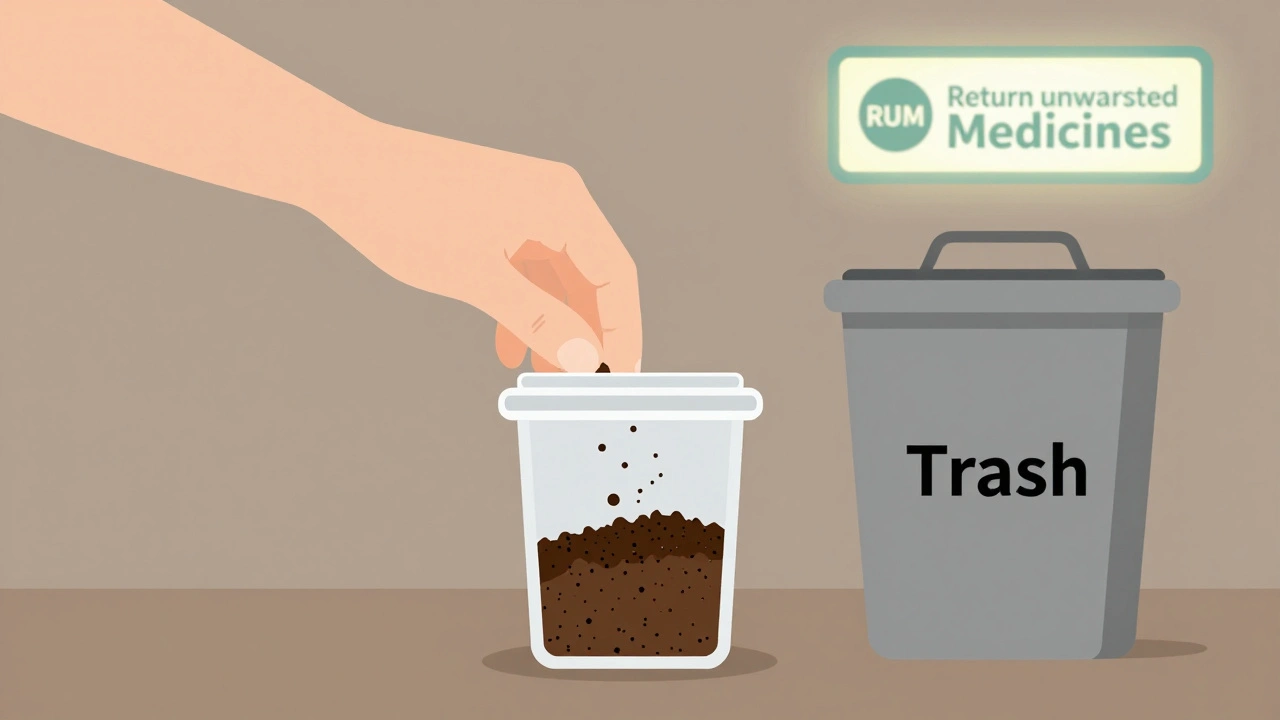
How Often Should You Check Your Medicine Cabinet?
Do it every three months. Make it part of your routine, like checking smoke detectors. Pull out everything. Check dates. Look for changes in color, texture, or smell. Pay special attention to emergency meds: EpiPens, inhalers, nitroglycerin. Replace them on the dot. Don’t wait for them to expire. If you’re on long-term meds, ask your pharmacist. Many offer free medication reviews. They’ll tell you what’s still good, what’s risky, and what you can safely toss.Why Do Manufacturers Set Such Short Expiration Dates?
It’s not about greed. It’s about liability. The FDA requires manufacturers to prove a drug is safe and effective up to the date on the label. Beyond that? They can’t guarantee anything. Even if a pill could last five more years, the company can’t say so without running new, expensive tests. The military’s Shelf Life Extension Program (SLEP) found that 90% of stockpiled drugs remained stable 15+ years past expiration. But that data is classified. It doesn’t apply to civilian meds. The system isn’t designed for long-term storage. It’s designed for turnover.Final Take: Replace When in Doubt
Most expired medications won’t hurt you-but they might not help you either. And for some, the risk isn’t worth it. If you’re treating something serious, replacing expired meds isn’t optional. It’s essential. For minor issues, using an old painkiller is probably fine. But don’t make it a habit. Keep your medicine cabinet clean. Replace what you need. And when in doubt? Ask your pharmacist. They’ve seen it all.Can expired medications become toxic?
Most expired medications don’t turn toxic-they just lose potency. But there are exceptions. Tetracycline antibiotics can degrade into compounds that damage the kidneys. Improperly stored liquid medications can grow harmful bacteria. Insulin and epinephrine break down into less effective forms, but not typically toxic ones. Still, if a pill looks discolored, smells odd, or a liquid is cloudy, don’t risk it.
Is it safe to take expired ibuprofen or acetaminophen?
Generally, yes-if they’re only a few months or even a year past the expiration date and stored properly. Studies show these solid oral medications often retain 90% of their potency for years. But if they’re cracked, powdery, or smell strange, toss them. Don’t rely on them for chronic pain or if you’re treating something serious.
What happens if I take expired antibiotics?
You might not get better. Expired antibiotics like amoxicillin can lose 35-40% of their strength, meaning they won’t fully kill the bacteria. That doesn’t just mean your infection lingers-it increases the risk of antibiotic resistance. Bacteria that survive can evolve to resist future treatments. Never use expired antibiotics for a new infection.
Can I use an expired EpiPen in an emergency?
If you’re having a severe allergic reaction and your EpiPen is expired, use it anyway. It may be less effective, but it’s better than nothing. Epinephrine degrades over time, especially if exposed to heat or light. Still, in a life-or-death situation, administer it and call emergency services immediately. Don’t wait for a fresh one.
How should I dispose of expired medications?
Use a drug take-back program if available. In Australia, return unwanted medicines to any pharmacy through the RUM program. If that’s not possible, mix pills with coffee grounds or cat litter, seal them in a container, and throw them in the trash. Remove personal info from the bottle. Only flush medications listed on the FDA’s Flush List-like fentanyl or oxycodone-due to overdose risk.
Should I keep expired medications for emergencies?
No. Emergency meds like EpiPens, insulin, or nitroglycerin must be replaced on time. Their potency drops too quickly, and you can’t predict when you’ll need them. Relying on an expired EpiPen could mean the difference between life and death. Keep fresh ones on hand, and check expiration dates every three months.



val kendra
December 4, 2025 AT 08:38Simple.
Isabelle Bujold
December 4, 2025 AT 21:46Also, if you’re using an EpiPen that’s been sitting in a hot car for three summers? You’re playing Russian roulette with your kid’s life. Replace it. Don’t wait for the panic to set in.
George Graham
December 6, 2025 AT 08:37Ollie Newland
December 7, 2025 AT 16:22Michael Feldstein
December 7, 2025 AT 18:57Benjamin Sedler
December 9, 2025 AT 00:02Heidi Thomas
December 9, 2025 AT 12:54Alex Piddington
December 10, 2025 AT 03:25Libby Rees
December 11, 2025 AT 21:21Dematteo Lasonya
December 13, 2025 AT 02:48Gareth Storer
December 13, 2025 AT 18:31