
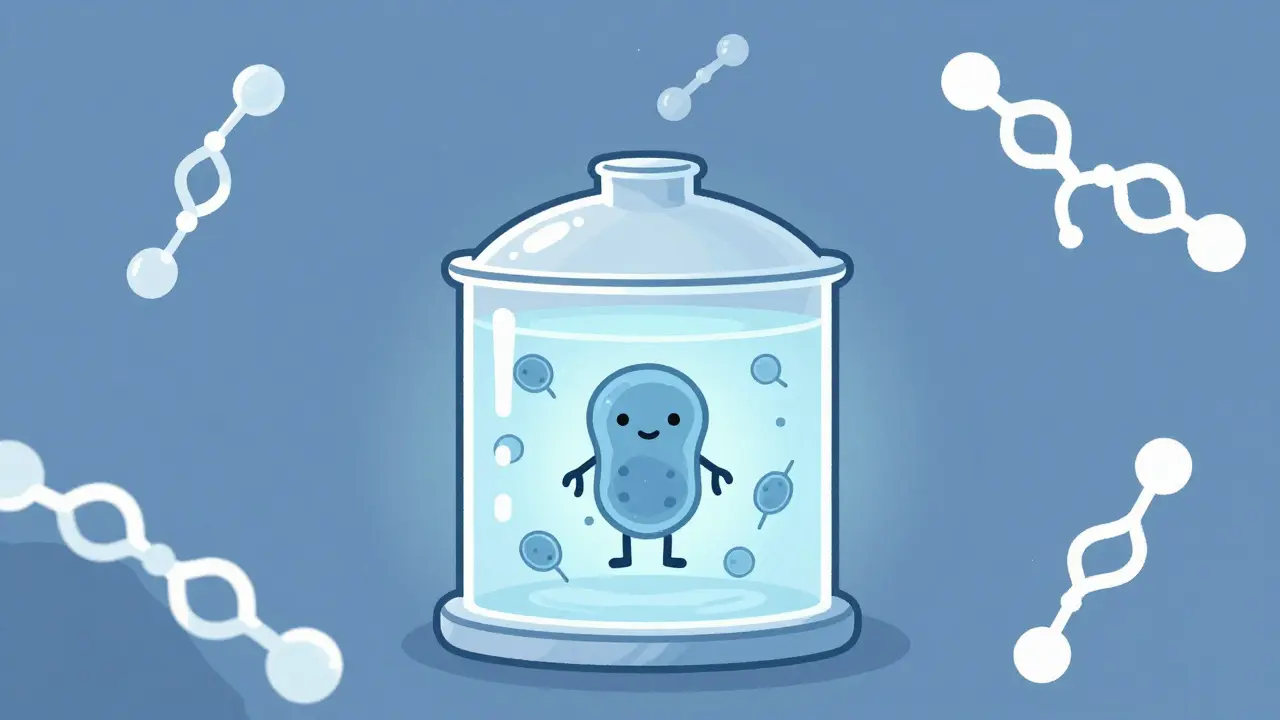
When you take a pill for high blood pressure or an infection, you expect every tablet to be identical. That’s because most drugs are small molecule chemicals made in labs using precise chemical reactions. But biologic drugs? They’re not made that way. They’re grown. Like plants. Like yeast. Like cells in a tank. And because of that, you can never make an exact copy.
What Makes Biologics Different?
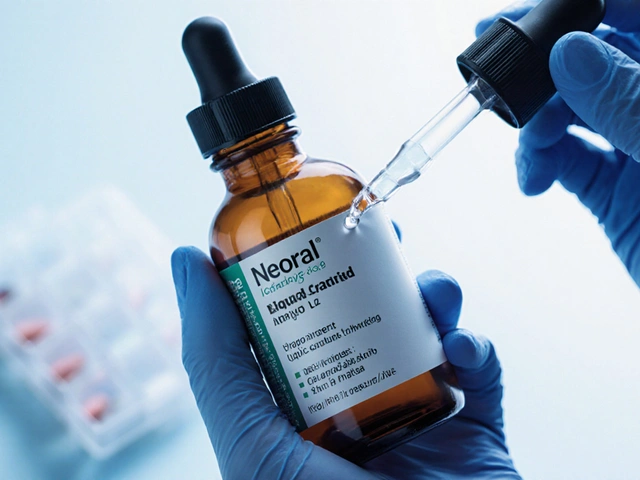
Biologic drugs are made from living things-human or animal cells, bacteria, or yeast. They’re huge, complex proteins, sometimes 1,000 times bigger than a regular pill’s active ingredient. Think of them as intricate machines made of amino acids, folded into shapes that fit perfectly into your body’s disease targets. Examples? Humira for rheumatoid arthritis, Ozempic for diabetes, and Enbrel for psoriasis. These aren’t just chemicals. They’re living products.Compare that to a generic drug, like ibuprofen. A generic version is chemically identical to the brand name. Same atoms. Same structure. Same everything. You can make it in any factory, anywhere in the world, and it works the same. But with biologics? Even the same company, making the same drug in the same facility, can’t guarantee every batch is identical. Why? Because living cells change. They react to tiny shifts in temperature, nutrient levels, or even the air in the room.
The Manufacturing Process Is Like Growing a Forest
Making a biologic isn’t mixing powders. It’s a 3- to 6-month journey. First, scientists insert a gene into a host cell-usually a Chinese hamster ovary cell-that tells it how to make the therapeutic protein. Then, those cells are placed in giant stainless steel tanks called bioreactors. They’re kept at 36.5°C, fed with nutrients, and bubbled with oxygen. For 10 to 14 days, they multiply. Millions of cells. Billions of proteins.Then comes the hard part: purification. The protein must be pulled out of the soup of dead cells, waste, and leftover nutrients. That’s done through protein A chromatography, viral filters, and ultrafiltration. Each step removes impurities, but even then, you’re left with a mixture of slightly different protein shapes. Some are perfect. Some have a missing sugar group. Others are folded just a little wrong. These aren’t defects-they’re natural variations. The FDA calls them ‘inherent variability.’
Quality control takes up 30-40% of the total cost. That’s because every batch gets tested for over 100 different characteristics: purity, potency, structure, stability. Even so, scientists admit current tools can only detect 60-70% of the protein’s full structure. The rest? Unknown. That’s why no two batches are truly the same.
Why You Can’t Just Copy Them Like a Generic
A generic drug is a copy. A biosimilar? It’s a very close cousin. Not a twin.The FDA doesn’t require biosimilars to be identical. They have to be ‘highly similar’ with no clinically meaningful differences in safety or effectiveness. That means manufacturers must run hundreds of tests-analytical, animal, and human trials-to prove it. One small change in the manufacturing process? A different type of filter, a 0.5°C shift in temperature, a new batch of growth medium-and the protein structure can shift enough to trigger an immune response.
That’s why a biosimilar for Humira took 12 years and over $100 million to develop. Not because the science was hard. Because proving it was safe enough to replace the original required proving it wasn’t just similar-but safe in real patients. And that’s not something you can do with a chemical formula. You need living cells, controlled environments, and years of testing.

Manufacturing Failures Are Common-and Costly
In biologics manufacturing, a single batch can cost $500,000 or more to produce. And if something goes wrong? It’s gone. Contamination is the biggest killer. A single airborne particle in the cleanroom can ruin a whole tank. One engineer on LinkedIn described spending 17 months and $22 million just to scale up from a 2,000-liter bioreactor to a 15,000-liter one. Why? Because what works in a small tank doesn’t always work in a big one. The flow, the oxygen, the mixing-all change.Even the best facilities have a 10-15% failure rate. That’s why companies invest in single-use bioreactors-plastic bags instead of steel tanks-to reduce cross-contamination. But those bags cost 15-20% more. And they’re not reusable. It’s a trade-off: safety over cost.
The Regulatory Maze
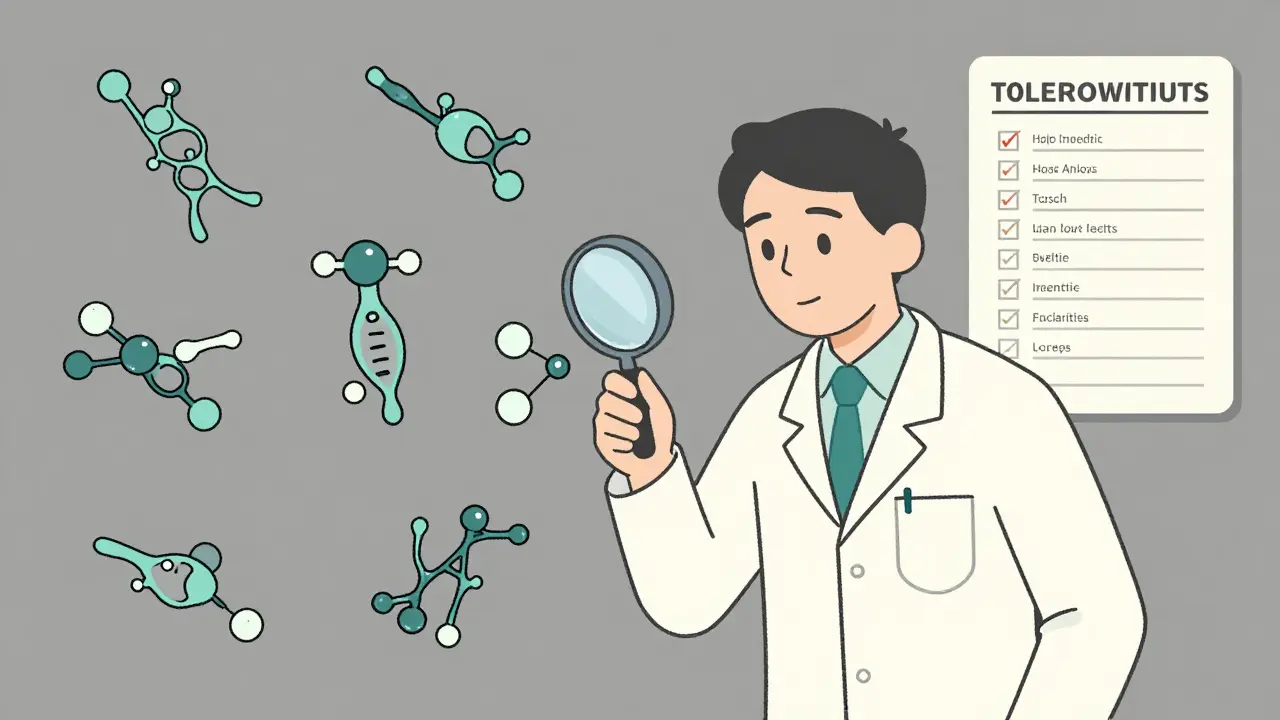
The FDA’s guidelines for biologics are over 200 pages long. The European Medicines Agency’s? Over 300. That’s because they know how easy it is to get it wrong. A biosimilar applicant must prove similarity not just in structure, but in how it behaves in the body. They must show it doesn’t cause more side effects. That it doesn’t trigger antibodies. That it works just as well in every patient group.Some experts argue this is too strict. Dr. Almut Winterstein from the University of Florida says minor structural differences don’t always matter. But regulators aren’t taking chances. One wrong move, and a patient could develop a dangerous immune reaction. That’s why, even after approval, manufacturers must keep detailed records-sometimes over 10,000 pages per product-for every single batch. Raw materials. Temperature logs. Test results. Every change. Every deviation.
Biosimilars Are the Answer-But Not a Perfect One
The biologics market hit $386 billion in 2023. And it’s growing fast. But with high prices, demand for cheaper versions is rising. That’s where biosimilars come in. In 2023, the global biosimilars market was $10.5 billion. By 2028, it’s expected to hit $30 billion.But biosimilars aren’t cheap generics. They’re complex, expensive to make, and still cost 15-30% less than the original-not 80% like generics. That’s because the manufacturing is just as hard. You can’t just reverse-engineer them. You have to reverse-engineer the entire process. And even then, you’re still not making the same thing.
Companies like Amgen, Samsung Bioepis, and Sandoz are leading the way. But even they admit: we’re not copying. We’re recreating. And we’re doing it with more precision than ever before.
What’s Next?
The future of biologics manufacturing is moving toward continuous production-where cells are fed and harvested nonstop instead of in batches. Artificial intelligence is being used to predict how a cell line will behave. Real-time sensors monitor protein quality as it’s made. Modular, flexible factories are being built so one facility can make multiple drugs without costly retooling.But the core truth remains: biologics are too complex to copy. They’re not pills. They’re living therapies. And that’s why we’ll always need biosimilars-not generics-for these drugs. We’ll always need science, patience, and billions of dollars to make them. Because when you’re treating cancer or autoimmune disease, you don’t want a copy. You want a version you know is safe. Even if it’s not perfect.
Can biosimilars be used interchangeably with the original biologic drug?
In most cases, biosimilars are approved for the same uses as the original biologic, but interchangeability is a separate regulatory step. Only a few biosimilars have been designated as interchangeable by the FDA, meaning a pharmacist can swap them without a doctor’s approval. Most require a doctor to specifically prescribe the biosimilar. Even then, switching isn’t automatic-it’s up to the prescriber and patient.
Why are biologic drugs so expensive?
Biologics cost so much because manufacturing is slow, complex, and risky. It takes 3-6 months to produce one batch, requires million-dollar facilities, and involves hundreds of quality tests. Up to 40% of the cost goes to testing alone. Plus, the R&D phase lasts over a decade. When you factor in failure rates of 10-15% per batch, the price starts to make sense-even if it feels unfair.
Are biosimilars safe?
Yes, when approved. Biosimilars undergo more testing than generics. They’re studied in clinical trials to prove they work the same way and don’t cause more side effects. Regulatory agencies like the FDA and EMA require extensive data on structure, purity, and immune response. Millions of doses have been given worldwide with no evidence of increased risk compared to the original biologic.
Can I get a generic version of Humira or Ozempic?
No. You can’t get a true generic of Humira or Ozempic because they’re biologics, not small molecule drugs. What you can get are biosimilars-like Amjevita for Humira or Wegovy for semaglutide (though Wegovy is still under brand protection). These are not exact copies, but they’re approved as safe and effective alternatives.
Do biosimilars work as well as the original biologic?
Clinical studies show biosimilars work just as well as the original drug in treating the same conditions. For example, biosimilars for infliximab (Remicade) have shown identical response rates in patients with Crohn’s disease and rheumatoid arthritis. The key is that they’re not just chemically similar-they’re proven to behave the same way in the human body.
Why can’t we just make a perfect copy of a biologic?
Because biologics are made by living cells, not chemical reactions. Every cell behaves slightly differently. Even with the same gene, the same tank, and the same process, the final protein will have tiny variations in shape, sugar attachments, or folding. These aren’t mistakes-they’re natural. Current science can’t fully measure or control every single detail. So perfect copies are impossible. That’s why we rely on biosimilars-close enough to be safe, but not identical.

Faith Wright
January 13, 2026 AT 02:34Man this is why America stays on top we dont just copy we recreate with precision and billions in R&D you think China or India can do this nah they just steal patents and call it innovation
Sonal Guha
January 14, 2026 AT 02:55Biologics arent drugs theyre biological artifacts with inherent noise the FDA calls it variability i call it uncontrolled chaos
gary ysturiz
January 14, 2026 AT 12:18So basically its like baking a cake with live yeast that changes its mind every time you turn your back
Jessica Bnouzalim
January 15, 2026 AT 16:43OMG YES THIS IS SO TRUE!!! I had a friend on Humira and then switched to the biosimilar and she was fine but then her insurance forced her back and she had a flare-up like WTF??
Bryan Wolfe
January 16, 2026 AT 13:04Love how you broke this down. People think drugs are like buying soda from a vending machine but biologics? Theyre more like raising a child in a lab. Every batch has its own personality. And honestly? That’s kind of beautiful.
Jay Powers
January 18, 2026 AT 00:20Biologics arent meant to be copied because theyre not products theyre processes and the process is alive. The fact we can even get close is a win. We dont need perfect we need safe and weve got that
Rebekah Cobbson
January 18, 2026 AT 01:25I work in a clinic and I see patients struggle with the cost every day. Biosimilars arent perfect but theyre a lifeline. We need more of them not less. The system should be pushing access not blocking it.
TiM Vince
January 18, 2026 AT 02:34Just came back from a biotech conference in Bangalore. The Indian labs are getting scary good at this. Not copying. Recreating. With better yield. And lower cost. The future is coming and its not American or European.
laura manning
January 19, 2026 AT 10:12It is imperative to underscore that the regulatory framework governing biosimilars is not merely stringent; it is, in fact, an exemplar of scientific rigor. The variance in glycosylation patterns alone necessitates a level of analytical fidelity that is unprecedented in pharmaceutical science.
Audu ikhlas
January 21, 2026 AT 01:31Why do we even bother with biosimilars? Just make the original cheaper. Why pay 100 million to make a copy when you can just lower the price of the real thing? This whole system is rigged by Big Pharma
Faith Wright
January 22, 2026 AT 18:57Bro you dont get it. You think you can just print more Humira like a dollar bill? The cells dont care about your outrage. Theyre not printing money theyre making proteins and if you mess with the temp by half a degree you get an immune reaction. This isnt capitalism its biology. And biology dont care about your feelings.