
Cephalosporin Cross-Reactivity Risk Assessor
Use this tool to understand how your specific penicillin reaction history might influence the safety of taking different generations of cephalosporins. Always consult a healthcare provider for medical advice.
Your Reaction History
Enter your details and select an antibiotic to see a personalized risk estimate.
Have you ever been told not to take a specific antibiotic because of an old reaction? If so, you might be part of the roughly 10% of people who report a penicillin allergy. For decades, doctors assumed that if you reacted to penicillin, there was a 10% chance you’d also react to cephalosporins. That number came from studies in the 1960s and 70s, but it’s largely outdated. Today, we know the risk is much lower, especially for newer generations of these drugs. Understanding why this misconception persists can help you make safer choices when discussing treatment options with your healthcare provider.
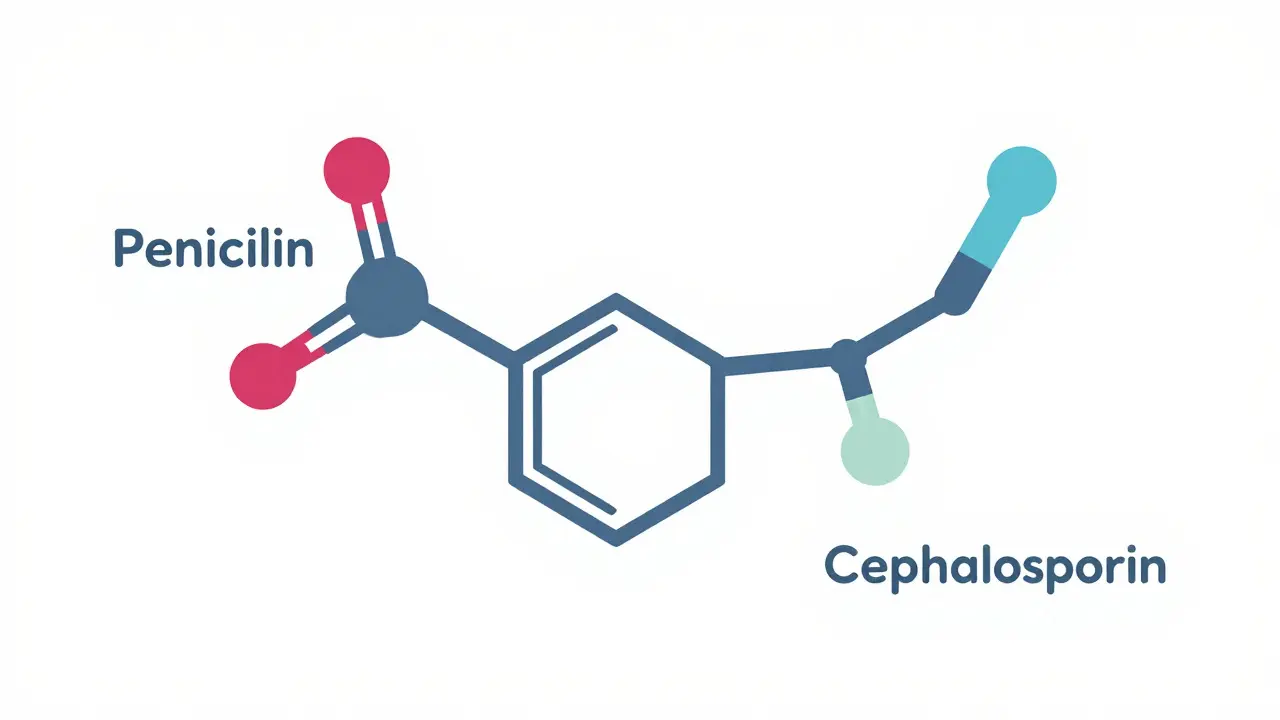
The core issue isn't just about fear; it's about how our immune systems recognize molecules. When we talk about Cephalosporins is a class of beta-lactam antibiotics widely used to treat bacterial infections., we are referring to drugs like ceftriaxone or cephalexin. They share a basic structural backbone with penicillins, which led to early assumptions about shared allergies. However, modern research shows that the specific "side chains" attached to that backbone matter far more than the backbone itself. This distinction changes everything about how we assess risk.
Why the Old 10% Rule Was Wrong
To understand current guidelines, we have to look at where the old data came from. In the early days of cephalosporin production, manufacturing processes were less refined. Trace amounts of penicillin often remained in the final product due to contamination during the molding process. So, when patients reacted to early cephalosporins, it wasn't always because their bodies recognized the cephalosporin structure-it was often because they were actually reacting to leftover penicillin. Medsafe, the Australian regulatory authority, highlighted this in a 2016 publication, noting that older studies overestimated cross-reactivity because of these impurities.
Even after manufacturing improved, the 10% figure stuck in medical literature and drug labels. The US Food and Drug Administration (FDA) still uses this warning on many prescriptions, creating confusion. But clinical reality has shifted. Recent data suggests that true cross-reactivity-where the immune system reacts to a cephalosporin specifically because of its similarity to penicillin-is significantly lower. For most patients, the fear is greater than the actual danger.
The Side-Chain Hypothesis: What Actually Triggers Reactions
So, what does trigger a reaction? It comes down to the Side-Chain Hypothesis is a theory stating that allergic reactions to beta-lactams depend primarily on the similarity of the side-chain structures rather than the core ring.. Imagine the beta-lactam ring as the chassis of a car. The side chain is the engine. Two cars might have the same chassis, but if the engines are completely different, they function differently. Similarly, two antibiotics might share the same ring, but if their side chains look different to your immune system, you’re unlikely to have a cross-reaction.
Research indicates that side-chain antigenic determinants account for a large portion of hypersensitivity reactions. In fact, studies show that epitopes-the specific parts of the molecule your antibodies latch onto-are often located on the side chains. If you had a reaction to amoxicillin, your immune system likely latched onto amoxicillin’s specific side chain. A cephalosporin with a very different side chain won’t trigger the same response. This is why cross-reactivity is higher between drugs with similar side chains (like ampicillin and amoxicillin) than between classes with dissimilar ones.

Generation Matters: Comparing Risk Levels
Cephalosporins are grouped into generations based on their spectrum of activity and chemical structure. The generation matters because it dictates how similar the side chain is to penicillins. First-generation cephalosporins, such as cephalexin and cefazolin, have side chains that are structurally closer to penicillins. Consequently, they carry a slightly higher risk of cross-reactivity. Third and fourth-generation cephalosporins, like ceftriaxone and cefepime, have evolved chemically. Their side chains are distinct, making them much safer for people with reported penicillin allergies.
| Generation | Common Examples | Cross-Reactivity Rate with Penicillin Allergy | Key Characteristic |
|---|---|---|---|
| First Generation | Cephalexin, Cefazolin | 1% - 8% | Highest structural similarity to penicillins |
| Second Generation | Cefuroxime, Cefoxitin | 1% - 5% | Moderate similarity; broader gram-negative coverage |
| Third Generation | Ceftriaxone, Cefixime | < 1% - 3% | Low similarity; highly effective against gram-negatives |
| Fourth Generation | Cefepime | < 1% | Very low similarity; stable against many enzymes |
Notice the drop-off. While first-generation agents might pose a small risk, third-generation drugs like ceftriaxone are considered safe for most patients with non-severe penicillin histories. The CDC’s treatment guidelines state that third-generation cephalosporins have cross-reactivity rates of less than 1% in patients with IgE-mediated penicillin allergies. This is a crucial distinction for clinicians deciding on treatment plans.
Clinical Implications: Why Accurate Diagnosis Matters
When a patient reports a penicillin allergy, doctors often avoid all beta-lactams, including cephalosporins. This leads to the use of alternative antibiotics like fluoroquinolones or vancomycin. These alternatives aren't just more expensive; they often have more severe side effects and contribute to antimicrobial resistance. By unnecessarily avoiding safe cephalosporins, we drive up healthcare costs and potentially expose patients to worse outcomes.
Here’s the good news: 90% to 95% of people labeled with a penicillin allergy can actually tolerate penicillin safely. Many of these "allergies" were just intolerance issues, like an upset stomach, mistaken for an immune reaction. Proper evaluation, including skin testing, can clear this label. Once delabeled, patients can access the full range of effective antibiotics. Even for those with confirmed allergies, choosing the right cephalosporin based on side-chain analysis minimizes risk without sacrificing efficacy.

Practical Steps for Patients and Providers
If you have a history of penicillin allergy, here’s what you should know before your next prescription:
- Describe the Reaction: Did you get hives, swelling, or difficulty breathing? Or was it just a rash or nausea? IgE-mediated reactions (hives, anaphylaxis) carry higher risk than delayed rashes.
- Check the Timing: When did the reaction happen? If it was more than 10 years ago, the likelihood of a persistent severe allergy drops significantly.
- Ask About Alternatives: If you need an antibiotic, ask if a third- or fourth-generation cephalosporin is appropriate. These are generally safe for most penicillin-allergic patients.
- Consider Testing: If you’ve had a severe reaction, ask about penicillin skin testing. It’s a quick, outpatient procedure that can confirm or rule out true allergy.
For providers, the key is moving away from blanket avoidance. Use the side-chain hypothesis to guide selection. Avoid first-generation cephalosporins in patients with confirmed IgE-mediated penicillin anaphylaxis, but don’t shy away from third-generation agents unless there’s a specific reason to do so. Electronic health records are increasingly flagging these allergies, but context matters. A note saying "rash" is very different from "anaphylaxis."
Frequently Asked Questions
Is it safe to take cephalosporins if I’m allergic to penicillin?
For most people, yes. The risk of cross-reactivity is low, especially with third- and fourth-generation cephalosporins like ceftriaxone. However, if you’ve had a severe, life-threatening reaction to penicillin, consult your doctor carefully. They may choose a different antibiotic or monitor you closely.
Why do some drug labels still say there’s a 10% cross-reactivity risk?
The 10% figure comes from older studies in the 1960s and 70s when manufacturing was less precise. Although newer evidence shows the risk is much lower, regulatory updates can be slow. Always discuss the current evidence with your healthcare provider, as clinical guidelines have moved past this outdated statistic.
What is the difference between a penicillin allergy and intolerance?
An allergy is an immune system response, often involving hives, swelling, or breathing difficulties. Intolerance is a non-immune side effect, like diarrhea or nausea. Many people labeled as allergic actually experienced intolerance. Distinguishing between the two is critical for safe antibiotic prescribing.
Which cephalosporins are safest for penicillin-allergic patients?
Third- and fourth-generation cephalosporins, such as ceftriaxone, cefixime, and cefepime, are generally considered safest. They have side chains that are structurally different from penicillins, resulting in cross-reactivity rates of less than 1% for most patients.
Can I get tested to see if I’m truly allergic to penicillin?
Yes. Penicillin skin testing is a standard procedure that can determine if you have a true IgE-mediated allergy. It involves applying small amounts of penicillin derivatives to the skin. If the test is negative, you can usually take penicillins and related antibiotics safely.



Darcy Galway
August 18, 2026 AT 10:14Great read. Simple and clear.
Paul Coar
August 18, 2026 AT 12:15finally someone is explaining this without making it sound like rocket science. i had a "penicillin allergy" tag in my chart for like 15 years just because i got a rash once when i was a kid. turns out it was probably just an upset stomach but nobody ever checked. now i can actually take the right meds instead of some weird alternative that costs double and makes me feel gross. love seeing the data back up what we all suspected. less fear more facts
Simon-Pierre Bouchard
August 20, 2026 AT 01:10Sure, the 10% rule is outdated. That's hilarious. I bet the FDA loves updating their labels too. Nothing says "trust us" like keeping a warning from the Nixon era on a prescription pad while doctors are still terrified to prescribe cephalexin to anyone with a history of hives. The side-chain hypothesis is great until you're the one standing in the ER wondering if your throat is closing up because you trusted a blog post over a doctor's gut feeling. But hey, at least the manufacturing is cleaner now, right? Probably.
Vivek sharma
August 20, 2026 AT 17:59This is a beautiful reminder that knowledge evolves! 🧠✨ We often cling to old fears because they feel safer than uncertainty. Understanding the chemistry behind the reaction empowers us to make better choices. It’s not just about drugs; it’s about how we perceive risk in our daily lives. When we question the status quo with curiosity rather than fear, we open doors to better health outcomes. Let’s keep learning together! 🌍💊
Garry Hedges
August 22, 2026 AT 17:52the real problem here isnt the allergy its the laziness of medical records. half these "allergies" are just people who threw up after taking amoxicillin and now every doc sees that flag and panics. we need better triage at the point of care. stop treating a tummy ache like anaphylaxis. its costing the system billions in unnecessary vancomycin use. fix the intake forms first then worry about the side chains
Jamaal Johnson
August 24, 2026 AT 06:23It is indeed a fascinating exploration of a persistent medical myth. One must appreciate the nuance presented regarding the structural differences between drug generations. However, the clinical application remains fraught with caution for many practitioners. The transition from theoretical safety to practical prescribing habits is often slower than one might hope. Yet, the data is compelling. It suggests a paradigm shift is overdue in how we manage beta-lactam hypersensitivity. We must continue to advocate for evidence-based delabeling. The potential benefits for patient care are substantial.
Ankit Sinha
August 25, 2026 AT 08:35Look, everyone is so busy celebrating that third-gen cephalosporins are safe that they forget the basics. You still have to know what the actual reaction was. A delayed maculopapular rash is not IgE mediated. Stop conflating the two. Also, the table is misleading if you don't account for the specific R-group similarities which vary wildly even within generations. Cefepime isn't magic. Just do your homework before you start telling patients they can take anything. It's basic pharmacology. Don't be lazy.
Jw George John Warren
August 27, 2026 AT 02:32Oh boy 🙄 another article trying to tell us we're all idiots for being scared of antibiotics. Love the car engine analogy 🚗🔧 really helps me sleep at night knowing my immune system is basically a picky mechanic. And yeah sure the FDA is slow but let's blame them for everything. I'd rather take a fluoroquinolone and get tendonitis than risk anaphylaxis based on a Reddit comment. Thanks for the confidence boost though 😂
Daniel Cook
August 28, 2026 AT 18:41Fair points. The distinction between intolerance and allergy is key.
Michael Smith
August 29, 2026 AT 19:05sure and my grandma swears she's allergic to penicillin because it made her feel "weird" in 1985. good luck getting her off that label. sarcasm aside the skin testing thing is underrated. should be standard for anyone over 10 years old with a vague history
Eunice Chen
August 31, 2026 AT 00:26this is super helpful. i always assumed any beta lactam was off limits. glad to know there is a safer option like ceftriaxone. thanks for breaking it down
Usha Ranji
August 31, 2026 AT 07:50I agree with the emphasis on proper diagnosis. In many settings, we still see a lot of unnecessary avoidance of beta-lactams due to poor documentation of the original event. It would be beneficial if electronic health records could prompt clinicians to re-evaluate these allergies periodically, especially if the last exposure was decades ago. This simple step could significantly reduce the burden of resistance and improve therapeutic options for patients. It is a small change with a large impact.
Marc-Alexandre Rizzo
August 31, 2026 AT 07:57Nice breakdown. The car chassis vs engine metaphor really sticks. It’s wild how much misinformation lingers in medical charts. I’ve seen plenty of folks avoid entire classes of meds for no reason. Hopefully this clears up some confusion for those reading. Great job putting this together.