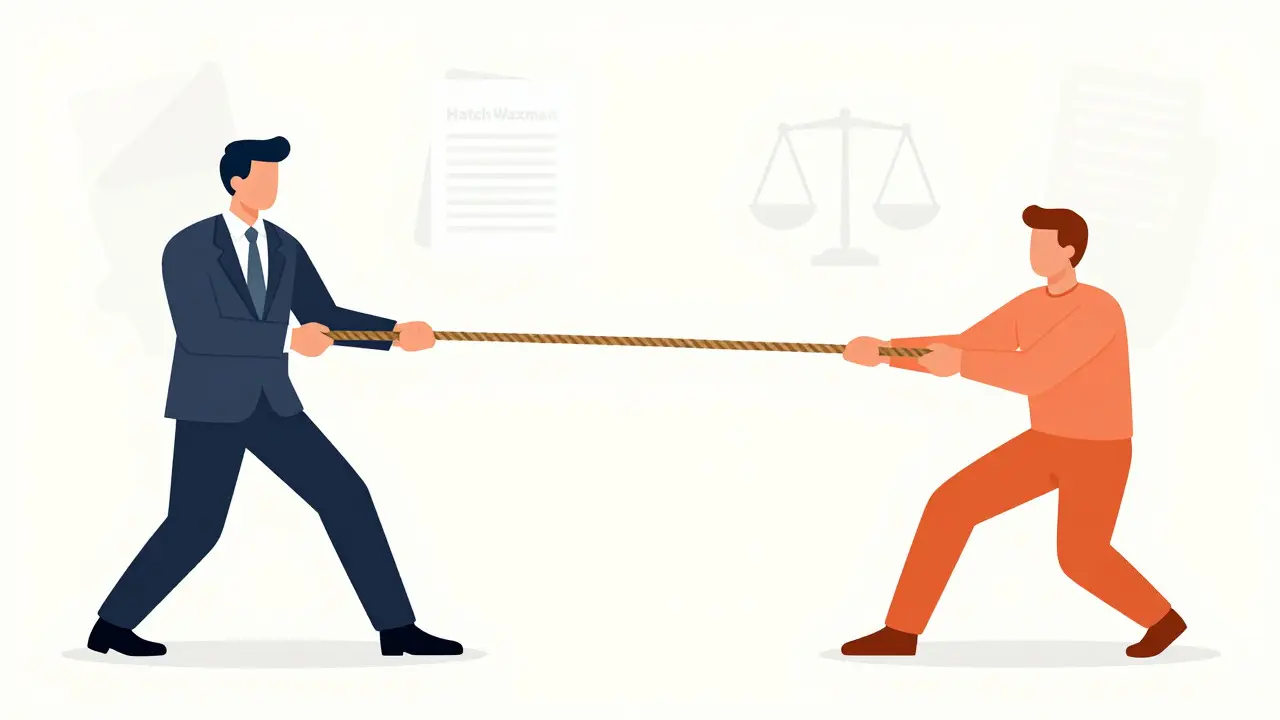
Imagine a life-saving medication that has been on the market for years. The original patent is expiring, which should mean cheaper generic versions are about to flood the shelves. But instead of lower prices, you see a legal battle erupting in federal court. This is not a glitch in the system; it is the standard operating procedure for modern pharmaceutical markets. The gap between when a brand-name drug’s patent expires and when a generic version actually reaches patients is often filled with intense litigation, strategic delays, and complex settlements.
This tug-of-war is governed by a specific legal framework known as the Hatch-Waxman Act, formally titled the Drug Price Competition and Patent Term Restoration Act of 1984. This law was designed to balance two competing interests: rewarding innovation by protecting brand-name patents and promoting competition by creating a streamlined path for generic approvals. In practice, however, this balance has tilted heavily toward prolonged legal conflicts. Understanding how these disputes work, why they happen, and what they cost consumers is essential for anyone navigating the healthcare landscape.
The Mechanism of Generic Entry and Paragraph IV Certifications
To understand the litigation, you first need to understand the entry process. When a generic manufacturer wants to sell a version of an existing drug, they do not submit a full New Drug Application (NDA), which requires expensive and time-consuming clinical trials. Instead, they file an Abbreviated New Drug Application (ANDA) with the Food and Drug Administration (FDA). This application asserts that the generic drug is bioequivalent to the brand-name version-meaning it works the same way in the body.
The critical moment occurs when the generic applicant challenges the validity of the brand-name company’s patents. This challenge is made through a "Paragraph IV certification." By filing this certification, the generic maker essentially tells the brand company, "We believe your patents are invalid, unenforceable, or will not be infringed by our product." This action triggers a specific sequence of events defined by federal law.
Once the Paragraph IV certification is filed, the brand-name manufacturer has 45 days to sue for patent infringement. If they do sue, a regulatory stay kicks in. The FDA is legally barred from approving the generic ANDA for 30 months, unless a court rules otherwise before that period ends. This 30-month stay is the core lever used by brand companies to delay competition. It buys them time to argue their case in court while maintaining their monopoly on the market.
| Component | Function | Impact on Market |
|---|---|---|
| ANDA Filing | Application for generic approval based on bioequivalence | Streamlines entry compared to full NDAs |
| Paragraph IV Certification | Legal challenge to listed patents | Triggers potential litigation and 30-month stay |
| Orange Book Listing | FDA database of approved drugs and associated patents | Defines which patents must be challenged |
| 30-Month Stay | Regulatory pause on FDA approval during litigation | Delays generic entry, preserving brand exclusivity |
The Role of the Orange Book and Patent Thickets
The battlefield for these disputes is largely defined by the Orange Book, officially known as the Approved Drug Products with Therapeutic Equivalence Evaluations. Published by the FDA, this book lists every approved drug along with the patents that protect it. For a generic manufacturer to enter the market, they must address every patent listed in the Orange Book for that specific drug.
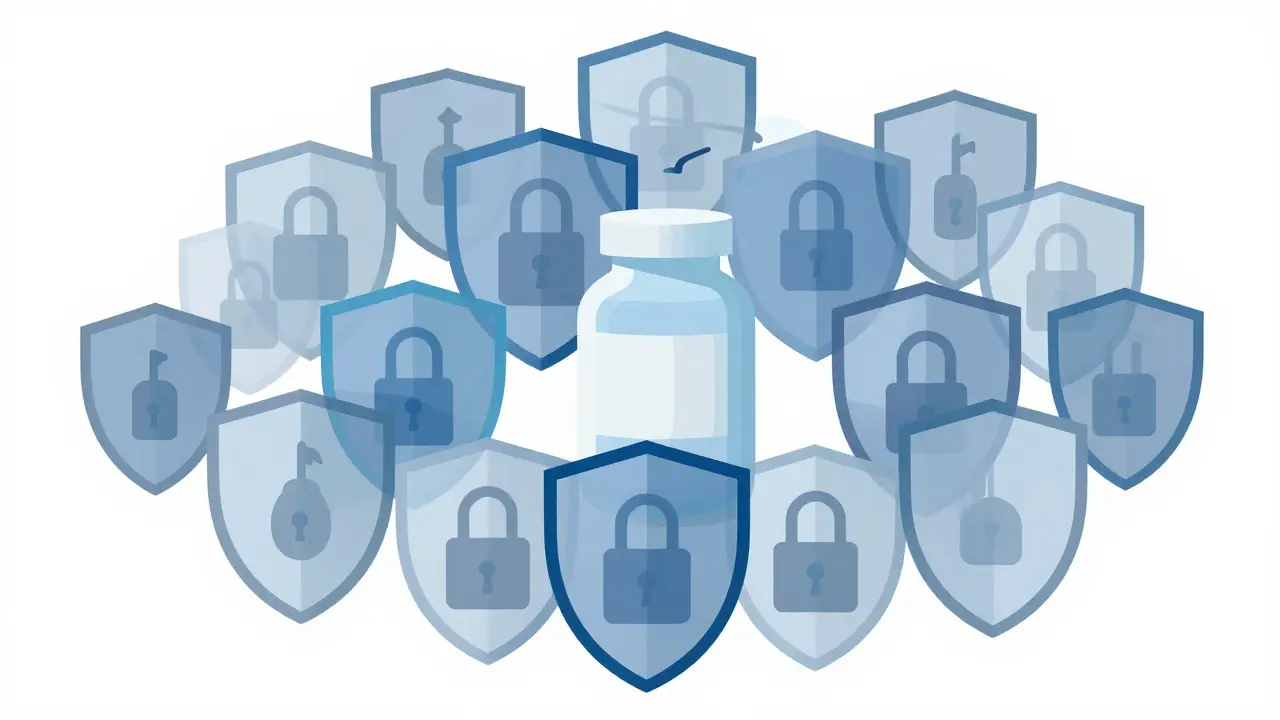
Brand-name companies have become increasingly sophisticated in how they use the Orange Book. A major tactic is the creation of "patent thickets." Instead of holding one strong patent for the active ingredient, companies now file dozens, sometimes hundreds, of patents covering minor aspects of the drug. These can include formulations, manufacturing methods, dosing regimens, and even packaging components like dose counters or inhaler mechanisms.
For example, data from the IQVIA Institute shows that oncology drugs now average 237 patents per product. Semaglutide products, such as Ozempic and Wegovy, collectively hold over 150 patents. Eliquis (apixaban) has 67 patents protecting a single drug product. This proliferation creates a dense web of intellectual property that generic manufacturers must navigate. Each patent represents a potential lawsuit and a potential delay.
Critics argue that many of these patents are improperly listed. The Association for Accessible Medicines (AAM) identified cases where brand companies listed patents covering ancillary components, such as delivery devices, rather than the drug itself. In a significant 2025 ruling, Judge Chesler in the District of New Jersey addressed this issue in the Teva vs. Amneal case over ProAir HFA. The judge ruled that patents claiming only a dose counter component were improperly listed because they did not claim "the drug for which the application was approved." This decision highlights the ongoing tension between broad patent protection and the statutory requirements for Orange Book listing.
Litigation Trends and Venue Shopping
The volume of patent litigation in the United States has surged. According to the Lex Machina 2025 Patent Litigation Report, there was a 22% increase in patent cases in 2024, totaling 2,594 filings nationwide. Damages awarded reached a record $4.3 billion. While this data covers all industries, pharmaceutical cases represent a significant and growing portion due to the high stakes involved.
Where these cases are filed matters immensely. Historically, the Eastern District of Texas was the preferred venue for patent lawsuits due to its perceived pro-patentee jury pools and efficient procedures. Although activity dipped after the Supreme Court’s TC Heartland decision in 2017, which restricted where companies could be sued, the Eastern District of Texas has recently reclaimed its position as the most active venue. In 2024, 38% of all patent cases were filed there, compared to 22% in the Western District of Texas and 15% in the District of Delaware.
This concentration of cases creates a specialized judiciary familiar with complex pharmaceutical IP issues. However, it also raises concerns about forum shopping, where plaintiffs choose venues strategically to gain an advantage. The predictability of outcomes in certain districts can influence settlement negotiations, as both sides weigh the likelihood of success in court versus the certainty of a deal.
Settlements: Pay-for-Delay or Patient Access?
Most patent disputes do not end with a final court judgment. They end in settlement. This reality has sparked intense debate among regulators, economists, and policymakers. The traditional view, held strongly by the Federal Trade Commission (FTC), is that many settlements involve "pay-for-delay" agreements. In these deals, the brand-name company pays the generic manufacturer to stay out of the market for a specified period. This preserves the brand’s monopoly and keeps prices high, harming consumers and antitrust principles.
The FTC has been aggressive in challenging these practices. In 2024, the agency challenged over 300 improper Orange Book patent listings. In May 2025, they issued warning letters targeting more than 200 patents across 17 brand-name products, including those from major players like Teva and Amgen. The goal is to deter brand companies from using litigation as a shield to block competition indefinitely.
However, a contrasting perspective argues that settlements often accelerate patient access. A June 2025 report by the IQVIA Institute, commissioned by the AAM, found that patent settlements actually led to generic market entry more than five years before patent expiration on average. John T. O’Donnell, an industry analyst cited in the report, noted that limiting the ability to settle might result in fewer Paragraph IV ANDAs being filed altogether. If generic companies cannot negotiate favorable terms, they may decide the risk of litigation is too high and abandon the challenge entirely.
This divergence in views reflects the complexity of the issue. Not all settlements are created equal. Some genuinely expedite access by resolving uncertainty quickly. Others appear designed solely to extend monopolies. Distinguishing between the two requires careful scrutiny of the terms, timing, and financial arrangements involved.
The Financial Impact on Healthcare Systems
The consequences of these legal battles extend far beyond the courtroom. They directly impact the cost of healthcare for individuals, insurers, and government programs. The FTC estimated in 2024 that improper patent listings delay generic competition for approximately 1,000 drugs annually. This delay costs the U.S. healthcare system an estimated $13.9 billion per year in excess spending.
Consider the timeline for generic entry. Data from DrugPatentWatch, analyzed by Bloomberg Law, shows that the average time from brand drug approval to first generic entry has doubled from 14 months in 2005 to 28 months in 2024. For oncology drugs, the delay is even more pronounced, averaging 5.7 years post-patent expiration. During these periods, patients and payers bear the full brunt of premium pricing.
The I-MAK 2025 report, titled "Overpatented, Overpriced," documents specific examples where extensive patent coverage has kept generics at bay long after the core invention should have entered the public domain. This dynamic forces hospitals and pharmacies to spend billions on brand-name medications when cheaper alternatives could theoretically be available. The economic burden falls disproportionately on Medicare, Medicaid, and private insurance plans, ultimately driving up premiums and deductibles for everyone.
Emerging Strategies and Future Outlook
As brand companies face increasing scrutiny, they are adapting their strategies. One notable trend is the rise of inter partes review (IPR) proceedings at the Patent Trial and Appeal Board (PTAB). Generic manufacturers are increasingly using IPRs to challenge the validity of patents outside of traditional district court litigation. USPTO data shows a 47% increase in IPR filings against pharmaceutical patents from 2023 to 2024. IPRs offer a faster, potentially cheaper path to invalidate weak patents, though recent Supreme Court decisions, such as Smith & Nephew v. Arthrex in April 2025, have imposed stricter standing requirements that may limit this avenue.
Regulatory changes are also on the horizon. The FDA has proposed new regulations requiring brand companies to certify under penalty of perjury that each patent listed in the Orange Book meets statutory requirements. Implementation is expected in the second quarter of 2026. This measure aims to reduce the number of frivolous or improper listings that trigger unnecessary litigation.
Looking ahead, the Lex Machina 2025 report predicts 25-30% annual growth in pharmaceutical patent litigation through 2027. This escalation is driven partly by the shift toward biologics and biosimilars. Biologic drugs are more complex than small molecule drugs, leading to more patents per product. The average number of patents for biologics has risen to 78, compared to 37 for small molecules. As more blockbuster biologics approach patent expiry, expect to see even more intense legal battles over exclusivity rights.
The future of generic drug markets will likely depend on how well regulators, courts, and legislators can strike a balance. The goal remains clear: encourage innovation without stifling competition. Until then, patients and payers will continue to watch the courts closely, hoping that justice-and affordability-will prevail.
What is the Hatch-Waxman Act?
The Hatch-Waxman Act, or the Drug Price Competition and Patent Term Restoration Act of 1984, is a U.S. law that created a pathway for generic drug approval via Abbreviated New Drug Applications (ANDAs). It balances incentives for brand-name innovation with the promotion of generic competition by allowing patent term restoration for brands while enabling generics to challenge patents through Paragraph IV certifications.
What is a Paragraph IV certification?
A Paragraph IV certification is a legal declaration made by a generic drug manufacturer when filing an ANDA. It states that the generic product will not infringe on the brand-name company’s patents, or that the patents are invalid or unenforceable. Filing this certification triggers a 45-day window for the brand company to sue, which can lead to a 30-month stay on FDA approval of the generic drug.
How does the Orange Book affect generic drug entry?
The Orange Book is an FDA publication listing approved drugs and their associated patents. Generic manufacturers must address every patent listed for a drug in the Orange Book to gain approval. Brand companies can list multiple patents, including those for formulations or manufacturing methods, creating barriers that generics must legally challenge or wait out.
What is a "patent thicket" in pharmaceuticals?
A patent thicket refers to a dense network of overlapping patents surrounding a single drug product. Brand companies create these by filing numerous patents for minor aspects like dosing, packaging, or manufacturing processes. This strategy makes it difficult and costly for generic manufacturers to enter the market, as they must challenge or navigate around each individual patent.
Do patent settlements help or hurt patients?
The impact is debated. Critics, including the FTC, argue that many settlements are "pay-for-delay" deals that keep generics off the market longer, keeping prices high. However, some studies suggest that settlements can accelerate access by resolving litigation quickly, bringing generics to market years before patent expiration. The outcome depends on the specific terms of each agreement.
Why is the Eastern District of Texas popular for patent lawsuits?
The Eastern District of Texas has historically been favored for patent litigation due to its efficient procedures, experienced judges, and juries perceived as sympathetic to patent holders. Despite restrictions from the TC Heartland decision, it regained its status as the top venue in 2024, hosting 38% of all patent cases, making it a strategic choice for plaintiffs seeking favorable outcomes.
What is the financial cost of delayed generic entry?
Delayed generic entry significantly increases healthcare costs. The FTC estimates that improper patent listings delay competition for about 1,000 drugs annually, costing the U.S. healthcare system approximately $13.9 billion per year. This excess spending affects insurance premiums, government programs like Medicare, and out-of-pocket expenses for patients.
How are biologics changing patent litigation?
Biologics are more complex than traditional small-molecule drugs, resulting in more patents per product. The average number of patents for biologics is 78, compared to 37 for small molecules. As biologics reach patent expiry, litigation is expected to grow by 25-30% annually through 2027, involving more complex disputes over biosimilar exclusivity and interchangeability.