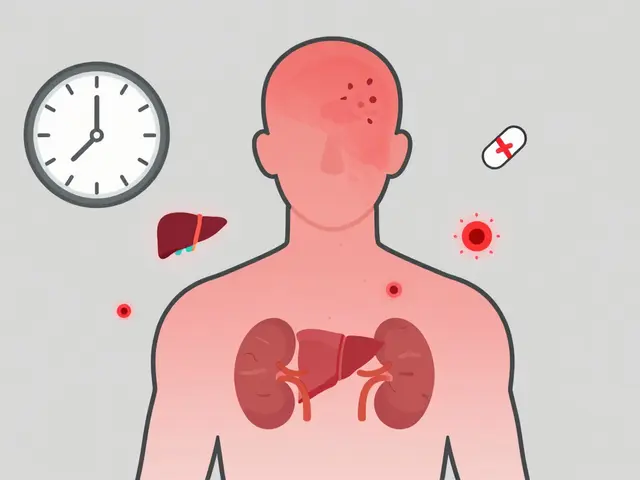
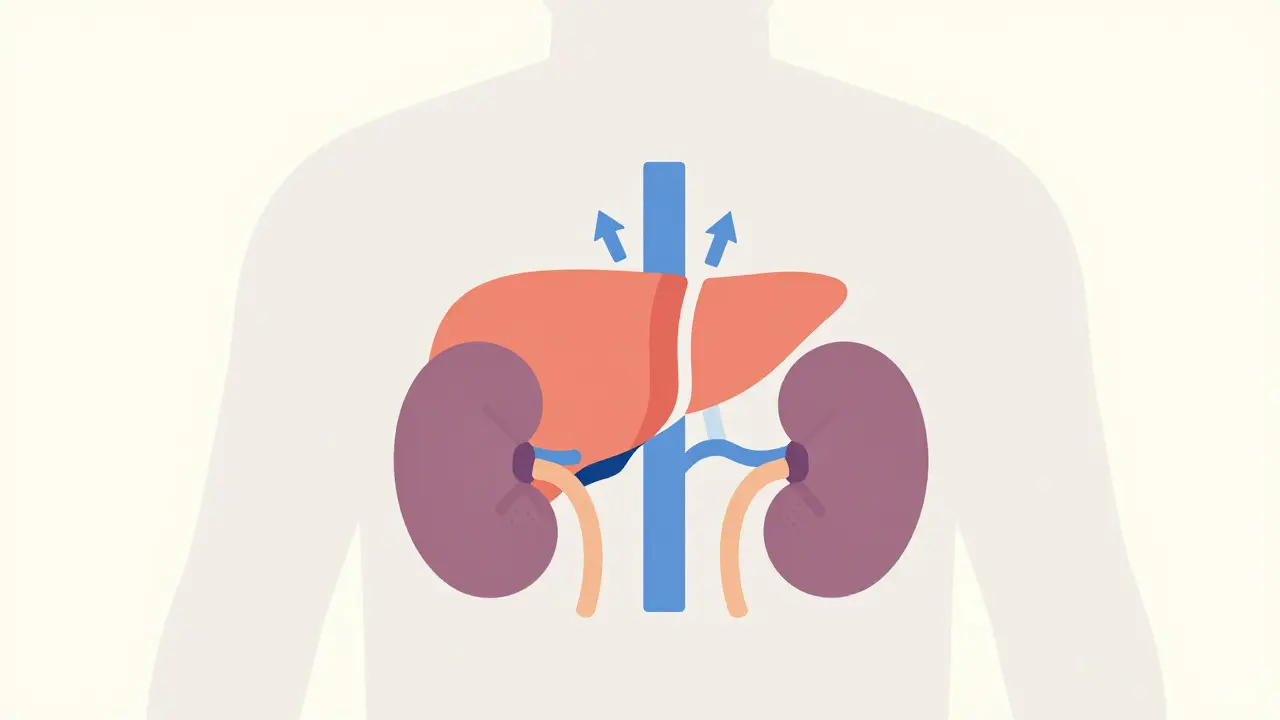
Imagine taking a standard dose of medication that worked perfectly for you at 40, only to feel dizzy or unusually tired at 75. This isn't just your imagination; it’s often your body’s changing hardware. As we age, our liver is the primary organ responsible for breaking down most medications, while the kidneys are responsible for filtering waste products from the blood. When these organs slow down, drugs can build up in the system, leading to side effects that look like new diseases. Understanding how drug metabolism shifts in older adults is the key to staying safe and effective on your prescriptions.
The Quick Shift: Why Your Body Processes Meds Differently Now
Your liver doesn't shrink dramatically overnight, but its efficiency does. Research shows that hepatic blood flow decreases by about 40% in older adults compared to younger people. Think of it like a highway where half the lanes are closed; traffic moves slower. For many drugs, this means they stay in your bloodstream longer than intended. Meanwhile, your kidneys lose their filtering power, with the glomerular filtration rate (GFR) dropping by 30-50% between ages 30 and 80. If you take a medication that relies on the kidneys to clear it out, a lower GFR means the drug lingers, increasing the risk of toxicity. These changes happen gradually, which is why a dose that was fine five years ago might be too high today.
Liver Changes: The Breakdown Factory Slows Down
The liver handles two main types of chemical reactions to break down drugs: Phase I and Phase II. Phase I involves enzymes like cytochrome P450, which chop molecules into smaller pieces. In older adults, the activity of these Phase I enzymes can drop significantly, sometimes by as much as 60% in animal studies, though human data suggests more modest declines. Phase II reactions, which attach molecules to make drugs water-soluble for excretion, tend to remain relatively stable. This distinction matters because it determines how specific drugs behave. For example, if a drug relies heavily on Phase I metabolism, it may accumulate in your system, requiring a lower dose. However, not all drugs are affected equally. Some undergo "first-pass" metabolism, where the liver breaks them down before they even enter your main circulation. With reduced liver function, less of the drug is broken down initially, meaning more of it reaches your bloodstream. This can increase the drug's effect, potentially leading to stronger side effects without any change in dosage.
Kidney Changes: The Filter Gets Clogged
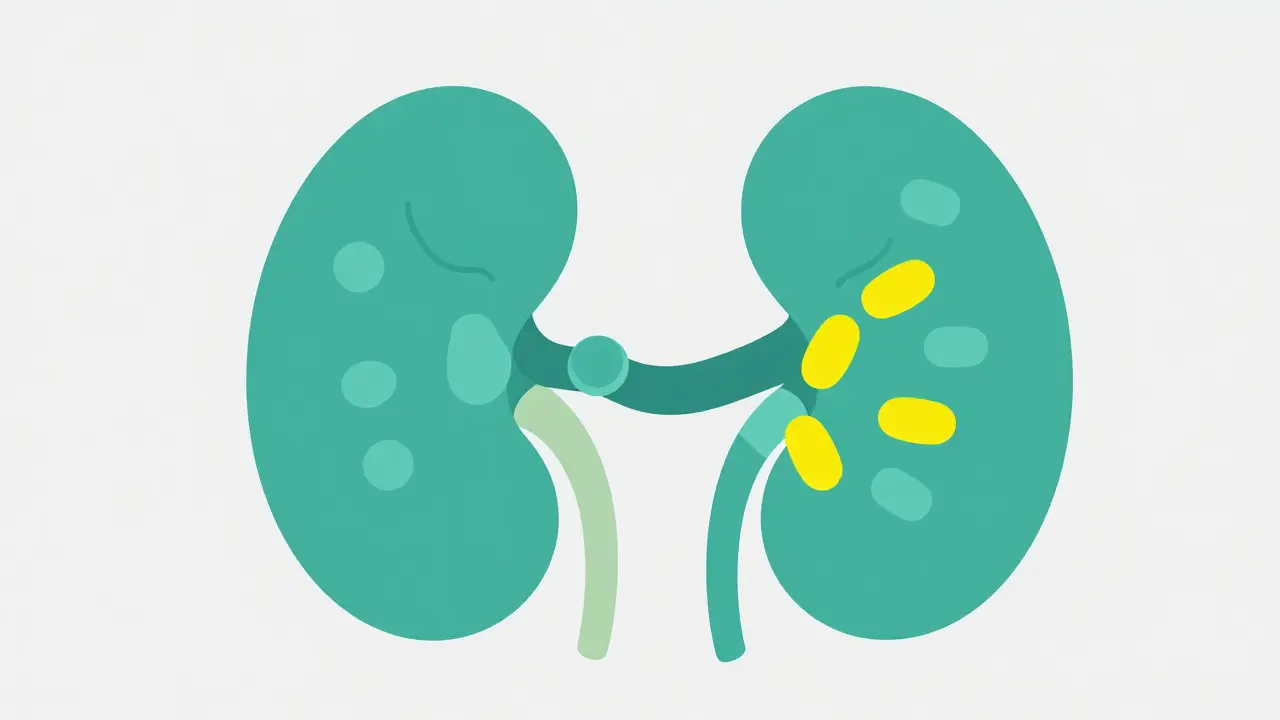
While the liver breaks drugs down, the kidneys flush them out. The kidneys' ability to filter blood, measured by GFR, naturally declines with age. But here’s the tricky part: serum creatinine levels, a common test doctors use to estimate kidney function, often remain normal in older adults. This happens because creatinine is produced by muscle mass, and since older adults typically have less muscle, their baseline creatinine is lower. So, a "normal" creatinine level might actually mask a significant decline in kidney function. If a doctor relies solely on creatinine, they might miss the fact that your kidneys aren't clearing drugs efficiently. This is especially dangerous for medications with a narrow therapeutic index, where the difference between a helpful dose and a toxic one is very small. Drugs like digoxin, lithium, or certain antibiotics require precise dosing based on accurate kidney function estimates, not just age.
Flow-Limited vs. Capacity-Limited Drugs: What It Means for You
Not all medications react to aging organs in the same way. Pharmacologists classify drugs based on how they are cleared. Flow-limited drugs depend heavily on how much blood reaches the liver. Since blood flow drops with age, these drugs-like propranolol, lidocaine, and morphine-see a significant reduction in clearance, roughly 40%. This means they build up faster. On the other hand, capacity-limited drugs depend on the enzyme activity itself. Since enzyme activity remains relatively preserved in many cases, drugs like diazepam or phenytoin show only a modest 10-15% reduction in clearance. Knowing which category your medication falls into helps you understand why some drugs cause more issues than others as you age. If you're on multiple flow-limited drugs, the cumulative effect can be substantial, leading to drowsiness, confusion, or low blood pressure.
| Drug Type | Examples | Primary Organ | Clearance Change | Clinical Risk |
|---|---|---|---|---|
| Flow-Limited | Propranolol, Morphine | Liver (Blood Flow) | ~40% Reduction | Accumulation, Sedation |
| Capacity-Limited | Diazepam, Phenytoin | Liver (Enzymes) | 10-15% Reduction | Moderate Accumulation |
| Renally Excreted | Digoxin, Vancomycin | Kidneys | Dependent on GFR | Toxicity if Dose Not Adjusted |
The Polypharmacy Problem: More Pills, More Risks
Many older adults take five or more prescription medications daily, a situation known as polypharmacy. Each additional drug increases the chance of interactions, and when your liver and kidneys are working at reduced capacity, these interactions become more severe. For instance, if two drugs compete for the same liver enzyme, and that enzyme is already sluggish due to age, both drugs can pile up. This is why adverse drug reactions account for about 10% of hospital admissions in elderly patients. The risk isn't just about taking too many pills; it's about taking standard doses in a body that processes them differently. Regular medication reviews are essential to catch these potential conflicts before they lead to a fall, a heart rhythm issue, or a kidney injury.
Practical Steps for Safer Medication Use
You don't need to be a pharmacologist to manage your meds safely, but you do need to be proactive. First, ask your doctor to check your kidney function using an equation that accounts for age and weight, such as the Cockcroft-Gault formula, rather than relying on simple creatinine tests. Second, keep an updated list of all your medications, including over-the-counter drugs like acetaminophen, which can strain the liver. Third, watch for subtle signs of drug accumulation, such as increased dizziness, confusion, or unusual fatigue, and report them immediately. Finally, consider using tools like the Beers Criteria, which lists medications to avoid or use with caution in older adults. By understanding that your body's chemistry has changed, you can work with your healthcare team to adjust doses appropriately, ensuring your medications help you rather than harm you.
Why does my doctor check my kidney function before adjusting my medication?
Because many drugs are cleared by the kidneys, and kidney function naturally declines with age. If your kidneys aren't filtering as well, drugs can build up in your blood, causing side effects. Checking kidney function ensures your dose is safe for your current health status.
Does everyone's liver slow down at the same rate?
No, individual variation is high. Factors like genetics, overall health, and other medications affect how quickly liver function changes. This is why personalized dosing is important rather than using a one-size-fits-all approach for all older adults.
What are the signs that a medication dose is too high for me?
Common signs include increased drowsiness, dizziness, confusion, nausea, or unusual heart rhythms. If you notice these symptoms starting after a medication change or consistently, talk to your doctor about possible dose adjustments.
Should I stop taking my medications if I'm worried about side effects?
Never stop medications abruptly without consulting your doctor. Sudden stops can cause withdrawal or rebound effects. Instead, schedule a review to discuss your concerns and explore safer alternatives or dose reductions.
How often should I have my medication list reviewed?
Ideally, at least once a year, or whenever you start a new medication, experience a new side effect, or have a change in your health status like a new diagnosis or hospitalization. Regular reviews help catch interactions and unnecessary drugs early.