
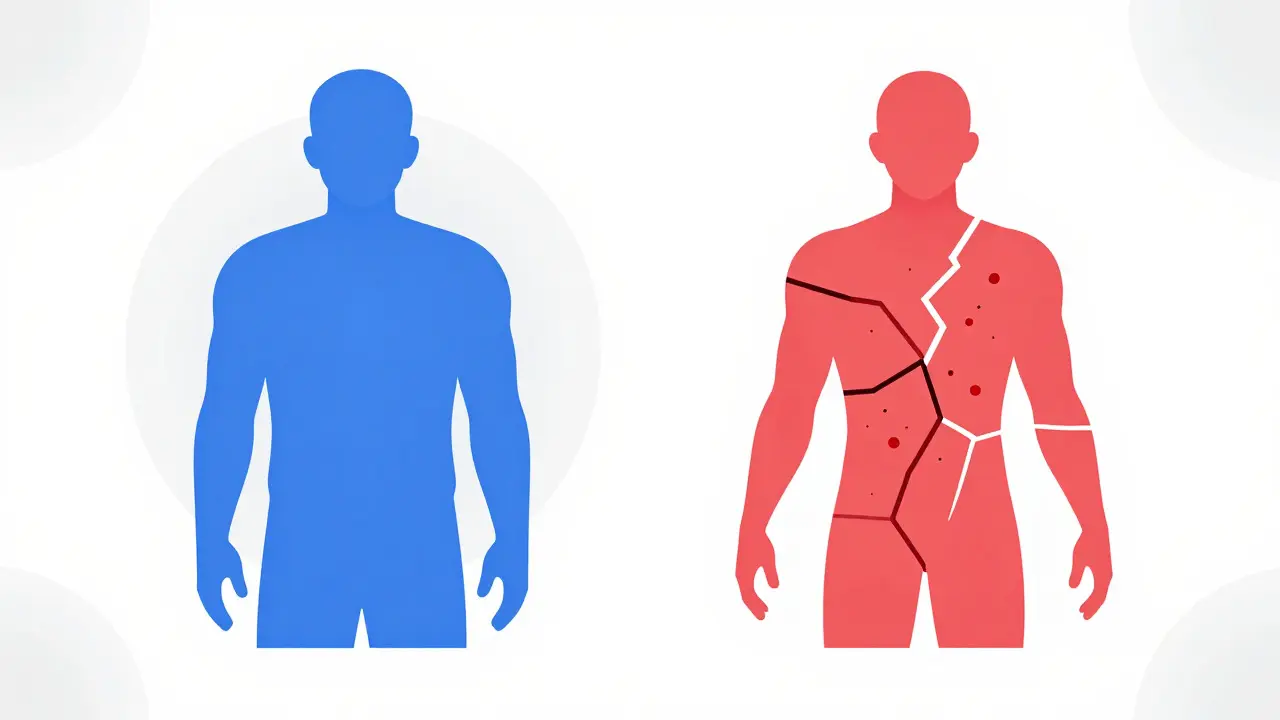
Waking up to a sudden return of weakness, blurred vision, or numbness is terrifying if you live with Multiple Sclerosis. Your first instinct might be panic: Is this a new attack? Do I need emergency steroids? But here is the hard truth that many patients miss right away: not every symptom flare-up is a disease progression. In fact, nearly a quarter of all reported exacerbations are actually pseudorelapses-temporary worsening of old symptoms caused by external stressors like heat or infection, not new brain damage. Misidentifying these events leads to unnecessary hospital visits, risky medication side effects, and wasted time. Knowing the difference between a true relapse and a pseudorelapse isn't just medical trivia; it is your most powerful tool for managing daily life and protecting your long-term health.
What Actually Happens During an MS Relapse?
To understand why distinguishing these two conditions matters, we have to look at what is happening inside your central nervous system. A true MS relapse, also known as an exacerbation or flare-up, is defined by specific clinical criteria. It involves new neurological symptoms or a significant worsening of existing ones that last for more than 24 to 48 hours. Crucially, there must be no identifiable external trigger like fever or infection. This event is driven by active inflammation and demyelination-the stripping of the protective myelin sheath around nerve fibers-in the brain or spinal cord.
Think of a true relapse as a fresh wound. The immune system mistakenly attacks healthy tissue, creating new lesions visible on MRI scans. These lesions disrupt signal transmission along neural pathways. According to data from the MS Center (2023), true relapses can last anywhere from several days to months. While high-dose corticosteroids can shorten the duration and severity of these attacks, they do not prevent permanent disability. Each untreated or severe relapse contributes to cumulative neurological damage, meaning the stakes are high when identifying them correctly.
- New Symptoms: Vision loss, balance issues, or sensory changes you haven't experienced before.
- Duration: Persists for at least 24-48 hours without improvement.
- No External Cause: Occurs in the absence of fever, infection, or extreme heat.
- MRI Evidence: Often shows new enhancing lesions indicating active inflammation.
Understanding the Pseudorelapse Phenomenon
If a true relapse is a fresh wound, a pseudorelapse (or pseudoexacerbation) is like pressing on an old scar. It hurts, but there is no new injury. A pseudorelapse is a temporary worsening of pre-existing neurological symptoms triggered by physiological stress. There is no new inflammatory activity in the central nervous system. Instead, previously damaged nerves simply struggle to conduct signals efficiently under stress.
This distinction was formally codified in clinical guidelines following the 2010 revisions to the McDonald diagnostic criteria for MS. Research indicates that pseudorelapses account for approximately 15-25% of all symptom exacerbations reported by patients. This number jumps significantly in older adults or those with longer disease duration, as accumulated disability creates more vulnerable neural pathways that are easily disrupted by minor stressors.
The key characteristic here is reversibility. Once the triggering factor is removed, symptoms typically resolve rapidly-often within hours or less than 24 hours. Unlike true relapses, pseudorelapses do not cause permanent neurological damage. However, ignoring them or mismanaging them can lead to deconditioning. Studies show that about 15% of patients over age 55 fail to return to their pre-pseudorelapse functional baseline due to physical decline during the episode, even though the underlying nerve damage hasn't worsened.
Common Triggers That Mimic Disease Progression
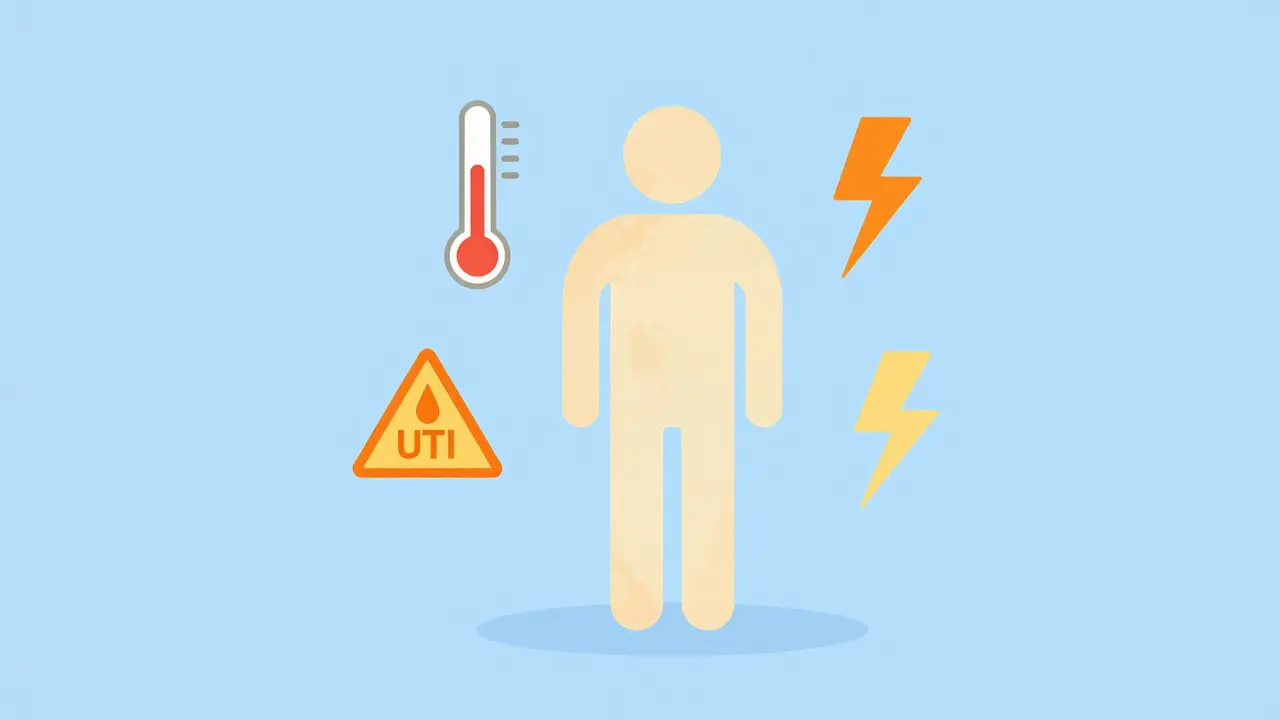
You cannot manage what you do not recognize. Identifying common triggers is the first step in avoiding unnecessary medical interventions. The most frequent culprits behind pseudorelapses are infections, heat, and metabolic disturbances.
| Trigger Type | Prevalence in Cases | Mechanism |
|---|---|---|
| Urinary Tract Infections (UTIs) | 67% | Systemic inflammation and metabolic stress impair nerve conduction. |
| Heat Exposure (Environmental or Hot Showers) | 41% | Elevated body temperature slows electrical signal transmission in demyelinated nerves. |
| Fever | 32% | Similar to heat exposure; raises core body temperature. |
| Physical Exertion | 28% | Fatigue and increased body heat temporarily overload compromised neural pathways. |
| Psychological Stress | 19% | Hormonal changes (cortisol/adrenaline) affect muscle tone and sensation. |
One specific and well-documented trigger is Uhthoff's phenomenon. This occurs when visual symptoms worsen specifically due to increased body temperature. It affects roughly 60-80% of MS patients who have had prior optic neuritis. If you notice your vision blurring after a hot shower or a walk in the sun, but it clears up once you cool down, you are likely experiencing Uhthoff's, not a new eye attack. Recognizing this pattern saves countless trips to the emergency room.
The Steroid Dilemma: When to Treat and When to Wait
This is where the rubber meets the road. Treatment decisions hinge entirely on accurate diagnosis. True relapses often warrant aggressive intervention. Standard care involves high-dose intravenous methylprednisolone (1 gram daily for 3-5 days). This treatment aims to reduce inflammation quickly, shortening the recovery period. Studies show that 70-80% of patients with true relapses experience clinical improvement with steroids, although complete recovery only happens in 45-55% of cases.
However, steroids are useless-and potentially harmful-for pseudorelapses. Since there is no active inflammation to suppress, corticosteroids provide zero benefit. Yet, research published in Neurology reveals that inappropriate steroid administration for pseudorelapses occurs in 30-40% of cases. Why does this happen? Because doctors and patients alike fear missing a true attack. But the risks are real. Unnecessary steroid use exposes patients to hyperglycemia (high blood sugar) in 25% of cases, insomnia in 40%, mood disturbances in 30%, and an increased risk of secondary infections.
Dr. Fred D. Lublin, Director of the Corinne Goldsmith Dickinson Center for MS, notes that misdiagnosis rates hover between 25-35% in community practice. The American Academy of Neurology’s 2021 guidelines emphasize a strict rule: before diagnosing a relapse, clinicians must rule out fever (temperature >37.8°C/100°F), metabolic disturbances (such as abnormal sodium levels), and active infections. If any of these are present, treat the trigger, not the MS.

A Practical Diagnostic Framework for Patients
So, how do you navigate this uncertainty when symptoms flare up? You don't have to guess. Adopt a systematic 3-step assessment protocol recommended by MS specialists.
- Check the Clock: Has the symptom persisted for more than 24 hours? If it resolves within a day, especially after cooling down or resting, it is likely a pseudorelapse.
- Scan for Triggers: Check your temperature. Have you had any signs of a urinary tract infection (burning, urgency)? Are you unusually stressed or exhausted? If yes, address these issues first. Drink water, take antipyretics for fever, or see a doctor for antibiotics if a UTI is suspected.
- Assess Severity and Impact: Use tools like the ARMS (Assessment of Relapse in Multiple Sclerosis) questionnaire. Scores ≥4 indicate significant impairment. If symptoms involve pyramidal signs (severe weakness), cerebellar involvement (balance issues), or sphincter dysfunction, seek immediate medical evaluation regardless of potential triggers.
Maintaining a symptom diary is invaluable. Record temperature changes, infection symptoms, and stress levels whenever an exacerbation occurs. Over time, patterns emerge. You might discover that your leg heaviness always spikes after intense exercise, allowing you to adjust your routine proactively rather than reactively.
Long-Term Implications and Future Directions
The economic and personal cost of confusion is staggering. The National MS Society estimates that inappropriate steroid treatments for pseudorelapses cost the US healthcare system approximately $12.7 million annually. Beyond money, patients endure side effects and anxiety. For individuals, the emotional toll of fearing every symptom as "progression" is exhausting.
Fortunately, technology is catching up. New tools like the MS-Relapse Assessment Tool (MS-RAT), validated in 2023, combine temperature data, symptom duration, and functional impact metrics to calculate a probability score for true relapse versus pseudorelapse. It boasts 92% sensitivity and 88% specificity. Telemedicine platforms are also integrating AI-driven assessments to help patients triage symptoms before seeking in-person care. Additionally, researchers are investigating biomarkers like serum neurofilament light chain levels to objectively distinguish inflammatory activity from temporary dysfunction.
Until these tools become standard in every clinic, education remains your best defense. Understand your body. Know your triggers. And remember: a bad day does not mean a worse disease. By mastering the difference between relapse and pseudorelapse, you reclaim control over your narrative and your treatment plan.
How long does a pseudorelapse last compared to a true relapse?
A pseudorelapse typically lasts less than 24 hours and resolves quickly once the triggering factor (like heat or infection) is addressed. In contrast, a true MS relapse persists for at least 24-48 hours and can last for weeks or months, requiring medical intervention such as steroids to shorten its duration.
Can steroids make a pseudorelapse worse?
Steroids do not directly worsen the underlying pseudorelapse mechanism, but they introduce unnecessary risks. Side effects include hyperglycemia, insomnia, mood swings, and increased susceptibility to infections. Since steroids target inflammation (which is absent in pseudorelapses), they offer no benefit while exposing the patient to these adverse effects.
What is Uhthoff's phenomenon?
Uhthoff's phenomenon is a type of pseudorelapse where visual symptoms, such as blurred vision or double vision, worsen due to an increase in body temperature. It commonly affects people with a history of optic neuritis and usually resolves within minutes to hours after cooling down.
Why are UTIs such a common trigger for pseudorelapses?
Urinary tract infections are the most common trigger, cited in 67% of pseudorelapse cases. The systemic inflammation and metabolic stress caused by the infection temporarily impair the ability of previously damaged nerves to transmit signals effectively, mimicking new neurological symptoms.
When should I go to the ER for MS symptoms?
Seek immediate medical attention if symptoms are severe, involve significant weakness affecting mobility, cause balance issues, or impact bladder/bowel control. Also, go to the ER if you suspect a serious infection like a UTI accompanied by fever, or if symptoms persist beyond 48 hours without any identifiable trigger.
Do pseudorelapses contribute to permanent disability?
No, pseudorelapses do not cause new neurological damage or contribute to disease progression. However, if a patient becomes deconditioned during a prolonged pseudorelapse episode, they may experience temporary functional decline. Proper management of the trigger ensures a full return to baseline function.
Prashant Shishodia
July 19, 2026 AT 22:12Listen up. This is the most important thing you will read today. Check your temperature. If it is high, it is not a relapse. It is heat. Cool down. Drink water. Wait 24 hours. Do not rush to the doctor for steroids unless you have new symptoms that do not go away. Steroids are heavy drugs. They mess with your sugar and your mood. Use them wisely. Trust your body.
Autumn LW
July 21, 2026 AT 19:10Oh, please. The average patient cannot be trusted to distinguish between a UTI and actual demyelination without a neurologist's input. This 'wait and see' approach is dangerously simplistic. You are suggesting people gamble with their neurological health based on a thermometer reading? Absurd. The guidelines exist for a reason because patients lack the clinical acumen to self-diagnose complex inflammatory processes. Stop giving medical advice from the internet.
Andrew Donovan
July 22, 2026 AT 23:51While Autumn has a point about caution, Prashant’s core message is grounded in reality. I’ve seen countless patients terrified by Uhthoff’s phenomenon, thinking their vision was failing permanently when it was merely thermal conductivity issues. The key is education, not fear. Understanding that nerves are like electrical wires-heat slows the signal, but doesn’t break the wire-is empowering. It shifts the narrative from panic to management. We must encourage patients to listen to their bodies while respecting medical protocols.
Patrick Meyer
July 23, 2026 AT 18:28typical layman oversimplification. the article mentions MRI evidence for true relapses yet u suggest waiting 24h which could mean missing the window for optimal steroid efficacy in severe cases. also 'drink water' is hardly a comprehensive strategy for metabolic disturbances. pretentious much?
Deva Vidya
July 24, 2026 AT 05:22I think both sides have valid concerns. The fear of progression is real and exhausting. However, unnecessary steroids cause so many side effects that they often make life worse than the temporary symptom flare. Finding that balance is tough. I found keeping a detailed diary helped me prove to my neuro that my leg heaviness was heat-related, not a new lesion. It took time, but it saved me from three rounds of IV steroids last year.
Paul Lyons
July 25, 2026 AT 23:46This whole debate is a classic example of American over-medicalization vs. common sense. In other countries, doctors don't just blast everyone with steroids at the first sign of trouble. They look at the whole picture. But here, we have a litigious society where if you wait 24 hours and something goes wrong, you get sued. So doctors treat aggressively to cover their backsides. It’s not about science; it’s about liability. Fix the system, not the patient.
Scott Colter
July 27, 2026 AT 11:33It seems we are circling the drain of human anxiety. The mind projects fear onto physical sensations. Is it the disease or is it the dread of the disease manifesting as tension? Perhaps the distinction between relapse and pseudorelapse is less biological and more psychological in its immediate impact. We must meditate on the nature of suffering. Does the pain matter if the source is transient? I find peace in knowing that most storms pass quickly.
ANINDA GHOSH
July 27, 2026 AT 18:18In our culture, we often say 'rest is productive.' When the body signals distress, whether from heat or infection, it is asking for pause. The Western rush to intervene with pharmaceuticals ignores the wisdom of the body's own recovery mechanisms. A pseudorelapse is a whisper; a relapse is a shout. Learn to hear the difference. 🌿
Ambarish Pal
July 28, 2026 AT 15:30ABSOLUTELY NOT! You are all ignoring the catastrophic potential of untreated inflammation! My uncle waited 48 hours because he thought it was just heat, and now he can barely walk! Steroids save lives! Steroids save function! To suggest otherwise is negligence wrapped in pseudo-intellectualism! The stakes are too high for this casual 'cool down and wait' nonsense! Act fast or regret forever!
anna arifiana
July 29, 2026 AT 13:23However, one might argue that the emphasis on 'waiting' overlooks the subjective terror of the patient, who, lacking the diagnostic tools of the clinician, experiences the symptom as an absolute crisis; furthermore, the binary classification of relapse versus pseudorelapse may itself be reductive, ignoring the spectrum of inflammatory activity that exists between clear-cut cases, thereby necessitating a more nuanced, perhaps even contradictory, approach to patient care that acknowledges both the physiological reality and the psychological burden of uncertainty.
MiMi Stanley
July 30, 2026 AT 03:52Just stick to the basics. Temperature check. Time check. Trigger check. That's it.