
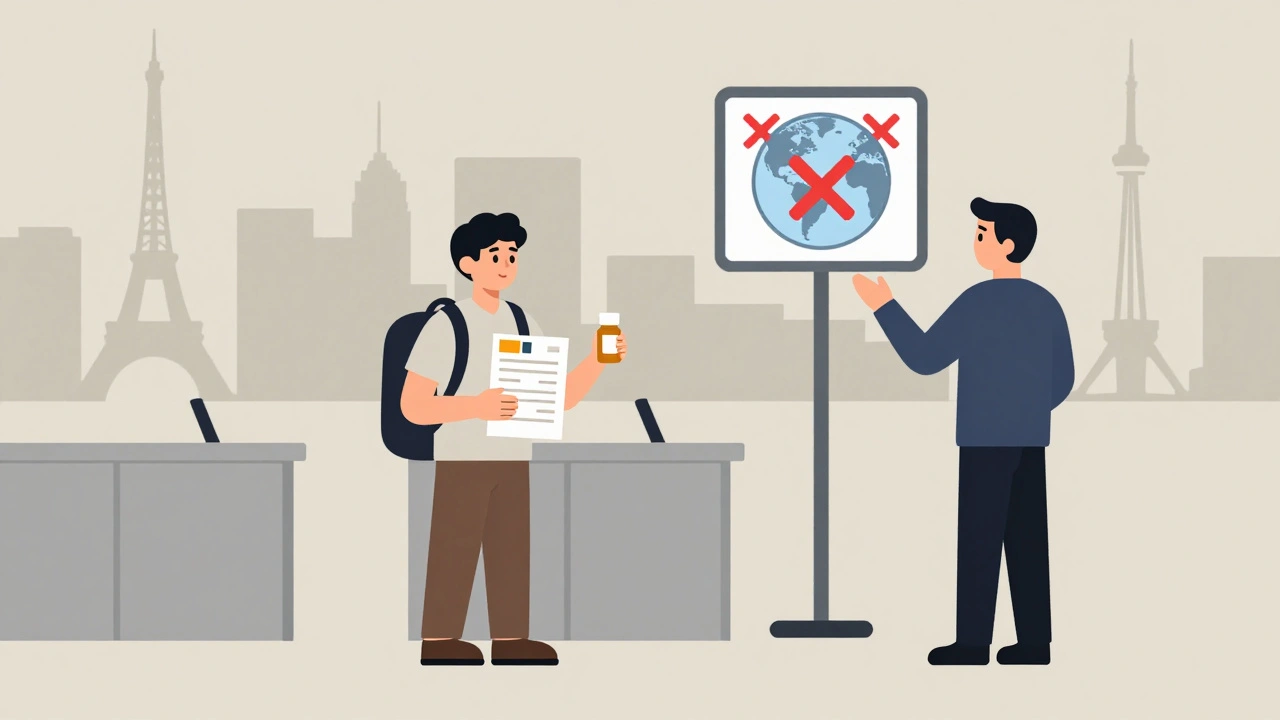
Trying to refill your prescription while traveling overseas isn’t as simple as walking into a local pharmacy. If you’re in Europe, you might get lucky. If you’re in Canada, China, or the Middle East, you could face a wall of bureaucracy. The truth? Prescription transfer between countries isn’t a system-it’s a patchwork of rules, loopholes, and outright bans.
Why You Can’t Just Walk In and Ask for a Refill
Most people assume a prescription is a prescription. It’s not. In the U.S., a prescription for Adderall or Xanax is a controlled substance under DEA rules. In Canada, those same pills might be classified differently-or not available at all. In Germany, your brand-name drug might have a different name. In Japan, even over-the-counter painkillers like ibuprofen require a local prescription. The U.S. Food and Drug Administration (FDA) officially bans importing prescription drugs for personal use. But here’s the catch: they often don’t enforce it-if you’re bringing in a 90-day supply for yourself, and it’s for a chronic condition like high blood pressure or diabetes. Border agents aren’t drug inspectors. They’re looking for illegal shipments, not your insulin. But that’s not the same as having a pharmacy transfer your prescription. U.S. pharmacies won’t send your prescription electronically to a pharmacy in Canada, Australia, or France. They’re not allowed to. Even if they wanted to, the systems don’t talk to each other. No shared database. No common format. No legal framework.What Works: The EU Advantage
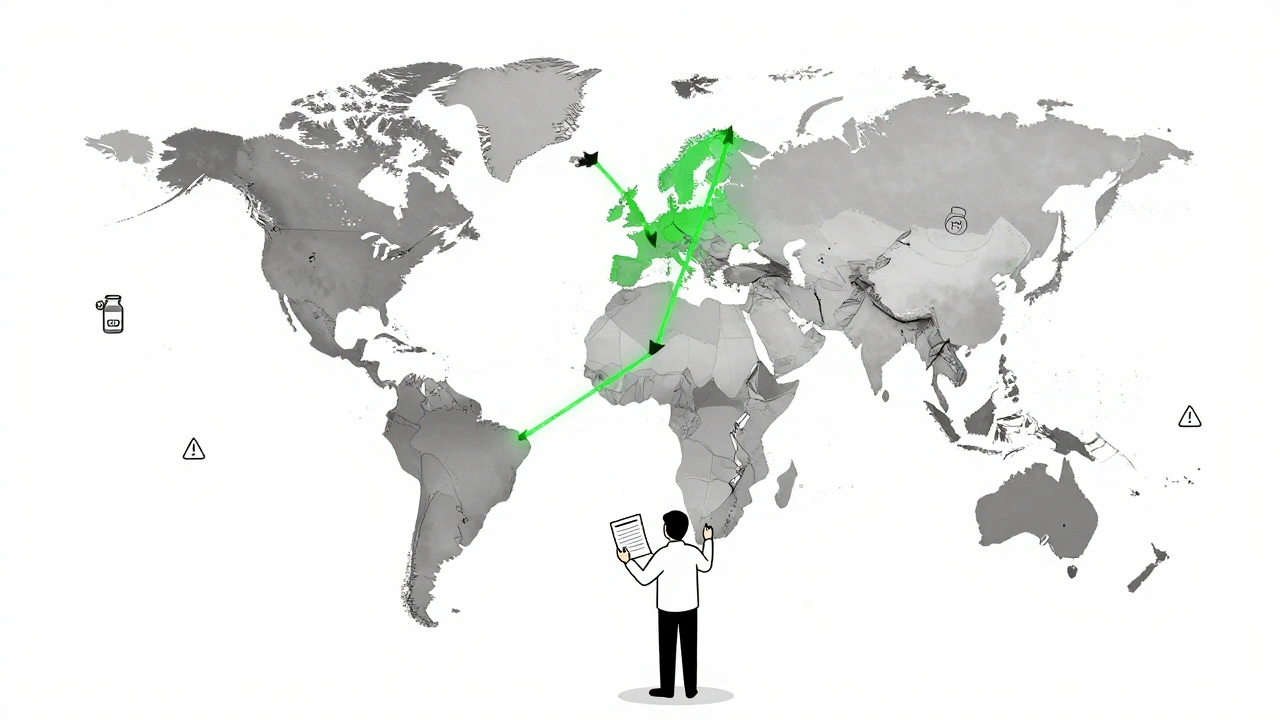
If you’re traveling within the European Union, you’re in the only region with a real cross-border prescription system. An EU prescription issued in France, Spain, or Poland is technically valid in any of the 27 member states. That means if you run out of your asthma inhaler in Rome, you can walk into a pharmacy in Milan with your original prescription-and they’ll fill it. But there are two big caveats:- The medication must be available under its common (generic) name. Your brand-name drug in the U.S. might not exist in Italy under that name.
- You need to carry the original paper prescription with the doctor’s signature. Electronic prescriptions aren’t always accepted outside your home country.
The U.S.-Canada Roadblock
Canada is the most common destination for Americans trying to refill prescriptions. But here’s the reality: U.S. pharmacies won’t transfer your prescription to Canada. Not legally. Not even if you beg. Instead, you need what’s called a “cosigning” process. A Canadian pharmacist will contact your U.S. doctor. They’ll review your medical history, confirm the medication is appropriate, and then issue a brand-new Canadian prescription. It’s not a transfer. It’s a restart. You’ll need to provide:- The original signed prescription from your U.S. doctor
- A letter from your doctor explaining your diagnosis and why you need the medication
- Your full medical history, including allergies and other medications
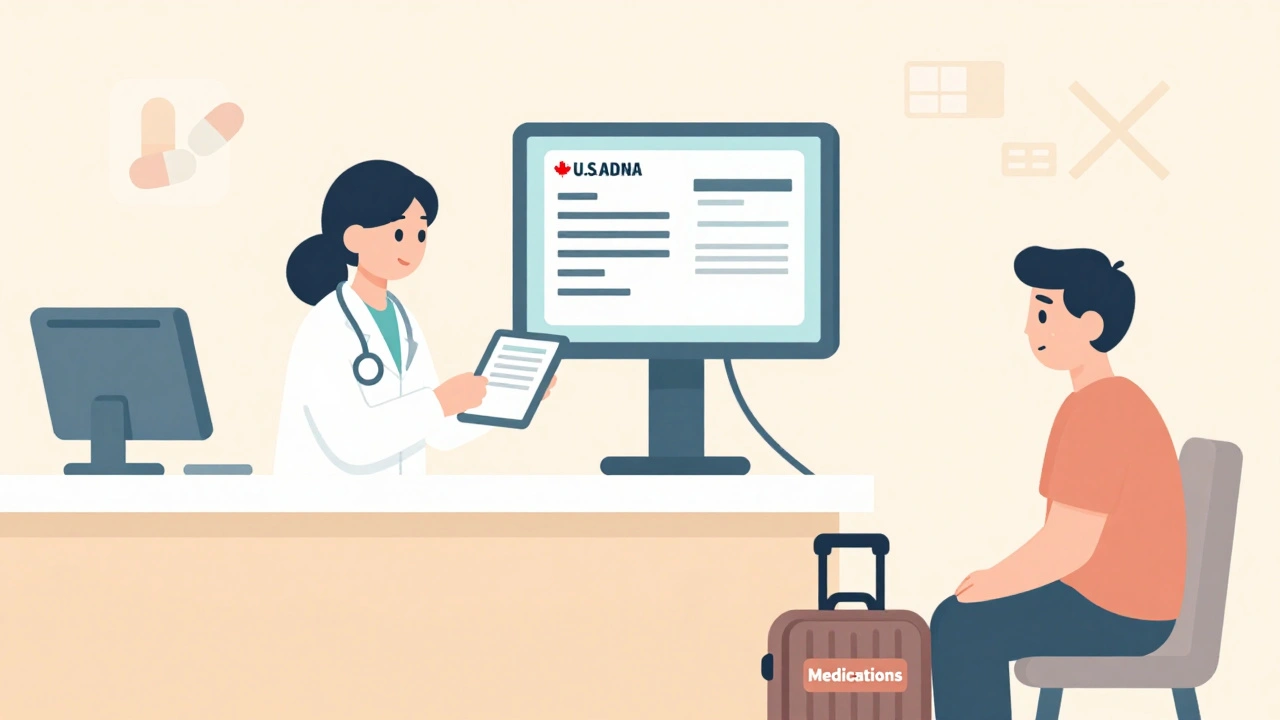
Other Countries: The Hidden Rules
Traveling to China, the UAE, or Saudi Arabia? You’re entering a minefield. In China, many medications considered legal in the U.S. are classified as controlled substances. Even common drugs like pseudoephedrine (in cold medicine) or melatonin are restricted. You need:- A letter from your doctor in English and Chinese (translated by a certified translator)
- A copy of your prescription with the doctor’s stamp
- A statement that the medication is for personal use during your trip
What You Should Do Before You Leave
Don’t wait until you’re overseas to figure this out. Start at least two weeks before you travel. Here’s your checklist:- Get a letter from your doctor-on letterhead, signed, with your diagnosis, medication name (generic preferred), dosage, and reason for travel.
- Carry original prescriptions-in the original bottles, with pharmacy labels intact.
- Know your medication’s generic name-brand names vary by country. Use resources like the WHO’s International Nonproprietary Names (INN) list.
- Check your destination’s rules-visit the U.S. State Department’s travel site or contact the embassy. Some countries have online lists of banned medications.
- Bring extra supply-at least 14 days more than you think you’ll need. Delays happen.
- Don’t rely on mail-shipping medication internationally is almost always illegal, even for personal use.
What Not to Do
Avoid these common mistakes:- Don’t try to buy medication abroad without a prescription-you risk counterfeit drugs, legal trouble, or dangerous interactions.
- Don’t split pills-some medications (like blood thinners or antidepressants) are extremely sensitive to dosage changes.
- Don’t assume your insurance covers it-most U.S. plans won’t pay for prescriptions filled overseas.
- Don’t carry more than a 90-day supply-even if you’re allowed to bring it, carrying more raises red flags with customs.
When All Else Fails: Local Doctors
If you’re stuck overseas and out of medication, your best option is to see a local doctor. Many countries have walk-in clinics for travelers. Bring your original prescription and doctor’s letter. Explain your condition and medication needs. In many cases, the doctor will write a new prescription based on your documentation. It’s not ideal, but it’s legal and safe. This is how millions of expats and long-term travelers manage their care.The Bigger Picture: Why This System Is Broken
There’s no global standard for prescription transfers. The EU has one. The U.S. has rules for domestic transfers only. Canada has its own provincial system. China, Japan, and the Middle East have their own lists of controlled substances. The DEA’s 2023 rule allowed electronic transfers between U.S. pharmacies-but explicitly excluded international ones. The FDA says importing drugs is illegal, but quietly allows 90-day supplies. It’s a mess. Patient advocacy groups point out that this system hurts frequent travelers, military families, retirees living abroad, and people with chronic conditions. Yet no major country is pushing for change. The pharmaceutical industry doesn’t want it-too many legal and liability risks. So until global standards emerge, you’re stuck navigating this alone. But you’re not powerless.Final Tip: Use Trusted Resources
You don’t need to guess. Use these tools:- U.S. State Department Travel Advisories-check the “Health” section for each country.
- PharmacyChecker.com-for Canada and some other countries, they list pharmacies that help with cosigning.
- MedAire-a travel health service that offers consultations (around $150) to review your meds and destination rules.
- World Health Organization’s INN Database-to find the generic name of your drug.
Can I transfer my U.S. prescription to a pharmacy in Canada?
No, U.S. pharmacies cannot directly transfer prescriptions to Canadian pharmacies due to regulatory differences. Instead, you must go through a “cosigning” process: a Canadian pharmacist contacts your U.S. doctor, reviews your medical history, and issues a new Canadian prescription. This can take 5-10 business days, so plan ahead.
Is it legal to bring prescription drugs into the U.S. from another country?
Under U.S. federal law, importing prescription drugs for personal use is technically illegal. However, the FDA exercises enforcement discretion and typically allows travelers to bring in a 90-day supply of medication for personal use-especially if it’s for a chronic condition and the drug isn’t available in the U.S. Always carry the original prescription and a doctor’s letter.
What if I run out of medication while traveling in Europe?
If you’re in an EU country, your original prescription is usually valid. Take the paper prescription (not just a copy), the original bottle, and a doctor’s letter to any pharmacy. They’ll fill it using the generic drug name. Brand names may differ, but the active ingredient will be the same. Keep in mind: some medications may not be available in every country, even within the EU.
Can I mail my prescription to a foreign pharmacy?
No. Mailing prescription medications across international borders is almost always illegal. Even if the pharmacy says they’ll accept it, customs agencies in both countries can seize the package. Always carry your medication with you in your luggage, in original containers, with documentation.
Which countries have the strictest rules on prescription medications?
China, Japan, the United Arab Emirates, Saudi Arabia, and Singapore have some of the strictest rules. Many common U.S. medications-including certain painkillers, ADHD drugs, and sleep aids-are classified as controlled substances there. Always check the destination country’s customs website or contact their embassy before you travel. Some require pre-approval or a local prescription, even for short stays.
Should I carry a doctor’s letter when traveling with prescription meds?
Yes. Always carry a letter from your doctor on official letterhead. It should include your name, diagnosis, medication name (generic preferred), dosage, and reason for travel. This helps avoid delays at customs and makes it easier to refill abroad. Some countries require it by law.


Rupa DasGupta
December 5, 2025 AT 16:52Marvin Gordon
December 5, 2025 AT 22:37ashlie perry
December 7, 2025 AT 11:20Jennifer Patrician
December 8, 2025 AT 12:51Mellissa Landrum
December 8, 2025 AT 18:26Mark Curry
December 10, 2025 AT 10:19Lynette Myles
December 12, 2025 AT 09:41Annie Grajewski
December 13, 2025 AT 15:40Jimmy Jude
December 15, 2025 AT 07:20Juliet Morgan
December 17, 2025 AT 04:33Norene Fulwiler
December 17, 2025 AT 09:01William Chin
December 17, 2025 AT 17:35Ada Maklagina
December 17, 2025 AT 23:19Mark Ziegenbein
December 19, 2025 AT 19:52