St. John’s Wort Interaction Risk Estimator
Select options and click Assess to see potential drug level impacts.
Imagine taking your daily medication with perfect consistency, only to watch your viral load spike because of a herbal supplement you bought at the grocery store. It sounds like a nightmare scenario, but for people living with HIV who take protease inhibitors a class of antiretroviral drugs that block the enzyme responsible for cutting viral proteins, preventing new virus particles from maturing, this is a very real risk when combined with St. John’s Wort a common herbal supplement used primarily for mild depression and anxiety. This isn't just a minor side effect; it is a documented cause of therapeutic failure.
The combination of these two substances creates a dangerous gap in treatment. You might feel fine, but inside your body, the levels of your HIV medication are dropping so low that the virus starts replicating again. This leads to drug resistance, which can lock you out of entire classes of life-saving treatments. Understanding why this happens-and how to avoid it-is critical for anyone managing HIV therapy.
The Mechanism: How St. John’s Wort Steals Your Medication
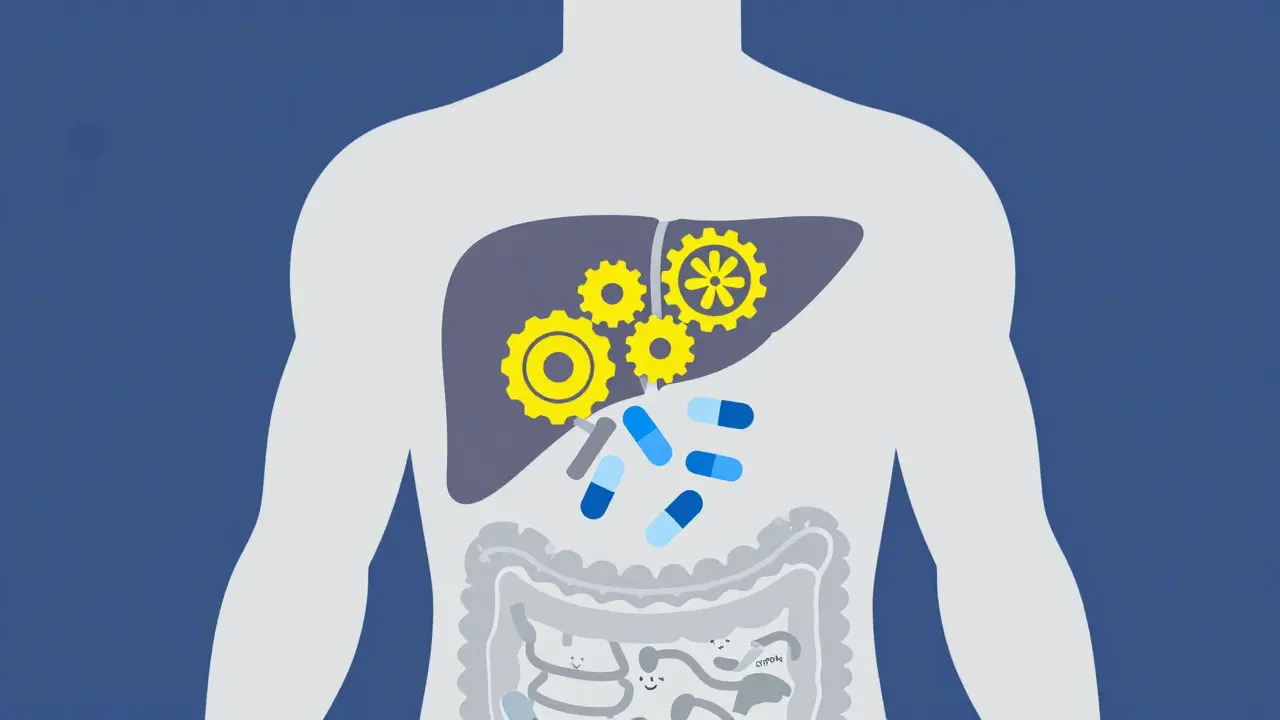
To understand why this interaction is so severe, we need to look at what happens in your liver and gut. Protease inhibitors rely on specific enzymes to stay in your system long enough to work. The main enzyme involved here is CYP3A4 a cytochrome P450 enzyme found in the liver and intestinal wall that metabolizes many drugs. Under normal circumstances, CYP3A4 breaks down medications at a steady rate.
St. John’s Wort contains a compound called hyperforin the primary active constituent in Hypericum perforatum responsible for its antidepressant effects and drug interactions. Hyperforin is a potent inducer. When you take St. John’s Wort, hyperforin signals your body to produce *more* CYP3A4 enzymes and more P-glycoprotein a transporter protein that pumps foreign substances, including drugs, out of cells. Think of it like adding extra drain holes to a bathtub. Instead of the water (your medication) staying in the tub long enough to soak you, it drains away rapidly.
This accelerated metabolism means your body clears protease inhibitors before they can do their job. Research published in *Drug Safety* by Marcus Mannel showed that standard doses of St. John’s Wort reduced the area under the curve (AUC) of indinavir by 57% and the maximum plasma concentration by 81%. In plain English, your body had less than half the amount of medicine it needed to fight the virus.
The Consequence: Virologic Failure and Resistance
When drug levels drop this significantly, the result is rarely subtle. The University of Liverpool’s HIV Drug Interactions database, updated in October 2025, classifies this interaction as "Do Not Co-administer." Why? Because sub-therapeutic levels lead to virologic failure.
If the protease inhibitor concentration falls below the effective threshold, HIV begins to replicate. But here is the danger: the virus doesn’t just come back; it evolves. Low levels of medication create selective pressure, allowing resistant strains of HIV to survive and multiply. Once resistance develops to one protease inhibitor, it often spreads to others in the same class due to cross-resistance. This limits your future treatment options drastically.
A study from the University of North Carolina involving 2,450 HIV patients found that 8.3% had detectable hyperforin levels despite being prescribed protease inhibitors. Of those, 3.1% experienced virologic failure directly linked to this interaction. Based on CDC data from 2023, this translates to roughly 27,000 potential cases of therapeutic failure annually in the United States alone. These aren't hypothetical risks; they are preventable medical crises happening right now.
| Metric | Standard St. John’s Wort | Low-Hyperforin Formulation |
|---|---|---|
| Reduction in AUC (Exposure) | Up to 57% | Approximately 12.3% |
| Reduction in Cmax (Peak Level) | Up to 81% | Minimal clinical impact |
| Risk of Resistance | High | Low (with monitoring) |
| FDA Labeling Status | Contraindicated | Not explicitly approved, but monitored |
The Nuance: Standard vs. Low-Hyperforin Products
For years, the advice was absolute: never mix them. However, science has evolved. In 2021, researchers identified that not all St. John’s Wort products are created equal. The key variable is the hyperforin content. Standard extracts contain 2-5% hyperforin, which drives the dangerous enzyme induction.
Newer formulations exist that limit hyperforin to less than 1 mg per daily dose. According to the University of Liverpool’s database, coadministration *may* be considered with these specific low-hyperforin products. Studies show these versions reduce lopinavir exposure by only about 12.3%, which is often within acceptable therapeutic ranges. This is a game-changer for patients who need both HIV treatment and depression management.
But there is a catch. The FDA’s 2022 Dietary Supplement Database revealed that only 37% of St. John’s Wort products accurately disclose their hyperforin content on the label. Most bottles simply say "St. John’s Wort Extract" without specifying the active ingredient breakdown. If you buy a bottle off the shelf, you have no way of knowing if it contains the dangerous high-hyperforin version or the safer low-hyperforin version. Relying on guesswork is not an option when your health is at stake.

The Washout Period: It Doesn’t Stop Immediately
Many patients think that stopping St. John’s Wort fixes the problem instantly. It does not. The enzyme-inducing effect of hyperforin persists for at least 14 days after you stop taking the supplement. Your body keeps producing excess CYP3A4 enzymes during this window.
If you are already on protease inhibitors and decide to start St. John’s Wort, you must wait. If you are on St. John’s Wort and starting protease inhibitors, you need a washout period. The University of Liverpool recommends stopping St. John’s Wort and checking viral levels. During the two-week washout, your protease inhibitor levels may actually rise as the enzyme induction fades, potentially requiring dose adjustments to avoid toxicity. This transition requires close monitoring by your healthcare provider.
Safer Alternatives for Depression Management
You don’t have to choose between mental health and viral suppression. There are many antidepressants that do not interact with protease inhibitors. Selective serotonin reuptake inhibitors (SSRIs) like sertraline or citalopram are often preferred because they have fewer metabolic interactions compared to other classes. Tricyclic antidepressants and MAOIs generally carry higher risks of interaction and should be avoided or used with extreme caution.
Always consult your prescriber or pharmacist before adding any supplement or medication. Even if a product isn’t listed in a database, individual variations in metabolism can make interactions unpredictable. The International Association of Providers of AIDS Care issued guidelines in 2024 recommending that clinicians ask about St. John’s Wort use at every visit. Make sure your doctor knows exactly what supplements you are taking.
Can I take St. John’s Wort with any HIV medication?
No. St. John’s Wort interacts dangerously with protease inhibitors and non-nucleoside reverse transcriptase inhibitors (NNRTIs). It induces enzymes that clear these drugs from your body too quickly, leading to treatment failure. Always check with your doctor before combining any herbal supplement with HIV therapy.
How long does the interaction last after stopping St. John’s Wort?
The enzyme-inducing effects persist for at least 14 days after cessation. You should not assume your medication levels are stable immediately after stopping the supplement. Close monitoring of viral loads and drug levels is required during this washout period.
Are all St. John’s Wort products equally dangerous?
Not necessarily. Standard formulations with 2-5% hyperforin are highly risky. However, specialized low-hyperforin formulations (≤1 mg/day) present a much lower risk. The problem is that most commercial products do not clearly state their hyperforin content, making it difficult to verify safety without professional guidance.
What are the signs of therapeutic failure due to this interaction?
You may not feel physically different initially. The primary sign is a rising viral load detected through routine blood tests. Over time, this can lead to drug resistance, where your current HIV medications stop working entirely. Regular monitoring is the only way to catch this early.
What should I do if I’ve been taking both?
Contact your healthcare provider immediately. Do not stop either medication abruptly without medical advice. Your doctor will likely recommend stopping St. John’s Wort, monitoring your viral load, and possibly adjusting your HIV medication dosage during the two-week washout period.