
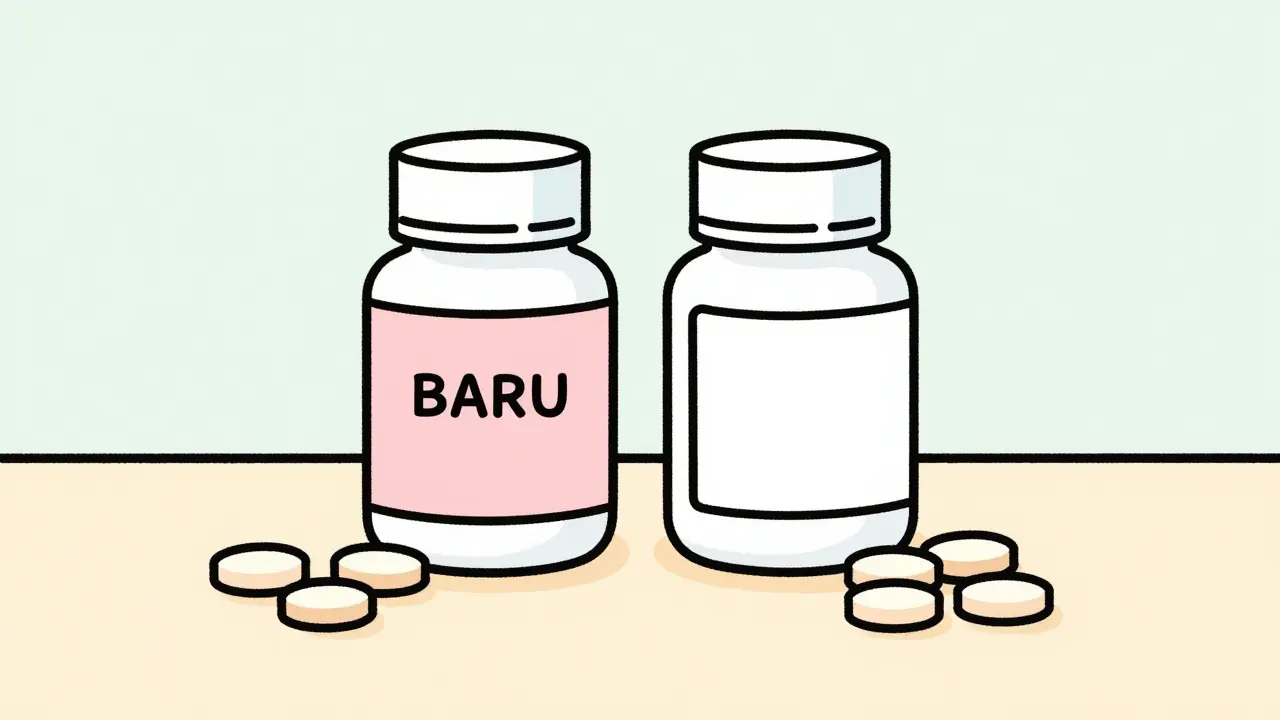
When a brand-name drug loses patent protection, patients and pharmacies often expect a sudden drop in price thanks to generic versions. But sometimes, the first generic on the shelf isn’t what you think. It might be an authorized generic - identical to the brand, just with a different label. These aren’t the typical generics you’ve heard about. They’re made by the same company that makes the brand drug, using the exact same ingredients, same factory, same process. The only difference? The box says something else.
What Exactly Is an Authorized Generic?
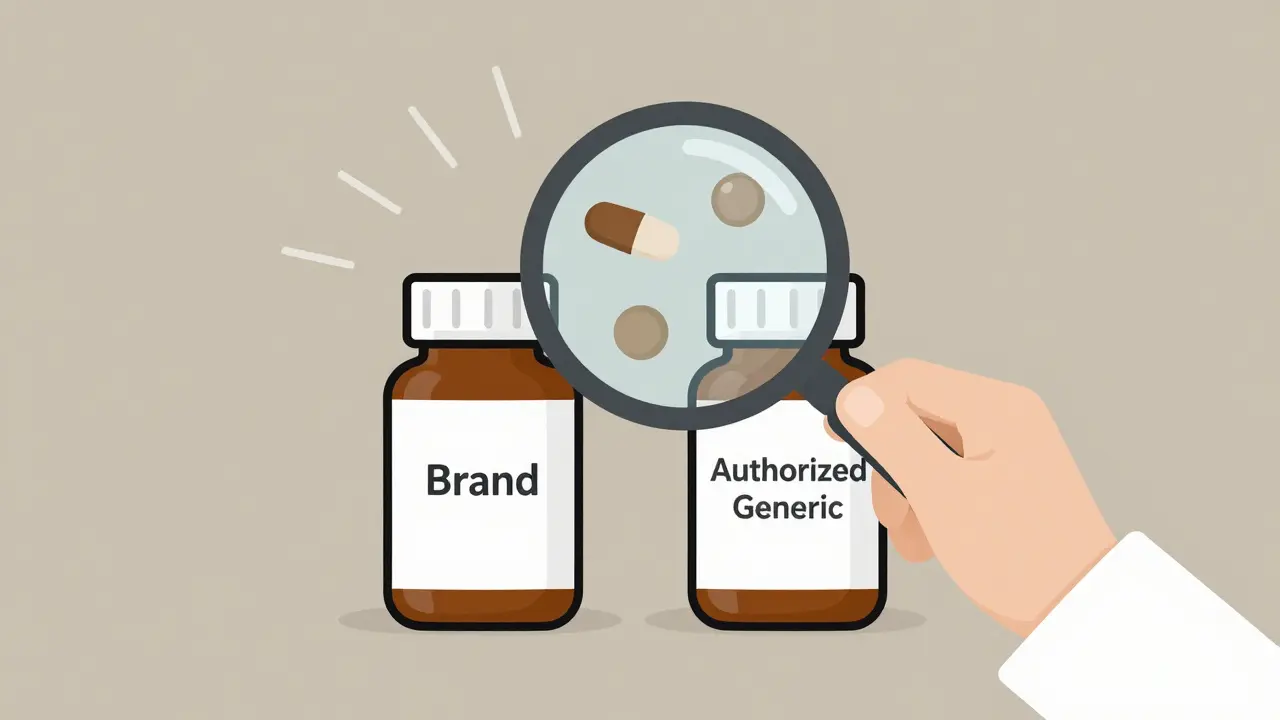
An authorized generic is not a copy. It’s the real thing, sold under a different name. The FDA defines it as a drug approved under a New Drug Application (NDA) - the same one used by the brand - but marketed with different labeling, packaging, or trade name. Think of it like a car manufacturer selling the same model under two different dealership brands. Same engine, same parts, same assembly line. Just a different badge.
Unlike traditional generics, which must prove they’re bioequivalent through an Abbreviated New Drug Application (ANDA), authorized generics skip that step entirely. They don’t need to test absorption rates or compare blood levels. Why? Because they’re the same drug. The FDA lists them as therapeutically equivalent with an “A” rating in the Orange Book. That means pharmacists can substitute them without any clinical concern.
For patients, this matters. A 2024 study in JAMA Internal Medicine found that 15-20% of patients switched to authorized generics reported no change in effectiveness or side effects - compared to only 8-12% for traditional generics. Why? Because traditional generics can have different inactive ingredients. Fillers, dyes, binders. For most people, that’s fine. But for those on narrow therapeutic index drugs - like warfarin, levothyroxine, or seizure medications - even tiny changes can cause problems. Authorized generics remove that risk.
Why Are There So Few New Authorized Generics Now?
Back in 2022, the FDA approved 37 new authorized generics. In 2025? Only 12. That’s a 68% drop. What changed?
The Federal Trade Commission (FTC) started cracking down on “pay-for-delay” deals. For years, brand companies would pay generic manufacturers to delay launching their versions. In return, the brand would launch its own authorized generic - undercutting the competition while still keeping most of the profit. The FTC called it anti-competitive. In 2023, Teva paid $1.2 billion to settle claims over its manipulation of Copaxone’s market. Since then, companies have backed off.
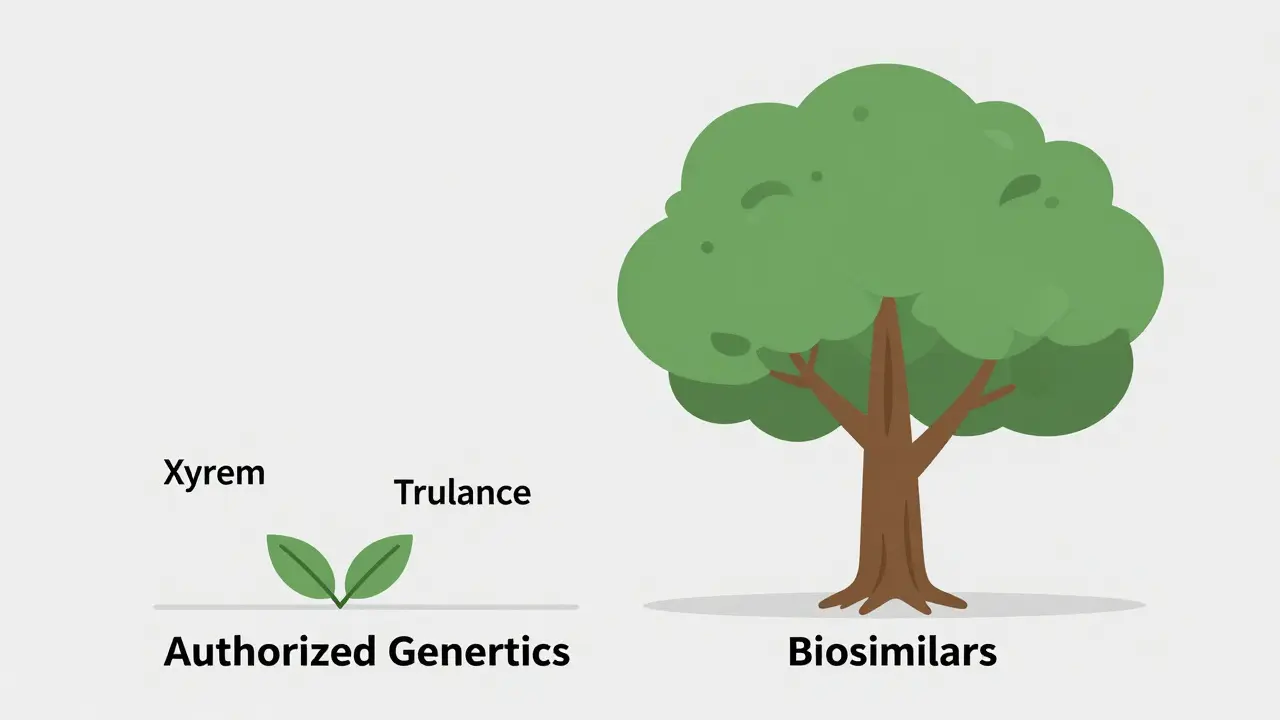
Instead of launching authorized generics, many brand companies now focus on biosimilars. Take Stelara (ustekinumab). When its patent expired, five biosimilars hit the market in 2025 - Otulfi, Selarsdi, Yesintek, Pyzchiva, and another. These aren’t authorized generics. They’re made by different companies, use different manufacturing processes, and require years of clinical testing. But they’re cheaper than the brand, and they don’t trigger FTC scrutiny.
The result? Authorized generics are becoming a relic of a bygone strategy. The FDA’s October 2025 update added just two new entries: a version of Xyrem (sodium oxybate) from Jazz Pharmaceuticals and a version of Trulance (plecanatide) from Ironwood. That’s it. For the rest of the year, no new ones.
What Authorized Generics Are Available Right Now?
As of October 2025, the FDA lists 1,247 authorized generics. Most are in three categories: cardiovascular (22%), central nervous system (18%), and metabolic drugs (15%). Here are some current options you might actually encounter:
- Simvastatin - Authorized generic of Zocor. Available at most pharmacies for under $10 a month.
- Lisinopril - Authorized generic of Prinivil or Zestril. Often priced the same as traditional generics, but with no formulation changes.
- Metformin - Authorized generic of Glucophage. Some patients report fewer GI side effects compared to traditional versions.
- Pregabalin - Authorized generic of Lyrica. On Drugs.com, 68% of users say it works just like the brand. But 78% say it’s only $5 cheaper - not the 80% discount you’d expect from a true generic.
- Sertraline - Authorized generic of Zoloft. Pharmacists on Reddit report fewer patient complaints about mood swings or insomnia when switching to this version.
These aren’t new. Most have been on the market for years. The key point: if you’re on one of these, you’re getting the exact same drug as the brand. No guesswork. No risk.
Why Don’t More People Know About Them?
Because they’re not marketed. No ads. No brochures. No patient support programs. The brand company doesn’t want you to know it’s the same drug - they’d rather sell you the expensive version. Pharmacies rarely flag them on the shelf. And many pharmacists can’t tell the difference without checking the Orange Book.
A 2025 survey of 2,345 pharmacists found 63% couldn’t reliably identify an authorized generic just by looking at the bottle. That means patients often get counseling they don’t need - or worse, they’re switched to a traditional generic without realizing there’s a better option.
Some insurers make it worse. Blue Cross Blue Shield recently stopped covering the authorized generic of Jardiance - even though it’s chemically identical - because their pharmacy benefit manager (PBM) got a bigger rebate on the traditional generic. So patients had to go back to the brand, paying $400 a month instead of $35. The authorized generic? Still available. But not covered.
Are Authorized Generics Cheaper?
Here’s the catch: they’re not always cheap. Because they’re made by the brand company, they often cost only 10-15% less than the original. Traditional generics? Sometimes 80% cheaper. That’s why authorized generics aren’t always the best deal.
But price isn’t everything. For patients on critical medications - like anticoagulants, epilepsy drugs, or immunosuppressants - consistency matters more than savings. A study in Health Affairs found that patients switched from brand to traditional generic for cost reasons were 22% more likely to be readmitted within 90 days due to side effects or loss of control. The same patients switched to an authorized generic? No increase in readmissions.
So if you’re stable on a brand drug and your insurance starts pushing you to a generic, ask: “Is there an authorized generic?” If yes, and you’re worried about side effects, it might be worth the extra few dollars.
What’s Next for Authorized Generics?
The future looks dim. The pending RELIEF Act (H.R. 4086), introduced in May 2025, would force authorized generics to match the price of traditional generics. That would remove the financial incentive for brand companies to make them. Evaluate Pharma predicts authorized generics will drop to under 5% of all generic entries by 2027.
But they’re not disappearing entirely. Experts like Dr. Aaron Kesselheim at Harvard argue they’re still vital for drugs where small formulation changes can be dangerous. “They’re an underutilized safety tool,” he says. “We should be expanding them, not eliminating them.”
For now, if you’re on a medication with a narrow therapeutic window - or if you’ve had bad reactions to traditional generics - ask your pharmacist: “Is there an authorized generic?” Check the FDA’s list. Ask your doctor to write “Dispense as Written” if you need the exact formulation. Don’t assume all generics are the same. Some are. Some aren’t. And the difference can matter.
Are authorized generics the same as the brand-name drug?
Yes. Authorized generics are manufactured by the same company as the brand-name drug, using the exact same active and inactive ingredients, in the same facility, under the same process. The only difference is the label and packaging. The FDA considers them therapeutically equivalent.
Why are authorized generics more expensive than regular generics?
Because they’re made by the brand company, they don’t face the same price competition as traditional generics. Traditional generics come from multiple manufacturers competing on cost. Authorized generics are often priced only 10-15% below the brand, while traditional generics can be 80% cheaper. The brand company uses authorized generics to retain market share, not to offer deep discounts.
How do I know if my prescription is an authorized generic?
Check the label. Authorized generics don’t always say “authorized generic” on the bottle. Look up the drug’s brand name and manufacturer on the FDA’s Authorized Generics list. You can also ask your pharmacist to check the Orange Book. Some pharmacies list them as “Same as Brand” or “Brand Equivalent.” If in doubt, call the manufacturer’s customer service line - they’ll confirm if it’s the same product.
Can my insurance deny coverage for an authorized generic?
Yes. Even though authorized generics are identical to the brand, insurance companies and pharmacy benefit managers (PBMs) often prefer traditional generics because they get larger rebates. Some insurers have removed authorized generics from their formularies entirely, forcing patients back to the brand or to a cheaper traditional generic - even if the patient did better on the authorized version.
Are authorized generics better for people with allergies or sensitivities?
They can be. Traditional generics sometimes use different inactive ingredients - dyes, fillers, preservatives - that can trigger reactions in sensitive patients. Authorized generics use the exact same inactive ingredients as the brand, so if you’ve had a reaction to a traditional generic, switching to the authorized version may solve the problem. Always discuss this with your doctor before switching.
Why aren’t there more authorized generics being approved now?
The FTC has cracked down on brand companies using authorized generics to delay competition. In the past, companies would launch an authorized generic to undercut real generics - a tactic called “product hopping.” After legal actions and settlements, including the $1.2 billion case against Teva, most companies have stopped. Now, they focus on biosimilars instead, which are legally distinct and not subject to the same scrutiny.


James Hilton
December 28, 2025 AT 12:58Meanwhile, my grandma’s insulin costs more than my car payment. Thanks, capitalism.
Mimi Bos
December 29, 2025 AT 18:27Payton Daily
December 30, 2025 AT 21:19They don’t want you to know. They don’t want you to ask. They want you to swallow the pill - and the lie - without a second thought.
Kelsey Youmans
December 31, 2025 AT 09:49Sydney Lee
December 31, 2025 AT 16:35And don’t get me started on PBMs. These middlemen are the real villains. They’re not just profiteers - they’re medical saboteurs. If your insurer denies coverage for an authorized generic because they got a bigger rebate on a cheaper version? That’s not capitalism. That’s malpractice.
oluwarotimi w alaka
January 2, 2026 AT 00:55Debra Cagwin
January 2, 2026 AT 05:47Hakim Bachiri
January 3, 2026 AT 19:28Celia McTighe
January 5, 2026 AT 13:41Also - can we start a movement to get pharmacies to put a little sticker on these? Like ‘Same as Brand!’? 🥺💖
Ryan Touhill
January 5, 2026 AT 21:05Teresa Marzo Lostalé
January 6, 2026 AT 22:52ANA MARIE VALENZUELA
January 8, 2026 AT 19:32Bradly Draper
January 9, 2026 AT 18:37James Hilton
January 10, 2026 AT 00:49