
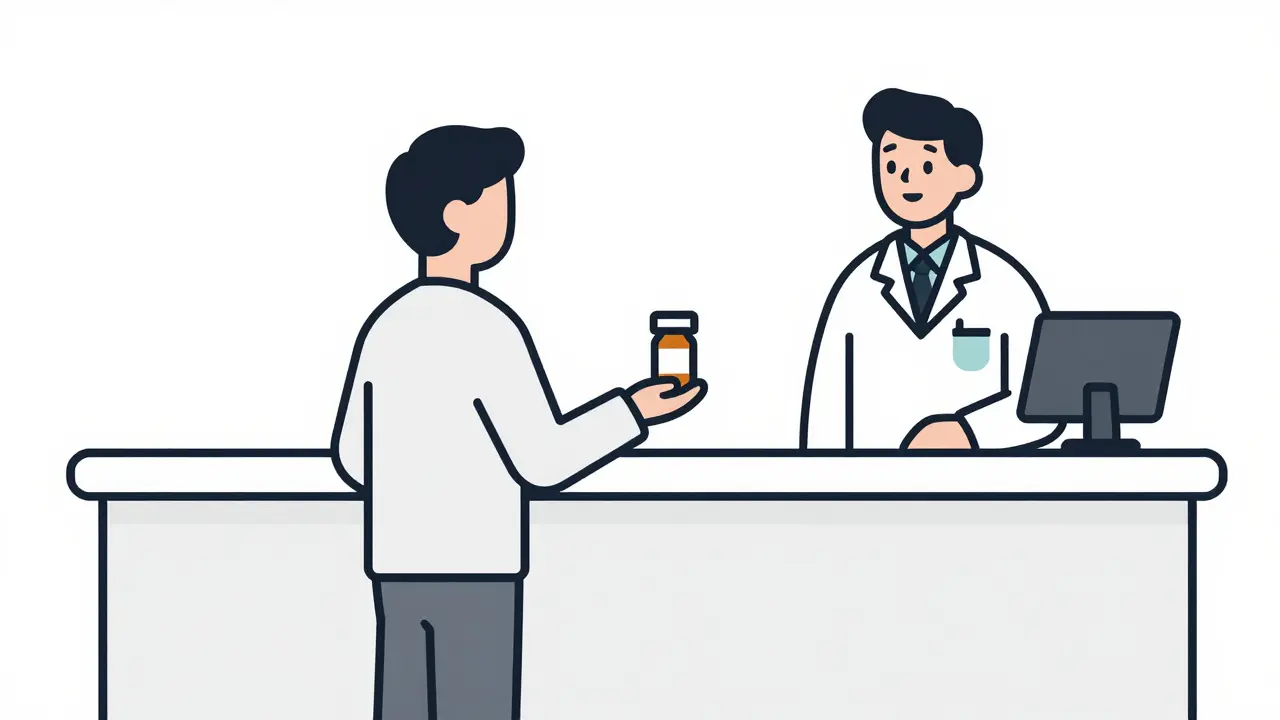
Why Your Role as the Final Checkpoint Matters
Making mistakes happens. In healthcare, specifically when medications change hands between doctors and patients, those mistakes can have real consequences. Research shows that approximately 1.5 million people face harm from medication errors annually within healthcare systems alone. While pharmacies have layers of checks, including automated systems and pharmacist reviews, you remain the ultimate safeguard. This isn't about blaming pharmacy staff; it is about recognizing that your active participation reduces medication errors by up to 37.2% when you actively verify prescriptions.
Prescription Verification is a critical safety measure designed to prevent medication errors that affect approximately 1.5 million people annually. By taking ownership of this process, you transform from a passive recipient of care into an active partner in your health journey. Whether you are picking up a routine blood pressure pill or a new controlled substance, the moment you receive the medication is your opportunity to ensure everything matches exactly what you expect.
The Seven Critical Elements of Verification
A quick glance at a bottle isn't enough. You need a systematic approach to catch issues before they leave the counter. Health organizations suggest focusing on seven specific areas. Each one addresses a common way things go wrong, such as dosage errors which represent roughly 34.6% of all prescription mistakes.
- Personal Information: Check that your full legal name and date of birth match the label. Using two identifiers ensures the medication belongs to you and not a neighbor with a similar name.
- National Drug Code (NDC): Every legitimate medication has a unique code. Verifying this number against manufacturer databases catches about 8.3% of errors where the wrong medication was dispensed despite correct labeling.
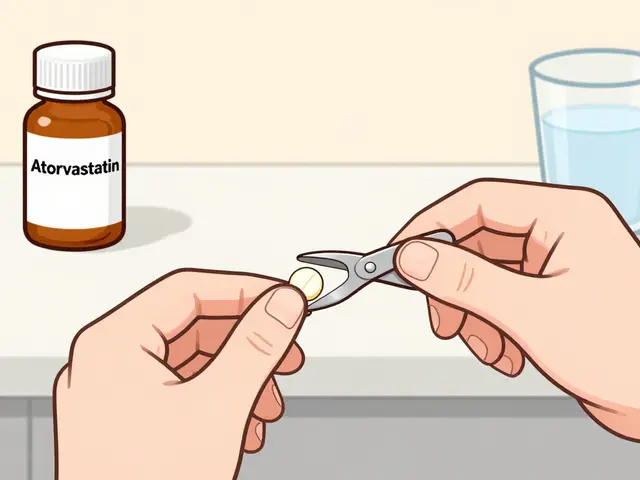
- Dosage Strength and Formulation: Is the tablet 10mg instead of 50mg? Did you receive the liquid instead of the capsule? Confirming strength prevents underdosing or overdosing risks.
- Quantity Dispensed: Count the pills or check the volume immediately. Data shows 9.2% of errors involve incorrect quantities, often leading to running out of life-saving drugs early.
- Administration Instructions: Read the directions aloud. Are abbreviations clear? Does it say 'take twice daily' or 'once daily'? Unclear instructions lead to nearly 19% of medication errors.
- Expiration Date and Packaging: Inspect the bottle seal and the printed expiry date. Expired products lose efficacy and can cause unexpected reactions.
- Controlled Substances: For stronger medications, extra vigilance is required regarding address verification and prescription legitimacy per regulatory guidelines.
| Element to Check | Common Error Rate | Action Required |
|---|---|---|
| Dosage Strength | 34.6% | Compare physical pills to expected strength |
| Medication Selection | 8.3% | Verify National Drug Code |
| Instructions | 18.7% | Ask pharmacist to explain abbreviations |
| Quantity | 9.2% | Count tablets immediately upon pickup |
Implementing a 3-Minute Safety Routine
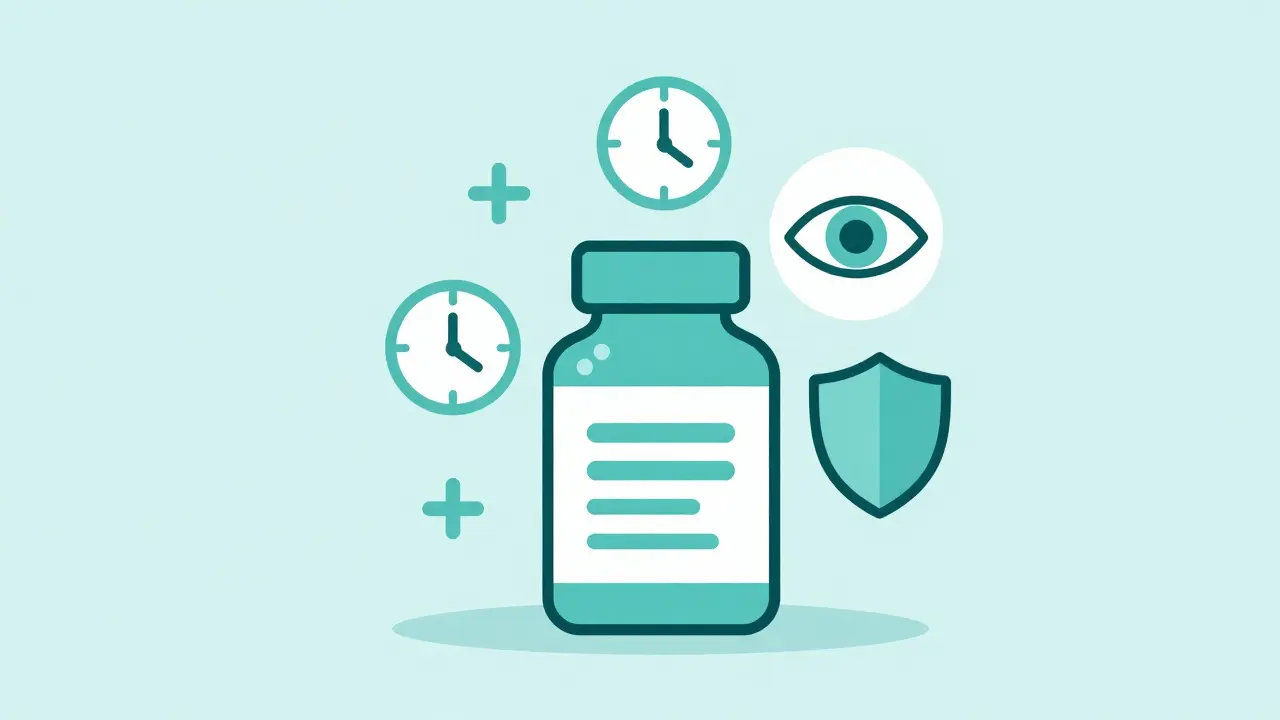
You might wonder how long this takes. It doesn't require minutes of staring at the counter. Industry protocols recommend spending 90 seconds examining the label, 60 seconds reviewing the physical medication, and 30 seconds confirming understanding. This short investment saves significant time and potential hospital visits later. When you arrive at the counter, don't rush. If the print is small, ask for a magnifying glass or use your smartphone camera to zoom in on the details. Studies indicate over 60% of older adults struggle with small print, which is a major reason errors slip through.
It is vital to distinguish between brand names and generic versions. Confusion here affects nearly 40% of first-time prescriptions. Even if the drug looks different because it is generic, the strength must match. Do not assume the color or shape guarantees correctness; always read the text. Furthermore, asking "What does this look like?" before leaving allows the pharmacist to show you the unlabelled medicine inside the bag, adding another visual layer of confirmation.
Questions That Save Lives
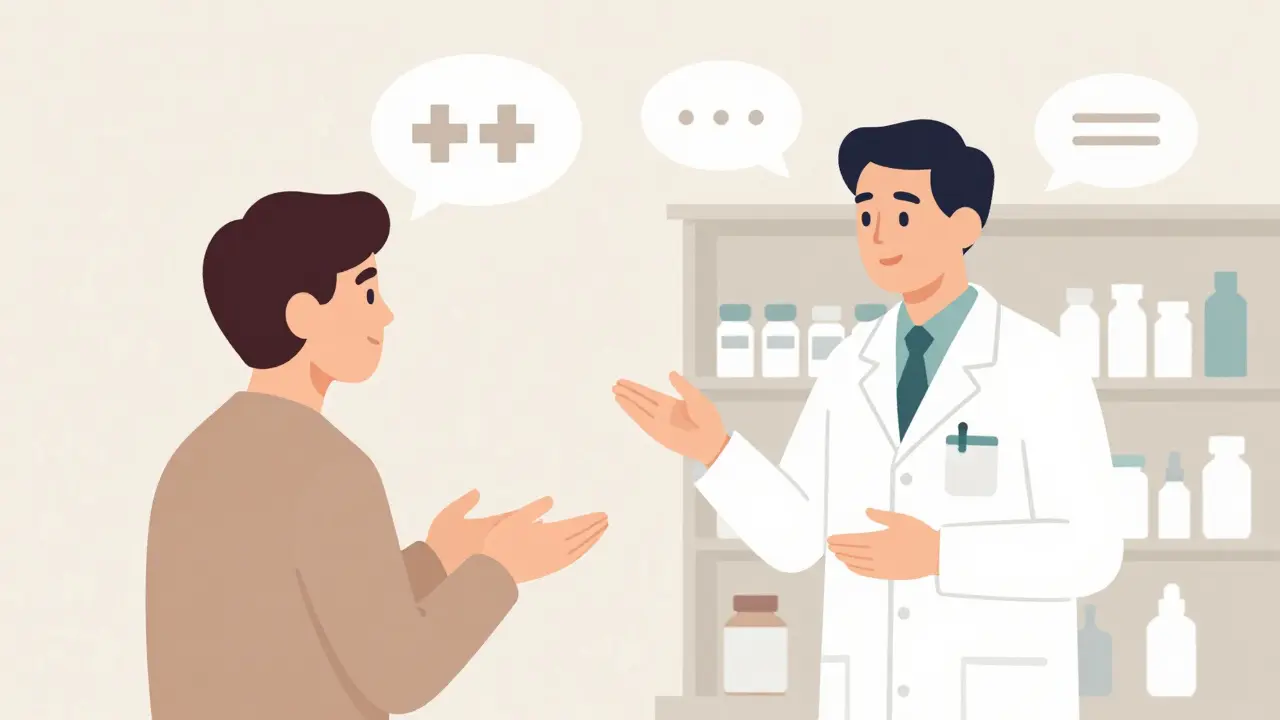
Silence can be dangerous. Pharmacists report that 78.4% consider patient verification essential to their own safety protocols. Most of them want you to ask questions. To get the most out of this interaction, prepare three specific queries before you walk in. First, ask exactly what the medication treats. Second, clarify how and when to take it relative to food or other drugs. Third, request a list of side effects to watch for. These inquiries align with consumer medication guides recommended by federal health bodies.
If something feels off, speak up immediately. Some patients worry about seeming difficult, but catching an error is far more important than saving face. Pharmacy staff are trained to handle corrections calmly. In fact, positive reviews for pharmacies often mention staff who encourage verification, suggesting that good providers welcome your scrutiny.
Technology and Future Safety Tools
The landscape of Pharmacy Technology is evolving rapidly to assist patients. Barcode verification systems are now used in over 87% of pharmacy locations, drastically reducing product identification errors. Some chains have installed patient verification stations with tablets that let you scan barcodes to view images of the medication before collection. Looking ahead, augmented reality applications are being piloted to allow smartphones to authenticate pills instantly. These tools complement human checks but do not replace the need for you to understand what you are buying.
Mail-order and digital pharmacies introduce unique challenges. Telehealth prescriptions carry slightly higher error rates compared to in-person visits due to the lack of immediate physical verification. When using these services, ensure you receive the medication in person whenever possible for the initial fill, or video call your provider to visually confirm the packaging before opening.
Handling Discovery of an Error
What happens if you find a mistake after getting home? Stay calm and contact the pharmacy immediately. Do not take a single dose until clarification is received. Document the discrepancy by taking photos of the label and the pills if you have already opened them. While most errors are corrected quickly, knowing your rights and reporting the incident contributes to broader safety improvements. Remember, every dollar invested in patient verification yields significant savings in avoided medical costs, proving that your time spent checking is a high-value activity.
Is it normal to check my prescription every time I pick it up?
Yes, checking every time is considered standard safety practice. Habits can change, and even experienced pharmacists appreciate the final check. Consistent verification helps catch rare system glitches or transcription errors.
What if the label is too small to read?
Most pharmacies provide magnifying glasses upon request. Alternatively, use your phone's camera zoom function or ask the pharmacist to read the instructions aloud to you during the handover.
Do I need to count the pills myself?
Counting is highly recommended, especially for new prescriptions. Approximately 22.8% of quantity errors involve missing tablets that are noticeable upon an initial count.
Can generic medications look different than before?
Absolutely. Generics may differ in size, shape, or color while containing the same active ingredient. Always verify the drug name and strength rather than relying on appearance.
What should I do if I suspect a medication error?
Stop taking the medication immediately. Contact the pharmacy that dispensed it right away to report the issue. Keep the bottle and any remaining medication for review by the pharmacist.

Julian Soro
April 2, 2026 AT 11:13This is honestly such a great reminder for everyone here. It is scary how easy it is to just grab the bag and leave without looking twice. I always forget to check the expiration date until I get home and open the bottle. Thanks for posting this checklist it really helps simplify the process. We should all spend that extra minute to stay safe from bad batches.
Christopher Beeson
April 3, 2026 AT 06:51The statistics presented here are certainly compelling yet one must consider who benefits from shifting the burden of care. When patients become auditors does this inadvertently erode trust in the medical profession itself. It feels like a subtle transfer of liability from the institution to the individual consumer. Safety is paramount but constant verification places stress on an already fragile relationship. Are we meant to police our own survival or rely on established standards?
Eleanor Black
April 4, 2026 AT 21:57I remember clearly when my grandmother fell victim to a dispensing error back in the nineties. She was taking something simple for heartburn but received a different medication entirely instead. It took us three weeks before we realized why she felt so lightheaded every morning after breakfast. We found the label mismatched during a routine checkup with her cardiologist who noticed the discrepancy immediately. Fortunately she recovered well but that terrifying experience changed how our entire family handles prescriptions forever. Now we bring a written list of every single medication we take to every appointment regardless of urgency. It feels awkward sometimes standing there while the pharmacist counts pills in front of you under scrutiny. Yet knowing that your life depends on accuracy makes that temporary discomfort feel absolutely necessary to endure. Many people I talk to say they are too shy to question the professionals in white coats at the counter. I completely understand that hesitation because authority figures can intimidate even the most confident person easily. But silence is truly what allows these dangerous errors to slip through the cracks of the system unnoticed. I hope everyone reading this realizes their voice matters more than their politeness ever could possibly matter. Please do not wait until you or a loved one gets hurt by preventable mistakes happening in the background. Take those ninety seconds recommended in the article and look directly at the bottle seal and pills inside. Your health is the most precious asset you own and protecting it requires vigilance every single time. Thank you for sharing such important information with all of us today. :)
Rod Farren
April 6, 2026 AT 04:40We need to standardize NDC verification across all point-of-sale interfaces to mitigate variance. The current HL7 implementation does not consistently flag discrepancies before the transaction commits. Pharmacists rely heavily on barcoding integration but manual override options create significant risk vectors. Automated validation logic must be prioritized in the backend processing layers. Clinical decision support systems need better integration with inventory management databases. Without robust API connections the user interface remains vulnerable to human error inputs. We cannot depend solely on patient vigilance when the digital architecture is compromised. Upgrading to real-time adjudication engines would close the gap significantly.
Sharon Munger
April 6, 2026 AT 12:26I am going to print this checklist out right now.
Owen Barnes
April 7, 2026 AT 16:35It is crucail that we all adhere to these safety protocls without fail. Every citizen must undertand the importance of verificaton procedures. The statiscal data proves the risks are real and present danger. We shoudl not hesitate to speak up if we see any anomolies in the packaging. Education is key to preventing futur occurences of this nature.
Molly O'Donnell
April 8, 2026 AT 16:39Most pharmacies already verify three times before handing it over. You do not need to double check if the staff knows what they are doing.
Russel Sarong
April 9, 2026 AT 16:02OMG!!!!! This post is absolutely VITAL for every single one of us!!! Think about it!!!! If you do not check your pills YOU COULD DIE!!!!!!! It is not just about the pills themselves!!! It is about the peace of mind we gain from knowing what we ingest!! The stats are terrifying!!! We MUST take control of our own health destiny!!! Do not ignore this warning!!
Callie Bartley
April 11, 2026 AT 12:06America is the only place where patients have to play detective with their medicine. Other countries handle this perfectly without making us feel paranoid. It seems like a symptom of the overall broken system rather than a helpful tip. I guess we just have to deal with the extra work ourselves unfortunately.
Jenny Gardner
April 12, 2026 AT 21:28Reading through the guidelines; they are incredibly thorough and well structured. The breakdown of the seven elements provides clear direction for verification. Ensuring the label matches the prescription; this prevents major issues later. One must pay close attention to the administration instructions as well. Clarity in communication saves lives! We should encourage this behavior universally among our community.
Arun Kumar
April 13, 2026 AT 22:13In many parts of the world; community health workers perform these checks for patients. Here we must be our own advocates and that is empowering in its own way. Sharing knowledge helps build stronger neighborhoods and safer environments. It is beautiful to see people caring for one another like this online.
Cullen Zelenka
April 15, 2026 AT 12:54Just tried this out today and the pharmacist seemed really happy I asked questions. They appreciated the effort I made to check the dosage strength myself. Hopefully this becomes a normal habit for everyone pretty soon.