
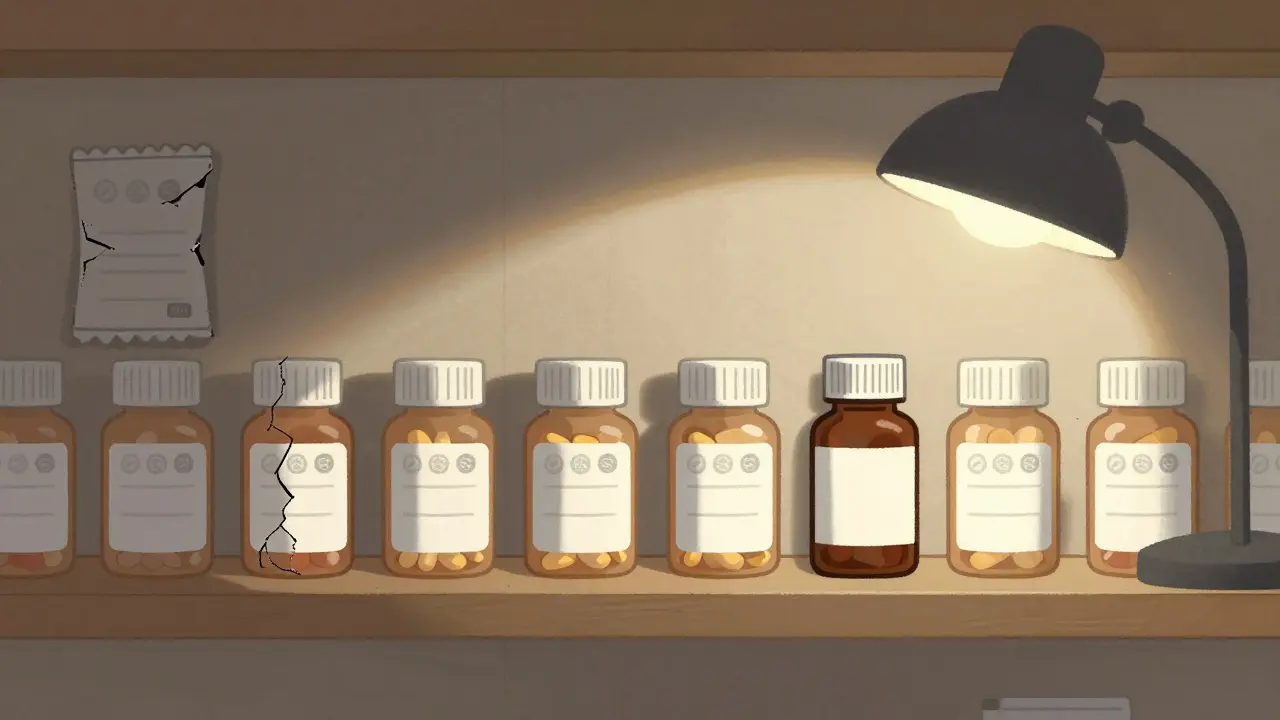
Every year, millions of people in developing nations take medicine that doesn’t work - or worse, makes them sicker. These aren’t just bad batches or expired pills. They’re counterfeit drugs, carefully packaged to look real, sold in pharmacies, clinics, and even street stalls. And they’re killing people - children, mothers, elderly patients - by the tens of thousands.
What Exactly Are Counterfeit Drugs?
The World Health Organization (WHO) breaks counterfeit medicines into two types: substandard and falsified. Substandard drugs are made by authorized manufacturers but fail quality tests - maybe they were stored wrong, expired, or made with poor ingredients. Falsified drugs are outright frauds. They’re made in secret labs, often in China, Bangladesh, or Türkiye, and designed to look exactly like real medicine. The packaging? Almost identical. The pills? Sometimes sugar, chalk, or worse.
Here’s what you might find inside a fake pill:
- No active ingredient (30% of cases) - a malaria pill with zero antimalarial drug.
- Wrong dosage (45% of cases) - too little to work, or too much and toxic.
- Harmful contaminants (25% of cases) - rat poison, antifreeze, industrial dyes.
These aren’t rare exceptions. In some parts of Africa and Southeast Asia, up to 50% of antimalarial drugs are fake. In rural clinics, half the malaria test kits are counterfeit. People are dying because they believe they’re getting treatment - but they’re not.
Why This Is So Deadly
Counterfeit drugs don’t just fail to cure. They actively cause harm.
When a child takes a fake antibiotic for pneumonia and it contains no active ingredient, the infection doesn’t just persist - it gets stronger. That’s how antimicrobial resistance grows. The OECD estimates that counterfeit drugs contribute to between 72,000 and 169,000 child deaths from pneumonia every year. In sub-Saharan Africa alone, over 116,000 deaths from fake antimalarials were recorded in 2018.
The 2012 Lahore tragedy is one of the most chilling examples. Over 200 people died after being given heart medication contaminated with a toxic chemical. The drugs had been distributed through public hospitals. Families didn’t know. Doctors didn’t know. The system failed.
And it’s not just malaria or pneumonia. Cancer drugs, HIV treatments, insulin, epilepsy meds - all are being counterfeited. A 2022 Lancet study found that 87% of counterfeit antibiotics contained too little active ingredient to fight infection. That means millions of people are being treated with pills that do nothing - while their diseases spread unchecked.
How Do These Drugs Get Into the System?
Counterfeit drugs don’t appear out of nowhere. They travel through a long, tangled supply chain. A fake drug might start in a lab in Guangdong, China, then pass through five or seven middlemen before reaching a pharmacy in rural Nigeria or Laos. Each stop is an opportunity to swap real pills for fakes.
Online pharmacies make it worse. A 2024 Trustpilot review of Southeast Asian online drug sellers found that 68% of negative reviews mentioned suspected counterfeit medicine. People order pills from websites that look professional - but the pills? They dissolve in water when they shouldn’t. Or they have no effect, even at the right dose.
And the packaging? It’s terrifyingly accurate. Interpol reports that 90% of counterfeit medicine packaging is nearly identical to the real thing. Even trained pharmacists can’t tell the difference without lab equipment.
Why Do People Buy Them?
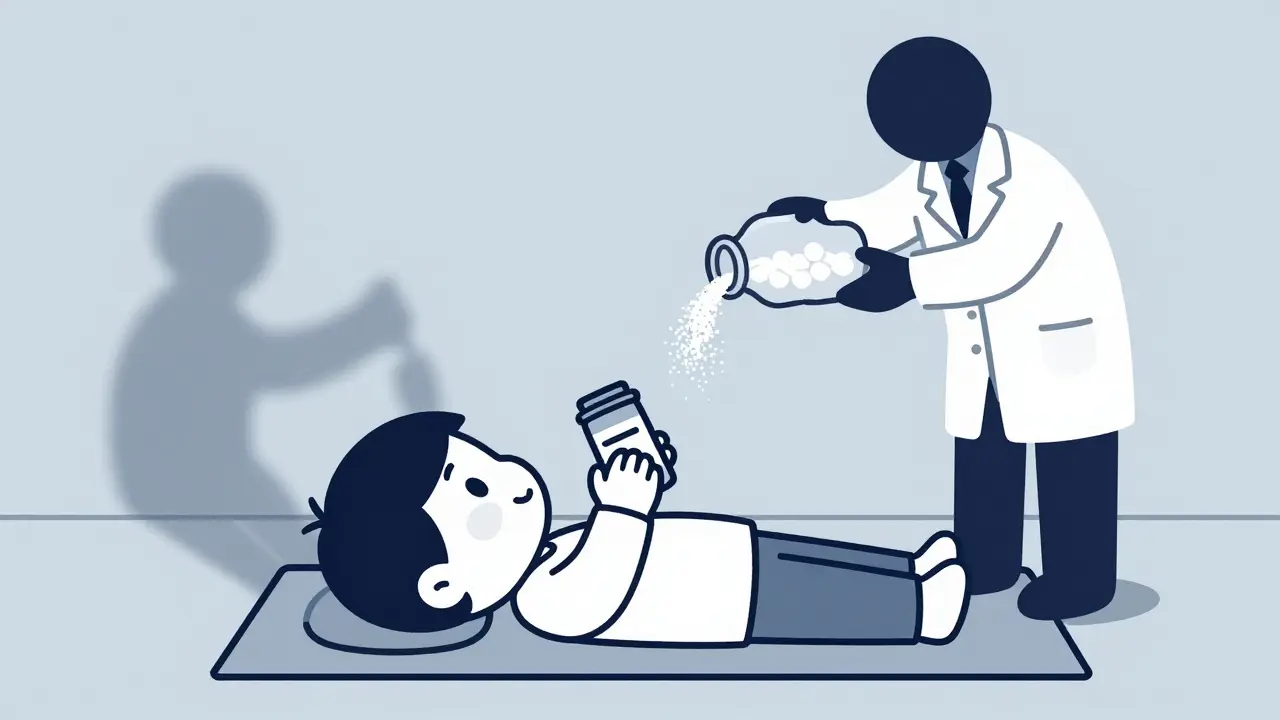
It’s not because they’re reckless. It’s because they have no choice.
In many developing nations, a real course of antimalarial drugs can cost 300% to 500% more than the fake version. A family might choose the fake pill because the real one means skipping meals, selling livestock, or going into debt. For many, the fake drug is the only one they can afford.
And there’s another factor: trust. In places where formal healthcare is weak, people rely on local pharmacies, street vendors, or relatives who “know someone” who sells good medicine. There’s no system to verify what’s real. No government oversight. No transparency.
According to a 2024 survey across 10 African countries, 63% of people had bought counterfeit medicine - knowingly or not. And 31% of them suffered serious side effects: vomiting, organ damage, or worse.
Who’s Behind This?
This isn’t random crime. It’s organized, global, and highly profitable.
Interpol estimates the markup on counterfeit drugs can reach 9,000%. A pill that costs 10 cents to make sells for $9. And the risk? Low. In many countries, penalties for selling fake medicine are lighter than for selling fake sneakers. Prosecution is rare. Jail time? Almost unheard of.
China produces 78% of the world’s high-fidelity counterfeit pharmaceuticals. Bangladesh, Lebanon, Syria, and Türkiye are major regional distributors. Criminal networks use 3D printing to replicate blister packs with 99% accuracy. Some even embed holograms, QR codes, and tamper-evident seals - the same security features used by real drugmakers.
And it’s getting worse. AI is now being used to generate fake packaging labels. Cryptocurrency is used to pay for shipments - untraceable, irreversible. In 2024, Interpol shut down 13,000 websites and social media accounts selling fake drugs. But new ones pop up the next day.
What’s Being Done?
There are solutions - but they’re not reaching the people who need them most.
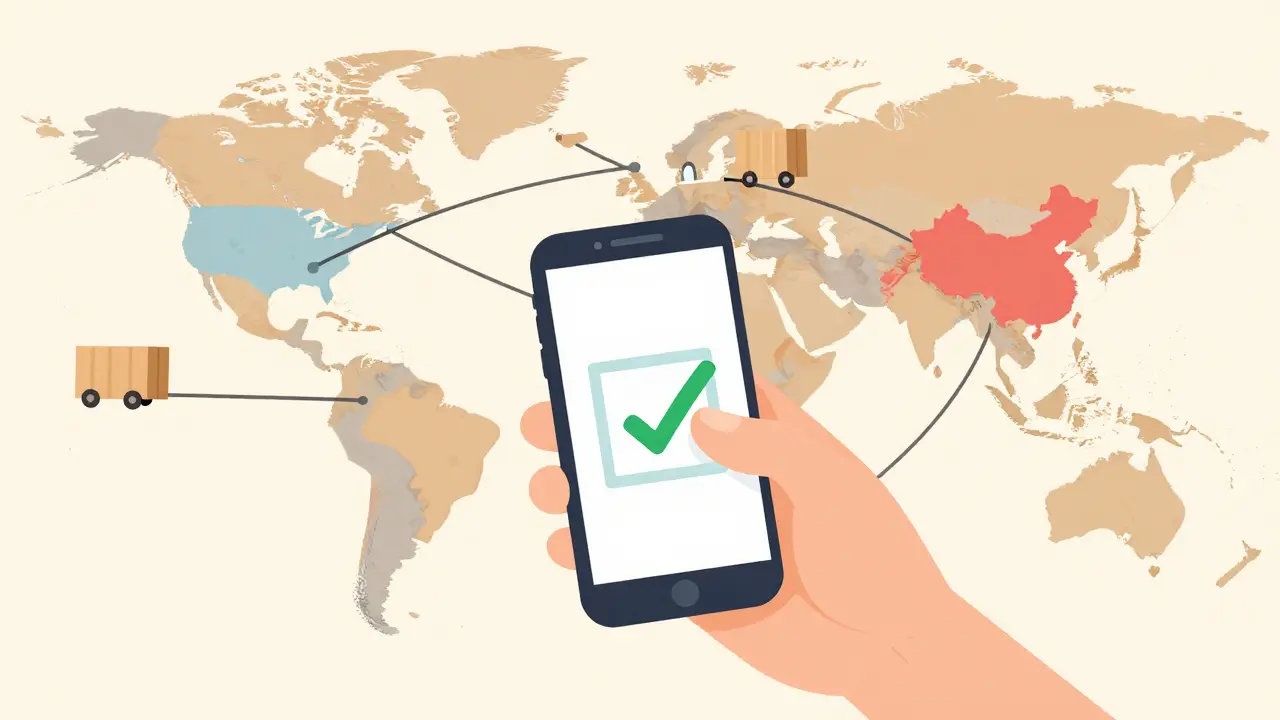
Some organizations are using blockchain to track medicine from factory to patient. Pfizer’s system has blocked over 302 million counterfeit doses since 2004. The WHO launched the Global Digital Health Verification Platform in March 2025 - already active in 27 countries. It lets patients scan a code on the package and instantly verify authenticity.
Other tools are simpler. In Ghana, the mPedigree system lets people send a free SMS to check if their medicine is real. It’s worked - one user said it saved her child’s life. But only 28% of users in low-literacy areas can use it without help. And in places with no mobile signal or electricity? It’s useless.
Solar-powered testing kits are being tested in rural clinics. They cost $5-$10 per test and can detect fake drugs with 70% accuracy. But only 15% of low-income countries have 24/7 verification support. Most rely on occasional training workshops.
And then there’s the Medicrime Convention - an international treaty signed by 76 countries. But only 45 have made it law. Without enforcement, it’s just paper.
What Can Be Done?
There’s no single fix. But progress is possible.
- Train community health workers - They’re the front line. A 2024 UNDP pilot in rural Africa cut counterfeit use by 37% with just 60 hours of training.
- Make verification tools affordable - Simple SMS systems work. So do color-changing stickers. They need to be free and easy.
- Strengthen national drug regulators - Countries like Ghana and Kenya improved oversight and saw fake drug rates drop. But most still lack funding, staff, or authority.
- Hold criminals accountable - Jail time, fines, and asset seizures must be real. Right now, it’s easier to sell fake drugs than to sell counterfeit sneakers.
- Lower the price of real medicine - If the real drug costs 10% of what it does now, people won’t risk the fake.
The WHO estimates countries lose $30.5 billion a year buying fake drugs. That’s money that could build clinics, train nurses, and buy real medicine. Every dollar spent on counterfeit drugs is a dollar stolen from health systems.
What You Can Do
If you live in a developed country, you might think this doesn’t affect you. But it does. Fake drugs fuel global antimicrobial resistance. They weaken global health security. They fund organized crime - including human trafficking and terrorism.
If you work in global health, advocate for funding real verification systems. If you’re a policymaker, push for stronger laws and border controls. If you’re a donor, invest in solar-powered testing kits and SMS verification. If you’re a citizen, demand transparency. Ask: Where does this medicine come from? Who tested it? How do we know it’s real?
The next time you hear about a child dying from malaria - ask if the medicine they took was real. Because in too many places, the answer is no.
Kenneth Jones
March 24, 2026 AT 16:35Real solution? Ban imports from countries that can't prove their supply chains. Period.
Mihir Patel
March 25, 2026 AT 01:18he was in hospital for 3 days because it had like chalk and rat poison in it
and the guy who sold it? just shrugged and said 'sorry bhai' and gave him a discount on the next one
how is this even legal??
Grace Kusta Nasralla
March 25, 2026 AT 12:13What does it say about us when profit is more sacred than a child’s breath?
Anil Arekar
March 26, 2026 AT 17:52It is imperative that international development partners prioritize funding for national drug regulatory authorities, as exemplified by Ghana’s National Agency for Food and Drug Administration and Control (NAFDAC), which has demonstrated measurable success in reducing counterfeit circulation through rigorous surveillance and public awareness campaigns.
Elaine Parra
March 26, 2026 AT 19:04And stop blaming China. The real problem? They don’t have the discipline to enforce basic standards. It’s cultural. It’s not rocket science.
Amber Gray
March 28, 2026 AT 03:47if you think this is bad wait till you see the fake insulin in rural texas
and no im not joking
my cousin works in med sales and says 1 in 5 'generic' insulins sold online are just saltwater with glitter
and people buy them because they're $20 vs $400
we're all in this together lol
Danielle Arnold
March 29, 2026 AT 22:10Namrata Goyal
March 31, 2026 AT 04:13Blessing Ogboso
March 31, 2026 AT 11:41florence matthews
April 1, 2026 AT 12:42imagine being a mom and having to choose between feeding your kids or buying real medicine
we need global solidarity, not just charity
real change means fair pricing, not just better scanners
we can do better
Kevin Y.
April 3, 2026 AT 07:19