
Statin Risk Assessment Calculator
Understanding your personal risk of rhabdomyolysis from statins can help you make informed decisions with your doctor. This tool estimates your risk based on key factors from medical research.
Your Risk Factors
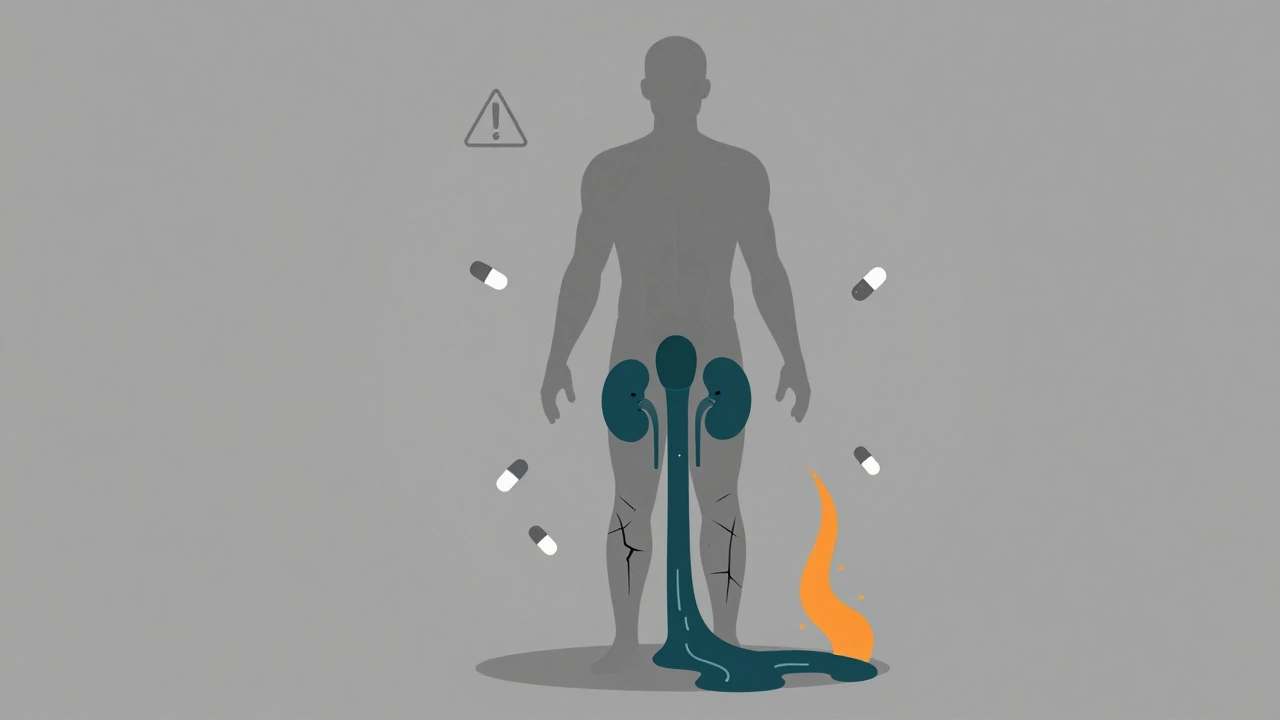
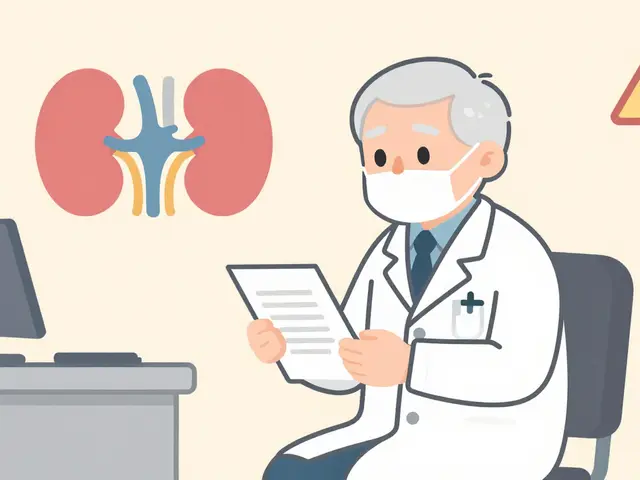
Most people taking statins never experience serious muscle problems. But when they do, it can be life-threatening. Rhabdomyolysis from statins is rare-about 1.5 to 5 cases per 100,000 people each year-but it’s real, and it’s dangerous. This isn’t just sore muscles or cramps. It’s your skeletal muscle breaking down rapidly, spilling a toxic protein called myoglobin into your bloodstream. That can shut down your kidneys, trigger heart rhythm problems, and in the worst cases, kill you.
How Statins Can Break Down Muscle
Statins work by blocking an enzyme in your liver called HMG-CoA reductase. That lowers cholesterol. But that same enzyme is also involved in making other important compounds your muscles need. One of them is coenzyme Q10 (CoQ10), which helps your muscle cells produce energy. When statins reduce CoQ10, your muscles may struggle to function properly, especially under stress. Another key mechanism involves the ubiquitin-proteasome system. This is your body’s natural cleanup crew for damaged proteins. Statins turn this system up too high in muscle tissue, causing healthy muscle proteins to be broken down faster than they can be replaced. Think of it like your body’s recycling bin going into overdrive and shredding your muscle fibers instead of just the junk. There’s also evidence that statins, especially the more lipophilic ones like simvastatin and lovastatin, can insert themselves into muscle cell membranes. This makes the membrane less stable. When you do something like hike uphill, carry heavy groceries, or even just climb stairs, the physical stress can trigger a cascade inside the cell that leads to rapid breakdown.Who’s at Highest Risk?
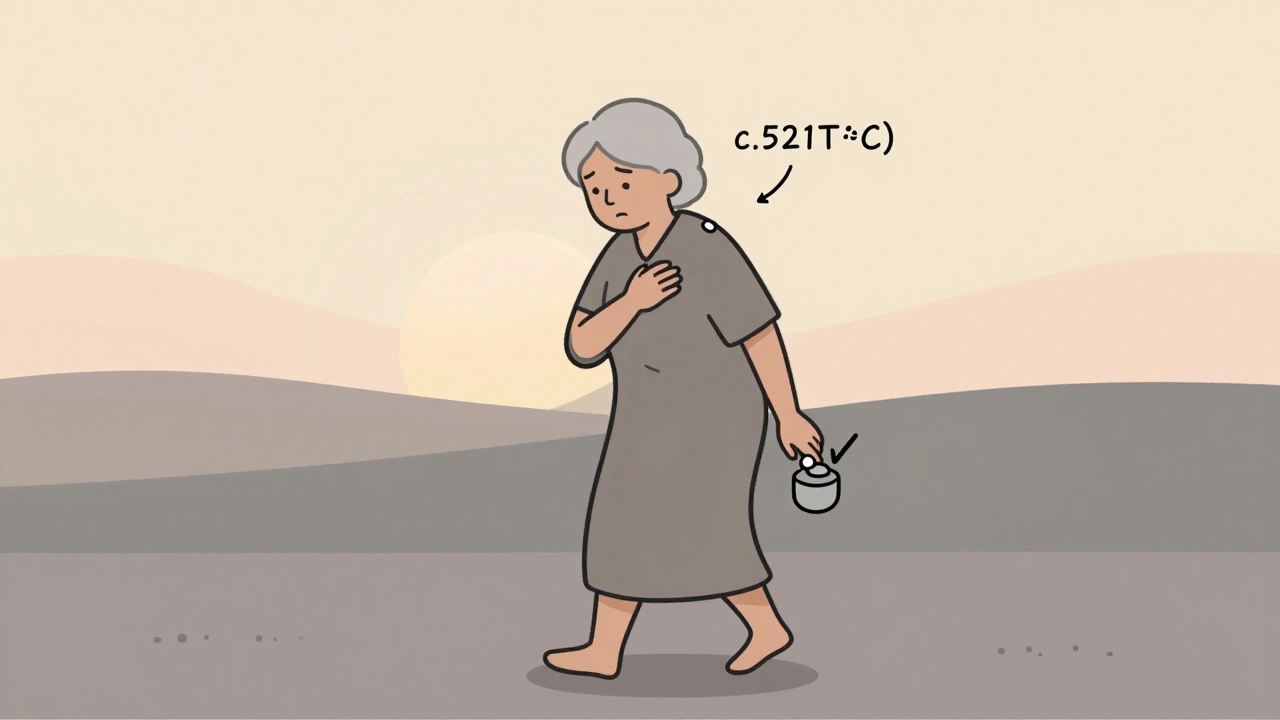
Not everyone who takes statins is equally at risk. Age matters. About 78% of rhabdomyolysis cases happen in people over 65. Women are more likely than men to develop it, making up 62% of reported cases. If you’re older, female, and taking a high dose of a strong statin, your risk goes up. Your genes play a big role too. The SLCO1B1 gene controls how well your liver pulls statins out of your blood. If you have a specific variant-c.521T>C-your body can’t clear the drug efficiently. That means higher levels stay in your bloodstream longer, increasing muscle exposure. People with two copies of this variant (homozygous) have a 4.5 times higher risk of muscle damage. Genetic testing for this variant is available and costs around $249, though insurance doesn’t always cover it. Then there are drug interactions. Statins like simvastatin, lovastatin, and atorvastatin are broken down by a liver enzyme called CYP3A4. If you’re taking something that blocks this enzyme-like the antibiotic clarithromycin, the antifungal itraconazole, or even grapefruit juice in large amounts-your statin levels can spike. One case report showed clarithromycin increasing simvastatin levels by 10 times. That’s enough to push someone from mild muscle pain into full-blown rhabdomyolysis.Which Statins Are Riskiest?
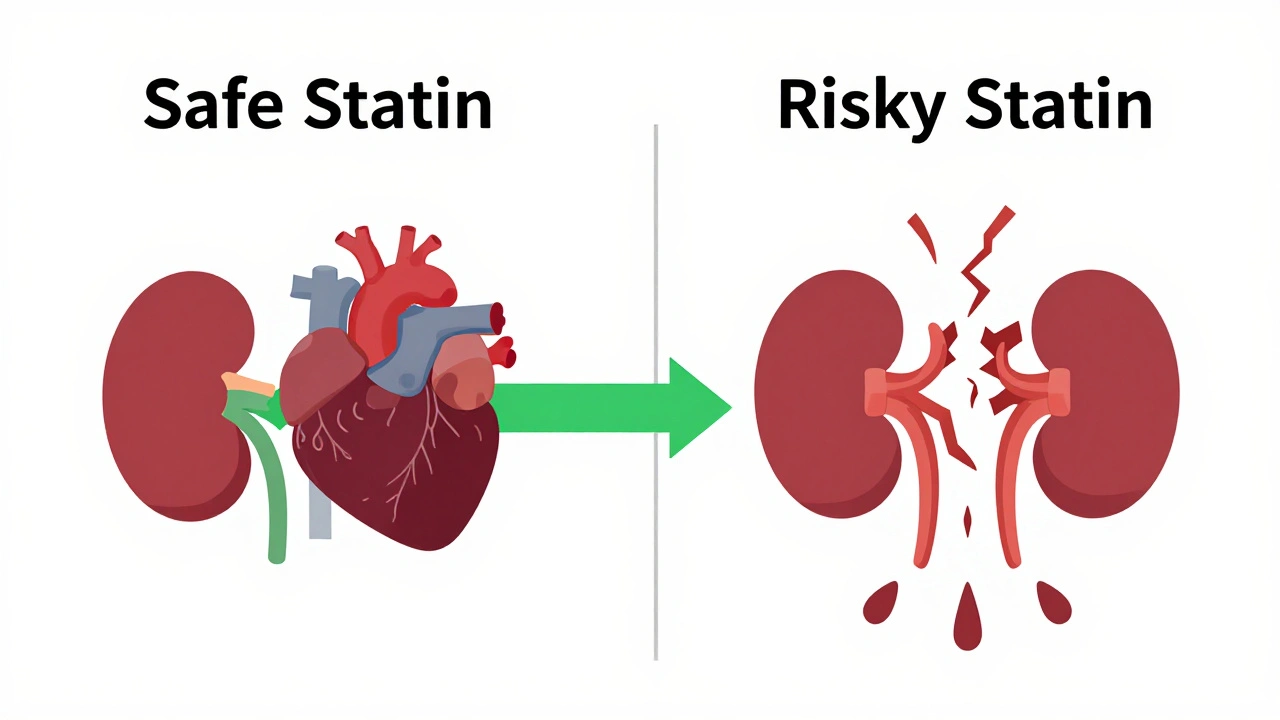
Not all statins are created equal when it comes to muscle safety.- Simvastatin carries the highest risk, especially at 80 mg. The FDA banned new prescriptions of this dose in 2011 after the SEARCH trial showed it increased myopathy risk by over 10 times compared to 20 mg.
- Atorvastatin and lovastatin are also metabolized by CYP3A4, so they’re risky with drug interactions.
- Pravastatin and fluvastatin are processed differently and have much lower muscle toxicity.
- Rosuvastatin has a moderate risk profile and doesn’t rely heavily on CYP3A4, making it safer with common medications.
That’s why doctors often switch patients from simvastatin to rosuvastatin or pravastatin if muscle symptoms appear. It’s not about the cholesterol-lowering power-it’s about finding the safest option that still works.
What the Symptoms Look Like
Most people with statin-related muscle issues have mild symptoms: soreness, fatigue, cramps. But rhabdomyolysis is different. It’s sudden, severe, and unmistakable. Patients describe:- Intense, crushing pain in the thighs, shoulders, or lower back-worse than any workout soreness
- Weakness so bad they can’t climb stairs or stand up from a chair
- Dark, tea-colored or cola-colored urine-this is myoglobin being flushed out
- Swelling or tenderness in muscles
Many report symptoms starting within the first three months of starting a statin. And 63% say their pain gets worse after physical activity. One Reddit user wrote: “I went on a moderate hike and couldn’t walk for three days. My legs felt like they were full of cement.” Another said, “I couldn’t lift my arms to brush my hair.” These aren’t exaggerations-they’re real stories from people who ended up in the ER.
What Doctors Do When It Happens
If you have muscle pain and your doctor suspects rhabdomyolysis, they’ll check your creatine kinase (CK) levels. Normal CK is under 200 IU/L. If it’s over 10 times that (over 2,000 IU/L), your statin gets stopped immediately. If it’s above 10,000 IU/L and you have dark urine, you’re likely in rhabdomyolysis. Treatment is straightforward but urgent:- Stop the statin right away
- Hydrate aggressively-IV fluids are often needed to flush out myoglobin and protect your kidneys
- Monitor kidney function closely-serum creatinine rising by 0.5 mg/dL or more means you need a nephrologist
- Check for electrolyte imbalances-potassium and calcium levels can swing dangerously
Most people recover fully if caught early. But if kidneys fail, dialysis may be needed. In rare cases, the damage is permanent.
Can You Still Take Statins After This?
Yes, but carefully. Many patients who stop statins due to muscle pain don’t actually have true statin intolerance. A 2023 American College of Cardiology report found that 78% of people who say they can’t tolerate statins can restart them with the right approach. Here’s how:- Switch to a lower-risk statin (pravastatin or rosuvastatin)
- Use the lowest effective dose
- Avoid CYP3A4 inhibitors (clarithromycin, grapefruit juice, some antifungals)
- Exercise gently-avoid heavy lifting or eccentric movements like downhill running
- Consider genetic testing for SLCO1B1 if you’ve had muscle issues before
For those who truly can’t take any statin, PCSK9 inhibitors like alirocumab or evolocumab are alternatives. But they cost over $5,850 a year, so they’re reserved for high-risk patients who need extreme cholesterol lowering.
What You Can Do Now
If you’re on a statin:- Know the warning signs: unexplained muscle pain, weakness, dark urine
- Don’t ignore symptoms just because you think “it’s just aging”
- Ask your doctor about your statin type and dose-is it the safest option for you?
- Keep a symptom journal: when did the pain start? Did it get worse after exercise?
- Get your CK checked if you have persistent muscle pain
If you’ve had muscle pain before and stopped your statin, don’t assume you’re intolerant forever. Talk to your doctor about trying a different statin at a lower dose. You might be surprised.
The Bigger Picture
It’s easy to focus on the risk. But remember: statins prevent about 500,000 heart attacks and strokes every year in the U.S. alone. For someone with a history of heart disease, diabetes, or high cholesterol, the benefit of taking a statin far outweighs the tiny risk of rhabdomyolysis. The goal isn’t to scare you off statins. It’s to help you take them safely. Muscle side effects are common. Life-threatening rhabdomyolysis? Extremely rare. But if you know the signs, act fast, and work with your doctor to find the right statin for your body, you can protect your heart without risking your muscles.Can statins cause permanent muscle damage?
In most cases, muscle damage from statins is reversible if caught early. Once the statin is stopped and hydration is started, muscle strength and function usually return within weeks. However, if rhabdomyolysis leads to severe kidney injury or compartment syndrome, some long-term damage can occur. Permanent muscle weakness is rare but possible in extreme, untreated cases.
Is it safe to exercise while taking statins?
Yes, but be smart. Light to moderate exercise like walking, swimming, or cycling is generally fine and even beneficial. Avoid intense or unfamiliar eccentric movements-like downhill running, heavy weightlifting, or sudden bursts of activity. These can trigger muscle membrane instability, especially with lipophilic statins. If you feel unusual soreness or weakness after exercise, stop and talk to your doctor.
Does taking CoQ10 supplements help prevent statin muscle pain?
Some people report feeling better after taking CoQ10, and studies show statins reduce muscle CoQ10 levels by up to 40%. But large clinical trials haven’t consistently proven that supplements prevent or treat statin muscle pain. It’s not a guaranteed fix, but if you’re experiencing mild symptoms and want to try it, it’s generally safe. Talk to your doctor first, especially if you’re on blood thinners.
Can genetic testing tell me if I’m at risk for statin side effects?
Yes. Testing for the SLCO1B1 gene variant c.521T>C can identify people at higher risk for muscle toxicity, especially with simvastatin. If you have two copies of this variant, your risk increases 4.5 times. Guidelines now recommend lower doses of simvastatin (≤20 mg) for these individuals. Testing is available through companies like OneOme and is increasingly covered for people with prior muscle symptoms or those on high-dose statins.
Why do some people think they’re statin intolerant when they’re not?
The nocebo effect is powerful. If you expect side effects, you’re more likely to notice and attribute normal aches to the drug. Studies show that when patients don’t know they’re taking a statin (in blinded trials), far fewer report muscle pain. About 78% of people who believe they’re intolerant can successfully restart a statin after switching types, lowering the dose, or getting proper guidance.
Statins save lives. But they’re not risk-free. Understanding how and why muscle problems happen helps you take them smarter-not harder. Talk to your doctor, know the signs, and don’t let fear stop you from protecting your heart.

Emily Haworth
December 14, 2025 AT 06:14kevin moranga
December 15, 2025 AT 22:28Deborah Andrich
December 17, 2025 AT 20:57Tyrone Marshall
December 19, 2025 AT 17:28Keasha Trawick
December 20, 2025 AT 20:04Yatendra S
December 22, 2025 AT 08:21Himmat Singh
December 23, 2025 AT 09:31Jamie Clark
December 23, 2025 AT 23:29Webster Bull
December 25, 2025 AT 16:27Bruno Janssen
December 25, 2025 AT 18:25Karen Mccullouch
December 27, 2025 AT 05:02Tom Zerkoff
December 27, 2025 AT 06:32Tommy Watson
December 27, 2025 AT 12:54Emma Sbarge
December 27, 2025 AT 16:54Tyrone Marshall
December 28, 2025 AT 12:44