
DRESS Syndrome Diagnostic Score Calculator
DRESS Syndrome Diagnostic Score Calculator
What Is DRESS Syndrome?
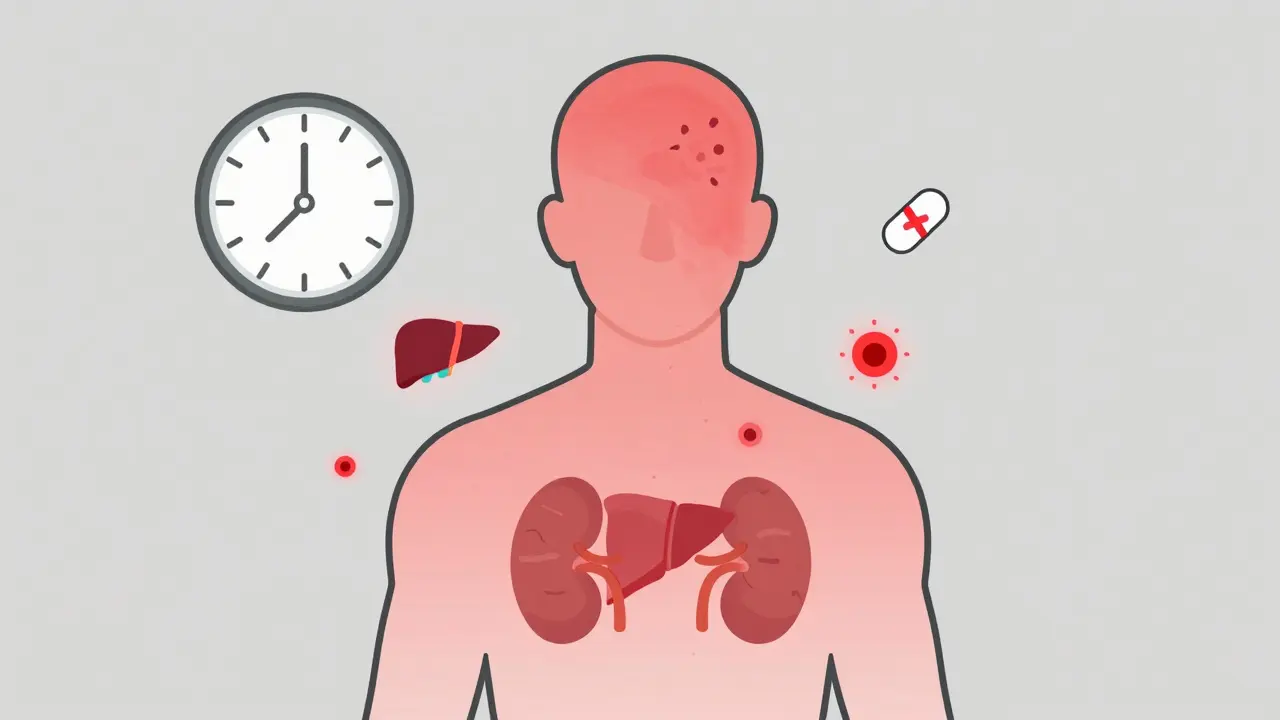
DRESS syndrome is a rare but life-threatening drug reaction that triggers a full-body immune meltdown, often weeks after taking a medication. It’s not a simple rash or allergy-it’s a systemic storm involving the skin, liver, kidneys, blood, and sometimes the heart or lungs. First recognized in the 1950s as a reaction to phenytoin, it was officially named DRESS (Drug Reaction with Eosinophilia and Systemic Symptoms) in 1996. Today, it’s also called DIHS-Drug-Induced Hypersensitivity Syndrome-and it kills about 1 in 10 people who get it.
Unlike typical allergic reactions that show up within hours, DRESS sneaks in. Most people start feeling off 2 to 8 weeks after taking the drug. That delay is why it’s so often missed. Patients show up at the ER with a fever and a rash, and doctors think it’s the flu, mononucleosis, or a viral infection. By the time the real diagnosis comes, organs may already be damaged.
How Do You Know It’s DRESS?
The signs aren’t subtle, but they’re easy to confuse. The classic triad is: fever, rash, and swollen lymph nodes. But the real red flags are deeper.
- Skin: A widespread red, flat, or slightly raised rash starts on the face and upper body, then spreads. It covers 80-90% of the skin in severe cases. Facial swelling and cracked lips are common.
- Fever: Usually above 38.5°C (101.3°F) and doesn’t break with regular meds.
- Lymph nodes: Swollen neck, armpit, or groin nodes in 75% of cases.
- Blood: Eosinophils-white blood cells that fight parasites-spike to over 1,500 cells per microliter. Atypical lymphocytes also show up.
- Organs: Liver damage is the most common, with ALT levels often over 300 IU/L. Kidneys, lungs, heart, and pancreas can also fail.
One thing that sets DRESS apart from other severe reactions like Stevens-Johnson Syndrome? Mucosal damage is rare. You won’t see the mouth or eye ulcers typical of SJS. Instead, you get slow-burning, multi-organ failure.
Which Drugs Cause It?
Not every drug causes DRESS-but some are well-known triggers. The top offenders:
- Allopurinol (used for gout): Responsible for nearly 1 in 4 cases. People with the HLA-B*58:01 gene are at extremely high risk.
- Anticonvulsants like carbamazepine, phenytoin, and lamotrigine: These make up about a quarter of cases. HLA-A*31:01 carriers are especially vulnerable.
- Antibiotics such as vancomycin, sulfonamides, and minocycline: Often blamed when the real culprit is something else.
- Other drugs: Some antivirals, NSAIDs, and even newer cancer immunotherapies have been linked.
Here’s the catch: You can take a drug safely for weeks, then suddenly react. No prior allergy needed. That’s why DRESS is so dangerous-it catches everyone off guard.
Why Diagnosis Is So Hard
Three out of ten patients are misdiagnosed the first time they see a doctor. Why?
Most primary care physicians have never seen a case. A 2021 study found only 38% of them could correctly identify DRESS criteria. Meanwhile, academic dermatologists got it right 89% of the time.
Patients report visiting the ER two to five times before getting the right answer. One Reddit user, u/RashWarrior, described how he took lamotrigine for five weeks, then developed fever and a rash. Three ER visits later-each time told it was viral or allergic-he finally got diagnosed when his liver enzymes hit 1,200 IU/L.
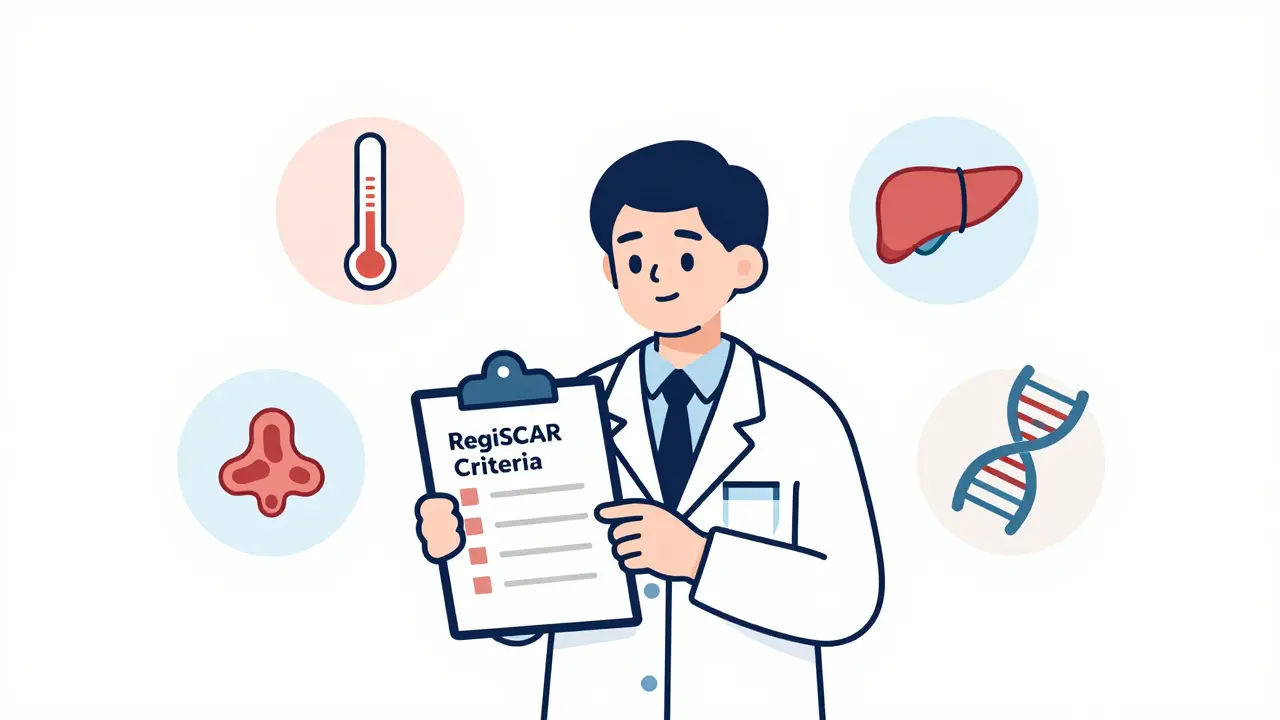
The RegiSCAR scoring system is the gold standard for diagnosis. It looks at timing, rash pattern, organ involvement, blood changes, and viral reactivation. It’s 97% specific and 80% sensitive. There’s even a mobile app now that helps clinicians calculate the score in minutes.
The Viral Connection
DRESS isn’t just a drug reaction-it’s a drug-triggered viral reactivation.
Up to 80% of DRESS patients show signs of HHV-6 (human herpesvirus 6) waking up in their body. EBV, CMV, and hepatitis viruses are also commonly reactivated. This isn’t a coincidence. The drug messes with immune control, letting dormant viruses flare up. And those viruses? They drive the inflammation, organ damage, and prolonged symptoms.
This is why DRESS lasts so long. Even after stopping the drug, the virus keeps the immune system firing. That’s why recovery takes months-not days.
How It’s Treated
There’s no magic pill. Treatment is about stopping the trigger, calming the immune system, and supporting failing organs.
- Stop the drug immediately. Every hour counts. If DRESS is suspected, the drug must be discontinued within 24 hours.
- Corticosteroids. Prednisone is the go-to. Most patients need high doses for weeks, then a slow taper over 3-6 months. Starting within 72 hours of diagnosis boosts survival odds.
- Supportive care. IV fluids, liver support, dialysis if kidneys fail, and ICU monitoring for severe cases (ALT >1,000, creatinine >2.0, or breathing trouble).
- Alternative therapies. For steroid-resistant cases, IVIG (intravenous immunoglobulin) and mycophenolate are being tested in trials. Early results are promising.
There’s no large-scale RCT proving steroids work-but every observational study shows they save lives. Waiting to treat? That’s how people die.
Long-Term Risks
Surviving DRESS doesn’t mean you’re out of the woods.
Up to 30% of survivors develop chronic autoimmune conditions: thyroid disease, type 1 diabetes, lupus, or even kidney damage that never fully heals. One patient in a 2022 study developed permanent kidney failure after 22 days of missed diagnosis.
Recovery takes time. Most people are out of the hospital in 4-8 weeks, but fatigue, joint pain, and skin sensitivity linger for months. Many can’t return to work for 6-12 months.
That’s why follow-up care is non-negotiable. Blood tests every 3 months for a year. Thyroid checks. Liver panels. You can’t assume you’re fine just because the rash is gone.
Prevention Is Possible
The biggest breakthrough in DRESS isn’t a new drug-it’s genetic screening.
In Taiwan, since 2012, every patient prescribed allopurinol gets tested for HLA-B*58:01. If they have it, they’re given a safer alternative. Result? An 80% drop in DRESS cases.
On March 1, 2023, the FDA approved the first point-of-care test for HLA-B*58:01 that gives results in under 2 hours. It’s now available in major U.S. hospitals.
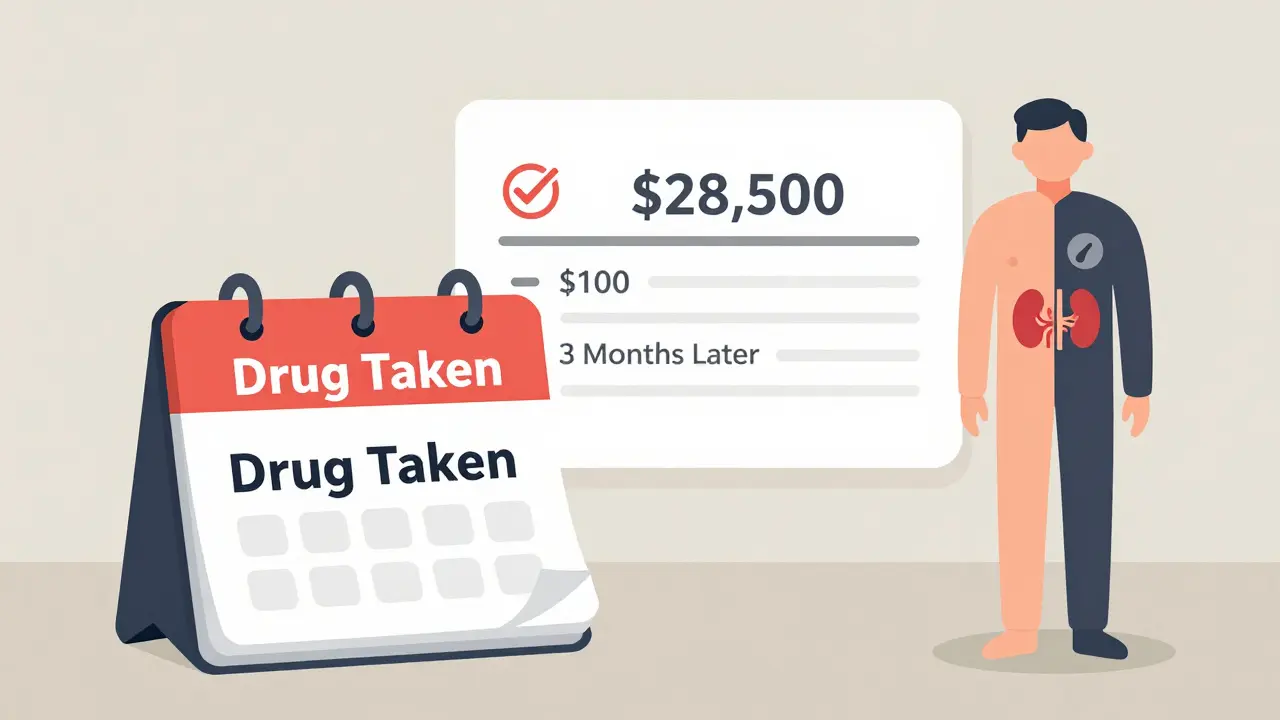
Yet in the U.S., there’s no national policy. Most doctors still prescribe allopurinol without checking. The cost of one DRESS hospitalization? Around $28,500. Screening costs under $100.
Same goes for carbamazepine and HLA-A*31:01 in Asian populations. The science is clear. The tools exist. The only thing missing is widespread adoption.
What Patients Are Saying
On the DRESS Syndrome Foundation’s forum, over 1,200 patients share their stories. The most common theme? "No one knew what was happening."
78% visited the ER multiple times before getting diagnosed. 65% said their primary doctor had never heard of DRESS. But those who found the Foundation’s resources-like their 24/7 consultation line-had better outcomes and faster recovery.
Sarah Johnson, a nurse who survived vancomycin-induced DRESS, spent 8 weeks in the hospital and 6 months tapering steroids. She returned to work after 10 months. "I’m alive because someone finally looked at my labs and asked: ‘Have you been on any new meds?’"
Her story isn’t rare. It’s the exception.
The Future of DRESS
Research is moving fast. In 2023, the RegiSCAR group updated diagnostic criteria to include viral markers-boosting accuracy from 80% to 92%. A global registry launched in September 2023, with 47 centers tracking cases to find patterns.
Scientists are now hunting for biomarkers that predict who’ll develop long-term autoimmune issues. A $2.5 million NIH grant is funding that work.
Experts predict that within five years, pre-prescription HLA screening will be standard for all high-risk drugs. If that happens, DRESS could drop by 60-70%.
But until then, awareness is the only shield we have.


Zachary French
February 2, 2026 AT 17:17And don't even get me started on how doctors still prescribe it without HLA screening. It's like handing out dynamite and saying 'hope you don't sneeze.'
Daz Leonheart
February 2, 2026 AT 23:25Coy Huffman
February 3, 2026 AT 01:04Kunal Kaushik
February 3, 2026 AT 04:17Mandy Vodak-Marotta
February 3, 2026 AT 05:46Samuel Bradway
February 4, 2026 AT 21:52Caleb Sutton
February 6, 2026 AT 17:31pradnya paramita
February 7, 2026 AT 04:58Jamillah Rodriguez
February 7, 2026 AT 14:38Susheel Sharma
February 9, 2026 AT 13:28Janice Williams
February 9, 2026 AT 23:55Roshan Gudhe
February 10, 2026 AT 23:09