
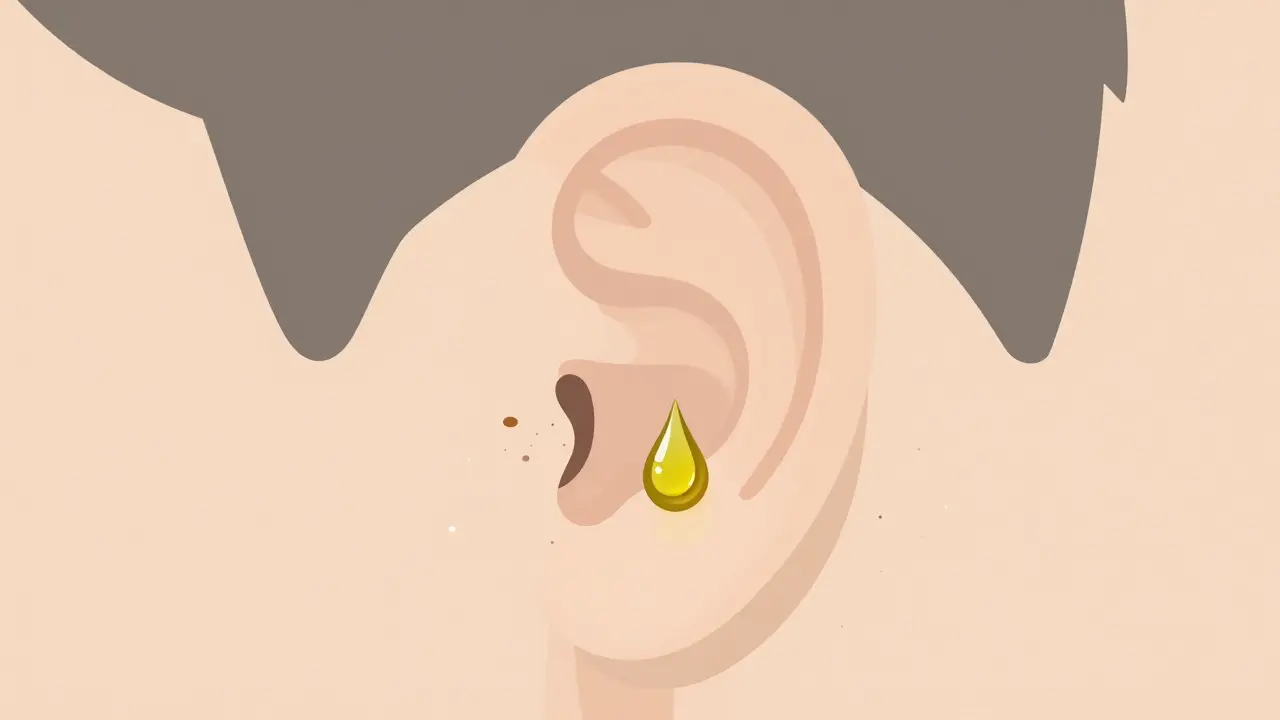
Most people think earwax is just dirt that needs to be cleaned out. But your ears aren’t broken if they make wax. In fact, earwax - or cerumen - is a natural, protective substance that traps dust, fights infection, and keeps your ear canal lubricated. The problem starts when too much of it builds up and hardens, blocking the ear canal. This is called earwax impaction, and it’s more common than you think.
According to the American Academy of Family Physicians, about 6% of adults have earwax impaction. That number jumps to 12% for people over 65 and hits 30% in those with developmental disabilities. If you wear hearing aids, have curly ear hair, or use cotton swabs regularly, you’re at higher risk. And yet, most people still reach for a Q-tip when their ear feels blocked. That’s the exact wrong move.
What Does Earwax Impaction Feel Like?
It doesn’t always hurt. But when it does, the symptoms are hard to ignore. You might notice:
- Hearing loss - sounds seem muffled, like you’re underwater
- A feeling of fullness or pressure in your ear
- Ringing in the ear (tinnitus)
- Dizziness or balance issues
- Itching or discomfort inside the ear
- Earache
- Odd drainage or a strange smell
These symptoms don’t show up overnight. They creep in over days or weeks. Many people ignore them at first, thinking it’s just a cold or allergies. But if you’ve tried ear drops, swabbed your ear, or used a home suction device and it got worse, you’re not alone. A Reddit survey of over 600 users found that 74% of those who used cotton swabs to clean their ears ended up with worse symptoms within 48 hours.
Why Your Ears Don’t Need Cleaning (Most of the Time)
Your ears are designed to clean themselves. Jaw movement - from chewing, talking, or even yawning - slowly pushes wax out of the canal. Skin cells naturally shed, carrying wax with them. You don’t need to dig inside. In fact, doing so pushes wax deeper, packs it tighter, and can even damage the eardrum.
Dr. William Luxford, Medical Director at House Clinic in Los Angeles, puts it simply: “90% of earwax impaction cases come from people trying to clean their ears.” That’s not a myth. It’s backed by NHS England data showing cotton swabs cause 60-70% of iatrogenic (doctor-caused) impactions. The more you clean, the more likely you are to create a problem.
How Doctors Diagnose It
Not every bit of wax is a problem. In fact, up to 40% of people seen for routine checkups have visible wax - but no symptoms. That’s not impaction. True impaction means wax is blocking the canal and causing symptoms.
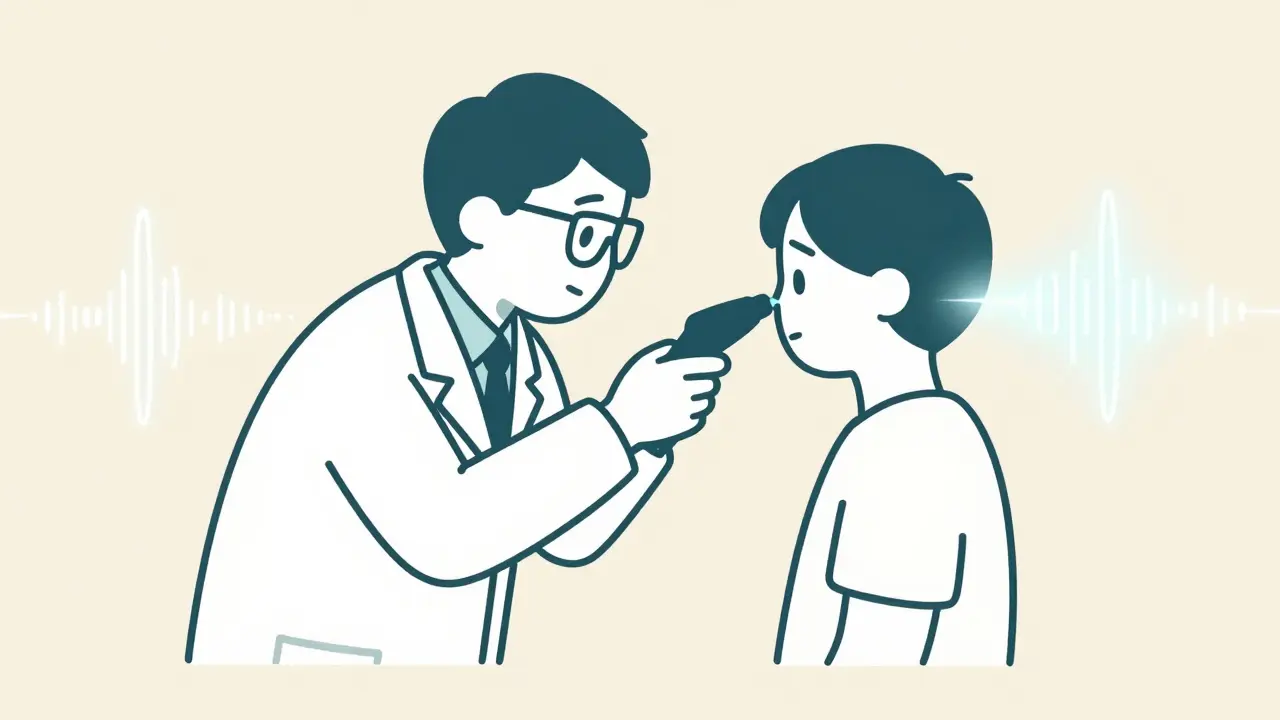
Doctors use a tool called an otoscope - a small lighted scope - to look inside your ear. A pneumatic otoscope can even check if your eardrum moves normally. If wax is blocking the view, and you have symptoms like hearing loss or fullness, that’s a clear diagnosis. But it’s not always earwax. About 22% of people who think they have wax buildup actually have something else: an ear infection, a skin growth, or even a jaw joint issue. That’s why seeing a professional matters.
What NOT to Do: The Dangerous Myths
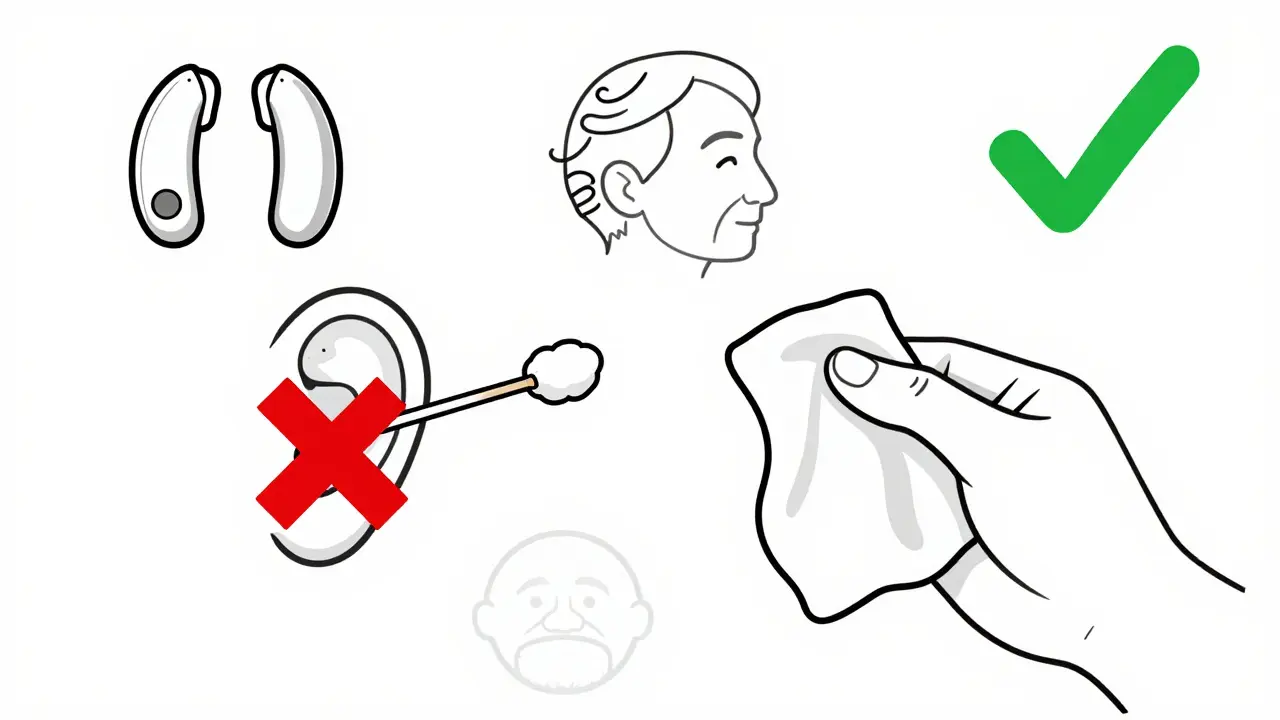
Let’s clear this up once and for all: do not use cotton swabs, bobby pins, toothpicks, or ear candles. The FDA has documented over 12,500 ear injuries between 2018 and 2022 from home removal attempts. That includes 3,000 cases of perforated eardrums. Ear candles? They don’t work. They’re not even approved as medical devices. The heat doesn’t pull wax out - it just drips wax into your ear and risks burns.
And those viral TikTok videos showing someone scooping out black gunk with a metal tool? Those aren’t earwax. They’re just debris from the tool itself. The real wax is deeper, and those methods can tear skin, rupture the eardrum, or push wax further in. One study found over 1.2 billion views on unsafe ear-cleaning videos on TikTok alone.
Safe Ways to Remove Earwax
There are two paths: at-home care for mild cases, and professional removal for stubborn or symptomatic blockages.
At-Home Softening (For Mild Cases)
If you have mild symptoms and no history of ear surgery or perforated eardrums, try this NHS-recommended method:
- Lie on your side with the affected ear facing up.
- Put 2-3 drops of olive oil, almond oil (if you’re not allergic), or mineral oil into the ear.
- Stay in that position for 5-10 minutes so the oil soaks in.
- Repeat 3-4 times a day for 3-5 days.
- After that, gently wipe the outer ear with a damp cloth - never insert anything.
Studies show olive oil softens wax in about 58% of cases. It’s safe, cheap, and doesn’t irritate. Avoid hydrogen peroxide - it can sting and dry out skin. Don’t use water irrigation at home. You risk pushing wax deeper or causing infection if your eardrum is damaged.
Professional Removal
If symptoms don’t improve in a week, or if you have pain, dizziness, or hearing loss, see a professional. Here are the three most common and effective methods:
- Manual removal - An ENT specialist uses a small curette or forceps to gently scoop out the wax. This is 92% effective in one visit. It’s quick, precise, and safe if done by someone trained.
- Ear irrigation - Warm water or saline is gently flushed into the ear to wash out wax. It works in 85% of cases. But it’s not for everyone. If you’ve had ear surgery, a perforated eardrum, or an infection, this can cause serious harm.
- Microsuction - This is the gold standard. A tiny vacuum removes wax under direct vision with a microscope. It’s 96% effective, dry (no water involved), and has the lowest complication rate. Most clinics now offer this, and patients report 92% satisfaction.
According to Ohio State University’s 2023 data, 85% of patients get completely clear in one visit. The procedure takes 15-20 minutes per ear. No anesthesia needed. No recovery time.
Who Should Always See a Doctor?
You should skip home remedies and go straight to a professional if you:
- Have had ear surgery
- Have a history of perforated eardrums
- Use hearing aids or earplugs regularly
- Have diabetes or a weakened immune system
- Notice sudden hearing loss or severe pain
- Have fluid draining from your ear
These aren’t risks you should gamble with. One bad attempt can lead to permanent hearing damage.
What’s New in Earwax Care
The field is evolving. In early 2023, the FDA cleared the Eareto OtoSonic - the first prescription-only home device that uses low-frequency ultrasound to soften wax. Early trials showed 78% effectiveness. It’s not for everyone, but it’s a step toward safer home options.
Also coming in June 2024: updated guidelines from the American Academy of Otolaryngology. They’ll include telehealth triage tools. A 2023 study found that trained clinicians could accurately diagnose earwax blockage via video call 89% of the time. That means you might not even need to leave your house for a diagnosis.
Why This Matters Beyond Hearing
Untreated earwax impaction doesn’t just affect hearing. In older adults, it’s linked to increased fall risk, confusion, and social isolation. A 2023 Johns Hopkins study found that clearing earwax in seniors improved balance and cognitive test scores. For kids, it can mimic learning delays. And for people with dementia or developmental disabilities, it’s often the hidden cause of sudden behavioral changes.
It’s not just a “dirty ear” problem. It’s a public health issue that gets ignored because we’ve been taught the wrong way to handle it.
Final Advice
Here’s the simple rule: Never put anything smaller than your elbow in your ear. That’s not a joke. It’s a rule backed by ENT specialists and patient data. If your ear feels blocked, try oil drops for a few days. If it doesn’t improve, see a doctor. Don’t wait for pain. Don’t guess. Don’t YouTube your way out of it.
Earwax isn’t your enemy. It’s your body’s way of protecting itself. The goal isn’t to remove all of it - it’s to make sure it’s not stuck where it shouldn’t be. And that’s something a professional can do safely, quickly, and without risk.
Can I use hydrogen peroxide to clean my ears at home?
Hydrogen peroxide can soften earwax, but it’s not ideal. Studies show it’s only about 52% effective, and 15% of users report burning or irritation. It can dry out the skin in your ear canal, making it more prone to infection. If you use it, dilute it with equal parts water and limit it to one or two drops. But olive oil or mineral oil is safer and just as effective.
Why do I keep getting earwax buildup even though I don’t use cotton swabs?
Several factors can cause buildup without swabs. Aging slows down the natural cleaning process. Wearing hearing aids or earplugs blocks wax from exiting. Curly or coarse ear hair can trap wax. Some people naturally produce more wax. And certain medical conditions - like eczema or psoriasis in the ear - can increase flaking and buildup. If you’re prone to it, regular checkups with an ENT every 6-12 months can prevent problems.
Is earwax impaction dangerous?
Left untreated, yes. It can cause temporary hearing loss, dizziness, or ear infections. In rare cases, it can lead to a perforated eardrum or chronic infection. But the biggest danger comes from trying to remove it yourself. Improper tools can push wax deeper, scrape the ear canal, or rupture the eardrum. Professional removal is low-risk. DIY methods are high-risk.
Can children get earwax impaction?
Yes, especially toddlers and kids who use cotton swabs or have narrow ear canals. In some cases, it can mimic ear infections or even affect speech development if hearing is muffled. If your child is pulling at their ears, not responding to quiet sounds, or seems unusually irritable, have their ears checked. Never try to remove wax from a child’s ear at home.
How often should I get my ears checked for wax buildup?
If you have no symptoms and don’t wear hearing aids, you probably don’t need regular checkups. But if you’re over 65, use hearing aids, have a history of impaction, or produce a lot of wax, getting your ears checked once a year is smart. Many clinics offer free or low-cost ear exams as part of hearing screenings. It takes less than five minutes.



Jonathan Ruth
February 16, 2026 AT 08:57Yall still using Q-tips? Bro. I used to be one of you. Then I went to the ENT after my ear started bleeding. Turns out I had a perforated eardrum. All from trying to 'clean' my ear like it was a damn vacuum. You're not cleaning wax. You're jamming it in like a goddamn plug. Stop. Just stop. Your ears are not dirty. They're self-cleaning. Stop listening to TikTok influencers who think their earwax is a crime scene.
Philip Blankenship
February 17, 2026 AT 17:37Man I love this post. I used to be one of those guys who thought earwax was just dirt that needed scrubbing out. Then I started wearing hearing aids and boom - constant clogs. My audiologist just laughed and said, 'You're not cleaning your ears. You're building a fortress.' Now I do olive oil drops once a week and just wipe the outside. No more dizziness. No more weird pressure. My hearing’s better than it’s been in 15 years. Also - ear candles? That’s just a candle in your ear. Not magic. Not science. Just a fire hazard with a marketing team.
Kancharla Pavan
February 18, 2026 AT 17:32This is why Western medicine is so dangerously naive. You people treat your body like a machine that needs constant tinkering. Your ears evolved over millions of years to manage wax naturally - but now you’re told to insert sticks into them daily? This is not hygiene. This is cultural self-sabotage. In India, we’ve known for centuries that ear cleaning is not a daily ritual. Even Ayurveda says: 'Do not disturb the natural flow.' Yet here you are, reading a post about how cotton swabs cause 70% of iatrogenic damage - and still reaching for the Q-tip. The problem isn’t wax. The problem is arrogance. You think you know better than evolution. You don’t.
Tony Shuman
February 20, 2026 AT 16:35Wait - so you’re telling me the FDA has documented 12,500 ear injuries from home cleaning… but the CDC doesn’t even track this? Why? Because they’re in bed with the hearing aid industry? Or maybe the ENTs? Because guess what - they make money off this. Every time someone goes in for 'wax removal,' they charge $200. Meanwhile, you’re told to use oil drops - which cost 50 cents. Coincidence? I think not. And don’t get me started on 'microsuction' - that’s just a fancy vacuum. Why not just use a Shop-Vac? Oh right - because they don’t want you to know it’s all a scam. Your ear doesn’t need cleaning. It needs silence. And profit.
Haley DeWitt
February 22, 2026 AT 11:35This is so helpful!! I had no idea earwax could cause dizziness 😱 I’ve been ignoring that weird pressure for months and thought it was just stress. Just tried the olive oil drops last night - already feel better!! Thank you for explaining it so clearly!! 💖
John Haberstroh
February 24, 2026 AT 03:41I’ve been a walking earwax museum for years. My ears look like they’ve been dipped in caramel. But I never had symptoms - until I started using noise-canceling headphones. Turns out, they trap wax like a damn sauna. Now I do the oil thing religiously. It’s weirdly satisfying - like your ear is a slow-mo lava lamp. And the fact that jaw movement pushes wax out? That’s genius. I didn’t know my chewing was a biological plumbing system. I now salute my molars.
Logan Hawker
February 25, 2026 AT 10:59Let me just say - I’m a board-certified ENT. And I’ve seen more damage from 'cleaning' than from actual disease. The real tragedy? Patients come in with perforated eardrums, then blame 'bad genetics' or 'too much wax.' No. You used a toothpick. You thought it was a good idea. You watched a YouTube video. And now you’re paying for it. I don’t hate you. I pity you. Please stop. Just stop.
James Lloyd
February 26, 2026 AT 20:22Great breakdown. Just want to add: if you're using hearing aids, you're at higher risk not just because of the device blocking the canal - but because the device itself can trap dead skin cells and mix them with wax, creating a cement-like plug. I’ve had patients with 3+ years of buildup. One man had a blockage so dense it looked like a fossil. Professional microsuction saved his hearing. No trauma. No pain. Just a quiet, dry, precise removal. If you're prone to buildup, schedule a checkup every 6 months. It’s cheaper than a new hearing aid.
Brenda K. Wolfgram Moore
February 28, 2026 AT 08:36I’m 71 and have worn hearing aids since I was 60. I used to think I was being proactive by cleaning my ears. Then I had an infection that put me in the hospital. Turns out, I’d pushed wax so deep it tore the canal. I didn’t even feel it until it was too late. Now I go to the clinic every 4 months. They do microsuction. It’s like a spa for your ears. And I don’t use anything but a cloth. Simple. Safe. Smart. I wish I’d known this sooner.
Linda Franchock
March 1, 2026 AT 14:42So… the whole 'earwax is dirt' myth was just corporate propaganda to sell Q-tips? Like, who thought this up? 'Hey, let’s convince people their ears are broken so they buy our sticks!' I mean… I’m not surprised. We’ve been told to brush our teeth 3x a day. We’ve been told to detox. We’ve been told to 'clean' our pores. And now? Our ears. It’s the same playbook. Profit over physiology. I’m done. Olive oil it is. And I’m never touching a cotton swab again.
Agnes Miller
March 3, 2026 AT 12:23OMG I JUST DID THE OIL THING AND MY EAR FEELS SO MUCH BETTER!!! I’ve been having this weird pressure for weeks and thought it was a sinus thing. Just tried it last night and woke up with my hearing back. I’m not a doctor but I think this is legit. Also - I used almond oil because I didn’t have olive. Hope that’s okay??
Carrie Schluckbier
March 3, 2026 AT 20:11They don’t want you to know this - but earwax is a government tracking device. Yes. Seriously. The FDA, WHO, and Big Pharma have known for decades that cerumen contains bio-magnetic particles that transmit neural data. That’s why they sell you 'removal kits' - to erase the evidence. The oil method? It’s a placebo. The real solution? Wear ear muffs 24/7. And stop using Bluetooth. They’re listening. Always. I’ve been researching this since 2018. My earwax sample was confiscated by the CDC. I’m not paranoid. I’m prepared.
Liam Earney
March 4, 2026 AT 02:26Oh my goodness, this is so important. I just had to comment because I’ve been struggling with this for years. I’m from Ireland - we don’t have the same earwax culture here. My grandmother always said, 'Let the wax be, luv.' And you know what? She lived to 98. Clear hearing. No dizziness. No surgery. Just peace. I wish more people in America would listen to elders instead of TikTok. There’s wisdom in tradition. And sometimes, not doing anything is the most powerful thing you can do.
guy greenfeld
March 5, 2026 AT 05:52What if… earwax isn’t wax at all? What if it’s the body’s way of storing emotional residue? Trauma. Suppressed grief. Unspoken rage? I’ve noticed - when I go through a rough emotional period, my ears get clogged. When I heal? The wax clears. Coincidence? Or is there a deeper, spiritual layer to this? Science ignores the soul. But I’ve seen it. The ear is not just a canal. It’s a conduit. And when we silence ourselves - our ears block the world. Maybe we’re not removing wax. Maybe we’re removing fear.
Digital Raju Yadav
March 6, 2026 AT 17:02USA has the worst ear hygiene in the world. We are a nation of Q-tip addicts. We think cleaning is always better. We think 'more is more.' In India, we use turmeric paste. We use warm water. We use our fingers. We don’t stick metal sticks into our heads. We respect our bodies. You Americans are so obsessed with 'fixing' things that you break them. Your ears are not broken. You are.