
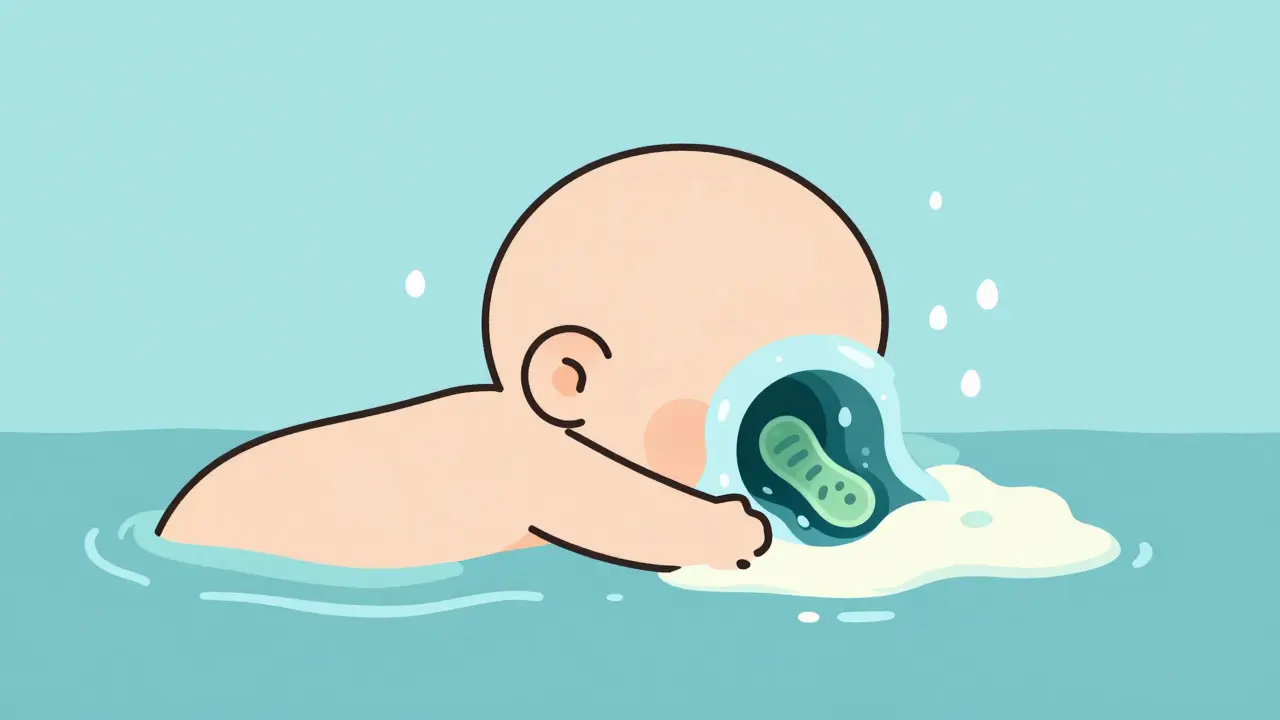
Swimmer’s ear isn’t just a nuisance-it’s a painful, sometimes debilitating infection that can turn a fun day at the pool into days of discomfort. If you’ve ever felt that sharp, throbbing pain deep in your ear after swimming, or noticed itching, muffled hearing, or even drainage, you’re not alone. About 1 in 10 Americans get it every year, and it’s especially common in kids who swim often and adults who spend time in humid environments. This isn’t just water trapped in the ear. It’s an infection of the outer ear canal, and it needs the right treatment to clear up fast.
What Exactly Is Swimmer’s Ear?
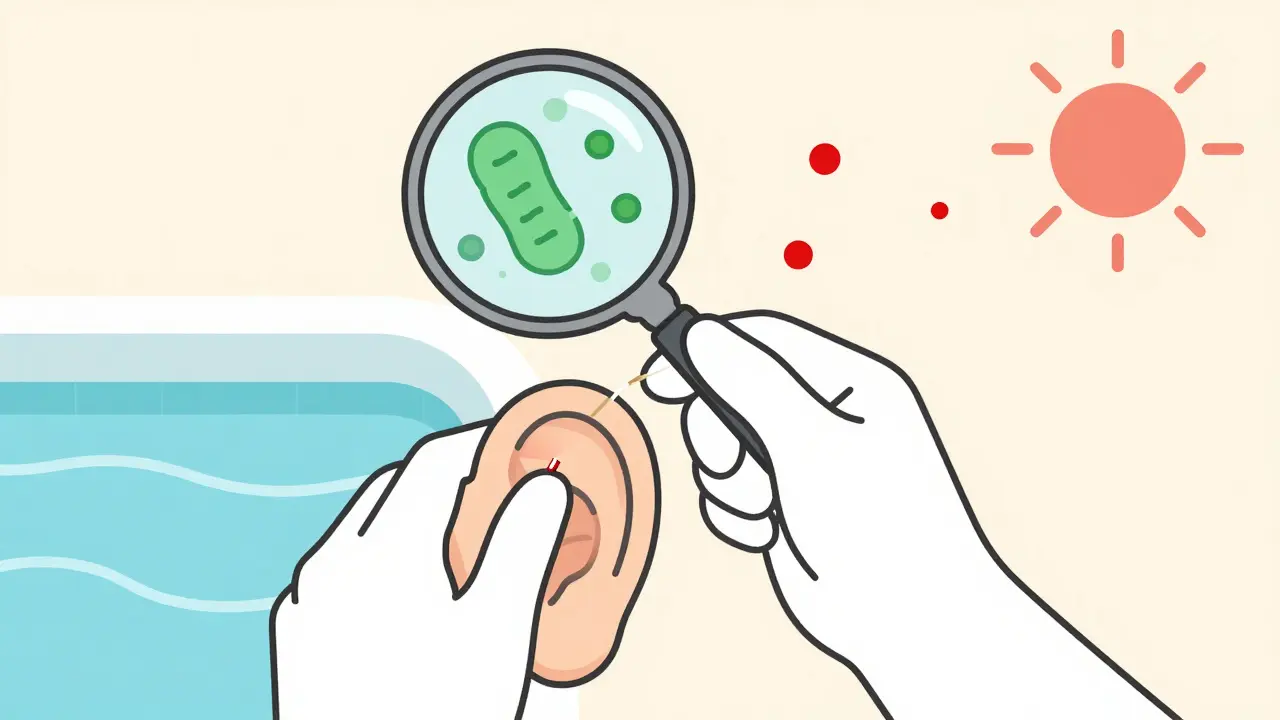
Otitis externa, or swimmer’s ear, affects the skin lining the ear canal-from the eardrum outward. Unlike middle ear infections (otitis media), which happen behind the eardrum, swimmer’s ear lives in the canal itself. The ear canal is naturally protected by a thin layer of earwax (cerumen) that keeps moisture out and maintains a slightly acidic pH between 5.0 and 5.7. That acidity is a natural defense against bacteria and fungi. But when water stays trapped, or when you clean your ears with cotton swabs, you disrupt that balance. Suddenly, bacteria like Pseudomonas aeruginosa (the most common culprit) and Staphylococcus aureus have the perfect environment to grow.
It’s not just swimmers who get it. People who shower often, live in humid climates, or even use hearing aids or earbuds frequently can develop it. The infection starts with mild itching and progresses to pain that worsens when you tug on the earlobe or chew. In moderate cases, the ear canal swells shut. Severe cases come with fever, swollen lymph nodes, and intense pain that can radiate to the neck or face.
What Causes Swimmer’s Ear?
The main trigger is moisture. Water left in the ear after swimming or bathing creates a damp, warm environment where bacteria thrive. But it’s not just water. Anything that scratches or irritates the ear canal opens the door to infection. That includes:
- Cotton swabs (yes, even if you’re just cleaning the outer ear)
- Earbuds or hearing aids worn for long periods
- Swimming in polluted water (lakes, oceans, poorly chlorinated pools)
- Excessive cleaning that removes protective earwax
- Skin conditions like eczema or psoriasis in the ear canal
People with diabetes or weakened immune systems are at higher risk for severe or chronic cases. In rare cases (about 0.03% of all cases), the infection can spread to the bone around the ear-a condition called malignant otitis externa. That’s why it’s critical to treat it early.
How Do You Know Which Drops Work?
Not all ear drops are created equal. The right one depends on whether your infection is bacterial or fungal, and how severe it is. Here’s what actually works based on clinical data and real-world use.
For Mild Cases: Acetic Acid with Hydrocortisone
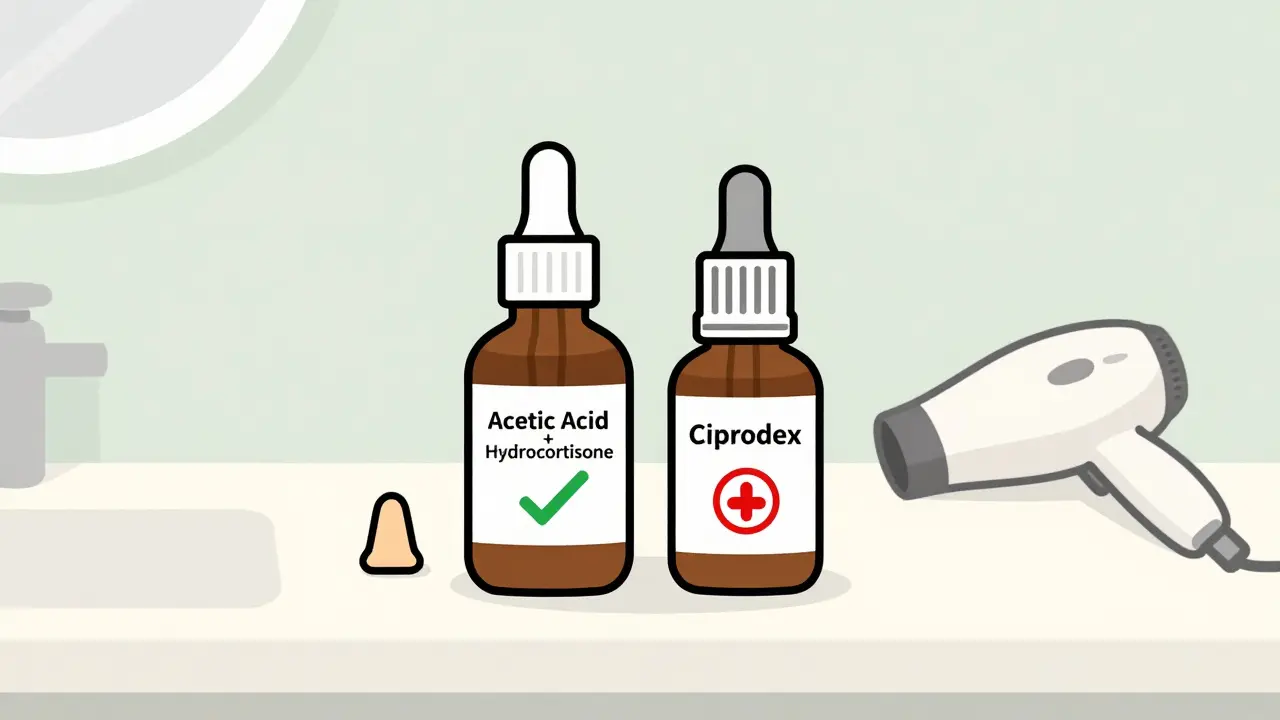
If your ear just feels itchy and slightly sore, with no major swelling or pain, start with an over-the-counter solution like Swim-Ear or VoSoL HC Otic. These contain 2% acetic acid and hydrocortisone. Acetic acid restores the ear’s natural acidity, killing bacteria and preventing fungal growth. Hydrocortisone reduces swelling and itching. Studies show this combo works in 85% of mild cases when used correctly-five drops, three times a day for seven days.
It’s cheap-around $15 a bottle-and safe. Many people use it as a preventive rinse after swimming. Just make sure you’re not using it if you have a perforated eardrum. And yes, it stings a bit at first. That’s normal.
For Moderate to Severe Cases: Ciprofloxacin + Dexamethasone (Ciprodex)
When pain is sharp, swelling is blocking your ear canal, or you’ve had symptoms for more than two days, you need something stronger. Ciprodex is the gold standard. It combines a fluoroquinolone antibiotic (ciprofloxacin) to kill bacteria and a steroid (dexamethasone) to reduce inflammation. Clinical trials show 92% of patients see major improvement in just seven days.
But it’s expensive-around $147.50 without insurance. That’s why many switch to generic ofloxacin drops, which cost about $45 and still have 88% effectiveness. Both are prescription-only and require a doctor’s visit. They’re also safe for perforated eardrums, unlike older drops containing neomycin, which can damage hearing if the eardrum is broken.
For Fungal Infections: Clotrimazole
Not every ear infection is bacterial. About 10% of cases are fungal (called otomycosis), often from swimming in warm, dirty water. Signs include thick, white or black discharge, intense itching, and a feeling of fullness. Acetic acid won’t help here. You need antifungal drops like clotrimazole 1%. Studies show it clears up fungal ear infections in 93% of cases within a week.
Don’t guess. If OTC drops don’t help after 2-3 days, see a doctor. Misdiagnosing a fungal infection as bacterial can delay treatment by a week or more-and make things worse.
How to Use Ear Drops Correctly (Most People Get It Wrong)
Even the best drops won’t work if you don’t use them right. A 2021 study found that 40% of people reduce their treatment’s effectiveness just by how they apply the drops. Here’s how to do it properly:
- Wash your hands.
- Warm the bottle in your hands for 1-2 minutes. Cold drops can cause dizziness.
- Lie on your side with the infected ear facing up.
- Pull your earlobe gently up and back (for adults) or down and back (for kids) to straighten the canal.
- Instill the prescribed number of drops.
- Stay lying down for 5 minutes. This lets the drops reach deep into the canal.
- Place a cotton ball at the ear opening to keep the drops in (don’t push it in).
- Do not insert cotton swabs, fingers, or anything else into the ear.
Skipping the 5-minute wait? You’re wasting up to 40% of the treatment’s benefit. And never irrigate your ear with water-even if you think it’s helping. That’s how infections spread.
What About Debridement? Why It’s Critical
One of the most overlooked parts of treatment is cleaning the ear canal before applying drops. If your ear is swollen shut or full of debris, the drops can’t reach the infected tissue. That’s where debridement comes in.
A doctor uses a suction device or dry cotton swab to gently remove wax, pus, and dead skin. This simple step improves drop effectiveness by 30-40%. If your ear is completely blocked, your doctor may insert an ear wick-a small sponge that expands as it absorbs moisture and delivers medication directly to the infected area. It’s uncomfortable, but it works.
When to Skip the Drops and See a Doctor
You don’t need to rush to the ER for every earache, but here’s when you should:
- Fever over 101°F (38.3°C)
- Pain that spreads to your neck or face
- Swelling that blocks your ear canal completely
- Drainage that’s bloody or foul-smelling
- No improvement after 3 days of using drops
- You have diabetes or a weakened immune system
Also, don’t use leftover antibiotic drops from a previous infection. Bacteria change. The wrong drop could make things worse.
Prevention: How to Avoid It Next Time
Prevention is easier than treatment. Here’s what works:
- After swimming or showering, tilt your head to drain water. Gently pull your earlobe in different directions to help water escape.
- Use a hair dryer on low, cool setting held at least a foot away to dry the ear canal.
- Use OTC acetic acid drops (like Swim-Ear) as a preventive rinse after water exposure. Studies show it cuts recurrence by 65%.
- Avoid cotton swabs. Ever. Use a damp cloth to clean the outer ear only.
- Wear swimmer’s earplugs if you swim often. Silicone ones are better than foam.
If you’re diabetic, take extra care. Even minor ear infections can become serious faster.
What’s New in Treatment?
In March 2023, the FDA approved a new extended-release ofloxacin formula called OtiRx. It works for 24 hours instead of 12, meaning fewer doses per day and better compliance. It’s showing 94% effectiveness in trials.
Researchers are also exploring microbiome-based treatments-using good bacteria to restore the ear’s natural defenses. Early trials at Stanford are promising, but they’re still years away from the market.
For now, the best tools are still the ones we’ve had for years: the right drops, used correctly, with proper ear care.
Why Antibiotics Aren’t Always the Answer
Doctors rarely prescribe oral antibiotics for swimmer’s ear. Why? Because topical drops work better-and systemic antibiotics increase side effects like diarrhea and rashes without adding much benefit. The American Academy of Otolaryngology says oral antibiotics offer only 5-7% more relief than topical drops alone.
And there’s a bigger problem: overuse. Between 2015 and 2020, fluoroquinolone-resistant strains of Pseudomonas increased by 12%. That means the most common drops might not work as well in a few years. Using them only when necessary helps slow this down.
Can swimmer’s ear go away on its own?
Sometimes mild cases can improve without treatment, but it usually takes 7-10 days and comes with ongoing pain and risk of complications. Most people feel better faster with proper ear drops. Waiting too long can lead to swelling that blocks the ear canal, requiring a wick or stronger medication.
Are over-the-counter ear drops safe?
Yes, if they’re for mild symptoms and you don’t have a perforated eardrum. Acetic acid-based drops like Swim-Ear are safe for prevention and early-stage infections. But if pain is severe, you have a fever, or symptoms last more than 2-3 days, see a doctor. OTC drops won’t help fungal infections or advanced bacterial cases.
Why does my ear hurt more when I chew?
The ear canal runs close to the jaw joint. When you chew, the movement stretches the inflamed skin in the canal, triggering pain. This is a classic sign of otitis externa and helps doctors distinguish it from middle ear infections.
Can I use hydrogen peroxide to clean my ear?
No. Hydrogen peroxide can irritate the skin inside the ear canal and worsen inflammation. It doesn’t kill the bacteria that cause swimmer’s ear. Stick to dry methods or doctor-recommended drops. Never irrigate the ear with any liquid unless directed by a professional.
How long should I wait before swimming again?
Wait until symptoms are completely gone and you’ve finished your full course of drops-usually 7-10 days. Even after you feel better, the ear canal is still healing. Getting water in too soon can cause a relapse. Use earplugs and drying drops when you return to swimming.



Blow Job
December 23, 2025 AT 13:13Man, I used to get swimmer’s ear every summer until I started using those acetic acid drops after swimming. Total game changer. No more lying awake in pain. Just a few drops and you’re good. Seriously, try it before you reach for the antibiotics.
niharika hardikar
December 24, 2025 AT 04:44While the article provides a clinically grounded overview of otitis externa, it is imperative to emphasize that the integrity of the ceruminous barrier is non-negotiable in the pathophysiology of this condition. The disruption of the ear canal’s acidic microenvironment, primarily via mechanical trauma or prolonged hygroscopic exposure, facilitates bacterial colonization by Pseudomonas aeruginosa, a Gram-negative organism with documented biofilm-forming capabilities. Consequently, prophylactic interventions must be predicated on microbiological principles, not anecdotal remedies.
suhani mathur
December 26, 2025 AT 03:37Oh wow, someone actually wrote a 2000-word essay on ear drops and didn’t mention that cotton swabs are the devil? Shocking. I’m so glad we have a medical journal disguised as a Reddit post.
Jillian Angus
December 26, 2025 AT 18:31I just let it heal on its own last time and it took forever but I didn’t have to pay for anything
John Pearce CP
December 28, 2025 AT 03:21The American medical establishment has degraded into a profit-driven machine. Ciprodex costs nearly $150? In my day, we used vinegar and alcohol. No prescription. No corporate markup. Just common sense and discipline. This is what happens when you outsource wisdom to pharmaceutical reps.
Ademola Madehin
December 29, 2025 AT 01:28my ear started bleeding after i tried the drops and now i’m scared to sleep and my mom is crying and i think i’m gonna die from this and i hate my life and why does everything hurt so much
Diana Alime
December 29, 2025 AT 09:56ok so i used the cipro drops but i think i used too many and now my ear is ringing and i think i went deaf?? also i used hydrogen peroxide before because i thought it was a good idea?? help??
EMMANUEL EMEKAOGBOR
December 29, 2025 AT 15:11Thank you for this detailed exposition. In Nigeria, where humidity is relentless and access to specialist care is limited, such clear guidance on topical treatments and debridement is invaluable. Many patients self-medicate with inappropriate agents, worsening outcomes. Your emphasis on earwax preservation and avoidance of cotton swabs aligns with traditional wisdom, now validated by science.
CHETAN MANDLECHA
December 30, 2025 AT 14:05Used to get this every time I swam in the lake. Started using Swim-Ear after every dip. Haven’t had it in 3 years. Don’t be dumb. Don’t stick Q-tips in your ear. That’s all you need to know.
Adarsh Dubey
January 1, 2026 AT 07:19Interesting that the article mentions the FDA-approved OtiRx but doesn’t clarify it’s not yet widely available in most pharmacies. Also, the microbiome research is promising but still preclinical. Don’t get too excited about future cures-stick to what works now: proper drop technique and no cotton swabs.
Bartholomew Henry Allen
January 1, 2026 AT 10:47Overprescribing antibiotics is a national disgrace. Topical drops are superior. End of story. The CDC should mandate this protocol nationwide. No exceptions. No compromises. No more wasting taxpayer dollars on oral fluoroquinolones for ear infections. This is basic medicine. Why are we still debating it?