Have you ever dug into the back of your medicine cabinet looking for pain relief and found a bottle of ibuprofen that expired two years ago? You’re not alone. Most households have a stash of over-the-counter (OTC) medications past their prime. The big question is: can you actually take them, or are you risking your health?
The short answer is complicated. For most common pills like allergy meds or painkillers, taking an expired tablet usually just means it might not work as well. It rarely turns toxic. But for critical drugs like nitroglycerin or insulin, that same expired pill could be useless when you need it most. Understanding the difference between "less effective" and "dangerous" is key to managing your home pharmacy safely.
What Does the Expiration Date Actually Mean?
When you see expiration date on a medicine bottle, it isn’t a magic switch where the drug suddenly becomes poison at midnight. Instead, it’s a guarantee from the manufacturer. According to regulations set by the U.S. Food and Drug Administration (FDA) the federal agency responsible for protecting public health through regulation of food, drugs, and medical devices, this date marks the last day the company promises the medication will retain its full potency and safety.
This requirement has been in place since 1979. Before that, there was no standard. Today, shelf life typically ranges from one to five years after manufacturing. This window depends heavily on how the drug is made, what chemicals are in it, and how it’s packaged. If you store your meds properly-in a cool, dry place away from sunlight-they often stay stable longer than the label says. However, if they sit in a hot bathroom cabinet, that clock ticks much faster.
Solid Pills vs. Liquid Medications: A Stability Showdown
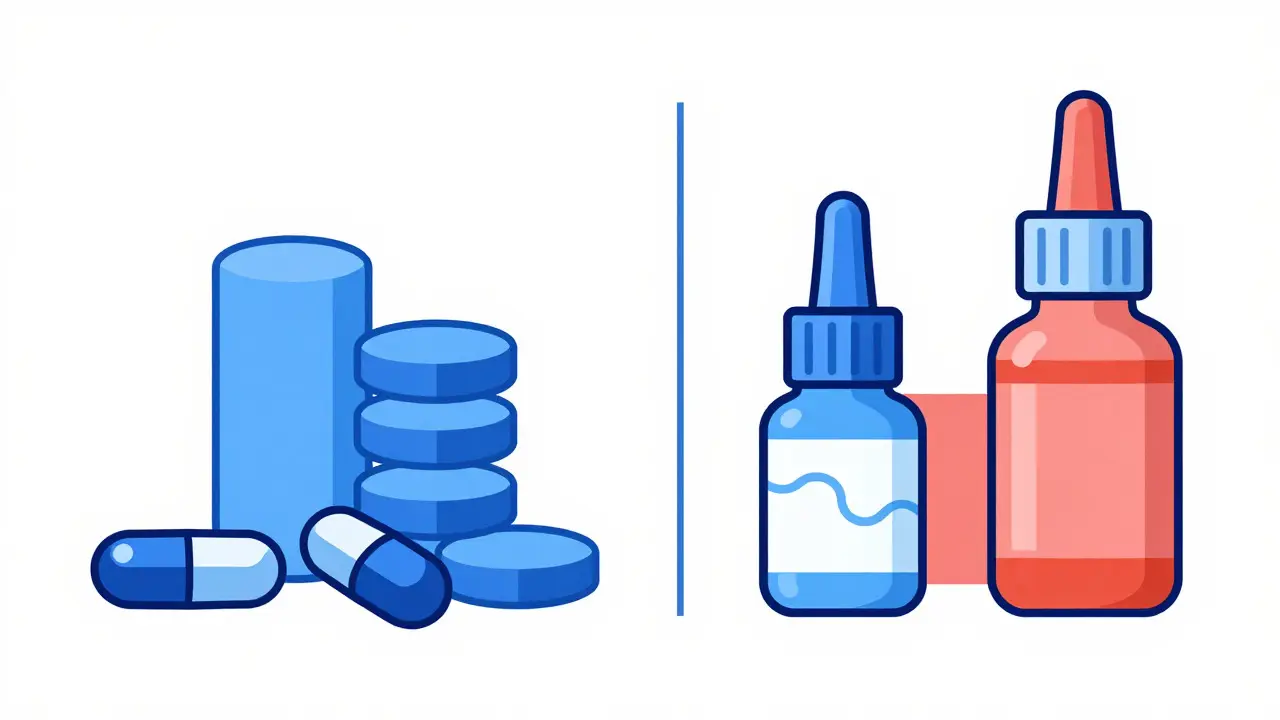
Not all medications degrade at the same speed. The form of the medicine matters more than you might think. Solid dosage forms, like tablets and capsules, are generally tough. Research from Harvard Medical School shows that tablets stored in their original containers at room temperature (around 25°C or 77°F) with normal humidity keep more than 90% of their strength for one to two years past the expiration date in nearly 90% of cases.
Liquids are a different story. Syrups, suspensions, and eye drops are far more vulnerable. Why? Because water invites bacteria. Studies from University Hospitals indicate that 43% of liquid medications show bacterial growth within six months of expiring. Eye drops are particularly risky because they need to be sterile. Data suggests that 72% of eye drops develop microbial contamination just three months after the expiration date passes. Using contaminated eye drops can lead to serious infections, so tossing those old bottles is always the safer bet.
| Medication Type | Avg. Potency Retention (Post-Expiry) | Primary Risk | Recommended Action |
|---|---|---|---|
| Tablets/Capsules (e.g., Ibuprofen) | 85-90% for 1-2 years | Reduced effectiveness | Generally safe for minor issues |
| Liquid Suspensions/Syrups | Variable; high degradation | Bacterial growth | Discard after expiration |
| Eye Drops | Low sterility retention | Microbial infection | Discard immediately after expiry |
| Nitroglycerin | Loses 50% potency in 6 months | Treatment failure | Replace strictly on schedule |
Critical Medications: When Expired Means Dangerous
While a month-old antihistamine might still stop your sneezing, some drugs lose their power quickly. These are the ones where relying on an expired bottle could cost you dearly. Nitroglycerin sublingual tablets, used for chest pain, are notorious for degrading fast. Clinical guidelines note they can lose half their potency within six months of expiration. If you’re having a heart attack and your nitro doesn’t work, the consequences are severe.
Insulin and epinephrine auto-injectors (EpiPens) fall into this high-risk category too. Insulin clumps up and loses effectiveness when exposed to heat or time, leading to uncontrolled blood sugar levels. Epinephrine breaks down into compounds that can irritate tissues without providing the life-saving adrenaline rush needed during an allergic reaction. For these critical tools, never gamble with an expired unit. Always check the date before you rely on them in an emergency.
The Antibiotic Exception: Toxicity Concerns
Most people assume antibiotics are just another type of pill, but they carry a unique historical warning. Tetracycline, an older antibiotic, was linked to kidney damage known as Fanconi syndrome when taken past its expiration date. While modern formulations are more stable, the FDA still advises caution. More importantly, using sub-potent antibiotics for current infections can lead to treatment failure. This doesn’t just mean your infection lingers; it contributes to antibiotic resistance, making future infections harder to treat.
If you find leftover antibiotics from a previous illness, don’t save them for later. Bacteria evolve, and what worked last year might not kill the bug infecting you today. Plus, incomplete courses due to weak medication fuel superbugs. Dispose of any unused antibiotics properly rather than hoarding them.
Storage Conditions: The Hidden Factor
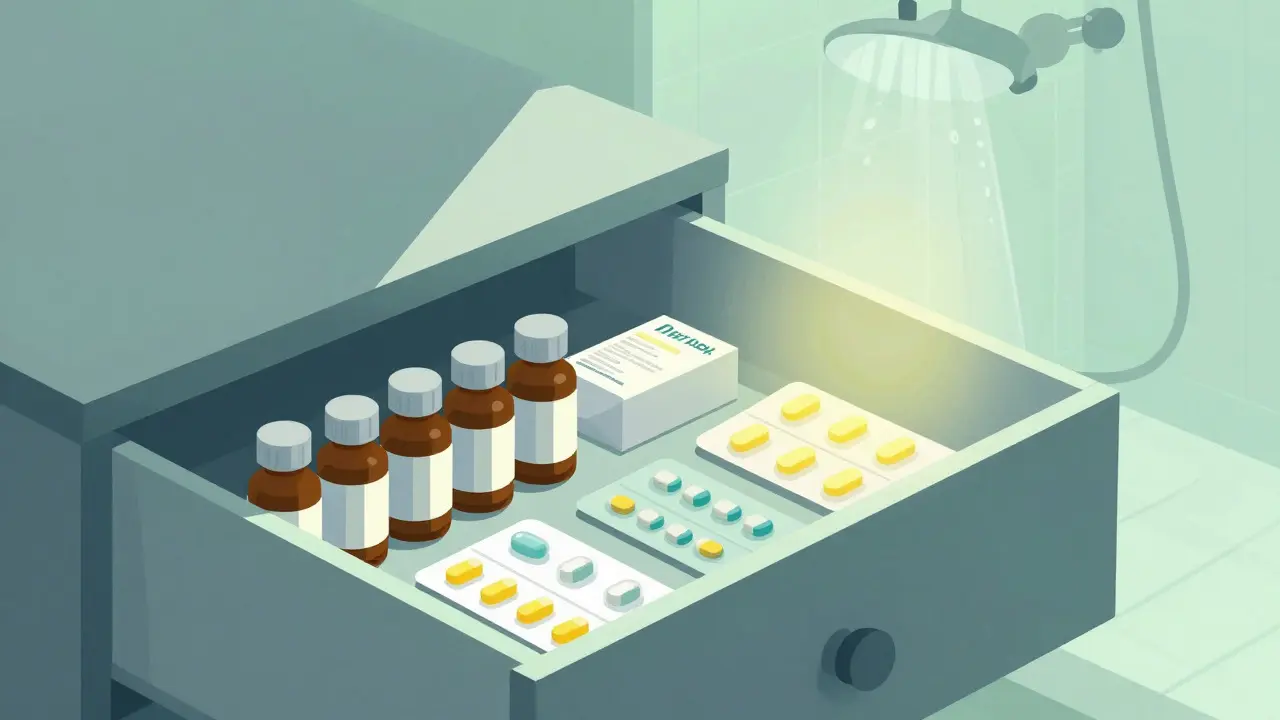
You can have a fresh bottle of medicine, but if you store it wrong, it expires early. Heat is the enemy of chemical stability. Medications stored above 30°C (86°F) degrade up to 300% faster than those kept below 25°C (77°F). That bathroom cabinet next to the shower? It’s a sauna for your pills. Humidity causes tablets to crumble and liquids to separate.
To maximize shelf life, keep meds in their original containers. The packaging is designed to block light and moisture. Transferring pills to weekly organizers exposes them to air and humidity, reducing their potency by up to 40% faster according to stability research. Keep your main supply in a cool, dark drawer in the bedroom or closet, not the kitchen or bathroom.
How to Spot Compromised Medication
Before you toss everything, look closely. Visual cues can tell you if a drug has gone bad even if it’s technically within date. Tablets that crumble easily when touched have likely absorbed too much moisture. Liquids that appear cloudy, separated, or have changed color should be discarded. Any unusual smell is a red flag-medicine shouldn’t smell like vinegar or rot unless specified (like some cough syrups).
If a capsule feels sticky or fused together, the gelatin shell has degraded. In these cases, the chemical integrity is compromised. Don’t guess. When in doubt, throw it out. It’s cheaper to replace a $10 bottle of ibuprofen than to deal with a worsening condition because the med didn’t work.
Safe Disposal Methods
Flushing meds down the toilet is outdated advice, except for specific opioids that pose a high overdose risk if ingested accidentally. For most OTC drugs, mix them with an unpalatable substance like coffee grounds, cat litter, or dirt. Put the mixture in a sealed container or plastic bag before throwing it in the trash. This prevents pets or children from digging it out and makes it less appealing if someone else finds it.
Check for local drug take-back programs. Many pharmacies and police stations host collection bins where you can drop off expired meds securely. This ensures proper environmental disposal and keeps dangerous substances out of the waste stream.
The Economic and Environmental Impact
There’s a tension here. On one hand, discarding still-potent medications wastes money. Estimates suggest hundreds of millions of dollars are lost annually to unnecessary replacements. On the other hand, using expired critical meds costs more in healthcare bills due to failed treatments. The balance lies in smart management. Use expired non-critical meds for minor issues if they look fine, but replace critical ones religiously. Donate unexpired meds to organizations that accept them, extending their useful life without risk.
Frequently Asked Questions
Is it safe to take expired ibuprofen?
For most people, yes. Ibuprofen tablets stored properly often retain 85-90% of their potency for up to two years past expiration. The main risk is reduced pain relief, not toxicity. However, if the pills look crumbled or discolored, discard them.
Can expired eye drops cause blindness?
While rare, expired eye drops can cause serious infections due to bacterial contamination. Since eyes are sensitive, using non-sterile drops increases the risk of corneal ulcers or conjunctivitis. It is best to discard eye drops immediately after the expiration date.
Why do expiration dates exist if drugs last longer?
Expiration dates are legal guarantees of full potency and safety mandated by the FDA. Manufacturers test drugs under various conditions and set conservative dates to ensure efficacy for all consumers, regardless of storage habits. They protect both patients and companies from liability.
Should I flush expired medications?
Only flush medications specifically labeled for flushing, such as certain potent opioids, to prevent accidental ingestion by children or pets. For most OTC drugs, mix them with coffee grounds or dirt in a sealed bag before trashing them to avoid environmental contamination.
Does heat affect medication expiration?
Yes, significantly. Heat accelerates chemical breakdown. Medications stored above 30°C (86°F) degrade up to 300% faster than those kept at room temperature. Avoid storing meds in cars, bathrooms, or near stoves to maintain their potency.
Are liquid antibiotics dangerous when expired?
Expired liquid antibiotics pose a dual risk: bacterial growth in the solution and reduced potency. Sub-potent antibiotics may fail to cure an infection, leading to complications or antibiotic resistance. Always use fresh antibiotics prescribed by a doctor.