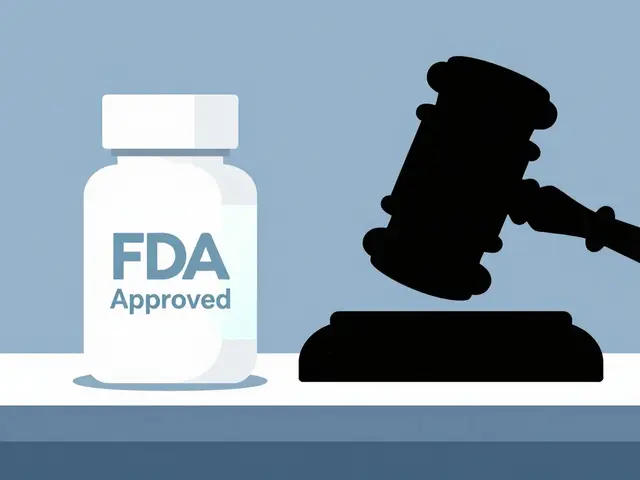
Imagine you pick up a bottle of medication at the pharmacy. It looks familiar, but it’s not the brand name your doctor wrote down. It’s a generic version. You trust it because it says “FDA Approved” on the label. But what if that claim is misleading? What if the marketing behind that drug exaggerated its benefits or hid critical risks? This isn’t just a hypothetical scenario-it’s a growing legal battleground.
In recent years, the line between legitimate promotion and false advertising in generic pharmaceuticals has become increasingly blurred. With the U.S. generic drug market valued at $140 billion and representing 90% of all prescriptions dispensed, the stakes are high. Misleading claims can lead to serious health consequences for patients and massive legal liabilities for manufacturers. As of September 2025, regulatory bodies like the FDA have intensified their crackdown on deceptive practices, signaling a new era of strict compliance.
The Regulatory Framework: How We Got Here
To understand the current legal landscape, we need to look back. The foundation of drug regulation in the United States was laid by the Pure Food and Drug Act of 1906. However, it wasn’t until the tragic sulfanilamide incident in 1937 that Congress passed the Federal Food, Drug, and Cosmetic Act (FD&C Act) of 1938. This act mandated that drugs be proven safe before they could be marketed.
The real game-changer came with the Hatch-Waxman Act of 1984. This legislation created the Abbreviated New Drug Application (ANDA) pathway, allowing generic manufacturers to prove bioequivalence rather than repeating costly clinical trials. Bioequivalence means the generic drug must deliver the same amount of active ingredient into a patient’s bloodstream in the same amount of time as the brand-name drug-typically within 80-125% of the reference listed drug’s pharmacokinetic parameters.
This framework was designed to lower costs while maintaining safety. But it also created a complex web of rules for how these drugs can be advertised. Today, companies must navigate the FD&C Act, the Lanham Act § 43(a), and various state consumer protection statutes. Each layer adds specific requirements and potential pitfalls.
What is the difference between FDA Approval and FDA Clearance?
This is a critical distinction often exploited in false advertising cases. "FDA Approved" typically applies to new drugs after rigorous review. "FDA Clearance" may apply to devices or certain pathways where the review process differs. Using "Approved" when only "Cleared" has been granted can trigger Lanham Act liability for misrepresentation.
Key Laws Governing Generic Drug Advertising
When a generic manufacturer markets its product, it steps into a minefield of federal and state laws. Let’s break down the primary statutes that define what constitutes false advertising in this sector.
- Federal Food, Drug, and Cosmetic Act (FD&C Act): Under 21 U.S.C. § 352, any drug deemed "misbranded" is subject to enforcement. This includes labels or advertisements that fail to reveal material facts about dangers or contain false therapeutic claims.
- Lanham Act § 43(a): This law allows competitors to sue for false advertising that causes consumer confusion. If a generic maker implies therapeutic equivalence without proper FDA-established data, brand-name rivals can file suit under this act.
- State Consumer Protection Statutes: States like New York (General Business Law § 349) and California (Business & Professions Code § 17500) have aggressive consumer protection laws. In New York, penalties can reach $10,000 per violation, and courts may award treble damages.
The interplay between these laws creates a dual-enforcement system. The FDA focuses on product labeling and direct-to-consumer (DTC) ads, ensuring fair balance between risks and benefits. Meanwhile, private competitors use the Lanham Act to police broader marketing language. This inconsistency leaves gaps that savvy marketers might try to exploit, but regulators are closing them fast.
The 2025 FDA Crackdown: A New Era of Enforcement
If you thought drug advertising was getting easier, think again. On September 9, 2025, the FDA issued a major announcement targeting deceptive pharmaceutical advertising. Driven by a presidential memorandum from Health and Human Services Secretary Robert F. Kennedy, Jr., the agency launched a comprehensive campaign against misleading DTC ads.
The goal? To shut down what officials called a "pipeline of deception." The memo highlighted how misleading ads can mislead the public about risks and benefits, encourage medications over lifestyle changes, and inappropriately intervene in the physician-patient relationship. Crucially, it noted that some ads advantage expensive brand-name drugs over cheaper generics by misrepresenting comparative efficacy.
As part of this initiative, the FDA sent thousands of warning letters and approximately 100 cease-and-desist letters. These actions specifically targeted misleading comparisons between brand-name and generic products. For example, an ad claiming a generic is "identical" to a brand-name drug without citing FDA-established therapeutic equivalence could face immediate scrutiny.
| Feature | Brand-Name Drugs | Generic Drugs |
|---|---|---|
| Risk Disclosure | Must disclose all major risks in DTC ads | Must disclose risks; stricter limits on minimizing side effects |
| Efficacy Claims | Can claim superiority if substantiated by trials | Cannot claim superiority without head-to-head clinical trials |
| Cost Messaging | Can highlight premium value | Can state "lower cost" but cannot quantify savings without rigorous FTC substantiation |
| Visual Identity | Distinct branding allowed | Must avoid visual elements confusingly similar to brand-name product |
Bioequivalence and the Language of Equivalence
One of the most common sources of false advertising claims involves bioequivalence. Generic manufacturers often want to emphasize that their product works just as well as the brand-name version. But the language matters immensely.
The FDA requires that generics demonstrate bioequivalence, meaning they fall within 80-125% of the brand-name drug’s pharmacokinetic parameters. However, saying a drug is "bioequivalent" is not the same as saying it is "therapeutically equivalent." Therapeutic equivalence is a higher bar, established through additional clinical data.
Legal experts at Nixon Peabody LLP warn that misrepresenting a generic drug as having identical efficacy without FDA-established therapeutic equivalence can trigger Lanham Act liability. If a competitor can demonstrate consumer confusion-for instance, if patients believe the generic is exactly the same when subtle differences exist-the manufacturer faces significant legal risk.
This is particularly relevant for narrow therapeutic index (NTI) drugs. These are medications where small changes in dose can lead to toxicity or lack of efficacy. Examples include levothyroxine for thyroid conditions. In March 2024, the FDA issued a warning letter to Teva Pharmaceuticals for implying equivalence for NTI drugs where substitution requires physician authorization. Such cases highlight the danger of oversimplifying complex medical realities in marketing materials.
The "Adequate Provision" Loophole Is Closing
For decades, pharmaceutical companies relied on the "adequate provision" policy created in 1997. This rule allowed broadcast advertisements to reference where complete risk information could be obtained rather than including all risks in the ad itself. Think of those TV commercials that say, "Ask your doctor about [Drug Name]," followed by a rapid-fire list of side effects ending with, "See full prescribing information online."
Critics argued this loophole minimized the impact of risk disclosures. Patients rarely remembered the side effects buried in the fine print. In response, the FDA announced rulemaking in September 2025 to eliminate this practice. Future regulations will require all broadcast and digital advertisements to include complete risk information directly in the ad, rather than merely referencing external sources.
This change aligns with the FDA’s 2024 "clear, conspicuous, and neutral" rule (21 C.F.R. § 202.1). Risk information must now appear in at least 14-point font or with minimum 50% contrast against the background. For digital platforms, this means redesigning ad creatives to ensure compliance without sacrificing engagement. It’s a technical challenge that demands close collaboration between legal, regulatory, and creative teams.
Real-World Consequences: Patient Harm and Legal Penalties
False advertising isn’t just a legal abstract-it has real-world consequences. Consider the case of "fearmongering lawsuit ads." Some lawyers advertise generic drugs as dangerous based on unproven allegations, causing patients to discontinue necessary medications. A 2024 FDA analysis of 1,247 patient complaints revealed that 32% of patients who stopped taking generics due to such ads experienced adverse health outcomes.
On the flip side, misleading brand-name ads can discourage patients from switching to affordable generics. Consumer surveys by the National Community Pharmacists Association found that 41% of patients express confusion about generic drug equivalence after viewing DTC advertisements that emphasize brand-name superiority without scientific basis. This confusion undermines the public health goal of increasing access to affordable care.
Legally, the penalties are steep. Beyond FDA warning letters, non-compliance can lead to civil lawsuits. In New York, General Business Law § 350 allows courts to award three times actual damages, up to $1,000 per violation. Historically, GlaxoSmithKline paid a $3 billion penalty in 2012 for miscommunicating drug information-a stark reminder of the financial risks involved.
Building a Compliant Marketing Strategy
So, how do generic manufacturers navigate this complex landscape? Success requires a multidisciplinary approach. Leading companies employ dedicated regulatory affairs teams of 15-25 professionals to vet all marketing materials. These teams typically include specialists with at least five years of FDA experience, medical writers, legal counsel, and marketing professionals.
Here’s a checklist for building a compliant strategy:
- Verify Bioequivalence Data: Ensure all claims about equivalence are backed by FDA-approved ANDA data. Avoid using terms like "identical" unless therapeutic equivalence is explicitly established.
- Balance Risks and Benefits: Present major side effects and contraindications prominently. Follow the "fair balance" principle required by the FDA.
- Avoid Comparative Pitfalls: Do not imply superiority over brand-name drugs without head-to-head clinical trial data. Be cautious with cost-savings claims; quantify only if rigorously substantiated.
- Clarify Regulatory Status: Use precise language. If a product has "FDA Clearance," do not label it "FDA Approved." Clearly state "This is a generic drug" and disclose the reference listed drug.
- Monitor State Laws: Stay updated on state-specific regulations. For example, Florida’s H.B. 1205 prohibits legal service ads from using government logos or terms like "health alert," which can complicate cross-state campaigns.
- Invest in Compliance Infrastructure: Companies like Pfizer have invested millions in advertising review systems. Robust internal controls reduce the risk of accidental violations.
The learning curve for new compliance officers averages 18 months, according to the Regulatory Affairs Professionals Society (RAPS 2025 Salary and Career Survey). This underscores the need for ongoing training and expertise. Ignorance of the rules is no longer a defense; it’s a liability.
Market Dynamics and Future Outlook
The competitive landscape for generic drugs is intense. There are 15 major generic manufacturers, including Teva, Sandoz, and Mylan, competing against 325 smaller specialty generic companies. Advertising compliance costs average $2.1 million annually per major manufacturer, according to IQVIA’s Pharmaceutical Compliance Report (March 2025).
Despite these costs, compliance is becoming a competitive advantage. Following the September 2025 crackdown, adoption rates for FDA-compliant advertising practices reached 83% among top 25 generic manufacturers. Smaller manufacturers lagged behind, showing only 47% compliance. Industry analysts at Evaluate Pharma project that enforcement actions will increase 35% annually through 2027, with generic manufacturers facing particular scrutiny regarding bioequivalence claims.
Future regulatory trajectory points toward increased coordination between the FDA and FTC. Draft legislation, such as H.R. 4582 (the "Transparency in Drug Advertising Act"), proposes standardized risk disclosure requirements across all media platforms. This harmonization could simplify compliance but also raise the bar for accuracy.
Long-term viability assessments indicate that companies investing in robust compliance infrastructure will maintain their edge. Those with inadequate controls face escalating risks, both financially and reputationally. In an era where transparency is paramount, honesty in advertising isn’t just ethical-it’s essential for survival.
What happens if a generic drug company violates FDA advertising rules?
Violations can result in FDA warning letters, mandatory corrective advertising, fines, and even injunctions stopping sales. Additionally, competitors can sue under the Lanham Act, and states can pursue penalties under consumer protection laws, potentially leading to treble damages.
Can generic drugs claim to be "cheaper" than brand names?
Yes, but with caution. Generics can state they are "lower cost," but they cannot quantify specific savings (e.g., "$50 less per month") without rigorous substantiation according to FTC guidelines. Vague or unsupported cost claims are frequent targets of enforcement.
How does the Lanham Act affect generic drug manufacturers?
The Lanham Act allows brand-name competitors to sue generic makers for false advertising that causes consumer confusion. If a generic ad implies therapeutic equivalence without FDA backing, the brand-name company can seek damages and injunctions, making legal review crucial.
What is the "adequate provision" loophole, and why is it being closed?
The "adequate provision" policy allowed ads to reference external sources for full risk information instead of listing all risks in the ad. Critics argued this minimized patient awareness of side effects. The FDA is closing this loophole to ensure risk disclosures are clear, conspicuous, and contained within the advertisement itself.
Why are narrow therapeutic index (NTI) drugs a special concern?
NTI drugs have a small margin between effective and toxic doses. Small variations in bioavailability can cause serious health issues. Therefore, advertising must be extremely precise, avoiding claims of seamless substitutability without physician authorization, as seen in FDA warnings to companies like Teva.