
Many people don’t realize that their medicine needs to be kept cold-not just for freshness, but to stay alive. If you’re taking insulin, a biologic for rheumatoid arthritis, or even a vaccine like the flu shot, your fridge isn’t just for milk and leftovers. It’s part of your treatment plan. And if it’s not set right, your medication could stop working without you even knowing.
Why Some Medicines Need the Fridge
Not all pills need refrigeration. In fact, most don’t. About 75% of medications-like blood pressure pills, antibiotics, or cholesterol drugs-do just fine at room temperature. But the other 15-20%? These are mostly biologics, insulin, and vaccines. They’re made from proteins or living cells. Heat, freezing, or even long exposure to light can break them down. Once that happens, they don’t work like they should.The science is clear: these drugs must stay between 2°C and 8°C (36°F to 46°F). That’s the universal standard set by the FDA, WHO, and U.S. Pharmacopeia. Go outside that range, even for a few hours, and you risk losing potency. Studies show some insulin products can lose over 50% of their strength after just 24 hours at 25°C. That’s not a theory-it’s what happened to people who left their pens in a hot car.
What Happens When You Get It Wrong
The consequences aren’t theoretical. In 2021, the FDA issued a warning after a patient developed diabetic ketoacidosis because their insulin had been stored at room temperature for weeks. Their blood sugar spiked. They ended up in the hospital. That’s not rare. A 2023 survey by GoodRx found that 68% of insulin users had experienced at least one episode of unexplained high blood sugar they later linked to improper storage.Freezing is even worse. Once a biologic freezes-even briefly-it’s ruined. You can’t thaw it and fix it. The proteins inside get permanently damaged. Cloudy insulin? Clumps in your pen? That’s not normal. That’s a warning sign. Don’t use it. Throw it out. And don’t feel guilty. Safety comes before cost.
Where to Store Them (And Where Not To)
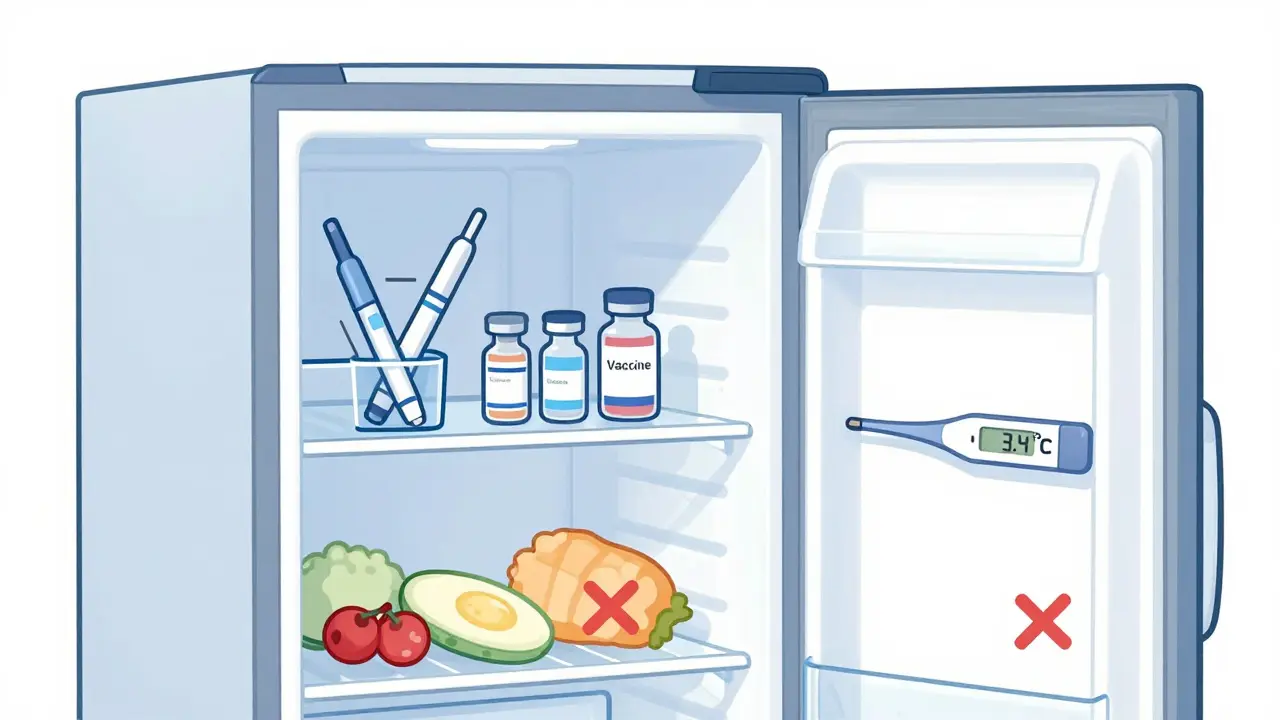
Your kitchen fridge might seem like the obvious choice. But not all spots are equal. The back of the fridge, near the cooling unit, is usually the most stable. That’s where temperatures hover around 3.4°C. The door? That’s a disaster zone. It can swing from 11°C to 15°C every time you open it. That’s way too warm for insulin or vaccines.Here’s what to do:
- Put refrigerated meds on the middle shelf, away from the door.
- Avoid storing them in the vegetable drawer or near the freezer compartment-cold spots can freeze them.
- Don’t store them in the fridge if they’re already open and approved for room-temperature use (like insulin after 28 days).
- Keep them in their original packaging. It protects them from light and gives you the expiration date and storage instructions.
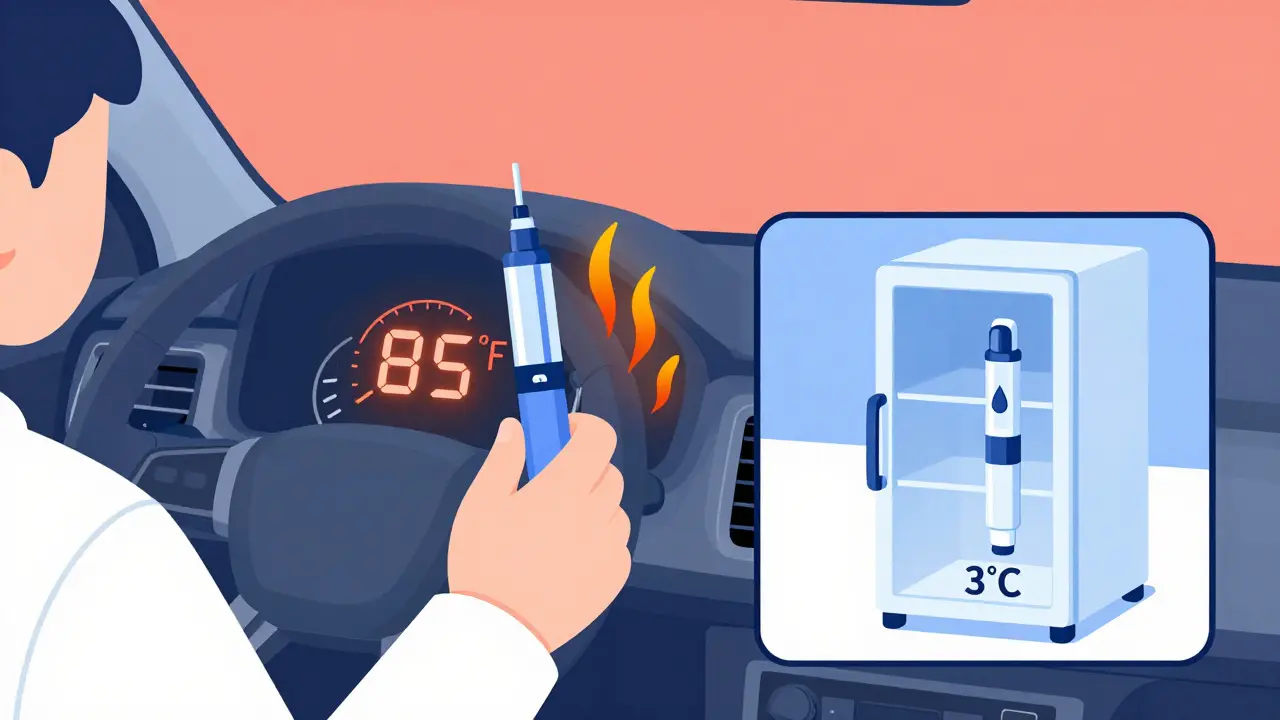
And never, ever leave them in a car, a purse, or a beach bag. Even a few hours in 30°C heat can ruin them. One Reddit user shared how their insulin pump failed after being left in a car at 85°F. Their blood sugar hit 450. It took 12 hours to get it under control.
Special Cases: Insulin, Vaccines, and Biologics
Different drugs have different rules. Don’t assume they’re all the same.Insulin: Most unopened insulin must be refrigerated until first use. Once you start using it-whether it’s a pen, vial, or pump-you can keep it at room temperature (up to 30°C) for 28 to 30 days. But check the label. Lantus® lasts 28 days after opening. Some newer insulins, like those from Novo Nordisk as of June 2023, can now last up to 7 days at 37°C. That’s a big change, but only if you’re using the latest version.
Vaccines: These are the strictest. No exceptions. MMR, flu shots, COVID boosters-all must stay between 2°C and 8°C. If they freeze, they’re trash. If they warm up, they’re trash. The CDC says 15-25% of home-stored vaccines experience temperature excursions. That’s why many clinics now use digital data loggers. You should too.
Biologics like Remicade® or Humira®: These can sometimes be stored at room temperature for up to 6 months. But only if they’re unopened. Once opened, they may need refrigeration again. Always check the manufacturer’s instructions. Johns Hopkins found some biologics are more stable than labels suggest-but manufacturers are cautious. Don’t gamble.
Tools That Actually Help
You don’t need a fancy lab to keep your meds safe. But you do need a few simple tools.- A digital thermometer ($25-$75) with a memory function. Place it next to your meds. Check it once a week. If it’s above 8°C, adjust your fridge or move your meds.
- A dedicated mini-fridge ($150-$500). Models like the Whynter FM-50G are popular. They’re small, quiet, and don’t have a freezer section. That’s key. No freezing risk.
- Insulated travel coolers ($30-$120). Brands like TempAid MediCool keep meds at the right temp for up to 48 hours. Perfect for travel, vacations, or power outages.
- Phase-change packs (gel packs that stay cold longer). Don’t use regular ice packs-they’re too cold and can freeze your meds. Look for ones labeled for pharmaceutical use.
Some people swear by smart fridges. Samsung’s 2023 Family Hub model has a medication mode that holds 3°C-5°C. It’s pricey, but if you’re on multiple refrigerated drugs, it might be worth it.
What to Do When the Power Goes Out
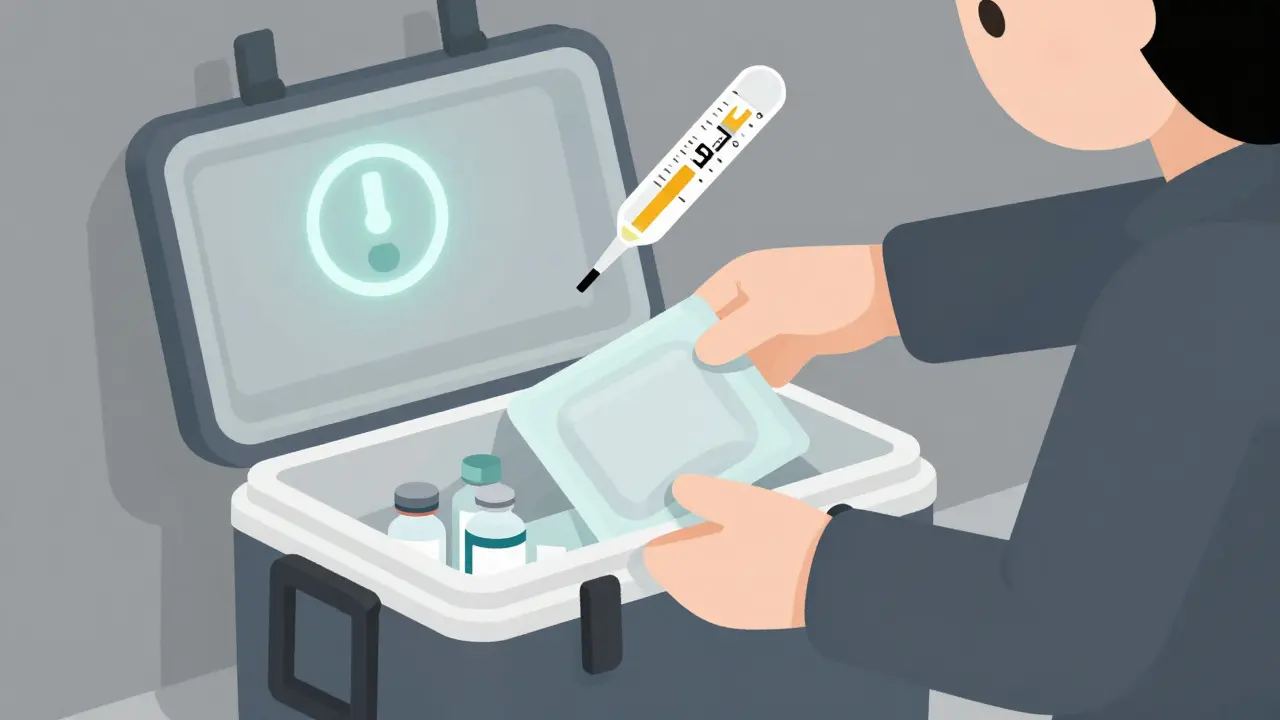
Power outages are scary for anyone on refrigerated meds. If the power’s out for more than 4 hours:- Keep the fridge closed. Cold air stays in longer than you think.
- Move meds to a cooler with phase-change packs.
- If you’re unsure how long the meds were exposed to warm temps, call your pharmacist. Don’t guess.
- Never use meds that feel warm, look cloudy, or have particles in them.
NeedyMeds has given away over 8,500 free thermometers since 2020. If cost is an issue, ask your pharmacy or clinic-they sometimes have them.
Common Mistakes (And How to Avoid Them)
Here’s what most people get wrong:- Assuming "cool" means cold. Room temperature is 20°C-25°C. That’s too warm for most refrigerated meds.
- Storing meds in the fridge door. Temperature swings here are wild. Use the back.
- Not checking expiration dates after storage issues. Even if it looks fine, it might not work.
- Ignoring manufacturer warnings. Labels say "do not freeze" for a reason. Don’t risk it.
- Not telling your pharmacist you’re storing meds at home. They can help you pick the right tools.
One user on Reddit said: "After I got a dedicated fridge and a thermometer, my HbA1c dropped from 8.2% to 6.9%. My numbers finally made sense." That’s not magic. That’s science.
What’s Changing in 2026
The rules are evolving. Newer insulins can handle heat better. The FDA is considering longer allowable excursions for some biologics. By 2030, the American Society of Health-System Pharmacists predicts that 30% of all prescriptions will need refrigeration. That’s up from 15-20% today.That means more people will need to learn this. More pharmacies will offer thermometers. More fridges will have medication modes. But until then, the responsibility is yours. Your meds depend on it.
Can I store all my refrigerated meds in one fridge?
Yes, but only if you keep them away from the door and freezer. Never store food and meds together unless you’re certain the meds won’t be exposed to temperature swings or contamination. Use a sealed container or bin labeled "Medications Only."
What if my insulin freezes accidentally?
Throw it away. Freezing permanently damages the protein structure. Even if it thaws and looks normal, it won’t work correctly. Using frozen insulin can lead to dangerous blood sugar spikes. Always replace it.
Do I need a special fridge, or can I use my regular one?
You can use your regular fridge-but only if you place meds on the middle shelf, away from the door and freezer. For better safety, a dedicated mini-fridge ($150-$500) is ideal. It eliminates temperature swings and keeps meds isolated from food.
How often should I check the temperature?
Check it at least once a week. Use a digital thermometer with memory. If the temperature goes above 8°C or below 2°C for more than a few hours, consider moving your meds or adjusting your fridge. Some people check daily-especially during heat waves or power outages.
Can I carry refrigerated meds without a cooler?
For short trips under 4 hours, it’s usually fine if it’s not too hot. But for travel, flights, or hot weather, always use a validated insulated cooler with a phase-change pack. Never leave meds in a car. Even on a 20°C day, a car can hit 40°C in minutes.





Rachidi Toupé GAGNON
February 14, 2026 AT 17:57Jim Johnson
February 16, 2026 AT 13:35Vamsi Krishna
February 18, 2026 AT 02:02Sophia Nelson
February 18, 2026 AT 03:20Skilken Awe
February 19, 2026 AT 00:12steve sunio
February 20, 2026 AT 12:29Neha Motiwala
February 20, 2026 AT 13:35athmaja biju
February 21, 2026 AT 21:36Robert Petersen
February 22, 2026 AT 16:40Craig Staszak
February 23, 2026 AT 06:18alex clo
February 24, 2026 AT 22:39Alyssa Williams
February 26, 2026 AT 22:36Ernie Simsek
February 27, 2026 AT 11:12