You pick up your prescription bottle at the pharmacy. The label lists a name you recognize from TV ads, but right below it, in smaller print, is a completely different word. Or maybe you see two unfamiliar words and wonder which one actually tells you what’s inside. This confusion is common, but understanding the difference between generic vs brand names on your prescription (Rx) label can save you money and reduce anxiety about your medication.
The short answer? They are usually the same medicine. But the details matter when it comes to cost, appearance, and rare exceptions where your doctor might insist on the brand. Let’s break down exactly what those names mean, why they look different, and how to read your label with confidence.
The Two Names on Your Bottle
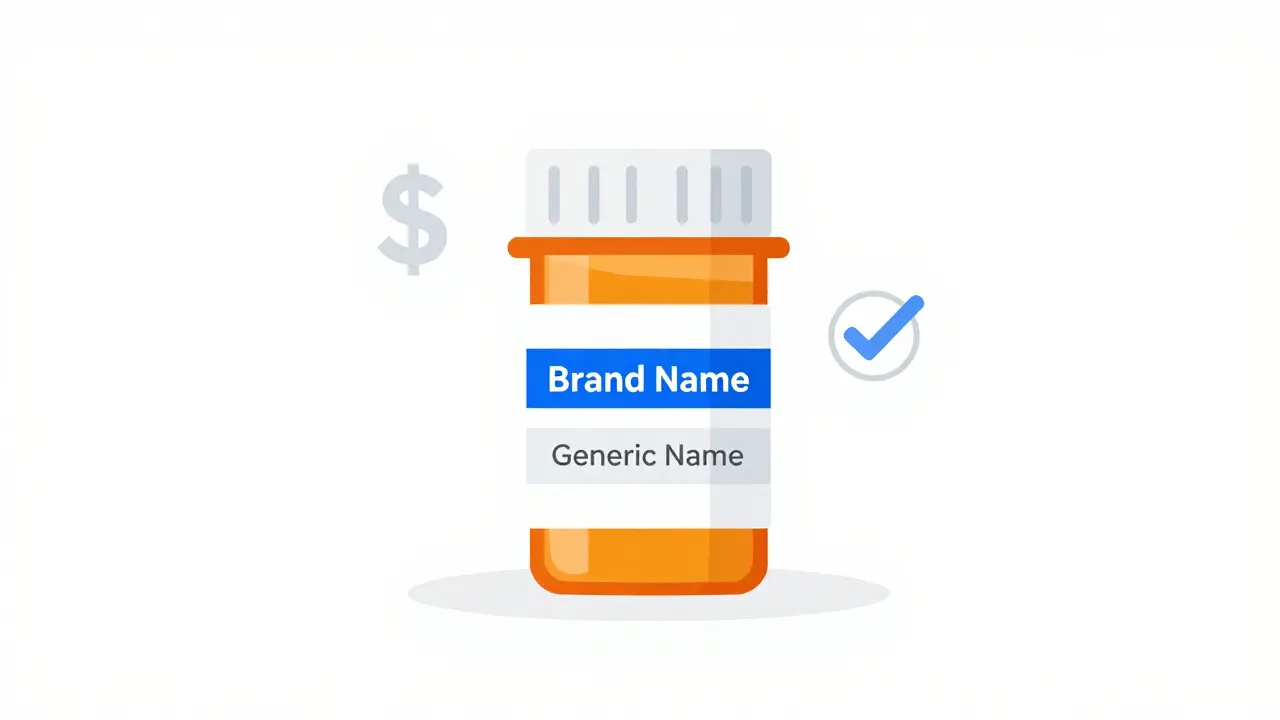
Every prescription drug has two potential names: the generic name and the brand name. Think of it like a person’s legal name versus their nickname or stage name.
- Generic Name: This is the official scientific name for the active ingredient. It’s standardized globally. For example, atorvastatin is the generic name for a cholesterol drug.
- Brand Name: This is the trademarked name created by the pharmaceutical company that invented the drug. For atorvastatin, the brand name is Lipitor.
On most prescription labels in the U.S., you will see both. The brand name often appears first or larger if the prescriber specified it, while the generic name appears in parentheses or smaller text beneath it. If you’re only seeing the generic name, don’t worry-it doesn’t mean the drug is “lesser.” It just means the patent has expired, and other manufacturers can make it.
Why Do Generics Exist?
When a new drug is developed, the company spends billions on research, clinical trials, and FDA approval. To recoup these costs, they get exclusive rights to sell the drug under its brand name for a set period, usually 20 years. Once that patent expires, other companies can step in.
This system was formalized by the Hatch-Waxman Act of 1984, which created a pathway for generic drugs to enter the market without repeating expensive clinical trials. Instead, manufacturers must prove their version is bioequivalent to the original brand-name drug.
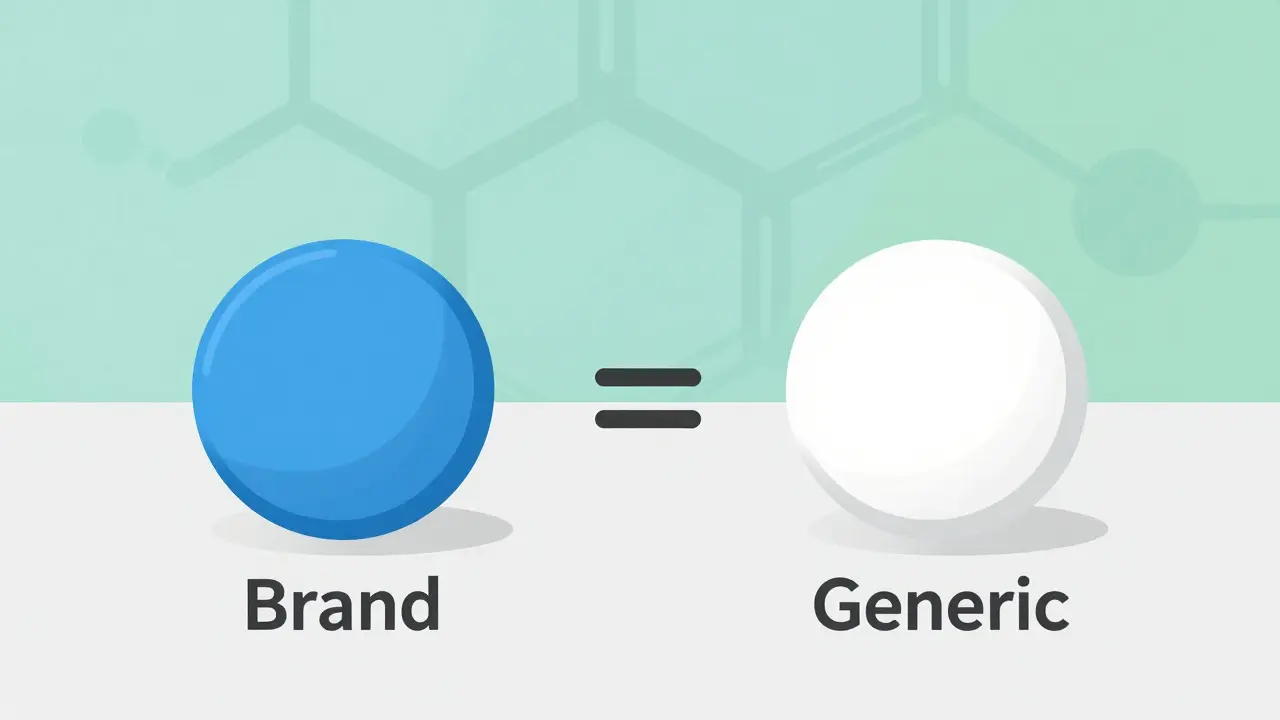
Bioequivalence means the generic drug delivers the same amount of active ingredient into your bloodstream at the same rate as the brand-name version. The FDA requires that the 90% confidence interval for absorption falls within 80-125% of the brand name. In plain English? It works the same way in your body.
Cost Differences: Why Generics Are Cheaper
Here’s where it gets practical. Generic drugs typically cost 80-85% less than their brand-name counterparts. According to data from GoodRx, generic medications saved the U.S. healthcare system $1.67 trillion between 2007 and 2016 alone.
| Factor | Brand Name | Generic |
|---|---|---|
| Average Monthly Cost (Example: Cholesterol Drug) | $300+ | $4-$10 |
| R&D Costs Recovered? | Yes (via high price) | No (patent expired) |
| Market Competition | Monopoly during patent | High competition lowers price |
| Active Ingredient | Identical | Identical |
The lower price isn’t because generics are made with cheaper ingredients. It’s because multiple companies compete to make the same drug, driving prices down. Meanwhile, brand-name manufacturers still bear the initial R&D burden-averaging $2.6 billion per approved drug according to Tufts Center studies.
Appearance and Inactive Ingredients
If you’ve ever noticed your pill changed color or shape after switching to generic, you’re not imagining things. Trademark laws prevent generic manufacturers from making pills that look identical to the brand-name version. So, while the active ingredient is the same, the inactive ingredients (fillers, dyes, binders) may differ.
These differences rarely affect how well the drug works. However, for some people with sensitive stomachs or allergies, a change in filler material might cause minor side effects. If you notice a difference after switching, talk to your pharmacist. They can check if another generic manufacturer uses different inactive ingredients.
When Doctors Insist on Brand Names
In most cases, pharmacists automatically substitute generics unless the doctor writes “dispense as written” (DAW) or “do not substitute.” About 28 states allow automatic substitution by default. But there are exceptions.
Some drugs have a Narrow Therapeutic Index (NTI), meaning even small changes in blood concentration can be dangerous. Examples include warfarin (blood thinner) and levothyroxine (thyroid hormone). For these, doctors may prefer the brand name to ensure consistency, though the FDA approves generics for many NTI drugs too.
Less than 1% of all medications fall into this category. For the vast majority, generics are safe and effective. The FDA maintains that generic drugs are “safe, effective, and of high quality-all at substantial savings to patients.”
Reading Your Prescription Label Correctly
To avoid confusion, here’s how to read your Rx label:
- Look for the active ingredient: This is the generic name. It tells you exactly what chemical is in the pill.
- Check for the brand name: If present, it’s usually in parentheses or smaller font. Not all labels show this, especially if the drug has no brand equivalent.
- Note the dosage form: Tablet, capsule, liquid, etc. Generics must match the brand’s format.
- Review instructions: Dosage, frequency, and warnings should be identical regardless of name.
If you’re unsure whether your medication is generic or brand, ask your pharmacist. By law, 41 states require them to provide both names on dispensed labels. Even if you don’t see both, they can clarify instantly.

Patient Concerns and Real-World Experiences
Despite scientific evidence, some patients feel generics aren’t as effective. A 2021 Kaiser Family Foundation study found 32% of patients initially harbor concerns about generic efficacy. Often, this stems from:
- Different pill appearances causing confusion
- Placebo effect: Believing a cheaper drug works less well
- Minor variations in inactive ingredients affecting digestion
Clinical studies consistently show no therapeutic difference. In fact, 78% of patients report satisfaction with generics once educated about equivalence. If you experience issues, consult your doctor before stopping medication. Switching back to brand name is possible but may increase out-of-pocket costs significantly.
Future Trends: Biosimilars and Supply Chains
As more biologic drugs (complex proteins used for conditions like rheumatoid arthritis or Crohn’s disease) lose patent protection, we’re seeing the rise of biosimilars. These are similar to generics but priced 15-30% lower rather than 80-85%. They undergo rigorous testing but face stricter regulatory hurdles due to their complexity.
Supply chain vulnerabilities also remain a concern. With 80% of active pharmaceutical ingredients manufactured in China and India, disruptions can impact availability. The FDA’s 2023 GDUFA III initiative aims to accelerate generic approvals and improve resilience, targeting a 20% reduction in approval timelines by 2027.
Key Takeaways for Patients
- Generic and brand-name drugs contain the same active ingredient and work the same way.
- Generics cost 80-85% less due to market competition, not inferior quality.
- Differences in color, shape, or fillers do not affect therapeutic outcomes for most people.
- Always check your label for both names; ask your pharmacist if unclear.
- For narrow therapeutic index drugs, follow your doctor’s guidance closely.
Understanding your prescription label empowers you to make informed decisions about your health and finances. Don’t hesitate to speak with your healthcare team-they’re there to help you navigate these choices confidently.
Are generic drugs really as effective as brand-name drugs?
Yes. The FDA requires generic drugs to be bioequivalent to brand-name versions, meaning they deliver the same amount of active ingredient into your bloodstream at the same rate. Clinical studies confirm identical therapeutic effects for over 99% of medications.
Why does my generic pill look different from the brand name?
Trademark laws prevent generic manufacturers from copying the exact appearance of brand-name drugs. While the active ingredient is identical, inactive components like dyes or binders may vary, leading to differences in color, shape, or size. These changes do not affect effectiveness.
Can I request a specific generic manufacturer?
In most cases, no. Pharmacists dispense whichever generic is available and covered by insurance. However, if you experience side effects from one manufacturer’s version, you can ask your pharmacist if another generic option exists with different inactive ingredients.
What does “dispense as written” mean on my prescription?
“Dispense as written” (DAW) instructs the pharmacist to provide the brand-name drug instead of substituting a generic. Doctors use this for narrow therapeutic index drugs or when clinical history suggests better tolerance with the brand. Note: Insurance may charge higher copays for DAW prescriptions.
Do biosimilars count as generic drugs?
Biosimilars are similar to generics but apply to complex biological drugs rather than simple chemical compounds. They are highly similar to reference biologics but not identical, resulting in smaller price discounts (15-30%) compared to traditional generics (80-85%). Regulatory standards ensure safety and efficacy.