
Every minute counts during a heart attack. Delaying care can kill 1.5 million heart cells each minute-yet many people wait hours before calling for help. Knowing the heart attack warning signs and acting fast can cut your risk of death by up to 50%. This guide explains what to look for and exactly what to do when symptoms strike.
What Happens During a Heart Attack?
A heart attack, or myocardial infarction, occurs when blood flow to part of the heart gets blocked. This blockage usually comes from a blood clot forming in a coronary artery narrowed by plaque buildup. Without oxygen-rich blood, the heart muscle begins to die. The longer the blockage lasts, the more damage occurs. Acting quickly is crucial to save heart tissue and prevent serious complications.
Common Heart Attack Symptoms
While chest discomfort is the most recognized symptom, it's not the only one. The American Heart Association lists these key signs:
- Chest discomfort: Pressure, squeezing, fullness, or pain in the center of the chest lasting more than a few minutes or coming and going.
- Shortness of breath: May happen with or without chest pain, affecting about 40% of cases.
- Cold sweats: Sudden sweating without exertion, often described as a 'cold sweat'.
- Nausea or vomiting: Feeling sick to your stomach or vomiting, especially in women.
- Upper body discomfort: Pain or discomfort in one or both arms, back, neck, jaw, or stomach.
Many people dismiss these symptoms as 'just indigestion' or 'anxiety.' But if they last more than a few minutes or come back, it's time to call emergency services immediately.
Gender Differences in Heart Attack Symptoms
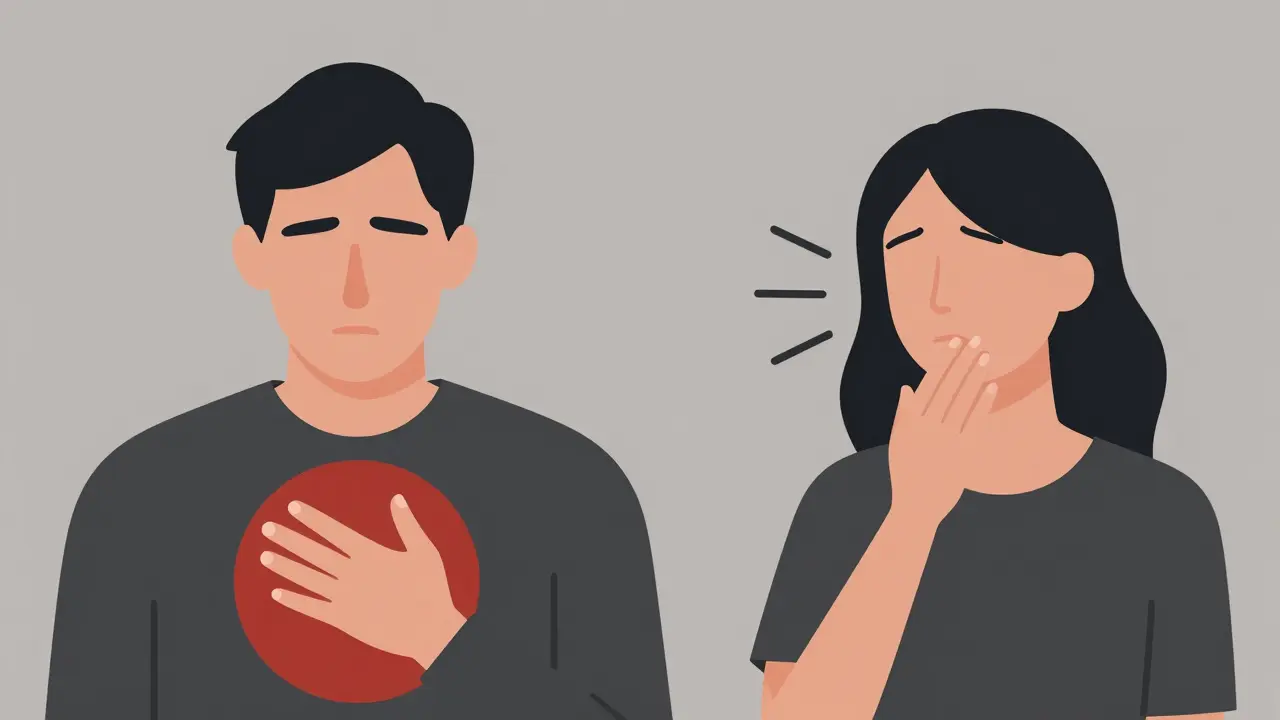
Women often experience different symptoms than men, leading to dangerous delays in care. A 2023 Journal of the American College of Cardiology study found:
| Symptom | Men | Women |
|---|---|---|
| Chest discomfort | 90% | 64% |
| Shortness of breath | 40% | 63% |
| Nausea or vomiting | 25% | 37% |
| Back or jaw pain | 30% | 41% |
Women are more likely to have symptoms like shortness of breath, nausea, and back or jaw pain without chest discomfort. Dr. Eugenia Gianos from NYU Langone Health explains: 'Women often describe heart attack symptoms as pressure or tightness rather than sharp pain, leading to dangerous delays in seeking care.'
Age and Silent Heart Attacks
Older adults, especially those over 75, may experience 'silent heart attacks'-no chest pain at all. Mayo Clinic research shows 30% of heart attacks in this age group have no typical symptoms. Instead, they might feel extreme fatigue, dizziness, or sudden weakness. Geisinger Health System's 2025 study found that unexplained weakness occurs in 22% of cases before a heart attack. Recognizing these subtle signs is vital for seniors and their caregivers.
What to Do When Symptoms Strike
Time is muscle. Every minute counts. Follow these steps:
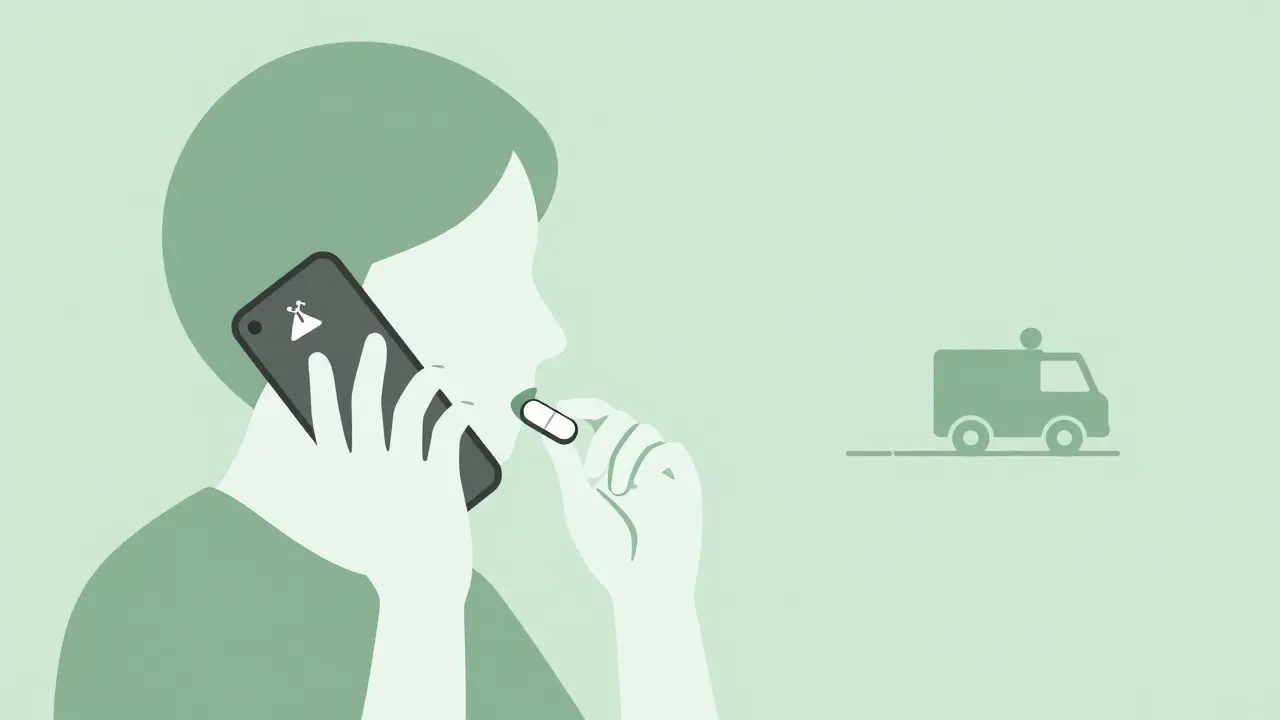
- Call emergency services immediately. Do not drive yourself. Ambulance crews can start treatment en route and alert the hospital.
- Chew an aspirin (300mg) if you're not allergic and haven't been told to avoid it. Aspirin helps thin the blood and reduce clotting.
- Stay calm and rest. Avoid physical exertion while waiting for help.
- Inform someone nearby about your symptoms so they can assist you.
The American Heart Association emphasizes that calling 911 is the fastest way to get help. Driving yourself delays treatment by an average of 3 hours-enough time to lose critical heart muscle.
Why People Delay Seeking Help
Many heart attack victims wait hours before calling for help. A HealthUnlocked survey found 52% delayed due to uncertainty about symptoms. Fear of embarrassment is a major factor-33% of people wait over 2 hours because they're afraid the symptoms aren't serious. But as Dr. Deepak Bhatt from Harvard states: 'The window for optimal treatment is 90 minutes from symptom onset, yet the average patient waits 3 hours before calling 911.' Overcoming this hesitation is life-saving. Remember: it's better to be safe than sorry. Emergency teams would rather check you out than let you miss critical treatment.
Real-Life Examples and Lessons
A 42-year-old woman in Australia experienced persistent jaw pain for weeks before her heart attack. Doctors initially diagnosed her with TMJ disorder. By the time her heart attack was confirmed, she'd lost significant heart muscle. Her story highlights why all symptoms, even unusual ones, deserve attention. On Reddit's heart disease community, 68% of female respondents said they initially thought their symptoms were anxiety or indigestion. These real cases prove that recognizing subtle signs can save lives.
Preparation Saves Lives
Knowledge is power. Take these steps now:
- Learn CPR: Communities with CPR training have 28% higher survival rates for cardiac arrests.
- Know your emergency number: In Australia, it's 000. In the US, it's 911.
- Keep aspirin accessible: Store it in your home, car, and workplace.
- Discuss symptoms with your doctor: Especially if you have risk factors like high blood pressure or diabetes.
Mobile EKG devices have increased 220% since 2020, with 38% of U.S. adults now owning them. These tools can detect early warning signs like atrial fibrillation. While not a replacement for professional care, they provide valuable data to share with doctors.
What are the most common heart attack symptoms?
The most common symptoms include chest discomfort (pressure, squeezing, or pain), shortness of breath, cold sweats, nausea, and discomfort in the arms, back, neck, jaw, or stomach. However, symptoms can vary widely, especially between men and women.
Do women experience different heart attack symptoms than men?
Yes, women are more likely to experience shortness of breath, nausea, vomiting, back or jaw pain, and extreme fatigue without chest discomfort. While 90% of men have chest pain during a heart attack, only 64% of women do. This difference often leads to misdiagnosis, making awareness critical.
What should I do if I think I'm having a heart attack?
Call emergency services immediately-do not drive yourself. Chew an aspirin if you're not allergic and have been told it's safe. Stay calm and rest while waiting for help. Every minute counts, and prompt action can save your life.
Can a heart attack happen without chest pain?
Yes, especially in older adults and women. About 30% of heart attacks in people over 75 have no chest pain at all. Symptoms might include sudden weakness, dizziness, nausea, or unexplained fatigue. Never ignore these signs-call for help immediately.
Is it safe to take aspirin during a heart attack?
Yes, chewing a 300mg aspirin can help reduce blood clotting while waiting for emergency help, but only if you're not allergic and haven't been advised against it by your doctor. Always call emergency services first before taking aspirin.

Albert Lua
February 7, 2026 AT 14:10Hey folks, just got back from Japan and saw how they have CPR classes in every school. It's amazing how communities come together to save lives. We need more of that here.
In Tokyo, even kids know CPR. It's a game-changer. Imagine if every neighborhood had training sessions.
We could save so many people. Let's push for community programs.
It's not just about the medical system; it's about everyone knowing what to do.
It's simple, effective, and life-saving. I've seen it work firsthand. We can do this too.
Katharine Meiler
February 8, 2026 AT 10:26Heart attack science is clear: blocked artery, heart muscle dies. But women often have symptoms like nausea, shortness of breath, or jaw pain-not chest pain. We need to spread the word. If you know what to look for, you can act fast. It's not just about doctors; everyone should know this. Let's get the message out. It could save lives.
Danielle Vila
February 10, 2026 AT 00:52Big Pharma and the government are in cahoots to make us think CPR classes are the solution. It's all about selling stents and meds. They don't want us to know the real truth: that heart attacks are caused by 5G radiation. I read a study that says the government is hiding the real cause. Don't trust anyone. Check the data yourself. It's a conspiracy!
Thorben Westerhuys
February 11, 2026 AT 22:16Oh my goodness! I had a heart attack last year! I was in so much pain! Called 911 right away! But the ambulance took forever! It's so scary! You have to know the symptoms! Please, please, don't wait! It's life or death!!!
Laissa Peixoto
February 13, 2026 AT 19:11It's fascinating how our bodies signal distress. The heart is resilient but vulnerable. Understanding symptoms isn't just about survival-it's about respecting our bodies. We should all learn to listen to them. It's not just medical knowledge; it's about being in tune with ourselves. A little awareness can go a long way. Let's take care of each other. Every minute counts. Don't ignore those subtle signs. Trust your instincts. Call 911 if unsure. It's better to be safe than sorry. Knowledge is power. Stay calm and act fast. Remember, you're not alone in this.
Lana Younis
February 15, 2026 AT 10:52I've seen how different cultures handle heart attacks. In some places, they use traditional medicine alongside modern treatments. But the main thing is knowing the symptoms. For example, women often have nausea or back pain. I've heard that 64% of women dont get chest pain. So always call 911 if you're unsure. Dont wait! Also, keep aspirin in your car. its a simple step that could save you.
Samantha Beye
February 16, 2026 AT 11:07It's important to recognize the signs early. Even if you're not sure, calling 911 is the best move.
I've trained in CPR, and it's empowering to know you can help someone in need.
Stay calm and act fast. Knowledge is power.
Matthew Morales
February 18, 2026 AT 00:19Yeah, I've read about this. Always call 911! Chewing aspirin can help too. I keep a pack in my glove box now. :) Also, womens symptoms are different, so dont ignore them. Good info here!
Diana Phe
February 19, 2026 AT 06:44Call 911 immediately.
Carl Crista
February 20, 2026 AT 19:08Heart attacks are staged. Big Pharma profits. The real cause is toxins in the water. You should check your water source. Always question authority
Andre Shaw
February 21, 2026 AT 05:24Most people think chest pain is the main sign, but that's wrong. It's actually the jaw pain that's key. I've studied this for years. You're all wrong. The real danger is from the government's hidden agenda. Always think for yourself.
Georgeana Chantie
February 22, 2026 AT 19:18America is the best at heart attack response. Other countries don't have it right. We need to stop importing medical advice. Always call 911, but don't trust foreign guidelines. :)
Carol Woulfe
February 22, 2026 AT 21:57The medical establishment's narrative regarding myocardial infarction is fundamentally flawed. It is imperative that one scrutinizes the underlying motivations of pharmaceutical conglomerates. The symptoms presented are often misdiagnosed due to systemic incompetence. One must remain vigilant against such pervasive misinformation. The truth lies beyond the surface. Critical thinking is essential. Do not be swayed by mainstream narratives. Question everything. Your life depends on it. Consider the statistics: the majority of heart attack deaths could be prevented with proper education. The current system prioritizes profit over patient care. It's no coincidence that treatments are expensive and invasive. We need to expose the truth. Trust no one. The real solution is community-based care.