
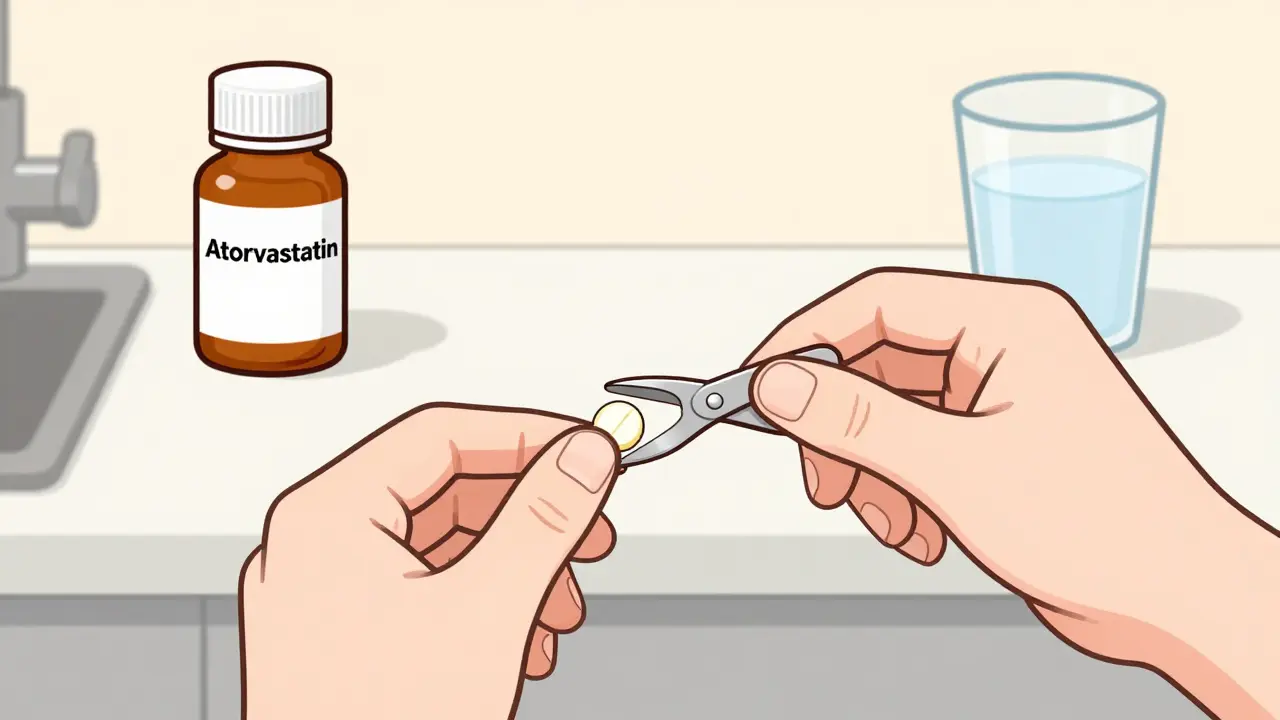
Buying medication can feel like paying for a luxury item when you're on a fixed income. A 40mg tablet of atorvastatin might cost $4.27, but two 20mg tablets cost $3.48 each-totaling $6.96. That’s nearly 60% more for the same total dose. Many people save money by splitting pills, and for some, it’s the only way to afford their prescriptions. But here’s the truth: not all pills can be split, and doing it wrong can be dangerous. If you’re thinking about splitting your meds to cut costs, you need to know exactly how to do it safely-or not do it at all.
Why Pill Splitting Saves Money
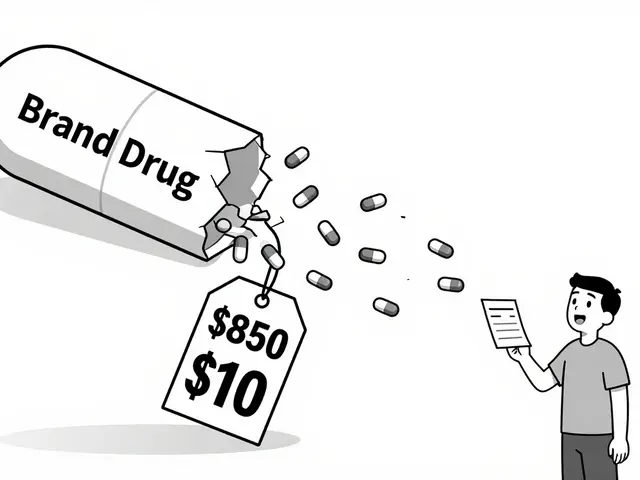
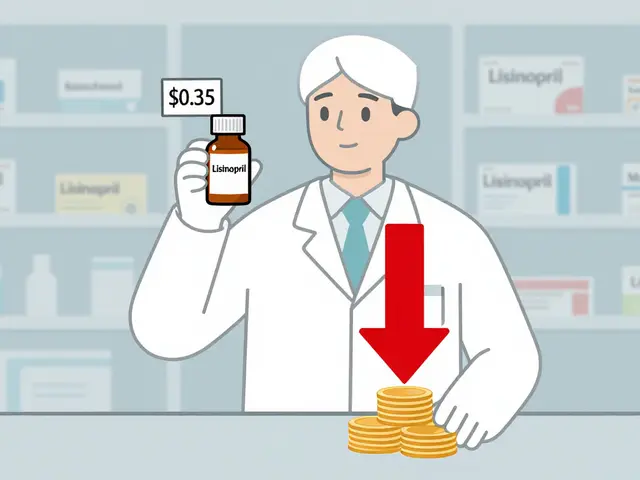
Pharmaceutical companies don’t price pills based on cost to make them. They price them based on what the market will bear. A 40mg tablet of lisinopril might cost $4.00, while two 10mg tablets cost $4.50. That’s because manufacturers often sell higher-dose tablets at a lower cost per milligram. It’s not about production-it’s about profit margins. When you split one 20mg tablet into two 10mg doses, you’re essentially getting two doses for the price of one. For many, that’s the difference between taking your medicine and skipping it.According to a 2022 Kaiser Family Foundation analysis, nearly 15% of Medicare Part D beneficiaries split their pills. For seniors on fixed incomes, that number jumps to over 22%. In low-income households, it’s nearly 32%. The savings can be dramatic. One person splitting 40mg simvastatin tablets saves $287 a month. Another cuts $1,200 off their annual bill for blood pressure meds. But those savings only work if the pill is safe to split-and you split it right.
Which Pills Are Safe to Split?
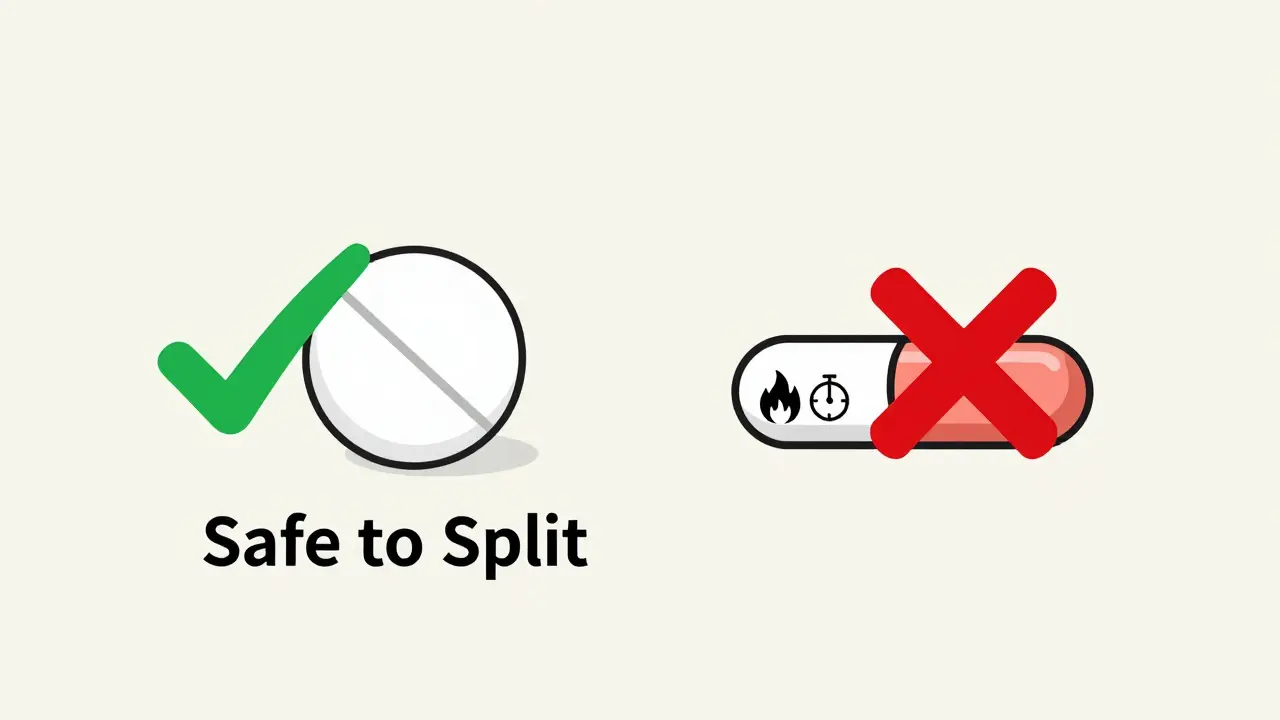
This is where most people get it wrong. Not every pill with a line down the middle is meant to be split. That line is just a guide for manufacturing, not a green light for you to cut it in half. The FDA says you should only split pills that are explicitly approved for splitting-and that info is in the package insert.Safe to split:
- Atorvastatin (Lipitor)
- Lisinopril (Zestril)
- Simvastatin (Zocor)
- Fluoxetine (Prozac)
- Hydrochlorothiazide (HCTZ)
- Metoprolol (Lopressor)
Never split:
- Extended-release tablets (like metformin ER, Adderall XR, or OxyContin)
- Time-release capsules
- Enteric-coated pills (like omeprazole or aspirin EC)
- Drugs with narrow therapeutic indexes: warfarin, digoxin, levothyroxine (Synthroid), tacrolimus
Why? Extended-release pills are designed to release medicine slowly over hours. Splitting them dumps the full dose at once. Enteric coatings protect the drug from stomach acid. Break the coating, and the drug can break down before it’s absorbed. With drugs like Synthroid or warfarin, even a 10% dose difference can cause serious problems-your thyroid levels can go haywire, or you could start bleeding internally.
The Right Way to Split a Pill
If your pill is safe to split, here’s how to do it without risking your health:- Get approval first. Talk to your doctor or pharmacist. Ask: "Is this pill approved for splitting?" Don’t assume. Some manufacturers change the formula without updating the label.
- Use a pill splitter. Not a knife. Not your teeth. Not scissors. A dedicated pill splitter costs $3-$10 at any pharmacy. It holds the pill steady and cuts cleanly with a retractable blade. A 2007 study in the Journal of the American Pharmacists Association found that pill splitters produce halves with only 5-15% variation. Knives? Up to 72% variation.
- Split right before taking. Don’t cut a week’s supply ahead of time. Exposure to air, moisture, and heat can degrade the medication. Banner Health’s 2022 guidelines say split tablets lose stability within 24-48 hours. Store the unsplit pill in a dry, cool place. Split and take immediately.
- Check for crumbs. If the pill crumbles or breaks unevenly, throw it out. Don’t try to eat the smaller piece. You have no idea how much you’re getting.
- Wash your hands and the splitter. After each use. You don’t want cross-contamination between different meds.
Most people need 3-5 tries to get consistent splits. A 2019 study found 78% of users were proficient after one week of practice. It’s not magic-it’s practice.
What Happens When You Do It Wrong
People don’t realize how risky this can be until something goes wrong. One Reddit user split a time-release amlodipine tablet and ended up in the hospital. Another split their Synthroid and had to get emergency blood work after their TSH levels spiked. The FDA tracked 127 adverse events linked to improper pill splitting between 2018 and 2023. Many were preventable.Even with a pill splitter, mistakes happen. A 2010 study with 94 volunteers splitting 25mg hydrochlorothiazide tablets found that 41% of the halves were off by more than 10%. Twelve percent were off by over 20%. That’s not a small error. That’s a dangerous dose. And if you’re splitting without a tool? You’re gambling with your health.
Alternatives to Pill Splitting
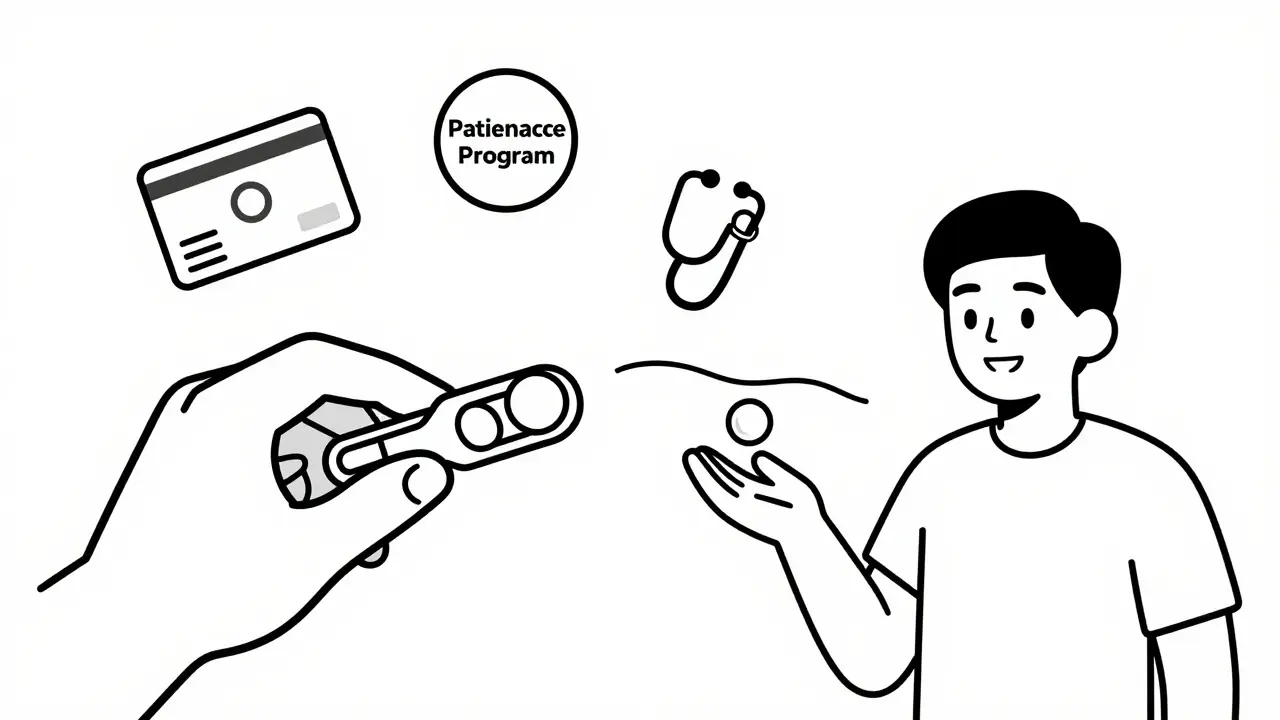
Before you reach for the pill splitter, consider these safer options:- Pharmacy discount cards. GoodRx and SingleCare often cut prices by 38% on average. No splitting needed.
- Manufacturer patient assistance programs. Many drug makers offer free or low-cost meds to people who qualify. Savings can be up to 53%.
- Ask about generic alternatives. Sometimes a different brand of the same drug is cheaper. Or a different class of medication altogether.
- Call your insurance. Ask if they can switch you to a lower-cost tier or if they cover a different strength.
These options carry zero risk of dose inaccuracy. And they’re often just as cheap-or cheaper-than splitting.
When Pill Splitting Might Be Your Only Option
The American Society of Health-System Pharmacists says pill splitting should be a last resort. But for some, it’s the only way to afford care. If you’re choosing between taking your medicine and going without, splitting can be a bridge. Just make sure you do it right. Use the right tools. Get approval. Split immediately before use. And never, ever split a time-release or narrow-therapeutic-index drug.For many, the savings are life-changing. One person told Drugs.com they saved $1,200 a year on their blood pressure meds. Another cut their insulin cost in half by splitting a higher-dose tablet. But those stories only work when safety comes first.
Final Rule: Always Ask
The FDA says it plainly: "Always talk to your healthcare professional before splitting a tablet." Don’t be shy. Don’t assume. Ask your pharmacist to show you the package insert. Ask your doctor if there’s a cheaper alternative. Ask if your insurance covers a different strength.Medication costs are broken. But you don’t have to fix them by risking your health. Pill splitting can work-but only if you treat it like a medical procedure, not a DIY hack.
Can I split any pill with a line down the middle?
No. A score line only means the pill was made to be split during manufacturing-not that it’s safe for you to split. Always check the package insert or ask your pharmacist. Some scored pills, like extended-release or enteric-coated tablets, must never be split.
What’s the safest tool to split pills?
A dedicated pill splitter with a V-shaped holder and retractable blade. These cost $3-$10 at pharmacies like Walgreens, CVS, or Walmart. Never use a knife, scissors, or your teeth-they cause uneven splits and increase the risk of crumbling or dose inaccuracy.
Can I split my Synthroid or levothyroxine?
No. These are thyroid medications with a narrow therapeutic index. Even a 5-10% dose change can throw off your thyroid levels, leading to symptoms like fatigue, heart palpitations, or weight gain. The FDA has documented adverse events from splitting these pills. Always take them whole as prescribed.
How long can I store a split pill?
Don’t store split pills. Split them immediately before taking. Exposure to air, moisture, or heat can degrade the medication. Banner Health’s guidelines say stability drops within 24-48 hours. For safety, always split one pill at a time.
Are there cheaper alternatives to splitting pills?
Yes. Pharmacy discount cards (like GoodRx or SingleCare) often reduce prices by 38% on average. Manufacturer patient assistance programs can offer up to 53% savings. Some insurance plans cover lower-cost generics or different strengths. Always ask your pharmacist about these options before splitting.
Sumit Mohan Saxena
February 28, 2026 AT 06:04While the financial incentive to split pills is undeniable, the pharmacological implications demand rigorous adherence to clinical guidelines. The FDA's position on therapeutic index variability is not merely bureaucratic-it is rooted in peer-reviewed pharmacokinetic studies demonstrating nonlinear absorption dynamics in split extended-release formulations. A 10% deviation in levothyroxine dosing can precipitate subclinical hypothyroidism or iatrogenic atrial fibrillation, particularly in elderly patients with comorbid cardiac conditions. The pill splitter, while superior to manual methods, introduces micro-fractures that accelerate oxidative degradation of active pharmaceutical ingredients, especially in hygroscopic compounds like hydrochlorothiazide. This is not a cost-saving hack; it is a controlled medical intervention requiring prescriber oversight and regular therapeutic drug monitoring.
Katherine Farmer
March 1, 2026 AT 17:51Oh look, another ‘I’m saving $1200 a year’ post from someone who thinks the FDA is just a bureaucratic inconvenience. Let me guess-you’re also the type who skips the ‘do not crush’ warning on your Adderall because ‘it’s just a pill, right?’ The fact that you’re even considering splitting a narrow-therapeutic-index drug without consulting a clinical pharmacist suggests you’ve never read a single peer-reviewed study. Maybe if you spent less time Googling ‘how to split pills’ and more time applying for patient assistance programs, you wouldn’t be risking your life for a few bucks. This isn’t DIY woodworking-it’s pharmacology. And you’re not a genius, you’re a liability.
Angel Wolfe
March 3, 2026 AT 13:15They don't want you to split pills because the drug companies are in bed with the FDA and the AMA and the insurance mafia-they make more money off you taking two pills instead of one. You think that 40mg tablet costs $4.27 to make? Nah. It costs 3 cents. They charge you $4.27 so you'll pay more and not ask questions. Splitting is the only way to fight back. They don't want you to know this. They don't want you to be free. They want you dependent. And if you're splitting your meds with a $5 splitter from Walmart? You're winning. They're scared of people like you. Keep splitting. They can't stop us all.
Sophia Rafiq
March 5, 2026 AT 04:47Splitting works if you do it right. I do it with my lisinopril and atorvastatin-both on the safe list. Got a $7 splitter from CVS, clean it with isopropyl after each use, split right before I take it. No crumbs, no drama. I’ve been doing it for 3 years. My BP’s stable, my cholesterol’s down. No need to overcomplicate it. Just use the right tools, stick to the approved meds, and don’t be lazy. Also, GoodRx is still cheaper than splitting for some drugs so check that first. But yeah, if you need to split, do it smart. Not with a knife. Not with your teeth. Just use the splitter. It’s not rocket science.
Martin Halpin
March 6, 2026 AT 22:36Let me tell you something about the pharmaceutical-industrial complex and how they’ve weaponized pill design to keep people like us docile. The score line? A psychological trap. A false promise. A corporate illusion designed to make you think it’s safe. But here’s the truth they don’t want you to know-many of those so-called ‘safe to split’ medications have been reformulated without label updates. The manufacturer changes the binder composition, alters the tablet density, and suddenly your 20mg split is now delivering 12mg or 28mg. And who’s responsible? Not the pharmacist. Not the doctor. You. You’re the one holding the splitter. You’re the one who didn’t read the 17-page insert. And when you end up in the ER with a TSH of 87? Who’s to blame? The system? Or the person who thought they knew better? I’ve seen it happen. I’ve seen it happen too many times. And no, I’m not scared to say it: pill splitting is a gamble with your life. And the house always wins.
Charity Hanson
March 7, 2026 AT 03:16You got this! I know it feels overwhelming, but you’re already ahead just by researching this stuff. I split my metoprolol every day and it’s been a game-changer for my budget. I use the little plastic splitter, wash it after each use, and always split right before I take it. No storing halves. No guesswork. And I always double-check with my pharmacist-she’s been so helpful. Don’t let fear stop you from taking care of yourself. You’re doing great just by asking questions and staying informed. Keep going-you’re not alone in this!
Justin Ransburg
March 7, 2026 AT 20:47Thank you for this comprehensive and evidence-based overview. The emphasis on consulting healthcare providers before proceeding is not only prudent-it is ethically imperative. The data presented on dose variability with manual splitting methods is particularly compelling, and the distinction between therapeutic index risk categories should be universally understood by patients and providers alike. I would encourage healthcare systems to proactively distribute pill splitters to low-income patients on qualifying medications, alongside clear educational materials. This is not merely a cost-saving strategy; it is a public health intervention that reduces medication non-adherence and prevents downstream complications. The integration of pill splitting into routine patient counseling represents a pragmatic, low-cost solution to a systemic problem.
Brandon Vasquez
March 9, 2026 AT 04:15I’ve been splitting my simvastatin for years. Always used the splitter. Always split right before taking. Never stored halves. Always checked with my pharmacist. It’s worked. No issues. I know it sounds simple, but the key is consistency and not cutting corners. The real danger isn’t the splitter-it’s the assumption that you don’t need to ask. If you’re unsure, ask. If you’re worried, ask. If you’re saving money, ask. That’s how you stay safe. You’re not alone. Many of us are doing this. Just do it right.
Vikas Meshram
March 10, 2026 AT 18:17Incorrect. The FDA does not 'approve' pill splitting for specific medications-this is a common misconception. The FDA does not regulate pill splitting; it is an off-label practice. The package insert may state 'may be split' based on manufacturer testing, but this is not FDA approval. It is a manufacturer's claim. The FDA only approves the original dosage form. Therefore, any splitting is technically off-label and carries inherent liability. Furthermore, the 2007 JAPA study cited is outdated. A 2020 meta-analysis in the Journal of Clinical Pharmacy and Therapeutics showed that even with splitters, inter-patient variability exceeds 18% in 42% of cases for hydrophilic matrices. You are not a pharmacist. You are not a chemist. You are a layperson. And you are gambling with your homeostasis. Do not assume safety based on internet posts.
Ben Estella
March 12, 2026 AT 07:19Why are we even having this conversation? America’s healthcare system is broken. You’re telling people to use GoodRx instead of splitting? That’s a band-aid. The real problem is that drug prices are set by greedy corporations who don’t care if you live or die. You think your $3 splitter is the problem? No. The problem is that a 40mg tablet of Lipitor costs $4.27 while the generic 20mg costs $3.48. That’s not pricing-that’s extortion. If you’re splitting pills, you’re not being stupid-you’re being smart. You’re resisting. You’re saying no to corporate greed. And if that means using a knife? Fine. Better than not taking your meds at all. This isn’t about safety-it’s about survival.
Jimmy Quilty
March 14, 2026 AT 03:55They’re hiding something. The FDA says not to split Synthroid-but have you looked at who funds their advisory panels? Big Pharma. The same companies that make Synthroid also fund the studies that say it’s dangerous to split. Meanwhile, in Canada and Germany, patients split levothyroxine all the time with zero issues. Why? Because their systems are regulated differently. Here, they want you dependent on expensive brand-name drugs. They don’t want you to know that the generic version is identical. And that score line? It’s a trap. A psychological weapon. They want you to think it’s safe so you’ll split it… but only with their approved splitter. They profit from the splitter sales too. It’s all connected. You think this is about health? No. It’s about control. And money. Always money.
Miranda Anderson
March 16, 2026 AT 00:18I really appreciate how detailed this is. I’ve been splitting my hydrochlorothiazide for over five years now, and I’ve never had an issue-but I also never assumed it was safe just because it had a line. I talked to my pharmacist, she showed me the insert, and we checked the batch info. I use a splitter, split immediately before taking, and store the unsplit tablets in a cool, dry cabinet. I’ve never kept a half. I’ve never cut anything not on the safe list. I’ve also tried GoodRx, and honestly, for me, splitting still saves more-about $200 a year. But I know it’s not for everyone. I think the key here is not fear, but informed caution. It’s not about being brave. It’s about being careful. And that’s something we can all do.
Gigi Valdez
March 16, 2026 AT 08:35Thank you for writing this. It’s clear, factual, and compassionate. The most important takeaway isn’t the cost savings-it’s the reminder that medication adherence is a right, not a privilege. For too many, splitting is the only way to stay alive. But it must be done with dignity, not desperation. The tools exist. The knowledge exists. The support exists. We just need to make sure people know where to find it. If you’re reading this and you’re unsure, reach out. Ask your pharmacist. Ask your doctor. Ask a friend who’s done it. You don’t have to figure it out alone. And if you’re already doing it? You’re doing better than you think. Keep going. Stay safe.
Justin Ransburg
March 17, 2026 AT 09:47Thank you for this comprehensive and evidence-based overview. The emphasis on consulting healthcare providers before proceeding is not only prudent-it is ethically imperative. The data presented on dose variability with manual splitting methods is particularly compelling, and the distinction between therapeutic index risk categories should be universally understood by patients and providers alike. I would encourage healthcare systems to proactively distribute pill splitters to low-income patients on qualifying medications, alongside clear educational materials. This is not merely a cost-saving strategy; it is a public health intervention that reduces medication non-adherence and prevents downstream complications. The integration of pill splitting into routine patient counseling represents a pragmatic, low-cost solution to a systemic problem.