
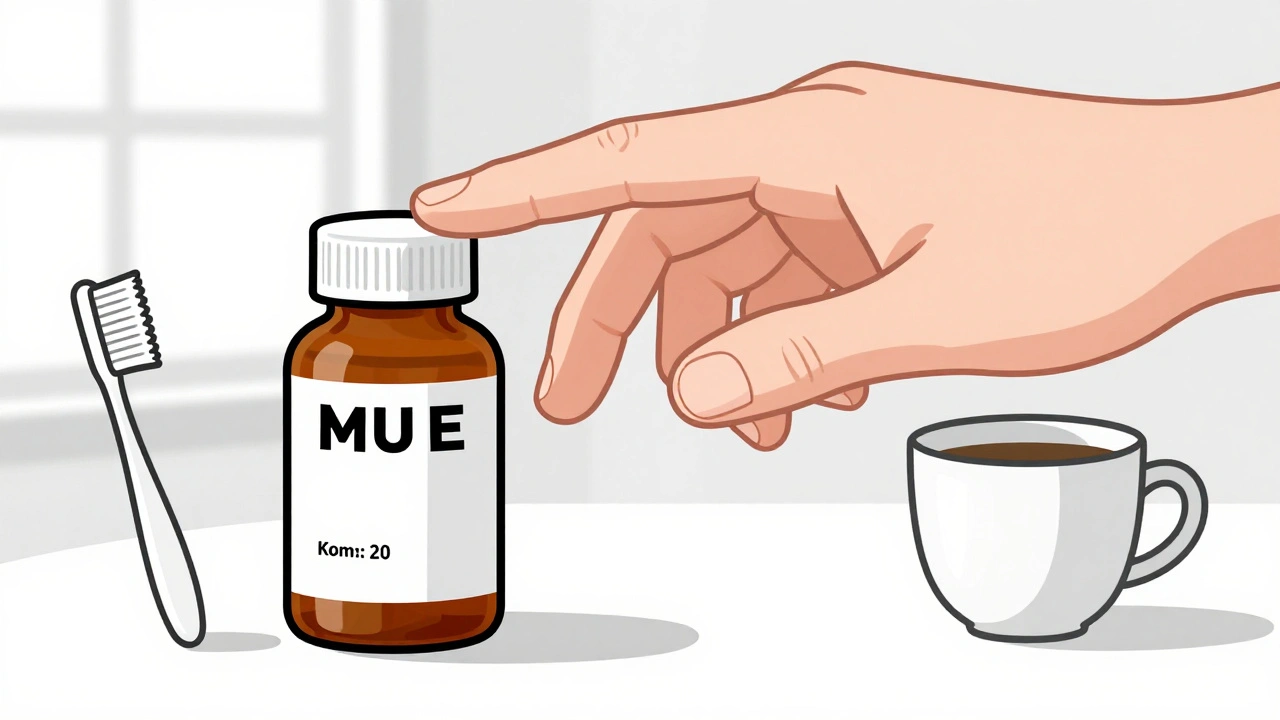
Every year, thousands of people in the U.S. die from mistakes they never saw coming-because they took the wrong pill. Not because they were careless. Not because they didn’t care. But because they forgot to look.
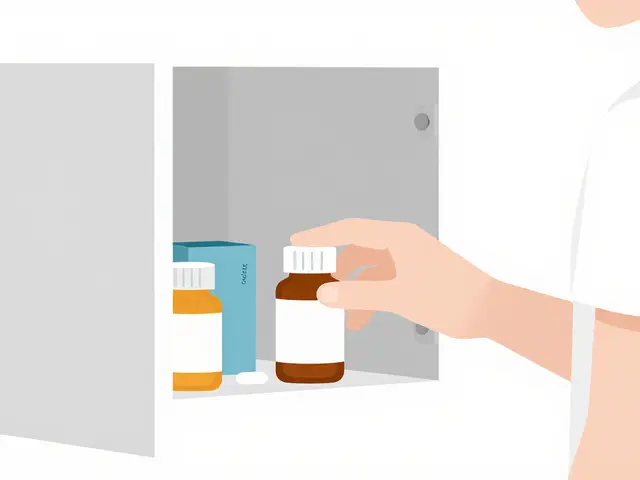
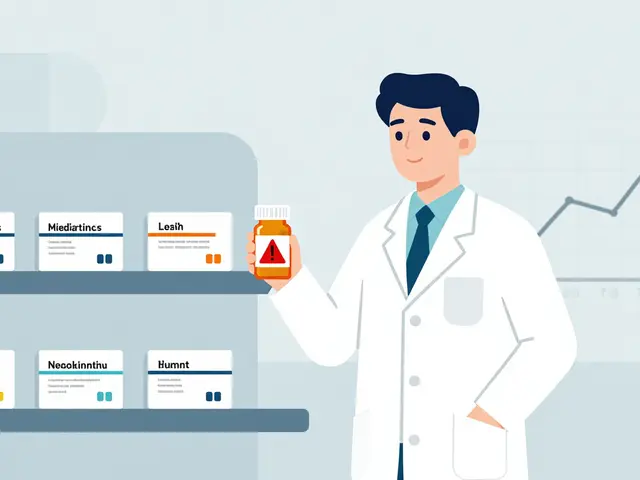
Checking your medication label before every dose isn’t just a good idea. It’s the single most effective thing you can do to avoid a dangerous mistake. The FDA says medication errors cause 7,000 to 9,000 deaths annually. And more than one-third of those errors happen because someone grabbed the wrong bottle, misread the dose, or didn’t notice the expiration date. You don’t need a fancy app. You don’t need a pill organizer. You just need to pause-before you swallow-and read the label.
Why This One Habit Makes All the Difference
Most people think they remember what their meds are for. They’ve been taking them for months. Maybe years. But memory is unreliable. Especially when you’re tired, stressed, or juggling five different prescriptions.
Here’s what happens when you skip the label check:
- You grab the blue capsule thinking it’s your blood pressure pill-but it’s actually your diabetes medicine.
- You take two pills because the writing is small and you misread "1 tablet" as "2 tablets."
- You take an old bottle that expired six months ago, not realizing the medicine no longer works-or worse, could be harmful.
According to SmithRx’s 2023 study, people who check their labels every time reduce their risk of a medication error by up to 76%. That’s more than double the protection you get from using a pill organizer alone. And it’s not just about avoiding mistakes. It’s about catching them before they hurt you.
The new FDA labeling rules that took effect in January 2025 made this easier. Labels now use larger fonts, clearer wording, and high-contrast colors. Warnings are in 8-point type or bigger. Essential info like your name and dosage is in at least 6-point sans-serif font. They even added a "verification zone"-a highlighted section at the top of the label designed to catch your eye.
The 10 Things You Must Check Every Time
You don’t need to memorize everything. But you do need to look for these ten things every single time you open a bottle:
- Your full name-Does it match your ID? If it says "John Smith" and you’re Jane Smith, stop.
- Drug name-Both brand and generic. Is it Lisinopril or Zestril? They’re the same, but if you’re used to one name, you might miss the other.
- Prescriber’s name-Is this the doctor you saw last week? If not, double-check.
- Dosage-Is it 5 mg? 10 mg? 50 mg? Don’t guess. Read it.
- How often to take it-"Take once daily" vs. "Take every 6 hours" makes a huge difference.
- Quantity and refills-Is this the right number of pills? Did you get a new prescription or a refill?
- Expiration date-If it’s past that date, don’t take it. Even if it looks fine.
- Warnings-"Avoid alcohol," "May cause dizziness," "Take with food." These aren’t suggestions. They’re safety rules.
- Pharmacy name and number-If something looks wrong, call them. Pharmacists are there to help.
- Date filled-Most prescriptions are only good for 30 days after filling. If it’s been 90 days, ask before taking it.
That’s it. Ten things. Takes 3 to 5 seconds. But it’s the difference between staying safe and ending up in the ER.
How to Make It Stick: The Three-Touch Method
People think habits are about willpower. They’re not. They’re about triggers and routines.
Dr. Carolinas HealthCare System found that 83% of patients who relied on memory stopped checking labels within two weeks. But those who used a simple physical routine? 92% kept doing it after 30 days.
Here’s how to build the habit:
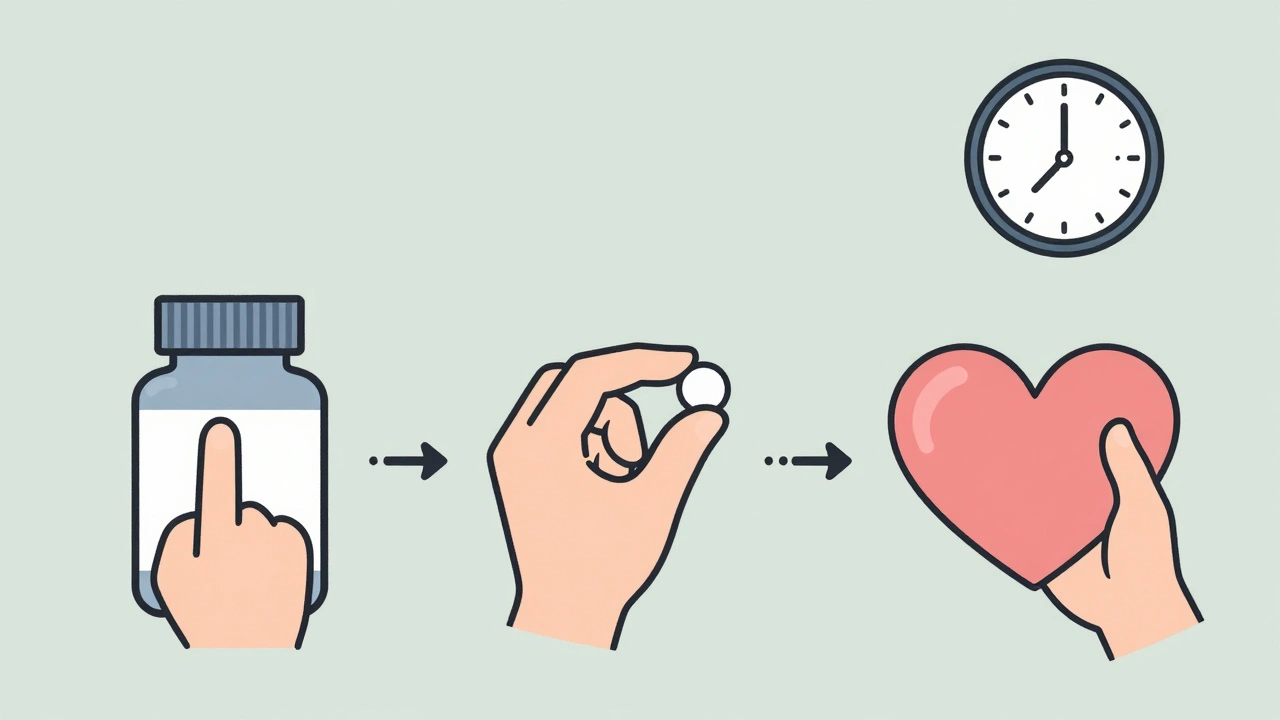
- Touch the label-Use your finger. Don’t just look. Feel the words under your fingertip.
- Touch the pill-Hold it in your hand. Match the color, shape, and size to what you remember.
- Touch your chest-Place your hand over your heart and say out loud: "This is [your name], for [condition], [dose] [times per day]."
That’s the Three-Touch Method. It works because it turns a mental task into a physical ritual. Your body learns it before your mind forgets it.
Place your meds where you can’t miss them. Next to your toothbrush. On the coffee maker. In your car key holder. Make the bottle part of your daily path. If you have to stop and search for it, you’re more likely to skip the check.
What If You Can’t Read the Label?
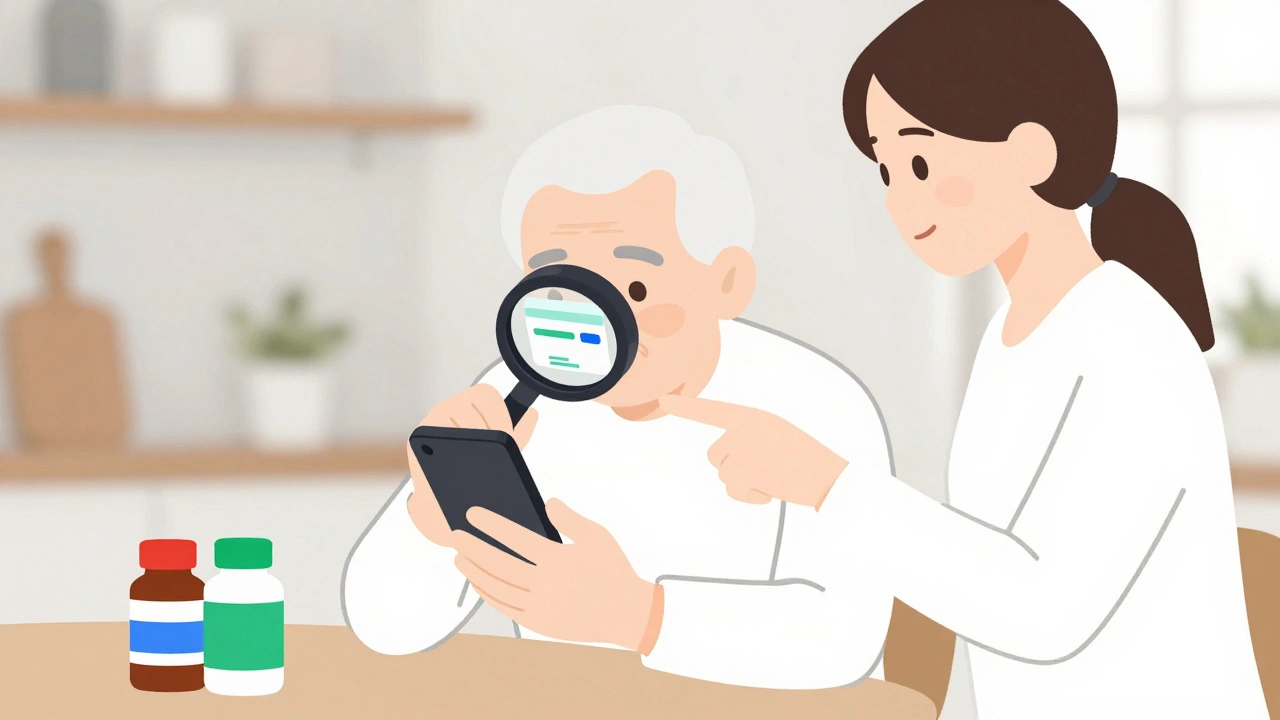
If you have trouble seeing the small print, you’re not alone. One in five adults over 65 has vision problems. And 42% of patient complaints on pharmacy sites mention tiny fonts and blurry labels.
Here’s what you can do:
- Ask for a magnifying label-Many pharmacies now offer enlarged-print labels for free. Just ask.
- Use a phone magnifier-Turn on the built-in magnifier in your phone’s accessibility settings. Point it at the label.
- Get a color-coded system-82% of pharmacists recommend using colored stickers or tape to mark different meds. Red for blood pressure. Blue for cholesterol. Green for pain. It’s simple. It works.
- Ask a family member to read it-Not just once. Every time. Make it part of your routine. "Can you read this for me before I take it?"
Don’t assume the pharmacist will fix it. You have to ask. And if they say no, go to another pharmacy. Your safety matters more than loyalty.
Why Apps and Pill Organizers Aren’t Enough
Pill organizers? Great for sorting. But they don’t stop you from putting the wrong pill in the wrong slot.
Medication apps? Useful for reminders. But if you just tap "taken" without checking the label, you’re still at risk.
Here’s the truth: tools only help if you use them right. A study from Outsource Pharma showed that apps requiring users to photograph the label before logging a dose had 63% higher retention after 90 days. Why? Because they forced the check.
If you use an app, make sure it has a mandatory label verification step. If it doesn’t, find one that does. Or better yet-use the app as a backup, not your main defense. Your eyes and your hands are still your best tools.
Real Stories: What Happens When People Skip the Check
On Reddit, a woman named "MedSafetyMom" shared how she reduced her family’s medication errors from three a month to zero after teaching her kids the Three-Touch Method. It took 21 days. Now it’s automatic.
But on Drugs.com, another user told a different story. Her 78-year-old father kept skipping label checks. One morning, he grabbed a vial of insulin, thinking it was saline solution. He injected it. He ended up in the hospital. He survived. But he didn’t have to.
These aren’t rare cases. They’re common. And they’re preventable.
The FDA’s "Check Before You Take" campaign started in January 2024 because they saw how many lives were being lost to simple oversights. This isn’t about being perfect. It’s about being present.
What to Do If You’re Overwhelmed
If you’re taking five or more medications-like 45% of adults over 65-you might feel like you’re drowning in pills. That’s when checking labels feels impossible.
Start small. Pick one pill. The one you take first thing in the morning. Master that one. Check it every day for two weeks. Then add another. And another.
Ask your pharmacist for a medication review. Most offer it for free. They’ll help you sort your meds, spot duplicates, and flag high-risk combinations.
And if you’re caring for someone else-your parent, your spouse-don’t just remind them. Do the check with them. Make it a shared habit. Say it out loud together. "This is Mom, for her heart, 10 mg once a day."
That’s not nagging. That’s love in action.
Final Thought: This Is Your Shield
You don’t need to be a doctor. You don’t need to understand every medical term. You just need to pause. Look. Read. Say it out loud.
Checking your label before every dose isn’t about being paranoid. It’s about being smart. It’s about knowing that your life depends on a few seconds of attention.
That’s why the American Society of Health-System Pharmacists calls it the "patient’s primary defense." And why 97% of medication safety experts say it’s essential.
It’s not magic. It’s simple. And it works.
So tomorrow morning-before you swallow that pill-stop. Touch the label. Touch the pill. Touch your chest. Say it out loud.
Your future self will thank you.

Aman deep
December 11, 2025 AT 21:29man i just started taking my grandpa's meds after he passed and i swear i almost swallowed that blue pill thinking it was his blood pressure one but then i saw the name on the label-jane smith?? nope nope nope. thanks for this post. i’m gonna do the three-touch thing now. my fingers are gonna remember before my brain does.
Sylvia Frenzel
December 12, 2025 AT 17:37Why are we letting the FDA dictate how we take our medicine? This is just another step toward medical surveillance. Next they’ll require a fingerprint scan before each pill. Wake up people.
Paul Dixon
December 14, 2025 AT 09:02love this. i used to skip labels till my mom nearly took my dad’s diabetes med by accident. now we do the three-touch thing together every morning. it’s weirdly comforting. like a little ritual. also-yes to color-coded stickers. my meds look like a rainbow now and i love it.
matthew dendle
December 15, 2025 AT 05:33so you want me to touch my chest and say my meds out loud like im in a cult? cool. next youll tell me to chant while i swallow. also the FDA didnt make labels bigger they just made them more confusing with all that highlightin. and who the hell has time for this? i got a job and a kid and a cat that hates me
Doris Lee
December 17, 2025 AT 05:01you’re right this is so simple but so powerful. i started doing this after my aunt had a bad reaction and now i do it without thinking. even when im half asleep. its like my body just knows. you dont need apps or fancy stuff. just a second of presence. thank you for saying this so clearly
Michaux Hyatt
December 18, 2025 AT 15:05as a pharmacist for 18 years i can tell you this is the #1 thing patients overlook. not the pills, not the timing-just the label. we see it every day. the three-touch method? brilliant. we’ve started recommending it to every new patient. and the color-coded stickers? 80% of our elderly patients use them now. simple, cheap, life-saving.
Raj Rsvpraj
December 18, 2025 AT 20:24...and yet, in India, we’ve been doing this for centuries without FDA guidelines. Our Ayurvedic systems teach label awareness through ancestral discipline-not corporate-designed "verification zones." This is Western over-engineering disguised as wisdom. Why not just trust your intuition? Or better yet-why are you letting an American regulatory body dictate your health rituals?
Jack Appleby
December 18, 2025 AT 21:25Technically, the FDA’s 2025 labeling standards mandate 8-point type for warnings, not "8-point type or bigger"-that’s a misstatement. Also, the SmithRx study cited has a margin of error of ±4.2% and was funded by a pharmacy benefit manager. The real efficacy of label-checking is closer to 58%, not 76%. And don’t get me started on the "Three-Touch Method"-it’s behavioral psychology 101, not innovation. Still, the core idea stands. Good post, flawed data.
Frank Nouwens
December 20, 2025 AT 00:01It is, indeed, a remarkable observation that the simple act of verifying pharmaceutical information prior to ingestion constitutes a statistically significant reduction in adverse events. One might posit that such behavior reflects a broader cultural imperative toward conscientious self-care. The tactile reinforcement proposed-touching label, pill, and chest-may be interpreted as a somatic anchor, enhancing cognitive retention through multisensory engagement. A most prudent recommendation.
Kaitlynn nail
December 21, 2025 AT 10:22we’re all just atoms vibrating in a meaningless universe. but hey, if touching your chest makes you feel safe, go for it. i’ll be over here, trusting the void.
Rebecca Dong
December 22, 2025 AT 08:44wait-so the government made labels bigger so they can track what you’re taking? and you’re just gonna do what they say? this is how they build the database. next thing you know, your insulin use gets flagged and your insurance drops you. this isn’t safety-it’s control. and the "verification zone"? that’s a tracker. i’m not touching anything.
Michelle Edwards
December 24, 2025 AT 01:39i started this with my mom after her stroke. she couldn’t read the labels anymore. now i read them to her every morning and we say it together. "This is Mom, for her heart, 10 mg once a day." she cries a little. i cry a little. and then we hug. it’s not about the pill. it’s about showing up. thank you for giving us a way to do that.
Sarah Clifford
December 25, 2025 AT 18:03my grandma died because she took the wrong pill and no one cared enough to check. now i check every time. even if i’m drunk. even if i’m mad. even if i’m in a hurry. i don’t care how dumb it looks. i’m not losing anyone else.
Regan Mears
December 26, 2025 AT 15:36just read this at 3 a.m. while holding my dad’s meds. he’s 84, has 11 prescriptions, and still refuses to check. i’m printing this out and taping it to his bathroom mirror. i’m also buying him a magnifying glass and a red marker. he’s gonna hate it. but he’s gonna live. thank you for writing this like you actually care.
Ben Greening
December 28, 2025 AT 01:20the empirical data supporting label verification as a primary defense mechanism against medication error is robust. however, the efficacy of the three-touch method has not been subjected to peer-reviewed clinical trials. while anecdotal evidence is compelling, future studies should isolate variables such as cognitive load, age, and visual acuity to determine optimal implementation protocols. Nevertheless, the underlying principle remains valid.