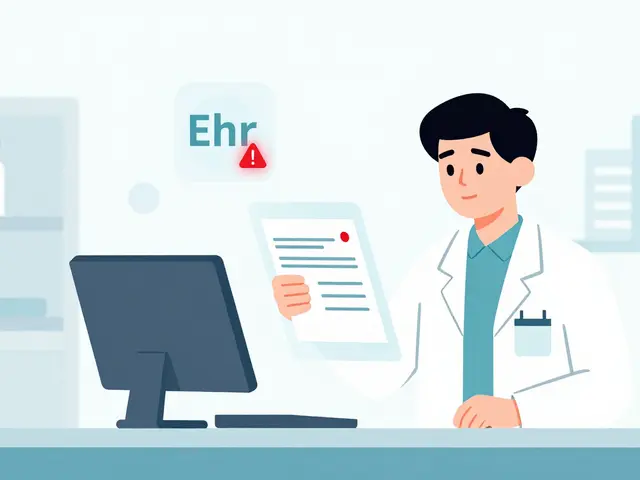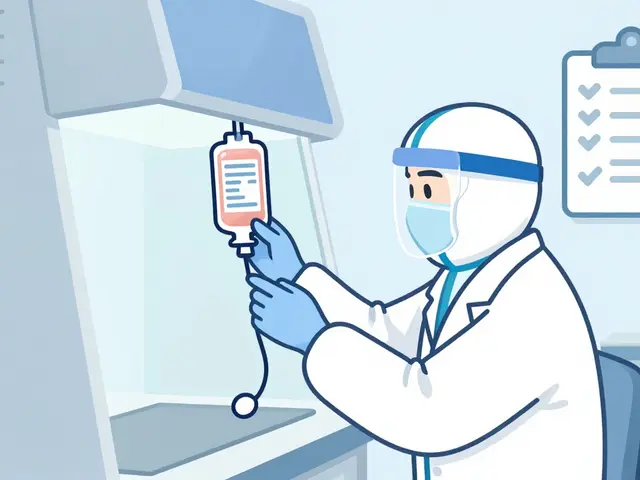
You pop a pill for high blood pressure or an antibiotic for an infection. It’s cheap, effective, and looks just like the brand-name version your doctor might have prescribed years ago. But how do you know it’s safe? The answer isn’t magic; it’s a massive, rigorous machine of regulation, inspection, and science run by the U.S. Food and Drug Administration (FDA). For decades, generic drug safety has been the backbone of affordable healthcare in America, covering roughly 90% of all prescriptions dispensed. But behind that statistic lies a complex web of manufacturing oversight designed to catch failures before they reach your medicine cabinet.
The core promise of a generic drug is simple: it must work exactly like the brand-name original. This concept, known as bioequivalence, means the generic delivers the same amount of active ingredient into your bloodstream at the same rate as the reference-listed drug (RLD). If the brand releases 100 units of medication over two hours, the generic must release between 90 and 110 units in that same window. Anything outside that range fails the test. This strict standard ensures that while the inactive ingredients-like dyes or binders-might differ slightly, the therapeutic effect remains identical.
The Legal Foundation: Hatch-Waxman and the ANDA Pathway
To understand how the FDA oversees generics, you have to look back to 1984. Before the Hatch-Waxman Amendments (officially the Drug Price Competition and Patent Term Restoration Act), bringing a new drug to market cost billions and took over a decade. Generics were rare because manufacturers had to repeat those expensive clinical trials. Hatch-Waxman changed everything by creating the Abbreviated New Drug Application (ANDA) pathway. Instead of proving safety from scratch, generic makers only need to prove their product is bioequivalent to an already-approved brand-name drug.
This shortcut saves money but doesn’t lower the bar for quality. In fact, it shifts the focus entirely to manufacturing consistency. The FDA’s Center for Drug Evaluation and Research (CDER) reviews these applications through its Office of Generic Drugs (OGD). They don’t just check if the chemistry matches; they scrutinize every step of the production process. An ANDA review involves assessing bioequivalence data, verifying labeling compliance with the RLD, and ensuring the manufacturing site adheres to Current Good Manufacturing Practices (cGMP). Historically, this process dragged on for 30 months due to resource constraints. However, the introduction of user fees under the Generic Drug User Fee Amendments (GDUFA) has drastically improved efficiency, with 95% of standard ANDAs now reviewed within 10 months.
cGMP: The Non-Negotiable Standard for Manufacturing
If bioequivalence is the goal, Current Good Manufacturing Practices (cGMP) are the rules of the road. These aren’t suggestions; they are federal regulations enforced by the FDA. For a generic manufacturer, cGMP covers three critical areas that prevent contamination and ensure potency:
- Material Control: Every raw material, from the active pharmaceutical ingredient (API) to the plastic capsule shell, must be traced from receipt to storage. Manufacturers must test incoming materials to ensure they haven’t been contaminated or degraded before they ever touch the production line.
- Process Controls: There are written procedures for every single step. Did the mixing tank reach the correct temperature? Was the compression force on the tablet press consistent? Critical parameters are monitored in real-time. If a machine deviates even slightly, the batch is flagged for investigation.
- Quality Testing: Laboratories must validate their testing methods. Finished products undergo rigorous analysis to confirm identity, strength, quality, and purity. This includes checking for impurities that could form during storage or manufacturing. The Office of Pharmaceutical Quality (OPQ) oversees this, using methodologies aligned with international standards to assess any impurities exceeding safety levels.
Failure to meet cGMP standards results in severe consequences. The FDA can issue warning letters, seize products, or even shut down facilities. In 2019, for example, the FDA identified quality issues in 15% of foreign generic drug manufacturing facilities inspected, compared to only 8% of domestic ones. This disparity highlights why oversight intensity varies based on risk and location.
Inspections: Eyes on the Factory Floor
Paperwork tells one story, but inspections tell another. The FDA conducts pre-approval inspections to verify that a facility can consistently produce drugs meeting cGMP standards before granting marketing approval. They also perform routine surveillance inspections to ensure ongoing compliance. Between 2011 and 2013, the FDA increased its pre-approval inspections of generic manufacturers by 60%, recognizing that many generic plants operated overseas where regulatory environments differed significantly from the U.S.
The challenge has always been scale. With thousands of facilities globally, the FDA cannot inspect everyone annually. That’s why GDUFA II, implemented in 2018, introduced a risk-based inspection scheduling system. Facilities with a history of violations, those producing complex generics, or those located in regions with weaker regulatory oversight get prioritized. By 2021, the FDA conducted 1,082 inspections globally, completing 74% of foreign inspections within performance goals set by GDUFA. Under GDUFA III, which runs through 2027, the agency aims to increase foreign inspections to 1,500 annually by 2025, funded by $1.1 billion in user fees.
| Metric | Domestic Facilities | Foreign Facilities |
|---|---|---|
| Quality Issues Identified | 8% | 15% |
| Regulatory Environment | Direct FDA Jurisdiction | Varies by Country |
| Inspection Frequency Goal | Biennial | Risk-Based Priority |

Post-Market Surveillance: Catching What Slips Through
No system is perfect. Even with rigorous pre-approval checks, problems can emerge once millions of patients start taking a drug. This is where post-market surveillance becomes vital. The FDA monitors the entire supply chain, from APIs to the pharmacy shelf. One of the most powerful tools in this arsenal is MedWatch, the FDA’s safety information and adverse event reporting program. Healthcare professionals and consumers can report side effects, medication errors, or quality defects. The Division of Clinical Safety and Surveillance (DCSS) analyzes approximately 1.3 million reports annually, looking for patterns or "signals" that suggest a specific generic drug may be causing unexpected harm.
If a signal emerges, the OGD’s Clinical Safety and Surveillance Committee steps in. This multidisciplinary group includes physicians, chemists, and scientists who evaluate whether the issue is isolated or systemic. Actions can range from updating product labeling to issuing Dear Healthcare Provider Letters, or in severe cases, initiating voluntary recalls. For instance, if a batch of tablets shows inconsistent dissolution rates after being sold, the FDA works with the manufacturer to pull the product and investigate the root cause-whether it was a machine calibration error or a raw material flaw.
The Future of Oversight: GDUFA III and Complex Generics
The landscape of generic drugs is evolving. It’s no longer just about simple pills. Today, manufacturers are copying complex generics like inhalers, topical creams, and extended-release formulations. These products require more sophisticated bioequivalence studies. To address this, the FDA launched the Complex Generic Drug Products Initiative in 2018, developing specific guidance for challenging-to-copy drugs. By 2023, the FDA had released detailed scientific approaches for over 2,800 drug products, a 40% increase since 2018.
GDUFA III continues to push modernization. Beyond increasing inspections, it funds real-time data monitoring and digital transformation of review processes. The goal is clear: reduce approval timelines without sacrificing safety. As FDA Commissioner Robert Califf noted in 2023, enhancing oversight of foreign manufacturing remains a top priority. The strategy relies on stronger international partnerships, smarter risk assessment, and relentless enforcement of cGMP standards.
For patients, this means greater confidence. When you take a generic, you’re not taking a gamble. You’re participating in a system where every ingredient is tracked, every machine is monitored, and every complaint is analyzed. The FDA’s oversight ensures that affordability never comes at the cost of efficacy or safety.
How does the FDA define bioequivalence for generic drugs?
Bioequivalence means the generic drug delivers the same amount of active ingredient into the bloodstream at the same rate as the brand-name reference drug. Specifically, the generic must achieve 90-110% of the exposure level of the brand-name drug. This ensures identical therapeutic effects despite potential differences in inactive ingredients like colors or flavors.
What happens if a generic drug fails cGMP inspections?
If a facility fails Current Good Manufacturing Practices (cGMP) inspections, the FDA can take several actions depending on severity. These include issuing warning letters, placing the facility on import alert (blocking entry of goods), seizing products, or revoking approval. Repeated failures can lead to permanent shutdowns of manufacturing operations.
Are generic drugs tested for safety before reaching the market?
Yes, but differently than brand-name drugs. Instead of full clinical trials, generic manufacturers submit an Abbreviated New Drug Application (ANDA) proving bioequivalence to an already-approved brand-name drug. The FDA rigorously reviews manufacturing processes, quality control labs, and stability data to ensure safety and efficacy match the original.
Why are there more quality issues found in foreign generic manufacturers?
Data shows higher defect rates in foreign facilities partly due to varying local regulatory environments and supply chain complexities. Some countries have less stringent oversight than the U.S., making contamination or process deviations more likely. The FDA addresses this through risk-based inspection strategies under GDUFA, prioritizing high-risk foreign sites for frequent scrutiny.
How can consumers report a problem with a generic drug?
Consumers and healthcare providers can report adverse events, medication errors, or quality issues via the FDA’s MedWatch program online or by phone. These reports are analyzed by the Division of Clinical Safety and Surveillance to detect safety signals, potentially leading to label updates, recalls, or further investigations into manufacturing practices.