

Every year, millions of seniors get a call from their Medicare Part D plan offering a free Medicare Annual Medication Review-also called a Comprehensive Medication Review (CMR). But too many people show up unprepared, waste 45 minutes, and walk away with no real answers. If you’re on three or more chronic medications, take eight or more Part D drugs, or spend over $1,623 a year out-of-pocket on prescriptions, you qualify. And if you skip this review, you could be missing dangerous interactions, paying too much, or taking pills you don’t even need.
What Exactly Is a Medicare Annual Medication Review?
This isn’t just a chat with your pharmacist. It’s a federally required, in-depth review of every medication you take-prescription, over-the-counter, vitamins, herbs, even supplements like fish oil or melatonin. The goal? Find hidden problems: drugs that clash, duplicates, side effects you haven’t told anyone about, or pills you stopped taking but your doctor never removed from your list.
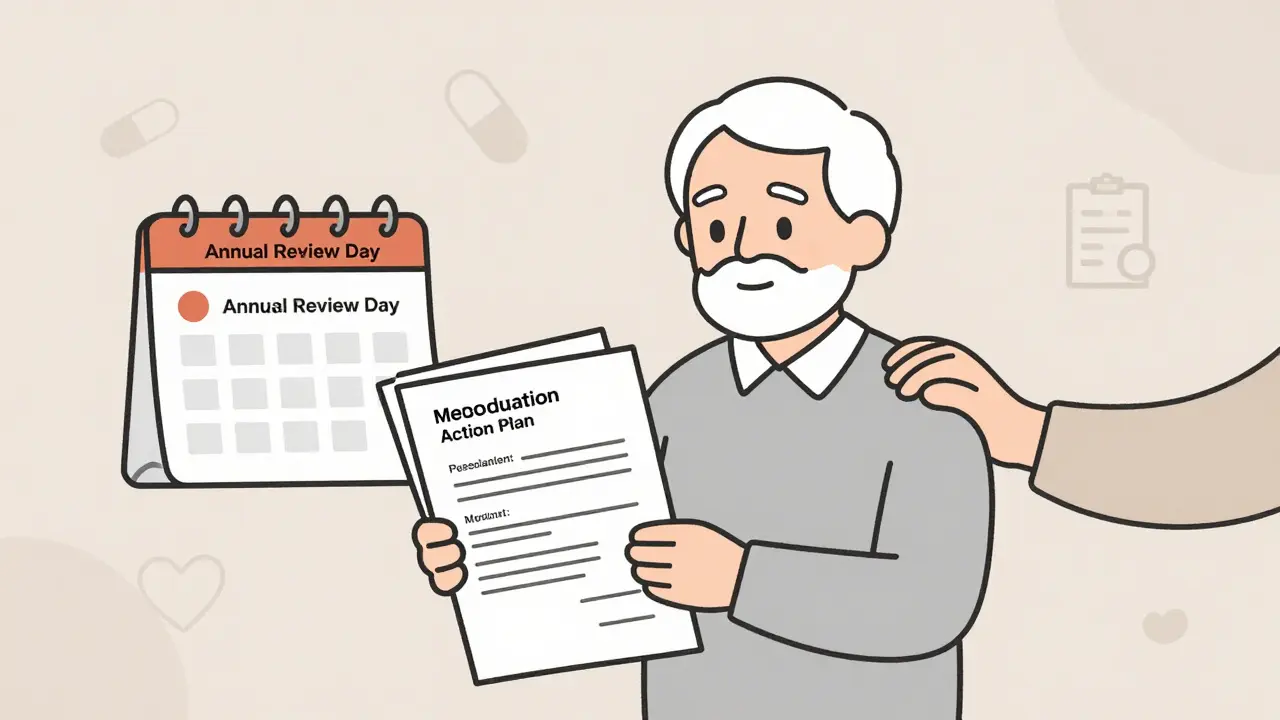
The review must be done face-to-face or over video call with a licensed pharmacist trained in Medicare’s rules. Afterward, you get three documents: a Consultation Letter, a Medication Action Plan, and a Personal Medication List. These aren’t just paperwork-they’re your official medication record, updated and signed off by your plan.
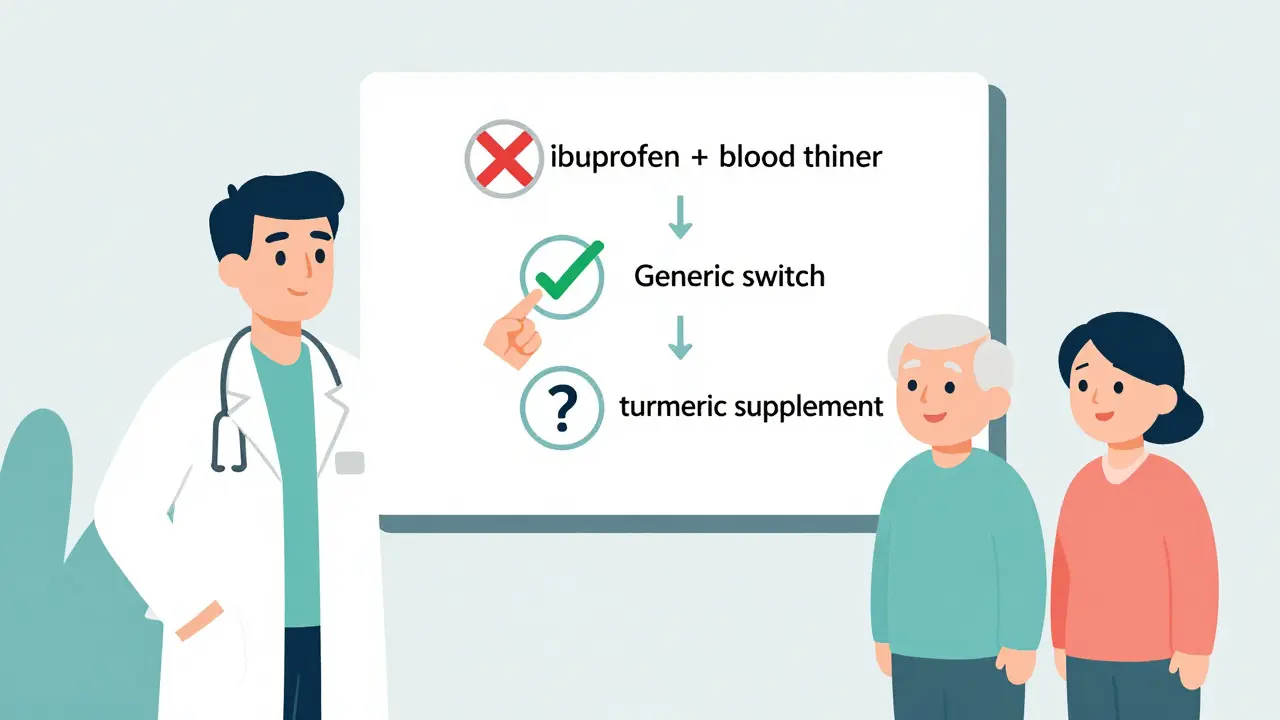
Unlike a quick pharmacy consultation, this review looks at everything. Even that $10 bottle of ibuprofen you grab every week. Even the turmeric capsule your cousin swore helped her arthritis. If it’s in your cabinet, it’s on the table.
Who Qualifies for a Medicare Annual Medication Review?
You don’t have to request it-it comes to you if you meet these criteria in 2025:
- You take at least three chronic conditions like diabetes, heart disease, COPD, or high blood pressure
- You’re taking between two and eight Part D-covered prescription drugs (including maintenance meds)
- You spent at least $1,623 out-of-pocket on your Part D medications in the past year
That’s it. No extra forms. No applications. If you hit these numbers, your plan is required to reach out. In 2022, 57% of eligible seniors got one. By 2026, that number is expected to hit 65%. But if you’re not getting a call, check with your Part D insurer. Sometimes the system misses people.
There’s a new twist: starting in 2024, if you have two serious chronic conditions and take high-risk medications (like blood thinners or opioids), you might qualify even if you don’t hit the eight-drug mark. This change helps seniors with complex needs who were previously left out.
Why This Review Could Save Your Life
Here’s what happens when people skip this:
- John, 78, took two blood pressure pills that canceled each other out. His plan caught it during his CMR-his doctor switched one, and his dizziness vanished.
- Maria, 82, was taking three different painkillers. One was an OTC NSAID she didn’t realize was dangerous with her heart meds. The pharmacist flagged it. She saved $120 a month by switching to a safer option.
- Robert, 75, had been taking a sleep aid for five years. He forgot to tell his doctor he stopped it six months ago. The CMR caught the discrepancy. His doctor removed it from his list, avoiding a potential fall risk.
Studies show seniors who prepare for their CMR are 85% more likely to have medication errors fixed. That’s not just savings-it’s safety. One review found 42% of seniors had at least one potentially dangerous drug interaction that wasn’t caught by their primary care doctor.
How to Prepare: The 5-Step Checklist
You don’t need to be a medical expert. You just need to be organized. Here’s how to get ready in under 90 minutes.
- Gather every pill, bottle, and capsule. Don’t rely on memory. Open your medicine cabinet, bathroom drawer, purse, nightstand. Bring everything-prescriptions, OTC meds, vitamins, herbal teas, CBD gummies, even the aspirin you keep in your car. The pharmacist needs to see the actual labels. Don’t bring a list you wrote on a napkin-bring the bottles.
- Write down your questions. What side effects are you getting? Are you skipping doses because it’s too expensive? Do you feel dizzy after taking your pills? Write them down. Example: “Why am I taking this cholesterol pill if my levels are normal?” or “Can I stop this sleep aid without rebound insomnia?”
- Track your adherence. Are you taking your meds as prescribed? Do you ever forget? Do you split pills to save money? Be honest. The pharmacist isn’t judging-they’re problem-solving. If you skip your diabetes pill on weekends, say so. That’s the kind of info that leads to better solutions.
- Bring recent health changes. Did you go to the ER last month? Get a new diagnosis? Start a new treatment? Bring lab results or discharge papers. Medication changes often happen after hospital stays, and your CMR pharmacist needs to know.
- Bring someone with you. Memory fades. Stress clouds thinking. Have a family member, friend, or caregiver come along. They’ll remember things you forget. And if the pharmacist says, “You should stop this drug,” they’ll help you ask, “What’s the alternative?”
Pro tip: Take photos of each pill bottle before you leave home. That way, if you misplace something during the review, you’ve got a backup. Many seniors do this now-and it cuts review time in half.
What Happens During the Review?
The pharmacist will spend 30 to 60 minutes with you. They’ll:
- Compare your actual meds with what’s in your plan’s records
- Check for drug interactions (like warfarin and cranberry juice)
- Look for duplicate medications (e.g., two different brands of the same painkiller)
- Identify drugs that are no longer needed
- Find cheaper alternatives or generic switches
- Discuss side effects you’ve been ignoring
- Help you simplify your routine (e.g., switching to once-daily pills)
They’ll also ask you to explain how you take each pill. “Do you take this one with food? At night? After breakfast?” This is where people slip up. Many think “take with food” means “whenever I eat,” but some meds need to be taken with a full meal, not a snack.
Don’t be shy. If you don’t understand something, say so. Ask: “Can you write that down?” or “Can you explain that in simpler terms?” This is your review. You’re the boss.
What You Get After the Review
Within a few days, you’ll receive three documents:
- Consultation Letter - Summarizes what was discussed and any changes recommended
- Medication Action Plan - Lists specific next steps: stop this drug, switch to that one, schedule a follow-up with your doctor
- Personal Medication List - Your updated, official list of every medication you take, including doses and times
Keep these. Give copies to your doctor, your pharmacy, and your caregiver. Update them every time your meds change. This list becomes your medical lifeline in emergencies.
Common Mistakes People Make
Here’s what goes wrong-and how to avoid it:
- Mistake: “I didn’t bring my supplements.” Fix: Even if you think they’re “natural,” they can interact with your meds. Garlic pills thin your blood. St. John’s Wort cancels out antidepressants.
- Mistake: “I thought they’d just check my prescriptions.” Fix: They check everything. OTC meds count. Even that daily aspirin.
- Mistake: “I didn’t know I had to be ready.” Fix: If you show up with no bottles, they’ll reschedule. That’s a lost opportunity.
- Mistake: “I didn’t ask any questions.” Fix: This is your one chance to clear up confusion. Don’t be polite-be direct.
One woman told her pharmacist she was taking “vitamins.” He asked which ones. She said, “The green ones.” He looked at her bottles-she was taking four different multivitamins, each with overlapping iron and vitamin D. She was overdoing it by 300%. That’s the kind of thing they catch.
What If You Don’t Qualify?
Even if you don’t meet the official criteria, you can still ask for a review. Many Part D plans will do a free consultation anyway-especially if you’re on multiple medications or have had recent health changes. Call your plan’s customer service. Say: “I’m on several medications and want a full review. Can you help?”
Some independent pharmacies also offer free medication reviews. Ask your local pharmacist. You don’t need Medicare to get good advice.
What’s Next After the Review?
Don’t stop after the meeting. Use your Medication Action Plan. If you’re told to stop a drug, don’t just quit cold turkey-ask how to taper safely. If you’re switched to a cheaper drug, check your next co-pay. If your plan recommends a new pharmacy, ask if they’ll transfer your prescriptions.
Set a reminder for your next CMR. It’s annual, but if your meds change, call your plan sooner. You can request a review anytime if your health changes-no waiting.
And if you’re still confused? Call the Medicare Rights Center at 1-800-MEDICARE. They’ll walk you through your documents and help you understand your rights.
This isn’t bureaucracy. It’s protection. Every year, hundreds of seniors avoid hospital stays, falls, and ER visits because they showed up prepared for their CMR. You can too.
Do I have to pay for a Medicare Annual Medication Review?
No. The Medicare Annual Medication Review is completely free for all eligible beneficiaries. It’s covered under your Medicare Part D plan as a required benefit. There are no copays, no fees, and no hidden charges. The pharmacy or plan handles the cost.
Can I do the review over the phone instead of in person?
Yes. Medicare allows the review to be done either in person or via secure video call (telehealth). Many seniors prefer video calls because they’re more convenient. But if you’re not comfortable with technology, you can always request an in-person visit at a local pharmacy or clinic.
What if I don’t have all my pill bottles?
Bring what you can. If you’ve thrown out bottles, write down the names, doses, and how often you take each medication. But don’t rely on memory alone-studies show people forget 2 to 3 medications on average. If possible, call your pharmacy to get a printed list of your current prescriptions. You can also check your plan’s online portal for your medication history.
Will the pharmacist change my prescriptions?
No, the pharmacist cannot change your prescriptions. Only your doctor can do that. But the pharmacist will identify problems and recommend changes to your doctor. They’ll send a written summary to your prescriber with suggestions. You’ll get a copy too. You can then decide whether to ask your doctor to make the changes.
How often should I update my Personal Medication List?
Update it every time your medications change-whether you start, stop, or change a dose. Keep the latest version with you at all times, especially when visiting doctors or going to the ER. Many seniors keep a printed copy in their wallet and another on their fridge. Some use free apps like Medisafe or MyTherapy to store digital copies.
Final Thoughts
Preparing for your Medicare Annual Medication Review takes time, but it’s one of the most important things you can do for your health. It’s not about paperwork-it’s about safety. It’s about making sure you’re not taking pills that hurt you, paying too much for meds you don’t need, or missing out on cheaper, safer options. The system is designed to help you. But it only works if you show up ready.
Don’t wait for a reminder. Start gathering your bottles today. Write down your questions. Bring someone with you. This review could be the reason you stay healthy, independent, and in control of your health for years to come.




beth cordell
January 13, 2026 AT 17:06OMG I just did this last week and I was NOT ready 😅 I brought like 12 pill bottles and my cat’s fish oil (yes, really) and the pharmacist laughed and said, "You’re the most prepared person this month." I had no idea I was taking 3 different things with ibuprofen in them-now I’m saving $80/month and not feeling like a zombie. THANK YOU for this guide!! 🙌💊
Lauren Warner
January 15, 2026 AT 08:46This is exactly the kind of bureaucratic nonsense that makes Medicare a joke. You need a 45-minute meeting just to confirm you’re not poisoning yourself? My grandfather died because his doctor didn’t check his meds properly-not because he didn’t bring his pill bottles. This is a band-aid on a bullet wound.
Craig Wright
January 17, 2026 AT 03:49As a British citizen who has navigated the NHS system for over two decades, I find this approach both commendable and astonishingly inefficient. In the UK, pharmacists routinely conduct medication reviews as part of standard care without requiring patients to assemble their entire medicine cabinet. The fact that such a fundamental safety measure is treated as an optional, event-driven procedure in the U.S. speaks volumes about the fragmentation of your healthcare infrastructure.
Lelia Battle
January 17, 2026 AT 11:22It’s interesting how we’ve come to treat medication as something that needs to be audited rather than understood. The real question isn’t whether we should review our pills-it’s why we’ve allowed our health to become so dependent on complex, opaque systems that require a checklist just to avoid harm. Maybe the review isn’t the solution. Maybe it’s the symptom.
Rinky Tandon
January 18, 2026 AT 07:30Let me be blunt: this is a classic case of pharmaceutical-industrial complex exploitation. You’re being conditioned to believe that a pharmacist’s review is the panacea, when in reality, it’s a performative compliance ritual designed to shift liability away from prescribers and onto the patient. The fact that you’re expected to bring your CBD gummies and turmeric capsules proves the system is terrified of natural alternatives-it’s not about safety, it’s about control. And don’t get me started on the ‘Personal Medication List’-that’s just a data harvesting tool disguised as empowerment.
Ben Kono
January 19, 2026 AT 08:33I showed up with no bottles and they still did the review anyway they just asked me what I took and wrote it down and then told me to stop the melatonin because it was making my blood pressure worse and I was like wow thanks
Windie Wilson
January 21, 2026 AT 02:18So let me get this straight-my government will pay for a 45-minute Zoom call with a pharmacist… but won’t pay for a doctor who actually listens? 😂 I guess if you’re lucky, your meds won’t kill you… but at least you’ll have a fancy PDF to show for it.
Daniel Pate
January 22, 2026 AT 01:29There’s a deeper philosophical layer here. The fact that we need a federally mandated review to prevent polypharmacy suggests a systemic failure in primary care continuity. Why is it that our medical education doesn’t train physicians to manage complex medication regimens as a core competency? Why are pharmacists, who are trained specifically for this, relegated to the role of emergency triage rather than integrated care partners? This isn’t just about bottles-it’s about how we’ve outsourced responsibility for human health to fragmented, profit-driven silos.
Amanda Eichstaedt
January 22, 2026 AT 13:26I brought my daughter with me and she took photos of every bottle like the guide said-and honestly? It was the best 90 minutes I’ve spent on my health in years. The pharmacist noticed I was taking two different versions of the same blood pressure pill and said, ‘You’re basically doubling your dose.’ I had no clue. We cried a little. Then we laughed. Then I got a new list and a free pill organizer. This isn’t just paperwork-it’s peace of mind.
Jose Mecanico
January 23, 2026 AT 12:31Good info. I’ve been doing this for my mom since last year. She’s 84 and has 11 meds. We started bringing the bottles and writing down questions. Now she actually talks about her meds instead of just swallowing them. Small change, big difference.
jordan shiyangeni
January 25, 2026 AT 02:25While the intent behind this guide is ostensibly benevolent, the underlying premise is dangerously naive. You are being instructed to surrender your autonomy to a system that has historically demonstrated incompetence, negligence, and financial exploitation. The notion that a pharmacist-whose compensation is often tied to the volume of prescriptions dispensed-can be trusted to objectively evaluate your regimen is not only misguided, it is ethically indefensible. Furthermore, the emphasis on ‘bringing bottles’ reinforces a performative compliance culture that prioritizes documentation over clinical judgment. The real solution is not more paperwork, but the abolition of the profit-driven pharmaceutical supply chain and the reintegration of holistic, patient-centered care into the fabric of Medicare. Until then, you are not being protected-you are being managed.