
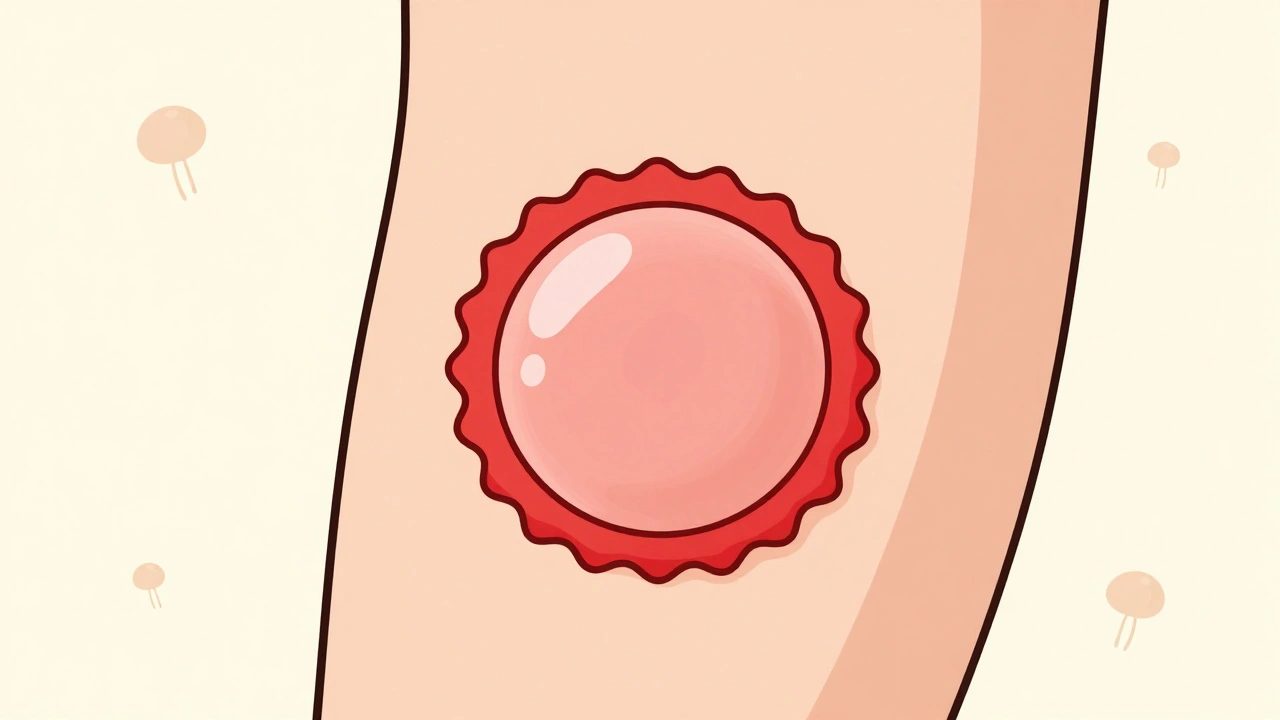
Ringworm isn’t caused by a worm at all. That’s the first thing you need to know. The name is misleading - it’s actually a fungal infection, and it’s way more common than most people realize. Around 20-25% of the global population gets it at some point. In the U.S. alone, about 40 million cases pop up every year. It shows up on your skin, scalp, feet, groin, or nails, and it doesn’t care if you’re a kid, an athlete, or someone who just stepped out of the shower. What it does care about? Warm, damp places. Locker rooms. Shared towels. Tight shoes. And yes, even your pet cat.
What Does Ringworm Actually Look Like?
The classic sign is a red, circular rash with a raised, scaly edge and a clearer center - like a ring. That’s where the name comes from. But not every case looks like that. Sometimes it’s just a patch of red, flaky skin that itches like crazy. Other times, it’s blistering, peeling, or even oozing.
Where it shows up tells you what kind of tinea you’ve got:
- Tinea corporis (body ringworm): Red rings on arms, legs, or torso. Starts small, about half a centimeter, and grows over days.
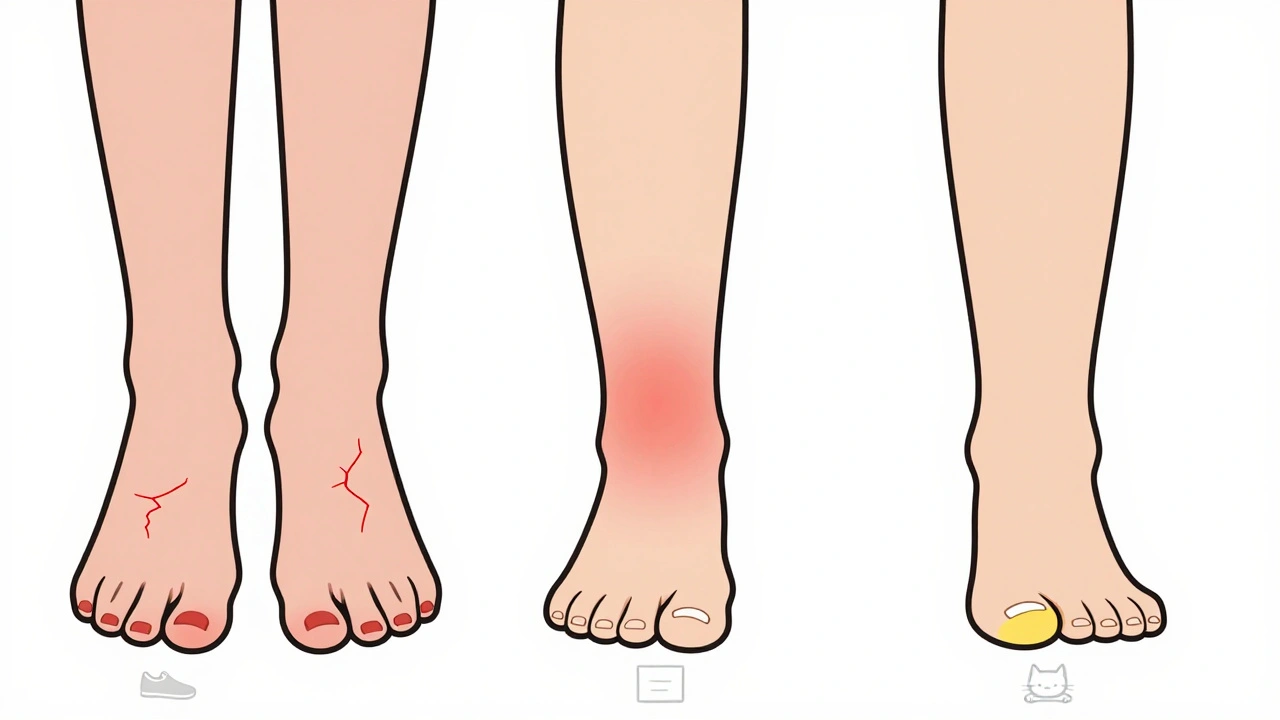
- Tinea pedis (athlete’s foot): Between the toes - red, cracked, stinging skin. Smells bad. Common in people who wear sneakers all day.
- Tinea cruris (jock itch): Red, itchy patches on the inner thighs and groin. Worse when you sweat.
- Tinea capitis (scalp ringworm): Mostly in kids. Bald patches, sometimes with swollen, pus-filled bumps called kerions. Can leave scars if ignored.
- Tinea unguium (nail fungus): Toenails thicken, turn yellow or brown, and get brittle. Fingernails rarely get it - the warm, dark space inside shoes is perfect for the fungus.
It takes 4 to 14 days after exposure for symptoms to show up. But sometimes, it hides for up to three weeks. That’s why people think they caught it from the gym last week - when really, they picked it up two weeks before that.
How Do You Even Catch It?
You don’t need to be dirty to get ringworm. It’s not about hygiene. It’s about exposure. The fungus lives on skin flakes, hair, and nails - and it survives for months on surfaces.
Here’s how it spreads:
- Skin-to-skin contact - 60% of cases. Wrestling, hugging, sharing a bed.
- Contaminated surfaces - 30%. Towels, gym mats, shower floors, combs, hats.
- Animals - 10%. Cats and dogs are the biggest culprits. Puppies and kittens often carry it without showing symptoms.
Some people are more at risk:
- People who sweat a lot (hyperhidrosis affects 3% of adults).
- Wrestlers - up to 84% of college athletes have had it.
- People who walk barefoot in public showers - risk goes up by 45%.
- Children under 10 - they make up 60% of scalp infections.
- People with weak immune systems - their bodies can’t fight it off easily.
And here’s the kicker: 15-20% of veterinarians and animal handlers get it. If you pet a stray cat and it scratches you, you’re not being paranoid - you should watch for a rash.
Antifungal Creams: What Works and What Doesn’t
For most skin and groin infections, you don’t need a prescription. Over-the-counter antifungal creams work just fine - if you use them right.
Here are the most effective ingredients, based on clinical studies:
- Terbinafine (1%) - Best overall. Clears up infections in 1-2 weeks for most people. Works in 80-90% of cases. Sold as Lamisil AT.
- Clotrimazole (1%) - Common and cheap. Takes 2-4 weeks. Works in 70-80% of cases.
- Miconazole (2%) - Good for mild cases. 65-75% effective.
- Ketoconazole (2%) - Also helps with dandruff. 75-85% effective.
How to use them:
- Wash and dry the area completely.
- Apply a thin layer over the rash and 1 inch beyond it - even if the skin looks normal.
- Use it twice a day, every day.
- Keep going for at least 2 weeks - even if the redness is gone.
Why stop early? Because 68% of people on Reddit and other forums say they do. And 45% of them get it back. The fungus isn’t dead just because the rash looks better. It’s still hiding under the skin.
Terbinafine gets praised in reviews for working faster - people report seeing improvement in 3-5 days. Clotrimazole? Often takes 7-10. But both work if you stick with it.
When You Need More Than Cream
Topical creams won’t fix everything.
If you’ve got scalp ringworm, nail fungus, or a really bad case that’s spreading, you need oral medication. That means pills.
- Terbinafine (250mg daily) - For scalp or nail infections. Takes 4-6 weeks for nails, 2-4 weeks for scalp. Cure rate: 85-90%.
- Itraconazole or fluconazole - Alternatives if terbinafine doesn’t work or causes side effects.
Why not just use cream for everything? Because the fungus lives deep in hair follicles or under the nail. Cream can’t reach it. Pills go through your bloodstream. That’s how they kill it from the inside.
Side effects? Rare, but possible - nausea, headache, liver issues. Your doctor will check your liver before and during treatment. Don’t take these without medical supervision.
What Doesn’t Work (And Why You Should Skip It)
Tea tree oil. Coconut oil. Apple cider vinegar. You’ll see them all over Instagram and Pinterest as "natural cures." But here’s the truth: a 2021 Cochrane Review looked at every study on natural remedies for ringworm. Only 40-50% of people saw improvement with tea tree oil - compared to 70-90% with real antifungals.
They might soothe itching. They might smell nice. But they won’t kill the fungus reliably. If you’re using them instead of proven medicine, you’re just giving the infection more time to spread.
And don’t try to "burn it off" with heat or bleach. That damages your skin and makes it worse.
How to Stop It From Coming Back
Prevention is easier than treatment.
- Wear flip-flops in public showers and pools. Reduces risk by 45%.
- Change your socks daily. Twice a day if you sweat a lot.
- Avoid sharing towels, hats, or shoes. Fungus survives on fabric for weeks.
- Keep skin dry. Use talcum powder in sweaty areas.
- Wash your pet if they’re scratching or losing fur. Take them to the vet - ringworm is treatable in animals too.
- Don’t ignore a small patch. Start treatment early. Dr. Adam Friedman says it cuts healing time by 5-7 days.
And if you’ve had it before? Don’t assume you’re immune. You’re not. Fungus doesn’t care about your past. It just waits for the right conditions.

Why This Matters More Than You Think
Ringworm isn’t just a nuisance. It’s a public health issue.
Every year, U.S. schools have outbreaks. One classroom, 5-10 kids infected. Parents panic. Kids get teased. A 2022 survey found 73% of adolescents with visible ringworm were bullied or avoided by peers.
And it costs money - over $500 million a year in the U.S. alone. Most people buy $8-15 tubes of cream. But if it turns into nail fungus or scalp infection? That’s $25-$150 in prescriptions. Plus doctor visits.
Worse, resistance is growing. A 2022 study found a 12% increase in terbinafine-resistant strains since 2018. That means what worked last year might not work next year. The more we misuse treatments - skipping doses, stopping early - the faster this problem gets harder to fix.
What to Do If It’s Not Getting Better
After 2 weeks of twice-daily cream, if the rash is still spreading, getting worse, or turning into blisters or pus - see a doctor.
Same if:
- You’re diabetic or have a weak immune system.
- You’re a child with a scalp rash.
- You’ve tried two different creams and nothing worked.
Doctors can do a skin scraping test. They look under a microscope to confirm it’s fungus. Sometimes they send it to a lab to find the exact strain. That helps pick the right treatment.
Don’t wait. Untreated ringworm can cover 30-50% more skin in just two weeks. And scalp infections can cause permanent bald spots.
Is ringworm contagious?
Yes, ringworm is highly contagious. It spreads through direct skin contact, sharing towels or clothing, or touching surfaces where the fungus lives - like gym mats or shower floors. It can also pass from pets to people. You’re most contagious when the rash is active and flaky.
Can I use antifungal cream on my face?
Most over-the-counter antifungal creams are safe for the face, but avoid the eyes and mouth. If the rash is on your beard or scalp near the face, you may need oral medication instead. Facial ringworm can be stubborn and sometimes requires a prescription-strength cream or pill.
How long does it take for antifungal cream to work?
You’ll usually see improvement in 3-7 days with terbinafine, and 7-10 days with clotrimazole. But don’t stop there. The fungus is still alive under the skin. Finish the full 2-4 week course, even if the rash looks gone. Stopping early causes relapse in nearly half of users.
Can ringworm go away on its own?
Sometimes, yes - but it can take months. And during that time, you’re spreading it to others and risking complications like scarring or secondary bacterial infections. It’s not worth the wait. Treatment cuts recovery time from weeks to days.
Does ringworm mean I’m dirty?
No. Ringworm has nothing to do with hygiene. Even people who shower daily and keep clean can get it. It’s about exposure - walking barefoot in a locker room, petting a stray cat, or sharing a towel. Anyone can get it.
Can I go to school or work with ringworm?
Yes, as long as the rash is covered and you’re using treatment. Most schools and workplaces don’t require you to stay home unless it’s a severe case or spreading. But cover the area with a bandage or clothing, wash your hands often, and don’t share personal items. That reduces risk to others.
What’s the difference between ringworm and eczema?
Ringworm has a defined, raised, circular border with a clearer center. Eczema is usually dry, flaky, and doesn’t form rings. Ringworm itches intensely and often spreads outward. Eczema tends to be symmetrical and stays in the same spot. A doctor can confirm with a simple skin scraping test.
Are antifungal creams safe for kids?
Yes, most over-the-counter creams like clotrimazole and terbinafine are safe for children over 2 years old. For scalp ringworm or severe cases, a doctor will prescribe oral medication. Never use adult-strength treatments on young kids without medical advice.
Final Tip: Don’t Panic. Just Act.
Ringworm is annoying. It’s itchy. It’s embarrassing. But it’s not dangerous - if you treat it right. You don’t need fancy products. You don’t need to see a doctor right away. Start with a $10 tube of terbinafine cream. Apply it twice a day. Don’t stop when it looks better. Wash your towels. Wear flip-flops. Keep your skin dry.
And if you’ve got a child with a bald patch on their head? Don’t wait. Get it checked. The sooner you act, the less it costs - in money, time, and stress.





Webster Bull
December 12, 2025 AT 20:05Bruno Janssen
December 14, 2025 AT 18:10Scott Butler
December 15, 2025 AT 18:06Emma Sbarge
December 17, 2025 AT 14:58Donna Hammond
December 17, 2025 AT 15:33Richard Ayres
December 19, 2025 AT 06:58Sheldon Bird
December 20, 2025 AT 08:45Michael Gardner
December 20, 2025 AT 14:43Willie Onst
December 22, 2025 AT 10:12Shelby Ume
December 24, 2025 AT 07:33John Fred
December 26, 2025 AT 07:10