
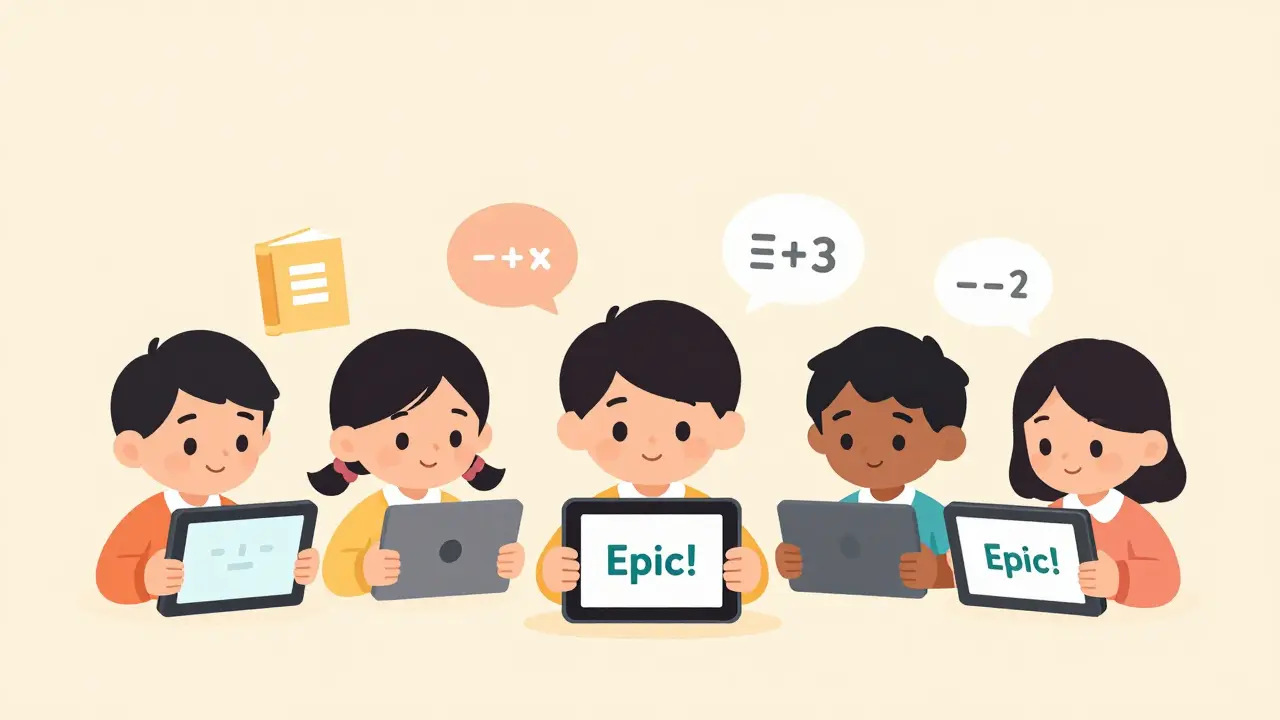
When you think of digital tools in education, you might picture kids playing math games on tablets or watching YouTube videos. But in 2025, the reality is much deeper. Digital tools aren’t just replacing worksheets-they’re reshaping how students learn, how teachers understand them, and even how families stay involved. The tools that work best aren’t the flashiest. They’re the ones that fit into real classrooms, respect student privacy, and actually help kids think-not just click.
What’s Actually Working in Classrooms Today
Not every app with a flashy logo is helping students learn. The most used tools in schools right now aren’t the ones with the biggest marketing budgets. According to the 2025 Top 100 Tools for Learning survey, YouTube, ChatGPT, and Microsoft PowerPoint are the top three. Why? Because they’re simple, accessible, and flexible. Teachers use YouTube to show real-world examples. ChatGPT helps generate practice questions or explain tough concepts in different ways. PowerPoint isn’t just for presentations-it’s a canvas for interactive lessons when paired with tools like Pear Deck or Deck.Toys.
For younger kids, Khan Academy Kids stands out. It’s free, ad-free, and covers reading, math, and social-emotional skills with over 10,000 activities. A third-grade teacher in Ohio told me she cut her small-group prep time by 65% just by letting kids work through it during rotations. It doesn’t replace teaching-it gives teachers breathing room to focus on the kids who need more help.
AI Is Changing Feedback-For Better and Worse
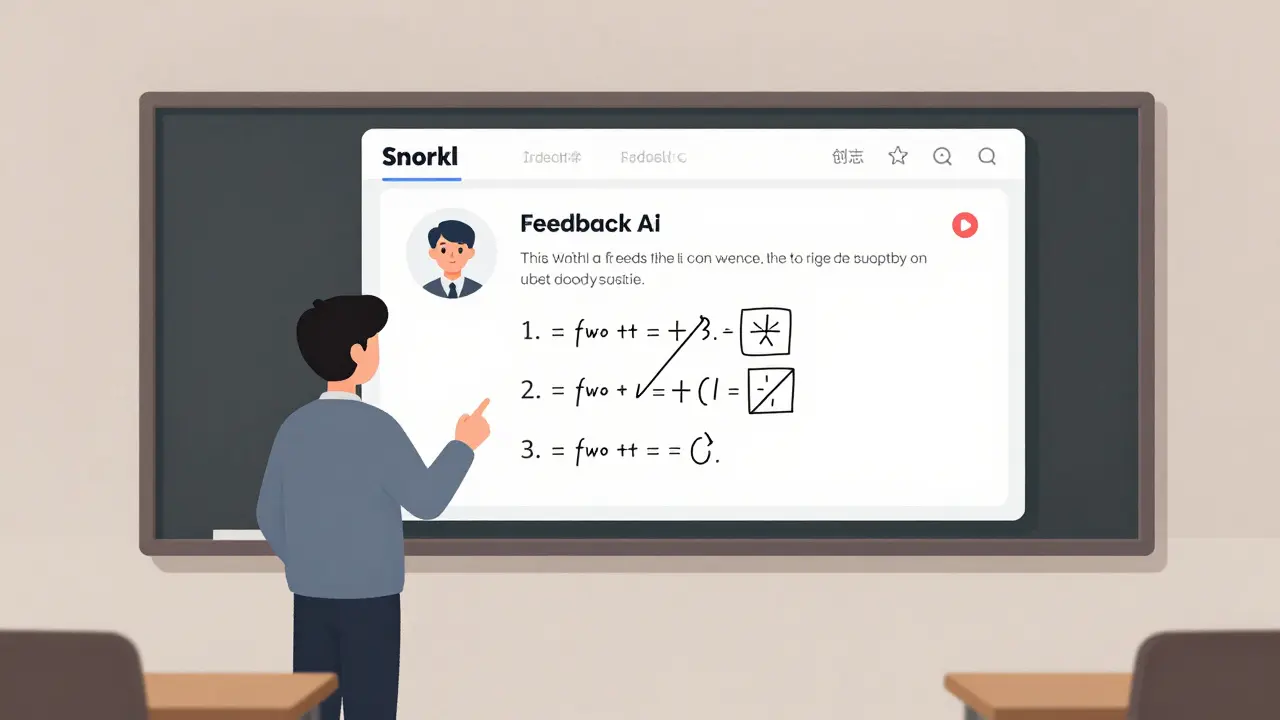
AI isn’t just about chatbots. Tools like Snorkl are changing how teachers assess understanding. Instead of just reading written answers, Snorkl listens to a student explain a math problem and watches how they draw a solution. It gives feedback in under two seconds. Teachers say this helps them catch misunderstandings earlier. One pilot study showed 89% of teachers felt they understood their students’ thinking better.
But here’s the catch: AI isn’t perfect. Independent testing found it misinterprets non-native English speakers in about 12% of cases. And studies from the Electronic Frontier Foundation and Digital Promise show AI grading tools make more mistakes for Black, Hispanic, and English-learning students-up to 27% higher error rates. That’s not a glitch. It’s a design flaw rooted in biased training data. If you’re using AI for grading or feedback, you need to double-check its answers. Never trust it blindly.
Game-Based Learning: Engagement vs. Learning
Prodigy Math is everywhere. Kids love it. They battle monsters, earn rewards, and solve math problems along the way. A Stanford study found students using Prodigy improved 47% more on standardized math tests than those who didn’t. That’s impressive.
But on Reddit, teachers are complaining. One wrote: “My students spend 20 minutes fighting goblins instead of solving equations.” The game mechanics are so strong, they sometimes drown out the learning. It works best when used as a supplement-not the main lesson. Pair it with direct instruction, and it’s powerful. Let it take over, and you’ve got a digital arcade, not a classroom.
Video Creation: Giving Students a Voice
Students don’t just consume content-they create it. WeVideo is the go-to for classroom video projects. It’s cloud-based, so no one needs fancy computers. A 7th-grade class in Texas made a documentary on climate change using only school iPads. They interviewed local farmers, edited footage, and added voiceovers. The final video was shared with the whole district. That’s not just tech-it’s civic learning.
Compared to Adobe Spark, WeVideo is easier for beginners. Teachers say its collaborative features are the biggest win. Multiple students can work on the same project at once. That mirrors real-world teamwork. The cost? $149 per classroom a year. For schools with tight budgets, that’s steep. But free alternatives like CapCut or iMovie often lack the privacy controls and teacher dashboards that make WeVideo worth the price.
Reading for All Learners
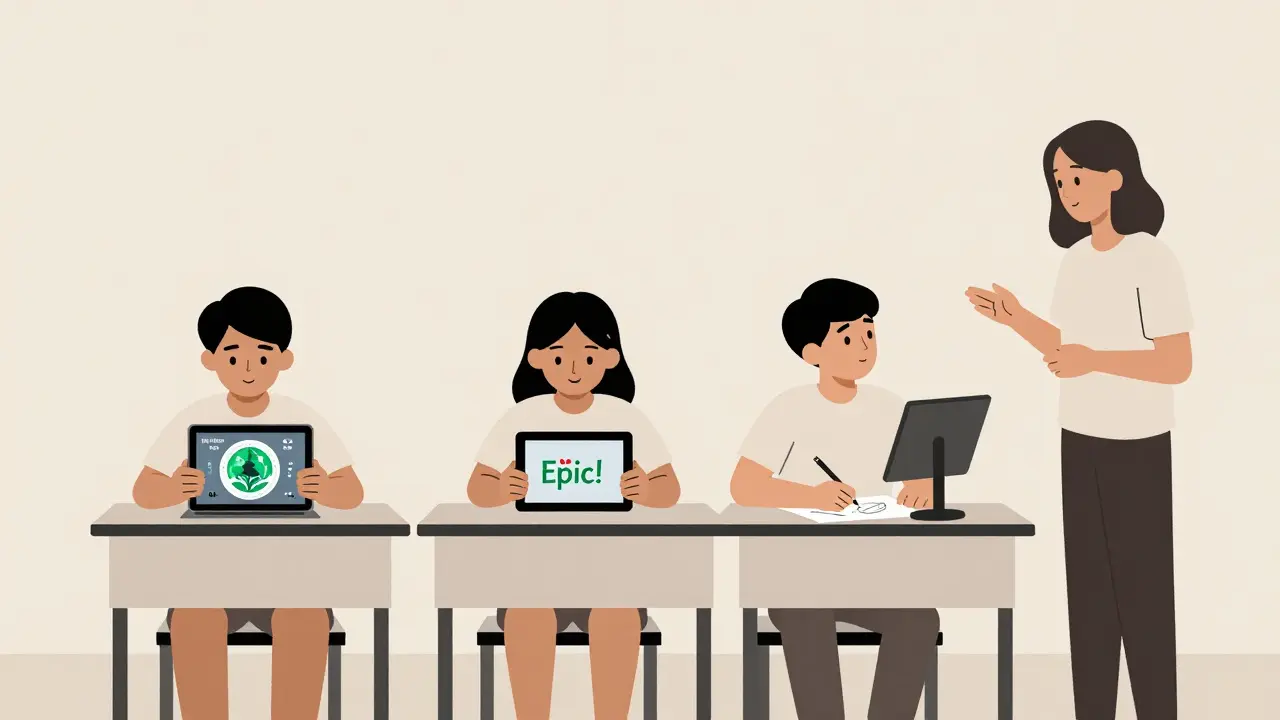
Not every child reads at the same level. Epic! solves that by offering 40,000+ books at different reading levels. Special education teachers swear by its read-aloud feature. A Vanderbilt University study found students with dyslexia improved reading comprehension by 31% when using it regularly. The app adjusts font size, highlights words as they’re read, and lets kids record themselves reading aloud. It’s not magic-it’s accessibility built in.
Compare that to Sora, OverDrive’s student reading platform. It’s cheaper at $9.50 per student a year, but it doesn’t have built-in supports for struggling readers. It’s great for schools with strong reading programs. But for mixed-ability classrooms, Epic! is the better fit.
What Schools Are Getting Right (and Wrong)
Most schools aren’t failing because the tech is bad. They’re failing because they use it wrong. A 2025 ISTE study found schools that used SeeSaw as just a digital portfolio saw average results. But those that used it to give daily feedback, share student work with families, and build reflection into the routine saw 37% higher learning gains.
The same goes for Google Classroom. It’s stable, easy to use, and requires only 15 minutes a week to maintain. But if you just post assignments and call it a day, you’re wasting it. The best teachers use it to create routines: morning check-ins, exit tickets, peer feedback loops. Tech doesn’t improve learning. Intentional use does.
Meanwhile, 63% of teachers spend over two hours a week fixing tech problems. That’s time stolen from teaching. The most reliable tools? Google Classroom, SeeSaw, and Khan Academy Kids. The most frustrating? Tools that require login codes, plugins, or specific devices. If a tool needs a 15-minute setup every time, it won’t stick.
The Hidden Cost: Privacy and Equity
Every tool that collects student data comes with risk. In 2025, 68% of U.S. states passed new student privacy laws. Twelve edtech startups shut down because they couldn’t comply. That’s not a bad thing-it’s necessary.
But here’s the real problem: not all schools can afford the same tools. WeVideo, NotebookLM, and ClassKit 3.0 require fast internet and modern devices. In rural areas, 41% of schools still don’t have 1:1 device ratios. That means the kids who need the most support are often the ones left behind. The digital divide isn’t about gadgets-it’s about access to thoughtful, well-supported learning experiences.
What to Look for When Choosing Tools
Don’t pick a tool because it’s trendy. Pick it because it solves a real problem. Ask yourself:
- Does it save me time-or just add another thing to manage?
- Can students use it without constant help?
- Does it work offline or on low-end devices?
- Is student data protected? (Look for FERPA and COPPA compliance)
- Can I see how each student is progressing-not just their score?
The best tools don’t shout. They whisper. They fade into the background so learning takes center stage.
Where This Is All Headed
By 2027, AI tutors will handle 30% of basic skill practice. That means teachers will spend less time drilling facts and more time guiding critical thinking. Blockchain credentials might let students carry their achievements across schools. Augmented reality could turn a textbook into a 3D human heart you can walk around.
But the biggest shift won’t be technological. It’ll be cultural. Schools that succeed will be the ones that treat tech as a tool-not a teacher. The best classrooms in 2025 won’t be the ones with the most screens. They’ll be the ones where students feel seen, heard, and supported-whether they’re using an app or a pencil.
What are the most effective digital tools for elementary students in 2025?
For elementary students, the most effective tools are those that combine learning with simplicity. Khan Academy Kids excels in early literacy and math with its free, ad-free content and social-emotional learning activities. Prodigy Math engages students through gamified practice, but works best as a supplement. Epic! supports diverse readers with read-aloud and accessibility features, while SeeSaw helps teachers build daily feedback routines with families. Snorkl is emerging as a powerful tool for formative assessment, capturing both spoken and visual responses.
Are AI-powered learning tools safe for kids?
AI tools can be safe-but only if used carefully. Tools like Snorkl and NotebookLM offer powerful feedback, but they’re not infallible. Studies show AI grading systems make more errors for non-native English speakers and students of color. Always review AI-generated feedback before sharing it with students. Choose tools that are FERPA and COPPA compliant, avoid those that sell student data, and never rely on AI to replace human judgment in assessment.
How do I know if a digital tool is worth the cost?
Ask: Does it solve a specific problem? Does it save teachers time? Can students use it independently? Free tools like Khan Academy Kids and Google Classroom are excellent starting points. Paid tools like WeVideo or BrainPOP Jr. are worth it only if they replace multiple manual tasks or significantly boost engagement and outcomes. Always test with a small group first. If it requires more setup time than it saves, it’s not worth it.
What’s the biggest mistake schools make with edtech?
The biggest mistake is treating technology as a replacement for teaching instead of a tool to enhance it. Schools often buy apps because they’re trendy, then wonder why results don’t improve. The most successful schools use tech to build routines-daily check-ins, student reflections, peer feedback, family updates. Tech works best when it’s woven into teaching, not layered on top of it.
Can digital tools help students with learning differences?
Yes-when chosen wisely. Epic!’s read-aloud and text-highlighting features help students with dyslexia. Snorkl’s ability to analyze verbal responses supports those who struggle to write. Tools like Deck.Toys let students show understanding through drawing or speaking instead of writing. The key is matching the tool to the student’s need-not the school’s budget. Accessibility isn’t an add-on; it’s the foundation.
How much training do teachers need to use these tools?
Simple tools like Google Classroom or Khan Academy Kids require less than 2 hours to learn. More advanced tools like NotebookLM or WeVideo need 12-15 hours of training for full use. The ISTE 5-15-45 rule works well: 5 hours of initial training, 15 minutes of daily use, and 45 days of consistent use before evaluating impact. Don’t rush implementation. Give teachers time to explore, fail, and adjust.
Next Steps for Schools and Parents
If you’re a teacher: Start with one tool that solves one problem. Maybe it’s using SeeSaw for daily check-ins or Epic! for reading support. Don’t try to do everything at once. Track what changes-student engagement, time spent on tasks, parent feedback. Let that guide your next step.
If you’re a parent: Ask your child’s teacher what tools they use and why. Look for tools that let you see your child’s progress-not just grades, but work samples, reflections, or voice recordings. If a tool feels confusing or overly commercial, speak up. Your voice matters in choosing what stays in the classroom.
Technology won’t fix broken systems. But when used with care, it can give every student-no matter their background-a chance to be heard, understood, and supported.





Kylie Robson
December 27, 2025 AT 14:52Let’s be real-most edtech implementations are just digital bandaids on systemic failures. The real ROI isn’t in the tool’s feature set; it’s in the pedagogical alignment. Snorkl’s multimodal feedback engine leverages latent semantic analysis to surface cognitive dissonance in student reasoning, which traditional LMSs simply can’t parse. If you’re not using AI-driven formative assessment with multimodal input triangulation, you’re operating in the analog dark ages.
Todd Scott
December 28, 2025 AT 03:38As someone who’s trained educators across 12 districts, I’ve seen the pattern: schools invest in flashy platforms but neglect the human infrastructure. The magic isn’t in WeVideo or Epic!-it’s in the teacher who uses them to scaffold student voice. A 7th grader in Texas narrating a climate documentary isn’t just learning tech-she’s learning agency. The real metric isn’t test scores; it’s whether the child feels seen. Tech enables that, but only if we prioritize relational pedagogy over transactional tools.
Paula Alencar
December 28, 2025 AT 10:10It is imperative that we acknowledge the profound ethical implications of deploying AI-driven assessment tools in K-12 environments. The documented disparities in error rates-up to 27% higher for Black, Hispanic, and English-learning students-are not anomalies; they are systemic failures rooted in homogenous training datasets. When we outsource judgment to algorithms trained on biased corpora, we are not automating efficiency-we are automating inequity. Educational institutions have a moral obligation to audit every algorithmic decision-maker, demand transparency from vendors, and refuse to deploy tools that cannot guarantee equitable outcomes. This is not a technical challenge-it is a civil rights imperative.
Chris Garcia
December 28, 2025 AT 19:29In Nigeria, we don’t have 1:1 device ratios-but we have ingenuity. A teacher in Kano uses WhatsApp voice notes for formative feedback because it’s free, works on 2G, and feels human. Tech isn’t about the latest app-it’s about the intention behind it. Khan Academy Kids? Brilliant. But so is a parent reading aloud from a printed book under a solar lamp. The real innovation is not in the code-it’s in the care. When education becomes a ritual of connection, not a product to be deployed, even the humblest tools become sacred.
James Bowers
December 28, 2025 AT 21:28Prodigy Math is a pedagogical disaster dressed in cartoon armor. It gamifies distraction. Students are not learning math-they are learning how to click faster. The Stanford study you cite measures engagement, not mastery. And yet, schools continue to fund these digital slot machines because they look impressive on a district dashboard. This is not innovation. This is corporate exploitation of educational vulnerability. If your math curriculum looks like a video game, you’ve already lost.
Will Neitzer
December 29, 2025 AT 08:02I must respectfully challenge the notion that AI tools are inherently flawed due to bias. While it is true that historical data disparities exist, the solution is not to abandon these technologies-it is to refine them through inclusive data curation, adversarial testing, and continuous feedback loops. The tools themselves are neutral; their misuse stems from institutional inertia and lack of training. With proper implementation-such as teacher-in-the-loop validation and bias-mitigation protocols-AI can be a force multiplier for equity, not a vehicle for its erosion. We must not let fear of imperfection paralyze progress.
Janice Holmes
December 31, 2025 AT 03:44Y’ALL ARE MISSING THE BIG PICTURE!! WeVideo costs $149?! That’s a crime! Meanwhile, Google Classroom is free, and yet districts are shelling out for ‘premium’ tools that are just repackaged PowerPoint! And don’t get me started on Epic!-it’s basically a Netflix for books, but with a subscription lock-in that’s basically a data harvest! They’re selling ‘accessibility’ while harvesting keystrokes, mouse movements, and reading patterns! This isn’t education-it’s surveillance capitalism with a ‘learning’ sticker on it!!
Olivia Goolsby
December 31, 2025 AT 20:32Who funded this article? EdTech Inc.? Let’s be honest-ChatGPT is the #1 tool because it’s a free AI tutor that doesn’t require compliance paperwork. But here’s the real story: every ‘free’ tool like Khan Academy Kids is secretly selling anonymized student behavior data to advertisers. The FERPA/COPPA compliance claims? Marketing fluff. The real reason YouTube dominates? Because it’s the only platform that doesn’t require a login, and schools know if they force kids to sign up for another account, they’re opening a legal liability nightmare. This whole piece is a corporate shill. They don’t want you to know that the best tool is still a pencil, paper, and a teacher who actually listens.
Alex Lopez
January 1, 2026 AT 13:52Wow. So we’ve got jargon overload, ethical hand-wringing, and a full-on conspiracy theory thread-all in one post. 😅 Let’s cut through the noise: the best tool is the one your teacher uses consistently, not the one with the fanciest AI. I’ve seen 3rd graders using Google Slides to explain fractions better than any gamified app. Simple, reliable, no login, no subscription, no data harvesting. That’s the gold standard. Stop overcomplicating it. Tech should disappear into the background. Not scream for attention.
Gerald Tardif
January 1, 2026 AT 18:58I’ve watched teachers burn out trying to juggle seven different platforms. The real win? Not the tool-but the rhythm. One teacher I coached started with SeeSaw for daily check-ins: ‘How’s your brain today?’ One emoji. One sentence. That’s it. Within a month, kids were volunteering reflections. No app needed to be perfect. Just consistent. Start small. Build trust. Let the tech fade into the background. The magic’s in the routine, not the feature set.
Monika Naumann
January 3, 2026 AT 06:09In India, we have over 1.2 billion people and a public education system that functions despite the odds. We do not need expensive tools like WeVideo or NotebookLM. We need discipline, respect for teachers, and a curriculum rooted in our own cultural context. Western edtech is a colonial export-designed for privilege, not for the masses. Why are we copying American trends when our own students thrive with chalkboards, group recitation, and oral tradition? Technology should serve our values-not replace them with Silicon Valley’s ideology.
Will Neitzer
January 4, 2026 AT 13:50Thank you, Gerald, for articulating what so many educators feel but rarely say aloud. The rhythm you describe-the daily check-in, the one-sentence reflection-is the antithesis of the ‘edtech sprint’ mentality. It’s slow, quiet, and deeply human. That’s the real innovation: not the algorithm, but the attention. When a child knows their voice matters-even in the smallest form-it changes everything. Tools like SeeSaw are merely vessels for that truth.