
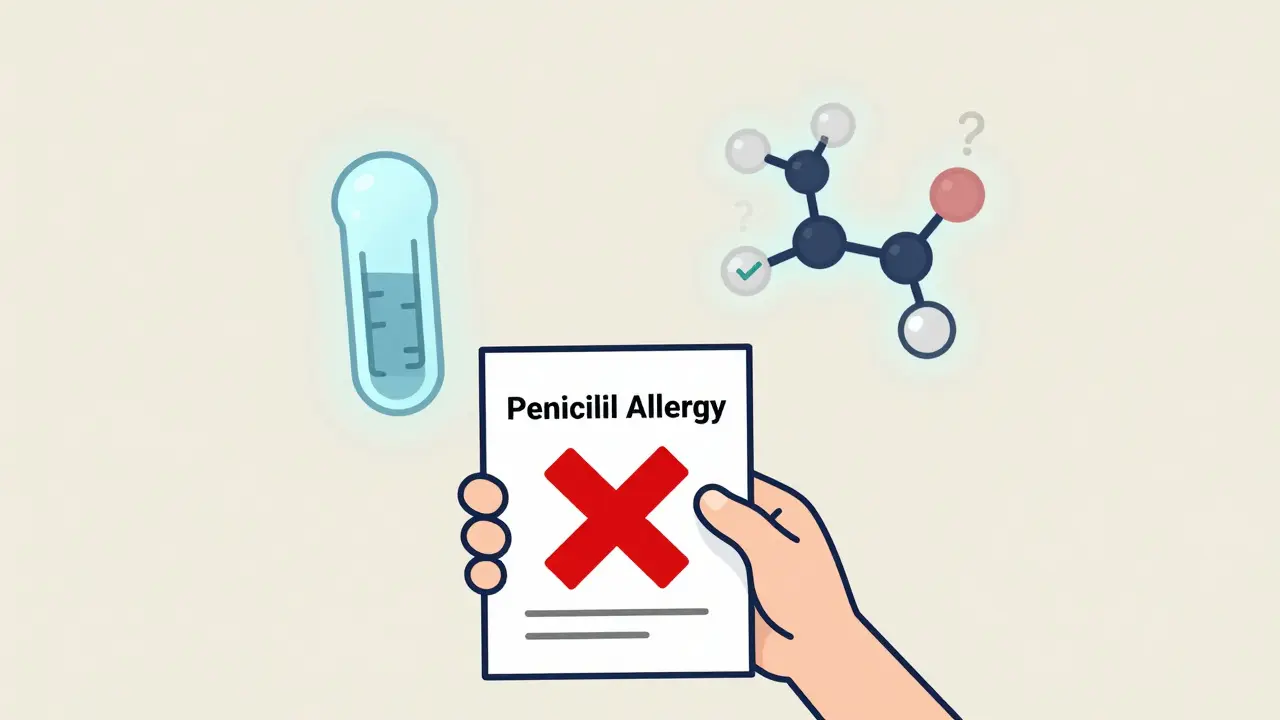
Beta-Lactam Allergy Calculator
Determine Your Antibiotic Safety
Based on your reaction history, we'll calculate your individual risk of cross-reactivity between penicillin and cephalosporin antibiotics. This tool uses current medical guidelines to help you make informed decisions about your treatment options.
More than 10% of people in the U.S. say they’re allergic to penicillin. But here’s the truth: 95% of them aren’t. That’s not a typo. Most of those labels were assigned after a childhood rash, a stomach upset, or a vague reaction decades ago - none of which were true allergies. And because of it, patients are getting worse antibiotics, spending more money, and facing higher risks of dangerous infections like C. difficile.
What Exactly Is a Beta-Lactam Allergy?
Beta-lactam antibiotics are a family of drugs that include penicillins (like amoxicillin and penicillin G) and cephalosporins (like ceftriaxone and cephalexin). They all share a core chemical structure called the beta-lactam ring. This ring is what makes them effective at killing bacteria - but it’s also what the immune system sometimes mistakes for a threat.When someone has a true beta-lactam allergy, their immune system produces IgE antibodies that react to the drug. This triggers an immediate response - usually within minutes to an hour. Symptoms include hives, swelling of the face or throat, wheezing, and in rare cases, full-blown anaphylaxis. But here’s the catch: most people who think they’re allergic never had a real immune reaction. A rash from a viral infection? That’s not an allergy. Nausea? That’s a side effect. Dizziness? Could be the illness itself.
Penicillin Allergy: The Most Misdiagnosed Condition in Medicine
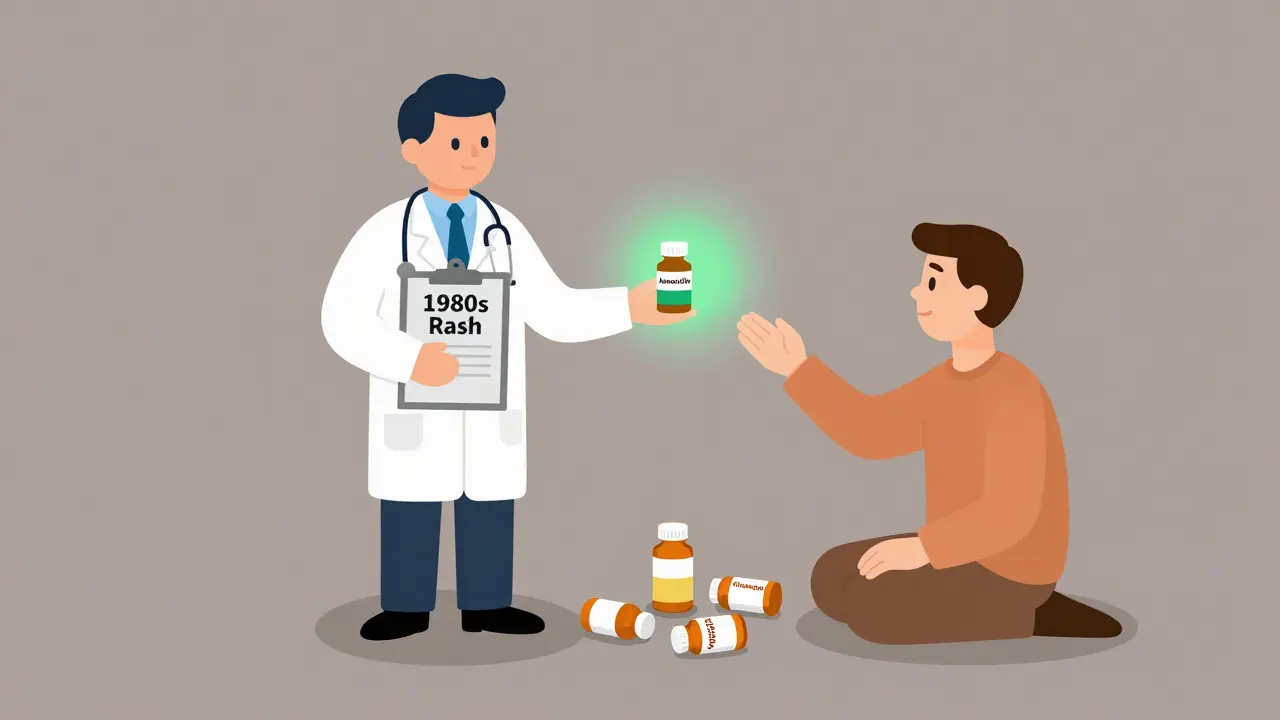
Penicillin is the most common drug allergy reported. But studies show that only 1 in 10 people who say they’re allergic actually are. The American Academy of Allergy, Asthma & Immunology found that 80% of people who were labeled allergic as kids lose the allergy within 10 years - even if they never got tested.Why does this matter? Because when doctors avoid penicillin, they turn to alternatives like vancomycin, clindamycin, or fluoroquinolones. These drugs are broader-spectrum, more expensive, and linked to higher rates of antibiotic-resistant infections. The CDC estimates that mislabeling penicillin allergy costs the U.S. healthcare system $2,000 to $4,000 per patient each year. That’s not just money - it’s longer hospital stays, more side effects, and higher chances of surgical infections.
Real-world examples are everywhere. A nurse in Texas told a Reddit thread: “I’ve seen patients with childhood rash labels get Zosyn for a simple UTI - a drug that costs 20 times more and knocks out good gut bacteria.” Another patient on WebMD said they were denied amoxicillin for strep throat and got azithromycin instead - which didn’t work. They ended up back in the ER.
Cephalosporin Reactions: Less Risk Than You Think
For years, doctors avoided giving cephalosporins to anyone with a penicillin allergy. The old rule: 10% cross-reactivity. That number came from outdated studies in the 1970s. Today, we know better.The real cross-reactivity rate between penicillins and cephalosporins is closer to 1-3%. And it’s even lower for later-generation cephalosporins like ceftriaxone or cefdinir. Why? Because newer cephalosporins have very different side chains - the parts of the molecule that trigger immune reactions. The shared beta-lactam ring alone isn’t enough to cause a reaction.
Studies from Mayo Clinic and Yale show that patients with confirmed penicillin allergy can safely take most cephalosporins - especially third-generation ones. In fact, ceftriaxone is now routinely used in patients with penicillin allergy for pneumonia, meningitis, and even syphilis - when penicillin can’t be used.
But here’s the problem: most hospitals still don’t follow the science. A 2023 survey found that only 35% of U.S. hospitals have formal protocols to evaluate penicillin allergy. So many patients still get labeled “allergic to all beta-lactams” - even when they’ve never had a true reaction.
How Do You Know If It’s Real?
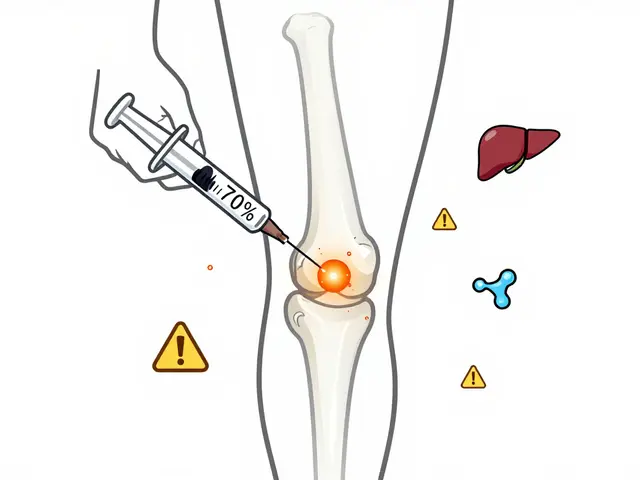
The only way to know for sure is testing. For penicillin, the gold standard is skin testing - done by an allergist. It involves two steps: a prick test and an intradermal test using penicillin major and minor determinants. If both are negative, there’s a 97-99% chance you can tolerate penicillin safely.For people with low-risk histories - like a mild rash more than 10 years ago - some clinics skip skin testing and go straight to an oral challenge. They give a full dose of amoxicillin under observation. If no reaction happens in an hour, the allergy label is removed. This is safe, fast, and costs less than $100.
For cephalosporins? There’s no commercial skin test available. So doctors rely on history and graded challenges. If the patient’s past reaction was mild and the cephalosporin is needed, they’ll give a small test dose - then gradually increase it over 30-60 minutes. If no symptoms appear, the patient is cleared.
What Happens If You Really Are Allergic?
If you’ve had hives, swelling, trouble breathing, or anaphylaxis after penicillin - you likely have a true allergy. In those cases, avoiding penicillin is critical. But that doesn’t mean you’re out of options.For life-threatening infections like neurosyphilis or endocarditis, where penicillin is the only effective drug, doctors use desensitization. This isn’t a cure - it’s a temporary workaround. You’re given tiny, increasing doses of penicillin every 15-30 minutes over 4-8 hours in a monitored hospital setting. Your immune system gets tricked into tolerating the drug long enough to complete treatment. Success rates? Over 80%.
Desensitization isn’t for everyone. It requires an ICU-level setup, trained staff, and emergency equipment ready. It’s not something you do in a doctor’s office. The CDC says it should only be done by allergists or infectious disease specialists.
Why This Matters for You
If you’ve been told you’re allergic to penicillin - especially if it happened as a child - ask for a reevaluation. Don’t wait until you’re sick and need antibiotics. Get tested now. It’s safe. It’s quick. And it could save you from unnecessary drugs, longer illnesses, and higher costs.Even if you’ve never had a reaction, but your chart says “penicillin allergy,” ask your doctor: “Is this based on a real test, or just a note from 20 years ago?”
Antibiotic stewardship isn’t just for hospitals - it’s personal. Every time you get the right antibiotic, you help stop the rise of superbugs. Every time you avoid a broad-spectrum drug, you protect your gut microbiome. And every time you get a correct allergy label, you help your future self get better care.
What to Do Next
- If you have a penicillin allergy label: Ask your primary doctor for a referral to an allergist.
- If you’ve never been tested: Request a penicillin allergy evaluation - especially if you’re planning surgery or have a chronic condition.
- If you’ve had a reaction: Write down exactly what happened - timing, symptoms, treatment. Don’t just write “allergic.”
- If you’re pregnant: Penicillin is still the #1 treatment for syphilis. Don’t avoid it without testing.
- If you’re a parent: Don’t label your child “allergic” after a rash. Many rashes are viral. Get it checked.
There’s no shame in being labeled allergic. But there’s huge risk in staying labeled without proof.
Can I outgrow a penicillin allergy?
Yes. About 80% of people who had a penicillin allergy as a child lose it within 10 years. Even if you’ve avoided penicillin for decades, you may still be able to take it safely. Testing is the only way to know for sure.
Are cephalosporins safe if I’m allergic to penicillin?
For most people, yes. The cross-reactivity rate is only 1-3%, and it’s even lower with newer cephalosporins like ceftriaxone. Many patients with penicillin allergy tolerate cephalosporins without issue. Your doctor should assess your specific reaction history before deciding.
What’s the difference between a side effect and an allergy?
A side effect is a known, non-immune reaction - like nausea, diarrhea, or dizziness. An allergy is an immune response - usually hives, swelling, trouble breathing, or anaphylaxis. If you got a rash after taking penicillin, but didn’t have swelling or breathing issues, it’s likely not an allergy - especially if it happened more than a year ago.
Can I be tested for cephalosporin allergy?
There’s no standard skin test for cephalosporins like there is for penicillin. Doctors rely on your reaction history and sometimes do a graded oral challenge - giving small, increasing doses under observation. If you’ve never had a reaction, you likely don’t need testing.
What happens if I have an anaphylactic reaction to penicillin?
Anaphylaxis is a medical emergency. Immediate treatment is intramuscular epinephrine (0.3-0.5 mg of 1 mg/mL solution), given in the thigh. Antihistamines and steroids are used after, but epinephrine is the only drug that stops the reaction. Call 911 immediately - don’t wait.
Is desensitization permanent?
No. Desensitization only works while you’re actively taking the drug. Once you stop, your immune system returns to its original state. You’d need to go through the process again if you need penicillin in the future. It’s not a cure - it’s a temporary safety net for critical situations.
Why do some doctors still avoid cephalosporins for penicillin-allergic patients?
Because old habits die hard. Many doctors were taught that 10% of penicillin-allergic patients react to cephalosporins - a myth from the 1970s. Even though studies have disproven this for decades, change moves slowly in medicine. Ask your doctor if they’re following current guidelines from the CDC or AAAAI.
Final Thoughts
Penicillin and cephalosporin allergies are not the same. They’re not equally risky. And most of the time, they’re not real. The science is clear. The tools are available. The cost of doing nothing is too high.Don’t let a label from 20 years ago decide your future treatment. Get tested. Ask questions. Push for better care - for yourself and for everyone who comes after you.


Kathy Scaman
January 28, 2026 AT 08:12My mom was labeled penicillin-allergic because of a rash at age 5. Turned out it was just roseola. She took amoxicillin last year for a UTI with zero issues. Why are we still doing this to people?
Rhiannon Bosse
January 30, 2026 AT 07:07Oh sweetie, let me guess - the hospital’s ‘allergy protocol’ is just a sticky note from 1998 taped to the EHR screen. 😏
Meanwhile, your doc’s still prescribing vancomycin like it’s the holy grail because they’re too scared to Google ‘cephalosporin cross-reactivity 2024.’
And don’t even get me started on how insurance won’t cover the $80 allergy test but will gladly pay $1,200 for a 5-day course of clindamycin. 🤡
Medicine is just capitalism with stethoscopes.
Howard Esakov
January 31, 2026 AT 00:02As a former ER doc, I can tell you this is the single most pervasive medical myth in primary care.
95%? That’s being generous. I’ve seen patients with ‘penicillin allergy’ on their chart who’ve taken amoxicillin three times before - and still won’t let the nurse write it in.
It’s not ignorance. It’s institutional cowardice.
And yes, I’ve seen patients die from C. diff because we gave them clindamycin instead of amoxicillin. The irony is thick enough to spread on toast.
Mindee Coulter
January 31, 2026 AT 03:08I work in pharmacy and we had a guy come in last week with a 40-year-old allergy label. We did the oral challenge. He got the full dose. No reaction. He cried. Said he’d been avoiding all antibiotics since college because he thought he’d die if he took one.
He’s now getting his first penicillin for his sinus infection. We all high-fived.
Why isn’t this routine?
Lance Long
January 31, 2026 AT 12:01Hey, if you’ve been told you’re allergic to penicillin - don’t just accept it. Don’t just shrug.
Ask. Push. Demand the test.
This isn’t about being ‘difficult.’ It’s about being your own advocate.
You deserve the right antibiotic. Not the one that’s easiest for the system to prescribe.
And if your doctor says ‘it’s not worth it’ - find a new one.
You’re worth more than a label from 1987.
fiona vaz
February 1, 2026 AT 06:14Just had my 7-year-old’s rash evaluated. Pediatrician said ‘probably viral, not allergic.’ We didn’t label it. We waited. It faded. No antibiotics needed.
Parents, please don’t panic-rush to ‘allergy’ when it’s just a rash. Let the science lead, not fear.
Anna Lou Chen
February 2, 2026 AT 14:39Let’s deconstruct the epistemological hegemony of the beta-lactam paradigm.
The medical-industrial complex has weaponized the ‘allergy’ construct as a bio-political tool to maintain pharmacological monopolies - vancomycin, azithromycin, fluoroquinolones - all patent-protected, profit-driven alternatives to the generic, low-margin penicillin.
Who benefits? Pharma. Who suffers? The microbiome. Who’s complicit? You, the compliant patient, who accepts the label without interrogating its ontological validity.
The beta-lactam ring isn’t the enemy - the reductionist diagnostic culture is.
Decolonize your prescription.
Lexi Karuzis
February 3, 2026 AT 12:08Wait… so you’re telling me the CDC, AAAAI, and Mayo Clinic are all in on it? And they’ve been lying to us for decades? And now you want us to just trust them again? 😏
What about the 5% who actually *do* die from anaphylaxis? What if the ‘test’ is wrong? What if the ‘challenge’ triggers something worse? What if this is just the next phase of the vaccine agenda?
I’ve seen people get ‘cleared’ and then end up in the ICU. And no one ever takes responsibility.
My cousin’s friend’s neighbor’s dog got a penicillin shot and turned purple. You think that’s coincidence? I don’t.
Bryan Fracchia
February 5, 2026 AT 08:46My grandma was told she was allergic to penicillin after a rash at 8. She was 82 when she finally got tested. Turned out she could take it fine.
She told me, ‘I spent 74 years scared of a word they stuck on me.’
Don’t let that word stick to you too.
Ask for the test. It’s not a betrayal of your past self - it’s a gift to your future self.
And if you’re a parent? Don’t pass on fear. Pass on curiosity.
Science isn’t scary. Ignorance is.