

You might have heard that generic drugs are "exactly the same" as brand-name versions. While the active medicine-the part that actually treats your condition-is identical, the rest of the pill isn't. Most people never think about the fillers, dyes, or binders in their medication, but for some, these "inactive" ingredients are anything but inert. If you've ever switched from a brand-name drug to a generic and suddenly felt bloated, itchy, or nauseous, you aren't imagining things. You might be reacting to the excipients in generics.
What exactly are excipients?
In the pharmaceutical world, Excipients is the term for any inactive ingredients intentionally added to a drug that aren't meant to have a therapeutic effect. They are essentially the "vehicle" that delivers the active drug into your body. Think of it like a cake: the active ingredient is the flavor, but the excipients are the flour, eggs, and baking powder that give it structure and make it edible.
Why not just use the active drug alone? Because most active pharmaceutical ingredients (APIs) are either too small to handle, taste terrible, or would dissolve instantly in your stomach before they could even work. Excipients solve these problems by acting as fillers to make the pill a usable size, stabilizers to keep the drug from expiring, or coatings to mask a bitter taste. However, the assumption that these ingredients are universally harmless is fundamentally flawed. Research from MIT and Brigham and Women's Hospital found that over 90% of oral medications contain at least one inactive ingredient capable of triggering a reaction in sensitive patients.
Why generics and brand names differ
When a company creates a generic version of a drug, the FDA (U.S. Food and Drug Administration) requires them to prove bioequivalence. This means the generic must deliver the same amount of active drug to the bloodstream at a similar rate as the brand name. But here is the catch: the FDA does not require the inactive ingredients to be the same for oral tablets.
This means two different generic manufacturers of the same blood pressure medication could use entirely different fillers. One might use lactose, while another uses microcrystalline cellulose. If you have a severe lactose intolerance, switching between these two generics could lead to sudden gastrointestinal distress, even though the medicine treating your blood pressure hasn't changed at all. This variability is why some patients feel "fine" on one generic but experience side effects on another.
| Excipient Type | Common Examples | Primary Purpose | Potential Tolerance Issue |
|---|---|---|---|
| Fillers | Lactose, Starch | Adds bulk to the pill | Digestive upset (Lactose intolerance) |
| Lubricants | Magnesium Stearate | Prevents sticking during manufacturing | Rare allergic reactions |
| Disintegrants | Croscarmellose Sodium | Helps the pill break down in the gut | Generally well-tolerated |
| Preservatives | Parabens, Sulfites | Prevents microbial growth | Skin rashes or asthma triggers |
| Colorants | FD&C Blue #2, Yellow #5 | Identification and aesthetics | Hives or sensitivity reactions |
How inactive ingredients impact your body
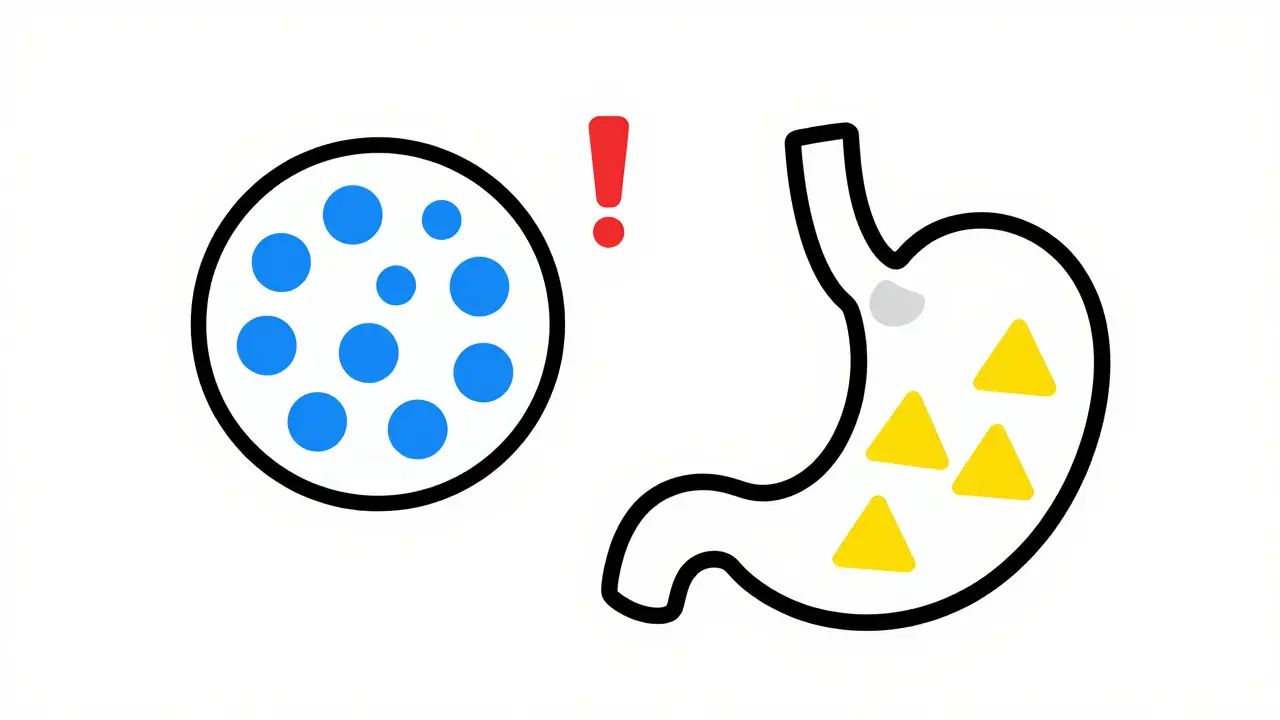
Tolerance issues usually fall into three categories: allergies, intolerances, and absorption changes. An allergy is an immune response, like hives or swelling, often triggered by dyes or preservatives. An intolerance, like Lactose Intolerance, occurs when your body can't digest a specific ingredient. While most people can handle the small amount of lactose in a pill, highly sensitive individuals may react to as little as 1-2 grams.
Then there is the more technical side: how excipients affect the drug's performance. Some fillers can change how quickly a drug dissolves. In rare cases, poor formulation can lead to "dose dumping," where the medication is released all at once instead of slowly over several hours. This can lead to a spike in side effects or a drop in the drug's effectiveness over time. This is particularly critical in neurology or endocrinology, where precise dosing is a matter of stability and safety.
Recognizing the signs of excipient sensitivity
If you suspect your generic medication is causing a reaction, look for symptoms that appear shortly after taking the pill but aren't listed as common side effects of the active drug. For example, if a medication is meant to treat anxiety but you suddenly develop abdominal bloating or a skin rash, the culprit might be the filler, not the medicine.
Real-world reports often highlight these "hidden" triggers. Some patients have reported severe GI distress after switching to a generic that contained specific artificial colors, like FD&C Blue #2. Because these ingredients aren't the main focus of the prescription, many doctors and patients overlook them, assuming the reaction is a fluke or a new side effect of the disease itself.

What to do if you're sensitive to a generic
You don't necessarily have to go back to the expensive brand-name version. There are several ways to manage excipient sensitivity without breaking the bank:
- Ask for the "Inactive Ingredients" list: Your pharmacist can provide the full list of excipients for a specific generic. You can then compare it to the brand name or another generic manufacturer.
- Use the FDA Inactive Ingredient Database (IID): This is a professional resource that lists approved excipients for various drugs. While technical, it's the gold standard for checking what's inside a pill.
- Request a specific manufacturer: Not all generics are made by the same company. If you know that "Manufacturer A" uses a filler you tolerate and "Manufacturer B" does not, your pharmacy may be able to source the specific version you need.
- Consult an allergist: If you have recurring reactions to multiple medications, an allergist can help identify if you have a systemic sensitivity to common fillers like cornstarch or certain dyes.
The future of personalized medicine
We are moving toward a world where "one size fits all" pharmacy is a thing of the past. New developments, including AI-powered tools from MIT, are beginning to predict a person's tolerance to specific excipients based on their genetic markers. This means in the future, your doctor might prescribe a generic that is specifically matched to your body's chemistry.
Furthermore, the industry is seeing a rise in specialty excipients. The market for gluten-free, lactose-free, and dye-free formulations is growing rapidly as pharmaceutical companies realize that patient adherence improves when the "inactive" parts of the drug don't cause active problems.
Are generic drugs less effective because they have different excipients?
No, the active medicine is the same. However, if a patient is sensitive to a specific excipient, the resulting side effects (like nausea or inflammation) might make the drug feel less effective or make the patient less likely to take it consistently, which impacts the overall treatment.
Can I ask my pharmacist to switch to a different generic manufacturer?
Yes. Most pharmacies work with multiple wholesalers. If you can identify which manufacturer's version you tolerate best, you can request that specific one. You may need your doctor to specify "Dispense Generic Manufacturer X" on the prescription for the pharmacy to guarantee it.
Is it possible to get a medication with no fillers at all?
In most commercial tablets, it is impossible because the active drug is too small to compress into a pill without fillers. However, some compounding pharmacies can create custom versions of medications with specific fillers removed, though this is usually more expensive and requires a special prescription.
Why doesn't the FDA require generics to have the same inactive ingredients?
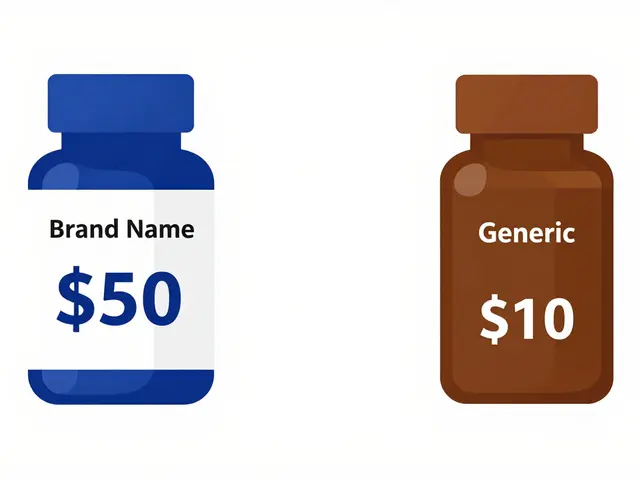
The primary goal of the FDA is to ensure the active ingredient is bioequivalent (works the same way in the blood). Allowing different excipients encourages competition among manufacturers, which is what keeps the cost of generic drugs so much lower than brand names.
Which inactive ingredients are the most common triggers for reactions?
Lactose is the most common trigger for digestive issues. Artificial dyes (like Yellow #5 and Blue #1) and preservatives (like parabens and sulfites) are the most common triggers for allergic reactions and skin sensitivities.


Ethan Davis
April 6, 2026 AT 18:39Typical FDA nonsense. They don't care about your health, they just want to keep the pharmaceutical lobbyists happy while they pump us full of mystery fillers. It's all a game to see how much junk they can slip into a pill before people actually start noticing the side effects. Wake up people, the "inactive" part is the most active part of the profit margin.
dwight koyner
April 6, 2026 AT 19:33It is important to note that for patients with complex comorbidities, the choice of excipients can indeed lead to clinically significant adverse reactions. I strongly recommend that any individual experiencing unexpected symptoms upon switching medications keep a detailed log of the manufacturer's name and the specific lot number. This documentation is invaluable when presenting your case to a healthcare provider or an allergist to ensure a precise diagnosis and a safe alternative formulation.
jack hunter
April 7, 2026 AT 10:40why do ppl care about a lil bloating lol. its just a pill not a lifestlye choice. the ideea that a tiny bit of lactose is a crisis is just peak modernity. we're all just organic machines breakin down and actign like its some huge conspiracy of the pharma state. just take the med and stop overthinking the flourescent dye in your tablet
Grace Lottering
April 8, 2026 AT 10:23They use these fillers to track us. Chemicals in the dyes are markers. Pure greed and control.
Nathan Kreider
April 8, 2026 AT 22:11I had this happen with my allergy meds and it was so scary! I'm just glad there's a way to ask for a different maker. Hang in there everyone, we can find a version that works for us!
Windy Phillips
April 10, 2026 AT 18:26It is truly fascinating... albeit exhausting... how many people simply refuse to educate themselves on basic biochemistry before complaining!!! One would think a simple search of the IID database would suffice, but apparently, the burden of research is too heavy for the average consumer... how tragic.
GOPESH KUMAR
April 11, 2026 AT 23:49The dichotomy between the active essence and the inert shell is a metaphor for human existence itself. We focus on the "active" purpose of our lives while ignoring the fillers that actually sustain us. However, the technical execution of the FDA's bioequivalence standard is laughably simplistic because it ignores the synergistic effects of the fillers on the gut microbiome. It is common knowledge in higher circles that the rate of dissolution is heavily influenced by the polarity of the excipient, yet the regulators pretend it doesn't matter just to streamline the approval process.
Darius Prorok
April 11, 2026 AT 23:56Just tell the pharmacist you want the brand name if you're that scared. Simple as that.
Jamar Taylor
April 12, 2026 AT 01:32Keep your head up! If you're feeling the side effects, just be your own advocate and talk to your doc. You've got the power to get the right med for your body! Let's get this sorted out!
Stephen Luce
April 13, 2026 AT 12:44I totally get how frustrating that is. I remember feeling like I was losing my mind when my skin started acting up after a pharmacy switch and the doctor just told me it was probably stress. It's a relief to see this explained here because it validates that the ingredients actually matter.
Laurie Iten
April 14, 2026 AT 05:53the thought of my body reacting to something labeled inactive is just wild... makes you wonder what else is hidden in plain sight and how much we actually control our own biology
Victoria Gregory
April 14, 2026 AT 08:28Oh wow!! 🌸 I never knew about the IID database!! It's so cool that we have tools to help us feel better and be safe... let's all just be kind to ourselves while figuring this out! ✨💖
Kathleen Painter
April 15, 2026 AT 23:33I've always felt that the medical community tends to brush off these kinds of reports because they are looking for the big picture, but for the person actually swallowing the pill every morning, those "minor" ingredients are a huge deal, and I think it's just so wonderful that there are compounding pharmacies out there for people who really can't handle the standard fillers, even if it costs a bit more, because peace of mind and a lack of hives is worth every penny in the long run.
Jay Vernon
April 16, 2026 AT 22:57Thanks for the info! 💊 I'll check my pills now! 👍
shelley wales
April 18, 2026 AT 02:06It's so important to make sure everyone feels seen in their health journey. If you're struggling, please know you're not alone and there are ways to make this work for you. Just take it one step at a time and don't be afraid to ask your pharmacist for help!