
Every year, medication safety issues affect millions of people - not because they’re careless, but because the system is broken. You take your pills as directed, trust your doctor, and assume the pharmacy got it right. But the numbers don’t lie: about 1 in 20 patients worldwide experience preventable harm from medications. That’s not a rare accident. It’s a pattern. And if you or someone you love takes any kind of medicine - even something as simple as aspirin - you need to understand what’s really going on.
Medication Errors Are More Common Than You Think
It’s easy to think medication errors only happen in hospitals or to elderly patients. But they occur everywhere: at home, in clinics, at the pharmacy counter. In the U.S. alone, more than 1.5 million people are harmed by medications each year. That’s more than car accidents or falls. And about 7,000 of those cases end in death - just in hospitals. These aren’t rare tragedies. They’re systemic failures. The most dangerous mistakes? They’re often simple. Taking the wrong dose. Mixing drugs that shouldn’t be mixed. Not realizing a new pill looks different because the manufacturer changed it. One study found that 3% of all patients experience preventable harm from medications - and a quarter of those incidents are life-threatening. That means if you’re on three medications, you have a 1 in 10 chance of being harmed in a way that could send you to the ER or worse.Which Drugs Are Most Dangerous?
Not all medications carry the same risk. Some are far more likely to cause harm than others. Antibiotics top the list, responsible for about 20% of all medication-related injuries. Why? Because they’re overprescribed, misused, and often taken incorrectly. People stop taking them when they feel better - but the infection isn’t gone. That leads to resistance and worse outcomes. Antipsychotics come in second, at 19%. These are often given to older adults with dementia - even though guidelines say they shouldn’t be. They can cause dizziness, falls, heart problems, and even sudden death. Central nervous system drugs - like anxiety pills and sleep aids - are next, causing 16% of harm. And cardiovascular drugs, including blood pressure and cholesterol medications, account for 15%. These are taken daily by millions, so even small mistakes add up fast. Intravenous (IV) drugs are especially risky. In hospitals and nursing homes, 48% to 53% of errors happen with IV medications. A wrong dosage, a mislabeled bag, or a pump that malfunctions can kill someone in minutes. Between January 2023 and August 2024, over 200 deaths were linked to infusion pump failures reported to the FDA. These aren’t glitches. They’re preventable.The Hidden Threat: Fake and Counterfeit Drugs
You might think buying medicine from a licensed pharmacy keeps you safe. But counterfeit drugs are flooding the market - and they’re getting deadlier. The DEA seized nearly 10 million fake pills between January and September 2021. More than half of overdose deaths from 2019 to 2021 involved counterfeit oxycodone. And now, fentanyl is the leading cause of death for Americans aged 18 to 45. These fake pills look identical to real ones. They’re sold on social media, through unregulated websites, and even in some pharmacies that don’t verify their suppliers. One in three fake drug seizures in North America happens here. And it’s not just opioids. Fake antibiotics, diabetes pills, and even cancer drugs are being sold online. You can’t tell the difference by looking. That’s why using a single, trusted pharmacy matters more than ever.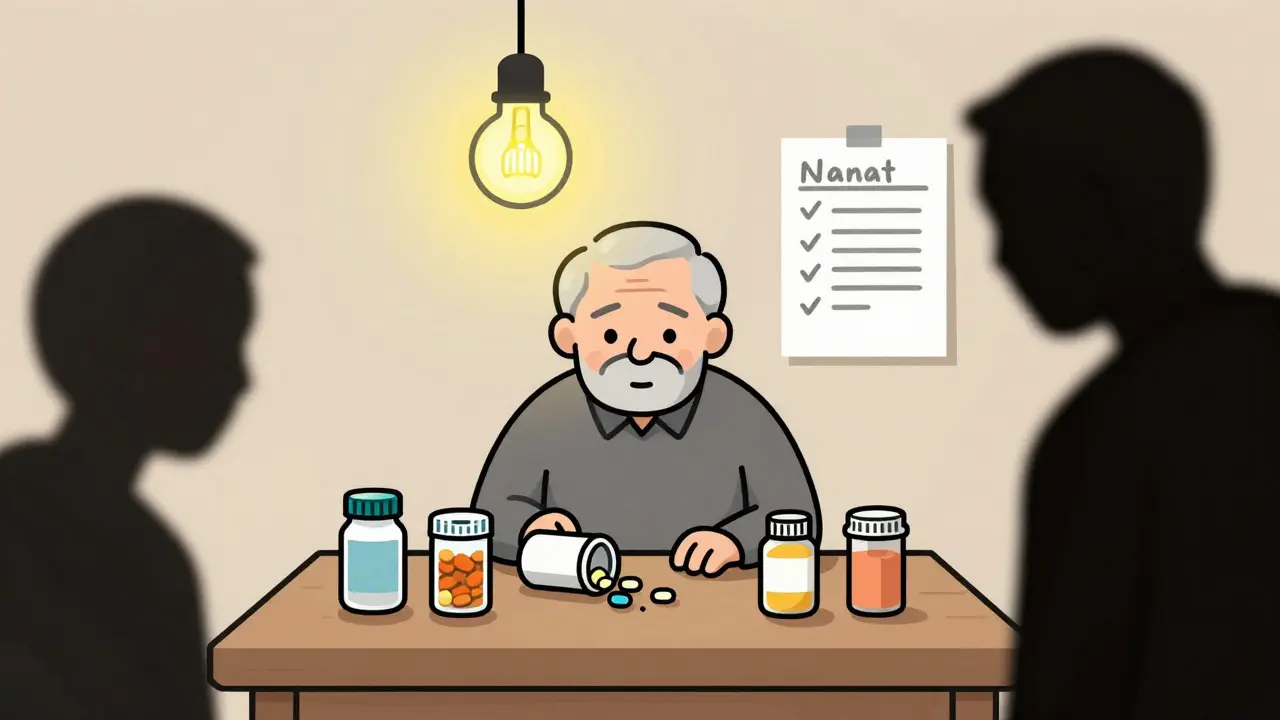
Who’s Most at Risk?
Older adults are the most vulnerable. They often take five, six, or more medications a day. One study found that 33% of seniors make mistakes at home - like doubling up on doses, skipping pills, or mixing alcohol with their meds. In Australia, efforts to reduce antipsychotic use in seniors cut inappropriate prescriptions by 11% between 2016 and 2021. That’s progress - but it shows how common the problem was. Younger people aren’t immune. Nearly 9 million Americans misused prescription painkillers in 2021. Four million misused stimulants like Adderall. Many think these are safe because they’re prescribed. But taking them without a medical need, or sharing them with friends, can lead to addiction, heart attacks, or sudden death. People with chronic conditions - diabetes, heart disease, HIV - are also at higher risk. Missing a dose or taking the wrong one can cause hospitalization. A Reddit analysis of medication-related posts found that 68% of users were confused about dosage instructions. Another 22% didn’t know their side effects were serious. If you’re reading this and thinking, “I didn’t realize that,” you’re not alone.How to Protect Yourself
You can’t control everything. But you can control these five things:- Keep a written list of every medication you take - including doses, times, and why you take them. Update it every time your doctor changes something.
- Use one pharmacy for all your prescriptions. That way, the pharmacist can spot dangerous interactions.
- Ask questions every time you get a new prescription: “What is this for?” “What are the side effects?” “What happens if I miss a dose?” Don’t be shy. If your provider seems annoyed, find someone who listens.
- Check the pills. If your new prescription looks different than last time, ask why. Manufacturers change colors and shapes. That’s normal. But if you’re not told, it’s a red flag.
- Review your meds regularly. Every six months, sit down with your doctor or pharmacist and ask: “Do I still need all of these?” Many people keep taking drugs long after they’re no longer useful - or even harmful.
Australia’s “5 Moments for Medication Safety” approach works because it’s simple: when you start treatment, when you add a new drug, when you move between care settings, when you’re on high-risk meds, and when you review everything. Use it. It’s not rocket science. It’s basic self-protection.
What’s Being Done - and What’s Not
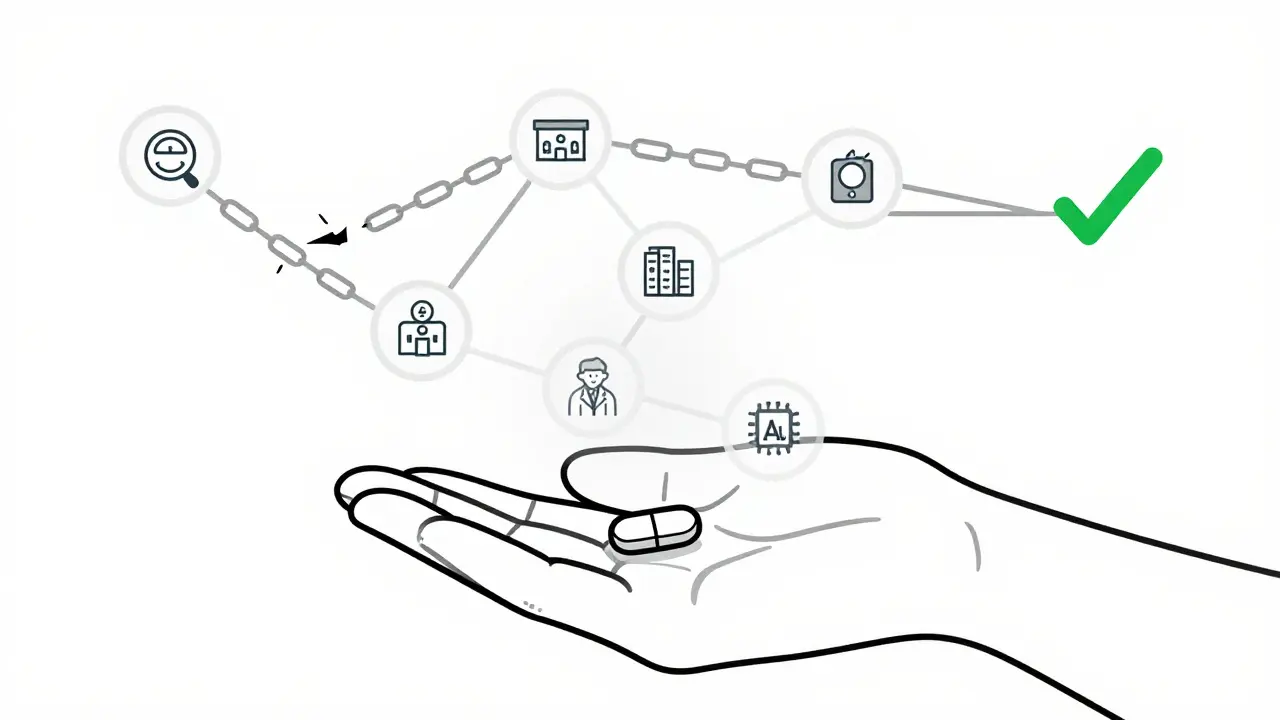
Some countries are making real progress. Australia cut opioid-related deaths by 37% since 2018 using real-time prescription tracking. The U.S. is rolling out 16 new patient safety metrics in 2025 - tracking things like statin use in diabetics and antipsychotic use in dementia patients. The WHO says 134 countries now have national plans to improve medication safety. But progress is slow. The global cost of medication errors? $42 billion a year. That’s more than what most countries spend on mental health care. The market for patient safety tech is growing - projected to hit $14.3 billion by 2029. AI tools could cut errors by 30% by 2027. But until those systems are widely used, you’re still on your own. The truth? Most errors aren’t caused by bad doctors or lazy pharmacists. They’re caused by broken systems. Overworked staff. Poor communication. Outdated technology. Dr. Donald Berwick, a top patient safety expert, said it best: “Most medication errors are system failures - not individual failures.”What You Can Do Today
Don’t wait for the system to fix itself. Start today:- Write down your meds. Now.
- Call your pharmacy and ask if they can flag dangerous interactions.
- Look up your prescriptions on a trusted site like Drugs.com to see common side effects.
- Speak up if something feels off. A strange rash, dizziness, confusion - don’t ignore it.
- Teach a family member how to read your medication list. You might not be able to manage it tomorrow.
Medication safety isn’t about perfection. It’s about awareness. You don’t need to be a doctor. You just need to be informed. Because when it comes to your health, assuming everything’s fine is the most dangerous thing you can do.
Timothy Olcott
March 21, 2026 AT 21:51Jackie Tucker
March 22, 2026 AT 21:37Bryan Woody
March 23, 2026 AT 14:27Chris Dwyer
March 25, 2026 AT 09:29Casey Tenney
March 26, 2026 AT 19:30Sandy Wells
March 28, 2026 AT 17:03Desiree LaPointe
March 30, 2026 AT 15:08Thomas Jensen
March 31, 2026 AT 05:32matthew runcie
March 31, 2026 AT 09:22shannon kozee
April 1, 2026 AT 01:04trudale hampton
April 2, 2026 AT 21:49Shaun Wakashige
April 4, 2026 AT 05:26Paul Cuccurullo
April 5, 2026 AT 08:25Solomon Kindie
April 6, 2026 AT 22:48Natali Shevchenko
April 8, 2026 AT 02:03