

Imagine taking two pills that are chemically identical. They have the same active ingredients, the same dosage, and the same purpose. One comes in a fancy box with a famous brand name; the other is in a plain white bottle labeled "generic." Despite the science saying they are the same, your body might react differently to them. This isn't a failure of chemistry, but a trick of the mind. The labeling effect is a psychological phenomenon where the perception of a drug's brand status influences a patient's subjective response and treatment success.
For most of us, "generic" sounds like "cheaper" or "lower quality," while "brand name" suggests "premium" and "effective." This mental shortcut can actually change whether you get better or stay sick. If you believe your medicine is inferior because of its label, you might subconsciously experience fewer benefits or even more side effects. It's a strange intersection of brand psychology and clinical medicine that has real-world consequences for your health.
The Psychology Behind the Label
How can a piece of paper or a plastic bottle change a chemical reaction in the brain? It mostly comes down to two powerful psychological drivers: the placebo effect and the nocebo effect. When you trust a brand, your brain releases dopamine and endorphins, which can actually dampen pain and make the drug feel more effective. Conversely, when you distrust a generic label, you might trigger the nocebo effect, where negative expectations lead to actual physical symptoms or a perceived lack of efficacy.
A fascinating study published in the European Journal of Public Health put this to the test. Researchers gave 72 people identical placebo pills-meaning there was no actual medicine in either. One group got pills labeled as brand-name, and the other got generic labels. The results were jarring: 54% of the generic group stopped taking their pills before the week was up, compared to only 33% in the brand-name group. Even worse, those with the generic label reported higher pain levels, despite the pills being exactly the same.
When the Label Outperforms the Ingredient
In some cases, the brand name does the heavy lifting that the chemistry can't. Research by Dr. Keith Petrie and his team looked at pain relief using ibuprofen. They found that people taking a brand-name labeled placebo felt almost as much relief as those taking actual active ibuprofen. However, those taking a generic-labeled placebo felt almost nothing.
This suggests that branding can create a "treatment benefit" even when the active ingredient is missing. For conditions like anxiety or chronic pain-where the mind plays a huge role in recovery-the label isn't just a name; it's part of the treatment. If you're fighting a headache, believing you have the "gold standard" drug can be as powerful as the drug itself.
| Metric | Brand-Name Label | Generic Label | Key Difference |
|---|---|---|---|
| Placebo Relief Rate | ~63% | ~42% | Significant trust gap |
| Discontinuation Rate | Lower (33%) | Higher (54%) | Reduced adherence |
| Perceived Side Effects | Lower (28%) | Higher (47%) | Nocebo response |
| Cost (Approx.) | High | 80-85% Lower | Major economic advantage |
The Danger of 'Skinny Labeling' and Mismatches
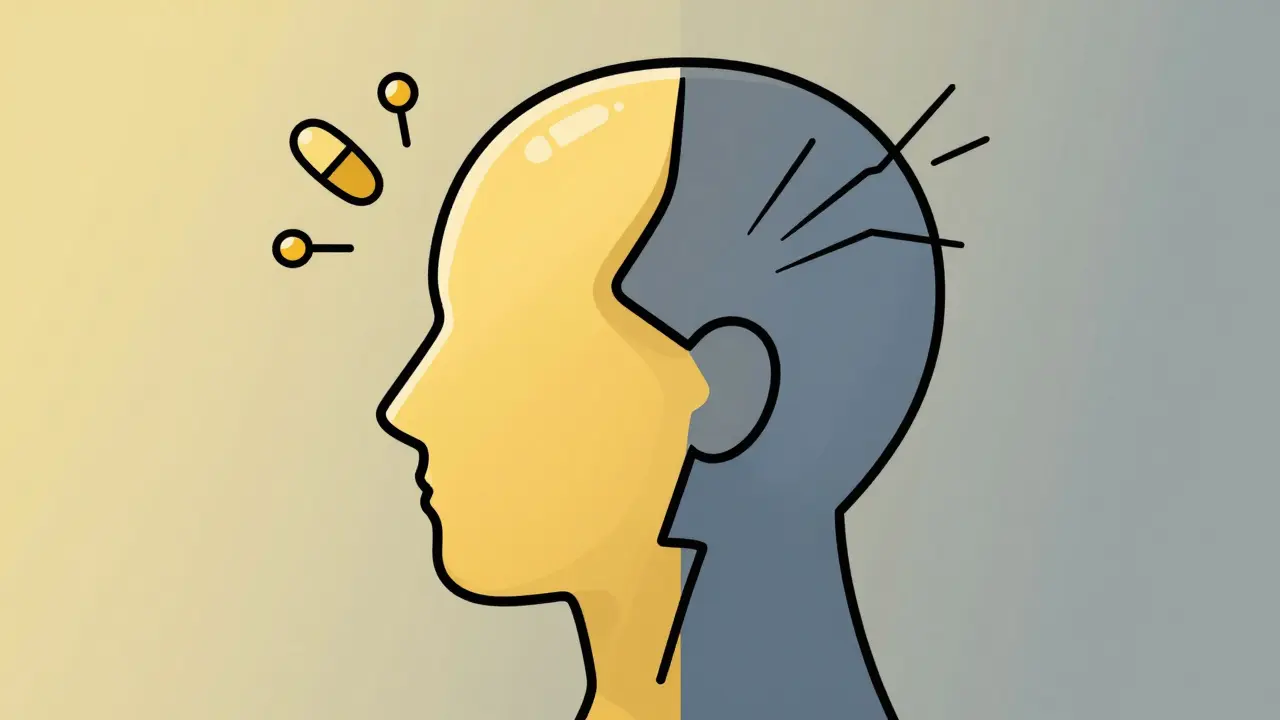
While most of the labeling effect is psychological, there is a physical side to this problem. Not all generic labels are perfect copies of the original. Some manufacturers use a tactic called skinny labeling. This is where a generic company leaves out certain approved uses (indications) from the label to avoid lawsuits from the brand-name company's remaining patents.
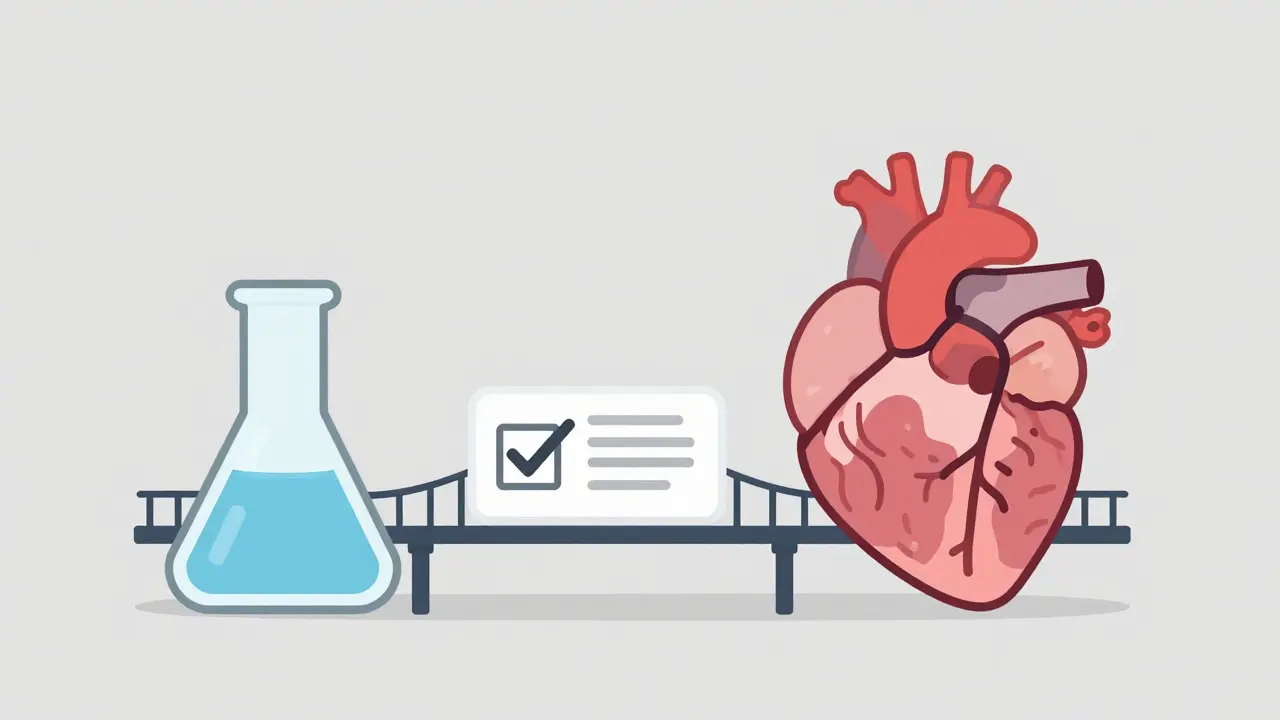
This can be dangerous. A study in the journal Pharmacy analyzed 31 different drug products and found that 100% of them had some kind of misalignment between the brand-name's summary of product characteristics and the generic version. Shockingly, about 13% of these labels had discrepancies that could potentially be life-threatening. When the label is wrong or missing key information, it's no longer just a psychological trick-it's a safety risk.
Who is Most Affected?
Not everyone reacts to the labeling effect in the same way. The impact is most severe in two specific groups: those with lower health literacy and those treating psychosomatic conditions. If a patient doesn't fully understand how bioequivalence works-the scientific standard ensuring a generic drug delivers the same amount of active ingredient to the bloodstream as the brand-they are more likely to distrust the generic version.
In the European Journal of Public Health study, the discontinuation rate for patients with lower health literacy was a staggering 67% for generic drugs, compared to 41% for those with higher literacy. This creates a healthcare gap where the people who need affordable medicine the most are the ones most likely to stop taking it because they don't trust the label.
Breaking the Cycle: How to Trust Generics
If you find yourself doubting your generic medication, it helps to look at the regulatory side. In the U.S., the FDA requires generic drugs to be bioequivalent to the reference listed drug. This means they must perform within a tight window (80-125%) of the original's pharmacokinetic parameters. They aren't "cheap imitations"; they are chemically equivalent versions produced after the original patent expires.
Healthcare providers are also trying to fix this. Some are adopting "generic-first" protocols combined with patient education. New research shows that simply adding the phrase "therapeutically equivalent to [Brand Name]" to a generic label can drop the discontinuation rate from 52% to 37%. The goal is to bridge the gap between the scientific truth (the drugs are the same) and the psychological perception (the brand is better).
Are generic drugs actually less effective?
Chemically, no. Generic drugs must meet strict bioequivalence standards to ensure they provide the same therapeutic effect as the brand-name version. However, the "labeling effect" can make them feel less effective because of the patient's psychological expectations and lack of trust in the generic brand.
Can the labeling effect cause side effects?
Yes, via the nocebo effect. If you believe a generic drug is lower quality or more likely to cause problems, your brain can actually trigger physical symptoms that mimic side effects, even if the drug is chemically identical to one you've taken before without issues.
What is 'skinny labeling'?
Skinny labeling occurs when a generic manufacturer removes certain approved uses of a drug from the label to avoid infringing on patents still held by the original brand-name manufacturer. This can lead to confusion for doctors and patients regarding what the drug is officially approved to treat.
Why do some people feel better with brand-name drugs?
This is often due to the placebo effect. The prestige and perceived reliability of a well-known brand can trigger a stronger psychological response, leading to a perceived increase in efficacy, especially in pain management and anxiety treatment.
How can I ensure my generic drug is safe?
Check that the medication is approved by the FDA (or your local health authority). You can also ask your pharmacist to confirm the bioequivalence of the specific generic brand they are providing. If you have a history of strong reactions to specific brands, discuss this with your doctor.



prince king
April 29, 2026 AT 09:29This is such a fascinating look at how our minds work! 🌟 It really makes you realize that the brain is the most powerful pharmacy we have. 💊✨
Abhishek Charan
May 1, 2026 AT 00:54Absolutely preposterous!!! 🙄 Why are we acting like the FDA is some infallible deity??? The bioequivalence window is far too wide for some critical meds!!! 😱🤡
Ryan Wilson
May 2, 2026 AT 07:38The sheer audacity of big pharma to play these psychological games with the gullible masses is just poetic. It's a grotesque circus of capitalism where we pay a 500% markup for a fancy cardboard box and some colorful ink, essentially paying a 'stupidity tax' just to feel the warm embrace of a corporate logo. Imagine being so intellectually bankrupt that you need a logo to tell your neurons to stop firing pain signals. Truly a masterclass in manipulating the cognitively impaired.
Stephen Johnson
May 3, 2026 AT 00:34It's an interesting cycle. We seek certainty in a chaotic world, and a brand name is just a symbol of that perceived certainty.
Peter Minto
May 4, 2026 AT 03:06USA made brand names always bettr than some random generic from overseas. keep it real!! 🇺🇸
Timothy Brown
May 4, 2026 AT 14:53People just love to overcomplicate things. If it works, it works. If you're stressing over the label, you're the problem, not the pill.
Jarrett Jensen
May 5, 2026 AT 01:48One finds the discourse surrounding the bioequivalence parameters to be dreadfully simplistic. The nuance of pharmacokinetic variability is entirely omitted here in favor of a narrative that appeals to the lowest common denominator of medical understanding. It is quite tedious to see such a rudimentary analysis presented as a comprehensive overview.
Jenna Riordan
May 5, 2026 AT 13:56I've seen this happen in my own family where my mother refuses to take the generic version of her blood pressure meds because she says it doesn't 'feel' right.
Raymond Lipanog
May 5, 2026 AT 18:25It would be prudent to consider how we might balance the economic necessity of generic pharmaceuticals with the psychological requirements of the patient to ensure an equitable healthcare outcome for all strata of society.
Angela Cook
May 7, 2026 AT 17:38Who cares about the psychological stuff? The only thing that matters is that our own companies are the ones making the gold standard! Buy American or don't buy at all!
Jonathan Hall
May 8, 2026 AT 02:10While I generally agree with the sentiment of accessibility, I must express a certain level of frustration that the regulatory frameworks are so opaque that the average citizen is forced to rely on a 'trust' system rather than a transparent verification process, which is essentially a failure of the bureaucratic machinery to communicate basic science to the public in a way that doesn't leave them feeling like lab rats in a corporate experiment designed to maximize profits while minimizing the actual quality of care provided to those who are already marginalized by their own lack of health literacy.