
Steroid-Induced Osteoporosis Risk Checker
This tool helps estimate your fracture risk based on corticosteroid usage guidelines. Enter your daily equivalent dose of prednisone and how long you have been taking it.
Your Parameters
Assessment Result
-
Recommended ActionLoading...
-
Prevention FocusLoading...
Bring these results to your rheumatologist or endocrinologist. If you fall into the High Risk category, discuss whether you need a DEXA scan or bisphosphonate medication immediately.
The Hidden Danger in Your Medicine Cabinet
If you've been told you need to take steroids for a long time, the conversation usually focuses on controlling inflammation or managing your autoimmune disease. But there's a silent companion that often shows up when you've been taking these medications for more than three months. It's not always obvious until something breaks. We are talking about Osteoporosis prevention specifically tailored for those on chronic therapy. Statistics show that between 30% and 50% of patients on these drugs face significant bone loss within the first few years of treatment.
This isn't just about getting older. It's a direct consequence of how the medication interacts with your skeleton. In fact, studies indicate fracture risk can double within the first six months of starting therapy. The good news is that this damage isn't inevitable. With the right strategy, we can protect your skeletal health even while treating other serious conditions.
Why Steroids Attack Your Bone Strength
To understand how to stop the damage, we have to look at how your bones work normally. Think of your skeleton as a construction site. You have builders (osteoblasts) who lay down new bone, and you have demolition crews (osteoclasts) who remove old bone. When everything is balanced, your bones stay strong.
Glucocorticoid-induced osteoporosis (GIOP) is a specific form of bone density loss caused by prolonged exposure to corticosteroid medications. Unlike natural aging, this process accelerates because steroids tell the builders to stop working while allowing the demolition crew to stay active longer.Research published in Frontiers in Endocrinology highlights that these drugs inhibit the function of the osteoblasts directly. They also reduce the amount of calcium your gut absorbs from food-by roughly 30%. That means even if you eat a healthy diet, your body struggles to get the minerals it needs to repair itself. At the same time, your kidneys leak calcium back into urine instead of saving it. It's a triple threat to your structural integrity.
The timeline is what worries doctors the most. You might see a decline in bone mineral density ranging from 5% to 15% in that very first year. This happens particularly fast in the spine and hip areas, where the bone structure is more porous. Once a vertebra fractures, it's often painful and limits movement, creating a cycle of weakness.
Knowing Your Risk Level
You probably know the name of your medication, but do you know your dose threshold? Guidelines from the British Bone Society updated in 2022 suggest that the risk zone starts when you take a dose equivalent to 2.5 mg of prednisone every day for more than three months.
| Dose Equivalent (Prednisone) | Duration Required | Risk Classification | Suggested Action |
|---|---|---|---|
| Less than 2.5 mg/day | Any duration | Low Risk | Lifestyle monitoring |
| 2.5 mg to 7.5 mg/day | More than 3 months | Moderate Risk | Calcium + Vitamin D supplementation |
| Above 7.5 mg/day | More than 3 months | High Risk | Bone density scan + Medication review |
Notice how the table above categorizes risk. If your daily dose climbs to 7.5 mg or higher, the risk effectively doubles compared to someone not on the drugs. This distinction matters because it dictates which doctors get involved. Primary care physicians handle low-risk cases, but rheumatologists and endocrinologists step in when the dosage crosses that 7.5 mg mark.
Don't forget the gender factor here. Women are naturally at higher risk due to post-menopausal hormonal changes, but men on high-dose steroids are often overlooked. Data suggests that only 44% of men receive proper intervention compared to 76% of women. If you are a male patient, you might need to advocate for yourself harder during appointments.
Building Your First Line of Defense: Diet and Exercise
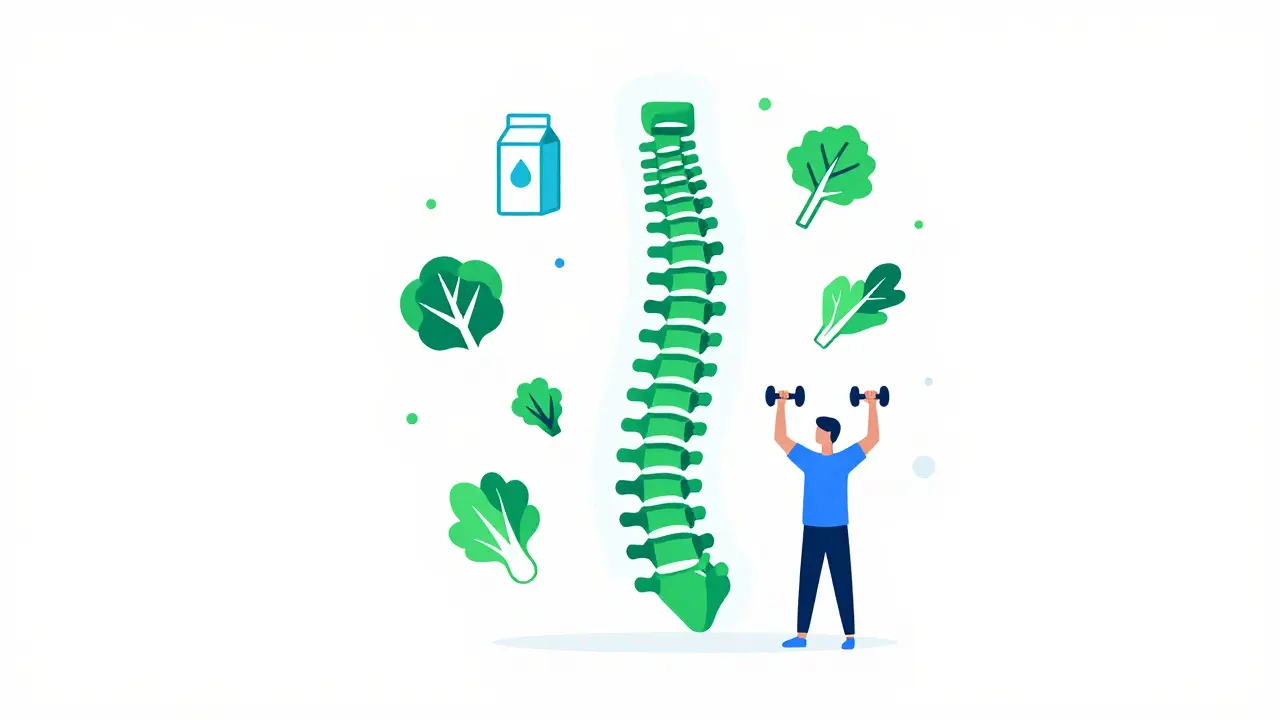
Before jumping to prescriptions, we have to look at what you control every single day. The foundation of any prevention plan rests on two non-negotiable pillars: nutrition and movement. Skipping these won't be fixed by medicine alone.
Cutting Through the Nutrition Confusion
How much calcium do you actually need? Most people hear conflicting numbers. For you, the Cleveland Clinic Journal of Medicine recommends aiming for 1,000 to 1,200 mg daily. You should try to get this from food first. A cup of milk gives you roughly 300 mg, while spinach provides around 200 mg. Leafy greens are great, but be careful; some plant fibers block absorption, so mix your sources.
Vitamin D is equally critical. It acts like the delivery truck that brings calcium into your cells. Without enough Vitamin D, that calcium you ate just passes through you. Standard recommendations suggest 600 to 800 International Units (IU) daily. However, if you live in areas with less sun or have darker skin, you might need closer to 1,000 IU to keep blood levels optimal. Testing your serum Vitamin D level helps determine exactly where you stand, ensuring you aren't under-supplementing.
The Movement Mandate
We all know exercise is good, but specific types matter here. Weight-bearing exercises stimulate your bones to thicken. Walking briskly, dancing, or resistance training puts load on the skeleton, signaling the body to keep density intact. Aim for at least 30 minutes on most days of the week.
However, be realistic. While exercise works wonders for the general population, steroids blunt your skeletal response to mechanical loading. Some analyses suggest that the effectiveness drops by about 25% in users compared to non-users. This means consistency is even more vital. You cannot rely on casual walking alone; structured resistance training yields better results. If balance is an issue due to muscle thinning from the meds, incorporate stability drills to prevent falls, which become far more dangerous when bone density is compromised.
Habits That Accelerate Damage
While building habits is good, breaking bad ones is crucial. Smoking is a major enemy here. Studies show that smokers have a 25% to 30% higher risk of fracture independently of steroid use. Combine smoking with steroid therapy, and you multiply the dangers. Alcohol moderation is also part of the plan. Limit intake to fewer than 3 units a day. Excessive drinking interferes with the balance of calcium and bone cell activity, negating the benefits of the supplements you are trying to take.
When Supplements Aren't Enough: Medical Interventions
Sometimes, lifestyle changes hit a ceiling. If you are on high doses or have already suffered a fracture, your doctor may discuss adding pharmaceuticals. These treatments are designed to halt the demolition crew entirely.
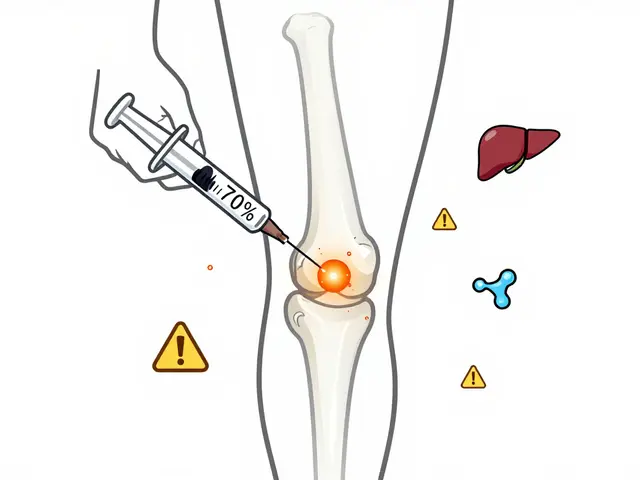
Bisphosphonates are a class of drugs used to strengthen bones by slowing down the breakdown of bone tissue. Common forms include risedronate taken weekly or alendronate. Clinical trials have shown they can reduce vertebral fracture risk by 70%.Taking oral bisphosphonates requires some discipline. You must swallow the pill on an empty stomach and stay upright for 30 minutes to avoid irritation. Gastrointestinal side effects affect about 30% of users, leading many to quit prematurely. If the pills upset your stomach too much, talk to your doctor about alternatives.
For those with severe bone loss or difficulty swallowing pills, there are stronger options. Zoledronic acid is given as a yearly IV infusion, removing the hassle of weekly dosing. Another powerful agent is Teriparatide, an injection taken daily. It works differently; instead of just stopping breakdown, it actively builds new bone. It produces significantly greater gains in bone density for high-risk users compared to standard blockers.
The Monitoring Schedule
Once you start prevention, you need to measure progress. Baseline testing is essential. Get a dual-energy X-ray absorptiometry (DEXA) scan before or immediately after starting long-term therapy. This establishes your starting point. From there, repeat the test every 1 to 2 years depending on how stable your bone density remains.
Doctors also use tools like the FRAX score, which calculates your 10-year probability of a fracture. This tool adjusts for steroid usage, acknowledging that being on steroids makes your skeleton age faster. Essentially, taking 7.5 mg of prednisone daily adds roughly 10 to 15 years to your calculated bone age. Knowing this number helps justify prescribing stronger protective drugs earlier rather than waiting for a crack to happen.
Overcoming Barriers to Care
Despite clear guidelines, implementation gaps are frustratingly large. Only about 15% of patients receiving these steroids get truly optimal care. Why is this? Often, the communication fails between specialists. Your lung specialist prescribes the inhalers, your rheumatologist manages the joint shots, but nobody takes ownership of the bones.
In larger hospital systems, electronic health record alerts help close this gap. When a system flags a 3-month prescription order, it prompts the doctor to consider bone protection automatically. As a patient, you need to fill that void. Keep a list of all medications. Ask specifically: "What is my fracture risk?" and "Do I need a DEXA scan?" Don't wait for the doctor to volunteer this information. Proactive inquiry increases your chances of getting guideline-concordant care from 35% to nearly 90%.
Frequently Asked Questions
Can I stop taking my steroid medication to save my bones?
Never stop taking corticosteroids abruptly on your own. Stopping suddenly can cause a life-threatening adrenal crisis. Instead, work with your prescribing physician to lower the dose as safely as possible. Reducing the dose below 7.5 mg/day is one of the most effective ways to slow bone loss.
Is osteoporosis reversible with treatment?
While you cannot fully restore bone mass lost rapidly, appropriate treatment can stop further loss and sometimes increase density slightly. Medications like teriparatide are particularly good at regenerating bone structure, whereas bisphosphonates mainly maintain what you have left.
Do I need a DEXA scan if I feel fine?
Yes, definitely. There are no warning symptoms before a fracture occurs. By the time you experience pain or shortness of breath from a compressed spine, damage has already happened. An early scan allows for preventative measures before a break happens.
Are calcium tablets safe to take long term?
Generally yes, especially when combined with Vitamin D. However, mega-doses of calcium from pills alone have raised concerns about heart health in some studies. Doctors prefer getting calcium from food first and using supplements only to fill the gap needed to reach 1,000-1,200 mg.
Does physical activity work if I am on steroids?
It works, but it might take more effort to get the same result compared to someone not on steroids. The drug dampens the bone-building signal from muscles. You should aim for consistent weight-bearing activities and resistive training rather than relying solely on light walking.

Eva Maes
March 29, 2026 AT 13:46The biological cascade initiated by glucocorticoid exposure is genuinely terrifying when you consider the sheer velocity of degradation. We observe osteoblast suppression occurring almost immediately upon administration of therapeutic doses. The cellular machinery responsible for construction halts operations without a single pause for safety checks. Simultaneously calcium absorption rates plummet due to altered gut permeability mechanisms. Demolition crews remain fully operational despite the lack of structural reinforcement. It becomes clear why fracture risk doubles within such a short timeframe of initiation. Many patients fail to grasp the urgency until they face physical collapse. This silent erosion requires proactive management strategies from day one. Relying solely on dietary intake proves insufficient against chemical interference. Medical intervention must align perfectly with dosage thresholds outlined in current guidelines. Ignoring the statistical probabilities leads inevitably to compromised skeletal integrity. We must understand that hormonal signaling pathways become confused under constant medication pressure. The body interprets high cortisol levels as a signal to conserve energy elsewhere rather than bone maintenance. This evolutionary trade-off serves poorly in modern chronic disease contexts. Prevention demands a multi-pronged approach involving nutrition exercise and pharmaceutical support. Each component addresses a specific vulnerability exposed by the drug regimen. Failure in one area exposes the weak points to catastrophic failure later.
Poppy Jackson
March 29, 2026 AT 19:11you absolutely can manage this with the right tools dont panic about the numbers just stay consistent with your daily routine and trust the process keeping strong takes effort but you got this
walker texaxsranger
March 31, 2026 AT 12:35big pharma pushes these stats to sell more supplements to vulnerable populations they claim osteoporosis but ignore the broader systemic toxicity issues present in chronic therapy protocols adrenal suppression remains unmentioned in most standard discussions regarding bone density metrics it seems convenient how the focus shifts entirely to calcium supplementation rather than root causes standard of care often neglects alternative metabolic therapies that could mitigate risk factors naturally the data presented aligns suspiciously with commercial interests driving prescription volumes upward patients should demand transparency regarding long term outcome studies beyond basic density scores
gina macabuhay
April 1, 2026 AT 03:20I find it deeply amusing how some people cling to conspiracy theories instead of following established medical guidelines designed for patient safety. Ignoring the evidence-based protocols put forth by specialists does nothing but endanger everyone involved in the healthcare system. Your skepticism does not change the biological reality of cortisol induced bone resorption which kills cells faster than repair mechanisms. We prioritize facts over feelings and the science clearly dictates a preventative approach for anyone on chronic steroids. It is irresponsible to dismiss clinical recommendations simply because you suspect ulterior motives behind them. Trust the doctors who spend their entire careers studying these pathologies rather than internet rumors. Your attitude suggests a dangerous level of apathy toward maintaining your own structural integrity through proper care. Stop looking for enemies and start looking at your lab results for actual answers.
Paul Vanderheiden
April 1, 2026 AT 23:39stay positive and keep moving forward with your plan every step you take helps protect your skeleton even on bad days just remember your strength comes from within and also from good habits like walking outdoors and eating green veggies together we make a difference keeping our bones strong is a win for everybody let us help you get there without stress or worry just keep going forward with confidence
Aaron Olney
April 2, 2026 AT 09:15me too i was taking steriods for years and forgot to do anything bout my boness then boom hurt back doc said oh yeah you lost density i didnt know that happened until i felt pain in spine now i lift weights but scared always of breaking something feels weird being careful all time but neccesary i guess so be careful with your meds
Sabrina Herciu
April 3, 2026 AT 05:22It is crucial to understand that bisphosphonate therapy requires specific adherence protocols to maximize efficacy:: swallowing the tablet upright prevents esophageal irritation which occurs frequently:: gastrointestinal side effects affect approximately thirty percent of users:: compliance drops significantly after initial discomfort manifests:: weekly dosing schedules provide better retention rates compared to daily regimens:: serum markers should be monitored quarterly to assess treatment response accurately:: teriparatide injections offer superior bone formation capabilities for high-risk individuals:: annual zoledronic acid infusions reduce logistical burden substantially:: discuss these options with your prescribing specialist early:: never delay intervention when density scores indicate moderate decline:: vigilance ensures long term structural stability.
Jordan Marx
April 4, 2026 AT 14:42The pharmacodynamics of osteotropic agents involve complex signaling pathways that regulate osteoclast activity directly: understanding the mechanism allows for better patient engagement. We observe significant reduction in microarchitectural deterioration when antiresorptive agents are introduced promptly. Bioavailability varies widely among formulations necessitating careful selection based on renal function parameters. Clinical endpoints must focus on preventing fragility fractures rather than mere density metrics alone. Patient education regarding administration technique reduces adverse event rates considerably. Synergistic effects emerge when combining nutritional optimization with pharmacological blockade. Monitoring longitudinal changes via DEXA imaging provides necessary feedback loops for dosage adjustments. Adherence patterns predict outcomes more accurately than genetic predisposition factors in this population.
Monique Louise Hill
April 6, 2026 AT 09:52Your health choices define your future quality of life completely 🦴❌ Neglecting bone protection shows a lack of self respect towards your own body 💊✅ Everyone deserves the best care possible and ignoring guidelines is selfish behavior 😤 Please educate yourself properly before dismissing medical consensus 👍🏼👀
kendra 0712
April 7, 2026 AT 05:23Please follow the advice given!!! Safety comes first! Always! It is super important to listen to your doctor!! The numbers matter a lot!!! Do not ignore the signs!!! You have the power to prevent injury!!! Take action today!!!
Kameron Hacker
April 8, 2026 AT 02:36The ethical implications of preventive medicine demand rigorous scrutiny from both practitioners and patients alike. Negligence in prophylactic care constitutes a failure of the social contract inherent in healthcare delivery systems. We must confront the reality that passive compliance often yields inferior outcomes compared to active advocacy. Philosophical frameworks surrounding bodily autonomy intersect dangerously with mandatory treatment protocols. Individual agency must be balanced against collective medical wisdom to avoid systemic breakdown. This tension defines the contemporary landscape of chronic disease management.
Austin Oguche
April 9, 2026 AT 17:57In many global regions the access to bone density screening remains limited creating disparities in care quality. Patients traveling between borders often lose continuity with specialists monitoring their endocrine health. Cultural attitudes toward medication vary significantly influencing adherence rates across different communities. We must advocate for standardized international protocols to ensure equitable protection regardless of location. Awareness campaigns should target diverse demographics to close existing knowledge gaps effectively.
Shawn Sauve
April 10, 2026 AT 15:38Great read :)