
Snacking doesn’t have to wreck your weight goals. In fact, the right snacks can help you lose weight, stay full longer, and even protect your muscle mass. The secret? High-protein, low-calorie snacks. These aren’t just trendy-they’re backed by science. Studies show that eating 20-40 grams of protein per snack helps your body build and maintain muscle while keeping hunger in check. And when you keep calories under 200, you’re not just snacking-you’re strategically fueling your body.
Why Protein Snacks Work for Weight Loss
Protein doesn’t just fill you up-it changes how your body signals hunger. When you eat protein, your gut releases hormones like PYY and GLP-1, which tell your brain you’re satisfied. One study found that protein snacks reduce hunger by 15-25% more than carb-heavy snacks like crackers or cookies. That means fewer cravings later in the day.
Protein also takes more energy to digest. While carbs use about 5-10% of their calories for digestion, protein uses 20-30%. That’s called the thermic effect of food-and it means you burn more calories just by eating protein. Combine that with the fact that protein helps preserve muscle during weight loss, and you’ve got a powerful combo.
Experts like Dr. Gabrielle Lyon and the Academy of Nutrition and Dietetics agree: spreading protein evenly across meals and snacks is more effective than loading it all into dinner. Aim for 15-20 grams per snack. That’s enough to trigger muscle repair and keep you full without overdoing it.
Top 10 High-Protein, Low-Calorie Snacks (Under 200 Calories)
Not all protein snacks are created equal. Some are packed with sugar, salt, or artificial stuff. Here are the real winners-based on nutrition data, user reviews, and expert recommendations.
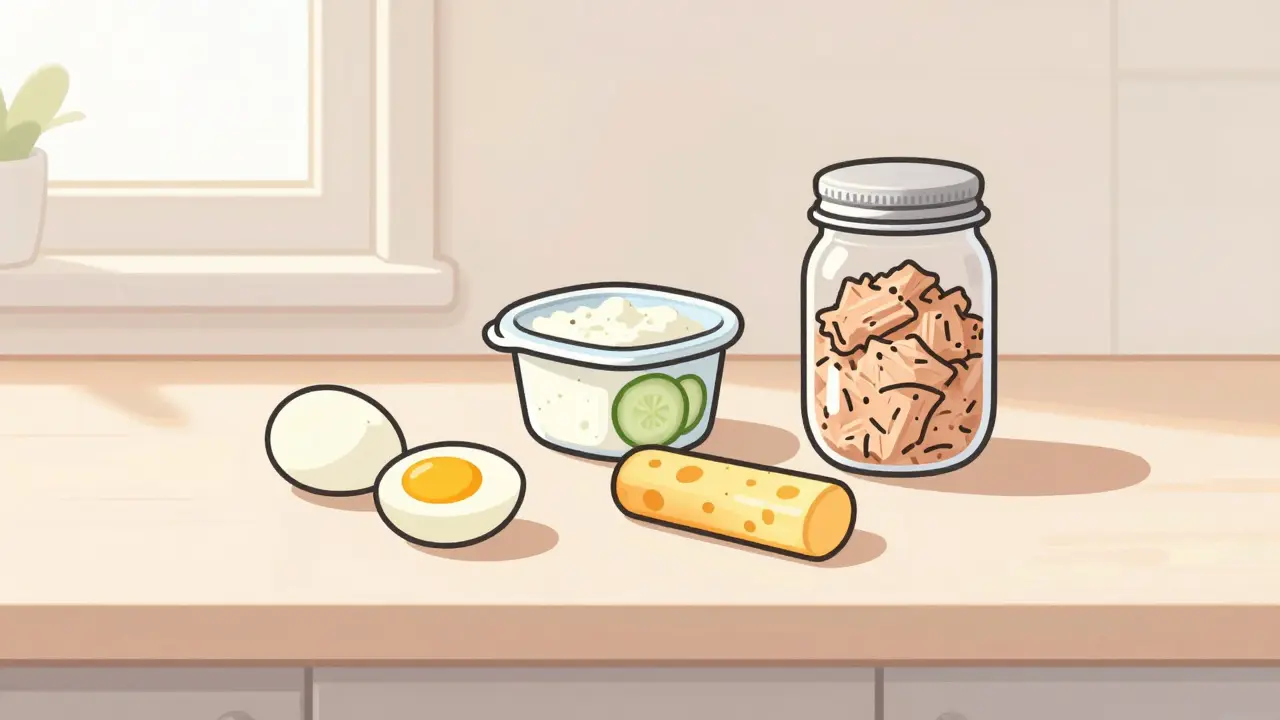
- Hard-boiled eggs - Two large eggs give you 12g protein and 156 calories. They’re portable, require zero prep if you boil a batch on Sunday, and are the #1 most logged high-protein snack on MyFitnessPal.
- Non-fat Greek yogurt - A 100g serving (about 1/3 cup) has 10g protein and just 59 calories. Add a handful of blueberries for fiber and antioxidants. Reddit users rave about this combo for lasting fullness.
- Cottage cheese - Half a cup (113g) of 1% cottage cheese delivers 14g protein and 90 calories. Try it with a sprinkle of black pepper or sliced cucumber. Cottage cheese bark (mixed with chia seeds and cinnamon) scored 4.5/5 in taste tests for satisfaction.
- Roasted chickpeas - A half-cup (82g) gives you 7g protein and 6g fiber for 135 calories. The fiber slows digestion, making you feel full longer than protein alone. Look for low-sodium versions.
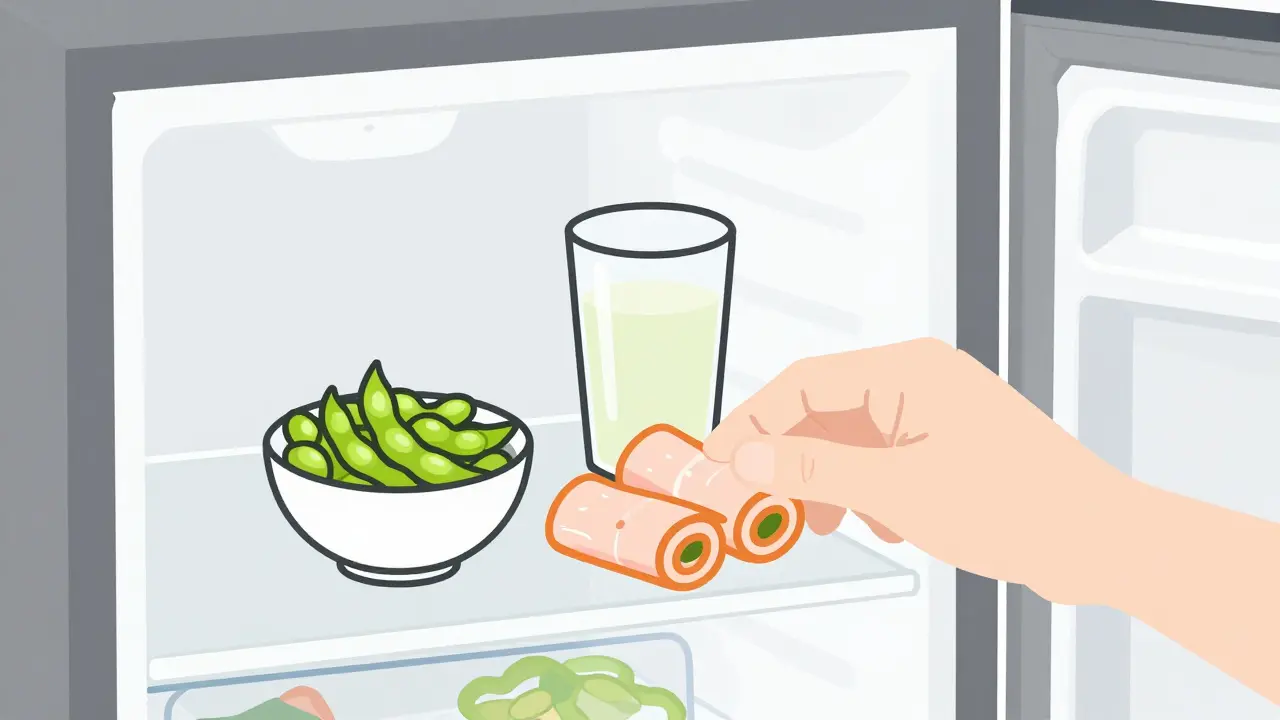
- Edamame - One cup (155g) steamed edamame has 17g protein and 8g fiber for 189 calories. Sprinkle with sea salt or chili flakes. It’s one of the few plant-based snacks that hits the 15g protein mark without added sugar.
- Hard cheese sticks - One stick (28g) of part-skim mozzarella has 7g protein and 80 calories. Easy to grab, and the fat helps slow digestion. Perfect for on-the-go.
- Turkey or chicken slices - Three ounces (85g) of sliced lean turkey breast gives you 25g protein for 120 calories. Roll them up with a slice of cucumber or bell pepper for crunch.
- Protein shake (unsweetened) - Mix 1 scoop of whey or plant-based protein powder (20g protein) with water or unsweetened almond milk. Keep calories under 150 by avoiding added sugars or syrups. Choose brands with under 5g added sugar.
- Miso & sesame eggs - Boiled eggs brushed with a light miso glaze and sesame seeds. BBC Good Food users report these keep hunger away for over 3 hours. Around 180 calories for two eggs.
- Tuna salad in a jar - Mix 3oz canned tuna (20g protein) with a spoon of plain Greek yogurt (instead of mayo), lemon juice, and dill. Add chopped celery. Total: 160 calories, 20g protein. A top pick among post-workout snackers.
Plant-Based vs. Animal-Based: What’s Better?
Can plant-based snacks really compete with chicken or eggs? Yes-but they need help.
Animal proteins like eggs, dairy, and meat are “complete,” meaning they contain all nine essential amino acids your body can’t make on its own. They score a perfect 1.0 on the Protein Digestibility Corrected Amino Acid Score (PDCAAS). Plant proteins like chickpeas or tofu score lower (0.7-0.8), so they’re less efficient at triggering muscle repair.
But here’s the fix: combine plants. Pair hummus (chickpeas) with whole wheat pita. Eat edamame with brown rice. Mix pea protein powder with oats. These combos give you a complete amino acid profile. Plus, plants add fiber-something animal proteins don’t offer. A snack with both protein and fiber (like edamame) increases satiety by 30% more than protein-only options.
Animal proteins give you more protein per calorie. For example, 3oz of chicken breast gives you 26g protein for 140 calories. The same weight of tofu gives you 9g protein for 70 calories. If you’re counting every calorie, animal sources are more efficient. But if you want fiber, antioxidants, and lower environmental impact, plants win.
What to Avoid
Not every “protein snack” is healthy. Many protein bars and shakes are sugar bombs in disguise.
- Quest bars - They have 20g protein, but many flavors contain sugar alcohols like erythritol. Over 20% of users report bloating or diarrhea.
- RXBARs - Clean ingredients, yes. But they’re sweetened with dates. One bar has 13g of sugar-almost all of it added. That’s more than a candy bar.
- Jerky - High in protein (10-15g per ounce), but often loaded with sodium. One serving can hit 700mg-nearly a third of your daily limit.
- Protein bagels - They sound great, but many are dense, gummy, and hard to digest. Over 40% of users on Allrecipes said they failed at making them at home.
Look for snacks with under 5g of added sugar, under 200 calories, and at least 3g of fiber. Skip anything with a long list of unpronounceable ingredients.
How to Make It Easy
Time is the biggest reason people quit healthy snacking. Here’s how to make it effortless.
- Prep on Sunday - Boil a dozen eggs. Portion out cottage cheese into small containers. Cook a batch of edamame. Store them in the fridge. You’ll save 10 minutes every day.
- Use mason jars - Layer Greek yogurt, berries, and chia seeds in a jar. Or make tuna salad in a jar. Grab and go.
- Keep snacks visible - Put a small bowl of hard-boiled eggs on the counter. Leave cheese sticks at eye level in the fridge. Out of sight = out of mind.
- Buy pre-portioned - Trader Joe’s and Costco now sell single-serve cottage cheese cups, roasted chickpeas, and turkey slices. No prep needed.
Start small. If you’re new to this, begin with one snack a day-like an egg or a cheese stick. After a week, add a second. Your body will adjust.
When to Eat Them
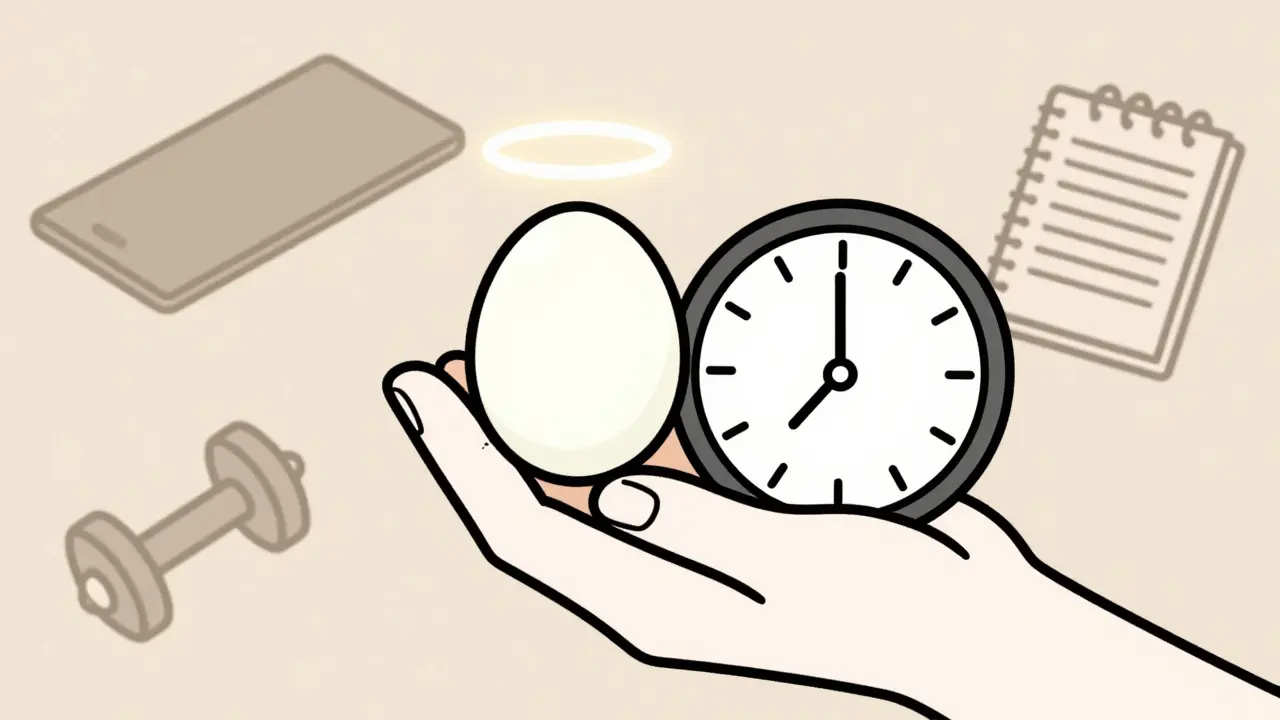
Timing matters. Eating protein within 45 minutes of waking up helps stop muscle breakdown after a night of fasting. That’s why experts recommend a 15-20g protein snack in the morning.
Post-workout is another golden window. Your muscles are primed to repair. A shake or tuna salad within 30 minutes can boost recovery.
And don’t forget the afternoon slump. A high-protein snack between 3-4 PM can prevent overeating at dinner. Studies show people who snack on protein eat 12-15% less at their next meal.
Real People, Real Results
Users on Reddit’s r/loseit consistently rank cottage cheese with berries as the most satisfying snack under 150 calories. One user wrote: “I used to snack on chips after work. Now I have cottage cheese and blueberries. I don’t even think about food until dinner.”
On Amazon, RXBARs get high ratings for taste-but many users say they feel sluggish after eating them because of the dates. Meanwhile, hard-boiled eggs are logged over 2 million times a month on MyFitnessPal. No sugar. No processing. Just food.
People who stick with this for 3 months report fewer cravings, more energy, and steady weight loss-not because they cut calories drastically, but because they stopped eating empty snacks that left them hungry.
Final Tip: Quality Over Quantity
Don’t chase protein at the cost of everything else. If you’re eating 40g of protein in a snack, you’re probably missing out on fiber, healthy fats, or micronutrients. Stick to 15-25g per snack. Focus on whole foods. Avoid processed bars unless they’re clean and low in sugar.
High-protein, low-calorie snacking isn’t a diet. It’s a smart habit. It’s not about deprivation-it’s about choosing foods that work for your body, not against it.
Can I eat high-protein snacks if I’m not trying to lose weight?
Absolutely. Protein snacks help maintain muscle mass, stabilize blood sugar, and improve energy levels-even if weight loss isn’t your goal. They’re especially helpful for older adults, athletes, and anyone who skips meals.
Are protein shakes better than whole foods?
Whole foods are always better because they come with fiber, vitamins, and natural fats. Protein shakes are convenient for post-workout or when you’re in a rush, but they shouldn’t replace meals or real snacks long-term. Use them as a backup, not a staple.
How much protein do I need per snack?
Aim for 15-20 grams per snack. That’s enough to trigger muscle repair and fullness without overloading your system. More than 30-40g doesn’t give extra benefits and may crowd out other nutrients.
Can I eat these snacks if I’m vegetarian or vegan?
Yes. Edamame, roasted chickpeas, tofu cubes, pea protein shakes, and combinations like hummus with whole grain crackers all work. Just make sure you’re pairing plant proteins (like beans + grains) to get all essential amino acids.
Why do some protein snacks make me bloated?
Sugar alcohols like erythritol or maltitol-common in low-sugar protein bars-can cause gas and bloating in some people. Check the ingredient list. If you see these, switch to whole food options like eggs, yogurt, or cottage cheese.
How long do these snacks keep me full?
Most protein-rich snacks keep you full for 2.5-4 hours, especially if they include fiber or healthy fats. Savory snacks like miso eggs or tuna salad tend to last longer than sweet ones like protein balls.
Amy Ehinger
January 15, 2026 AT 13:22I’ve been doing the cottage cheese + blueberries thing for like six months now and honestly? It’s changed my after-work cravings completely. No more chips. No more cookies. Just this creamy, slightly sweet, satisfying little bowl that keeps me full until dinner. I even started making it with chia seeds now for extra fiber. My digestion is better, my energy’s steadier, and I don’t feel guilty about it. It’s just… nice. Like a little reward that doesn’t feel like a reward.
Also, hard-boiled eggs on the counter? Genius. I keep a whole carton pre-peeled in a container. Grab one, eat it, done. No mess. No thinking. Perfect for when you’re rushing out the door.
Also also - miso eggs? I didn’t even know that was a thing. Now I’m obsessed. I made a batch last weekend with a little sesame oil and smoked paprika. Holy moly. 180 calories and I felt like I’d eaten a full meal. I’m definitely adding that to my rotation.
Pro tip: if you’re using tuna salad in a jar, put a paper towel at the bottom to soak up excess liquid. Learned that the hard way. Soggy tuna = sad tuna.
And yes, protein shakes are fine as a backup, but I’d rather chew my protein. There’s something about the act of eating that just… settles you. Not just physically, but mentally too.
Anyway. Just wanted to say thank you for this post. It’s the kind of thing that makes healthy eating feel doable, not punishing.
Also - edamame with chili flakes? Yes. Always yes.
Annie Choi
January 17, 2026 AT 01:23PROTEIN SNACKING IS THE NEW GAME CHANGER. If you’re still eating granola bars or pretzels you’re literally wasting your metabolism. Protein triggers PYY and GLP-1. That’s not marketing. That’s endocrinology. You want to stop cravings? Stop chasing carbs. Start chasing amino acids. Your brain will thank you.
And yes - cottage cheese is the MVP. 14g protein. 90 calories. Add cinnamon. Add berries. Add nothing. It doesn’t matter. It works. I’ve had clients lose 12 lbs in 6 weeks just by swapping their 3pm cookie for a cup of this. No cardio. No fasting. Just protein.
Also - avoid sugar alcohols like the plague. Erythritol is not food. It’s a chemical experiment. Your gut knows. And it’s mad.
DO THIS. Start tomorrow. One snack. One change. You’ll feel it in 48 hours. I promise.
Arjun Seth
January 18, 2026 AT 22:12You people are ridiculous. You think eating cottage cheese is going to fix your life? You’re all chasing magic snacks like they’re holy water. The truth? You’re just afraid to eat real food. Real meals. Real portions. You want to lose weight? Eat less. Not more protein bars. Not more eggs. Just eat less. That’s it. No hacks. No tricks. No ‘science.’ Just discipline.
And don’t get me started on ‘plant-based combos.’ You think mixing beans with rice makes you a nutrition guru? You’re just confusing digestion with magic. Animal protein is superior. Period. End of story. Stop trying to ‘optimize’ your way out of hunger. Just stop eating so much.
Also - why are you all so obsessed with ‘snacks’? Why not just have three meals? Simple. Clean. No fuss. You’re overcomplicating everything because you’re lazy.
And yes - I eat steak for breakfast. And I’m fine.
Dan Mack
January 19, 2026 AT 21:02EVERYTHING IN THIS POST IS A LIE. Protein snacks? They’re all sponsored by Big Protein™. Did you know the Academy of Nutrition and Dietetics gets funding from whey manufacturers? And ‘miso eggs’? That’s not a real thing. That’s a TikTok trend cooked up by some influencer in Oregon who’s never left the Bay Area.
And why are you all so obsessed with ‘calories under 200’? You’re being manipulated into thinking food is math. It’s not. It’s biology. And your body doesn’t care about your MyFitnessPal log. It cares about stress, sleep, and whether you’re actually happy.
Also - tuna salad in a jar? Who the hell has time for that? And why are you storing food in mason jars like you’re preparing for the apocalypse?
I’ve been eating nothing but bacon and coffee since 2018. I’ve never been healthier. And I don’t own a single hard-boiled egg.
Wake up. They’re selling you a lifestyle. Not nutrition.
Amy Vickberg
January 21, 2026 AT 10:55I love how this post doesn’t shame people for wanting to snack. So many diets make you feel guilty for eating between meals, but this is just… practical. Like, yeah, I get hungry. So what? Let’s make that hunger work for me, not against me.
I tried the turkey slices with cucumber last week and I was shocked - I didn’t even think about food for three hours. That’s wild. I usually end up raiding the pantry by 4pm.
Also - I used to hate cottage cheese. But I tried it with pineapple and a dash of vanilla extract and now I’m addicted. Who knew? It’s like dessert, but good for you.
And to the person who said ‘just eat less’ - I hear you. But for some of us, ‘eating less’ means feeling miserable and bingeing later. This approach? It’s sustainable. And that’s everything.
Jan Hess
January 23, 2026 AT 05:57Let’s get real - if you’re not prepping snacks on Sunday, you’re setting yourself up to fail. I used to think I was too busy. Then I spent 45 minutes one Sunday and now I have a fridge full of wins: boiled eggs, portioned yogurt, roasted chickpeas, pre-made tuna jars.
It’s not about willpower. It’s about setup. You don’t need motivation. You need convenience.
Also - cheese sticks. Always. I keep them in the front of the fridge. Eye level. No thinking. Just grab. It’s like a snack vending machine, but better.
And yes - edamame with sea salt? Chef’s kiss. I eat it cold straight from the bag. My partner thinks I’m weird. I don’t care.
Start with one. Just one. Tomorrow. You got this.
Gloria Montero Puertas
January 24, 2026 AT 22:09How quaint. You all think this is ‘science’? Let me remind you - the ‘protein snack’ trend was invented by a marketing team at a protein powder company in 2016. The ‘thermic effect’ is real, yes - but it’s negligible. You’re burning 30 calories extra per day eating protein? Congratulations. You just outsmarted a toaster.
And ‘miso eggs’? That’s not a recipe. That’s a Pinterest aesthetic. And ‘cottage cheese bark’? That’s not food. That’s a cry for attention.
Meanwhile, real people eat rice, lentils, and dal. Real people don’t measure protein in grams. They eat until they’re full. And they’re not obsessed with ‘under 200 calories.’
Stop treating your body like a lab rat. Just eat food. Real food. Not this… engineered nonsense.
Tom Doan
January 25, 2026 AT 05:37Interesting. The post cites studies on PYY and GLP-1, yet fails to mention that these hormones are also elevated by fat and fiber - not exclusively protein. The emphasis on protein as the sole driver of satiety is misleading. Furthermore, the claim that 15–20g per snack is optimal lacks longitudinal data. Most trials are short-term. What happens after six months? Do people plateau? Do they revert?
Also, the dismissal of protein bars is selective. Some brands (e.g., Orgain, Quest Zero) use stevia and inulin - not sugar alcohols - and contain fiber and micronutrients. Why not acknowledge them?
And the assertion that plant proteins are ‘less efficient’ ignores bioavailability adjustments. PDCAAS is outdated. DIAAS is the current standard - and many plant proteins score comparably when consumed in mixed meals.
Finally - ‘eat less’ is not a solution. It’s a euphemism for deprivation. This post, despite its flaws, offers a middle path. That’s valuable.
Nishant Garg
January 25, 2026 AT 18:02Back home in India, we’ve been doing this for centuries - dal with rice, paneer with roti, boiled chickpeas with lemon. No one calls it ‘high-protein snacking.’ We just call it lunch.
But I get it - in the West, food has become a puzzle. You need to ‘optimize.’ You need to ‘hack.’ You need to log everything. We never did that. We just ate. And we were fine.
Still - I love that you’re trying. Maybe the West needs this reminder: food doesn’t need to be complicated to be good.
And yes - edamame? We call it ‘soybeans with salt.’ Simple. Delicious. No jars. No labels. Just beans. Maybe that’s the real secret.
Also - miso eggs? We’d just call it ‘tamagoyaki.’ And it’s delicious. I’ll send you the recipe.
Keep it simple. Keep it real. That’s the Indian way.
Nicholas Urmaza
January 27, 2026 AT 00:03Let me be clear - if you're not eating at least 20g of protein per snack you're wasting your time. This isn't about trends. This is about muscle retention. You think you can lose fat without preserving lean mass? You're going to end up skinny-fat. And that's worse than being overweight.
And yes - cheese sticks. Always. They're portable. They're shelf-stable. They're delicious. Why are you overthinking this?
Stop chasing flavor. Start chasing function. Your body doesn't care if it's organic or gluten-free. It cares about amino acids.
And if you're still eating RXBARs because they taste good? You're not trying to lose weight. You're trying to justify sugar.
Do better.
Sarah Mailloux
January 27, 2026 AT 07:43My mom used to boil eggs every Sunday and leave them on the counter. I thought it was weird. Now I do it too. And I get it. It’s not about being perfect. It’s about being consistent.
I used to snack on chocolate bars. Now I snack on Greek yogurt with a sprinkle of flaxseed. I don’t feel deprived. I feel… calm. Like I’m taking care of myself without fighting myself.
Also - roasted chickpeas from Trader Joe’s? Life changer. Crunchy. Salty. Satisfying. No guilt. I keep a bag in my car.
To everyone who says ‘just eat less’ - I get it. But for people with busy lives, emotional eating, or history of dieting, this approach is healing. It’s not about restriction. It’s about replacement.
Thank you for this. It’s the kind of post that doesn’t make you feel like a failure.
Nilesh Khedekar
January 28, 2026 AT 06:58Let’s be real - if you’re eating protein snacks to ‘manage weight,’ you’re missing the point. You’re not broken. You’re not lazy. You’re just surrounded by bad advice.
The real problem? We’ve turned eating into a performance. You’re not supposed to feel hungry? You’re supposed to log grams? You’re supposed to eat ‘optimal’ snacks?
Meanwhile, in my village, people eat rice with lentils. They snack on roasted peanuts. They drink buttermilk. No one counts calories. No one knows what PDCAAS means. And they’re healthier than most of us.
Maybe the answer isn’t more protein. Maybe it’s less obsession.
But hey - if it works for you? Go for it. Just don’t pretend it’s the only way.
RUTH DE OLIVEIRA ALVES
January 29, 2026 AT 18:07While the empirical data presented in this article is generally sound, it is important to note that individual variability in protein metabolism, gut microbiota composition, and circadian rhythm significantly modulates the efficacy of protein-based satiety mechanisms. Furthermore, the recommendation to consume 15–20 grams of protein per snack is derived from a narrow cohort of healthy, sedentary adults and may not generalize to older populations, athletes, or individuals with metabolic disorders.
Additionally, the conflation of ‘low-calorie’ with ‘healthy’ is a persistent nutritional fallacy. A food’s caloric density does not correlate with its micronutrient profile, phytochemical content, or glycemic load.
While the suggested snacks are nutritionally sound, the framing of this as a ‘strategy’ for weight management reinforces a reductionist paradigm that overlooks behavioral, psychological, and sociocultural determinants of eating behavior.
Nonetheless, the practical implementation tips - particularly meal prepping and visibility - are evidence-based and commendable.
Crystel Ann
January 31, 2026 AT 03:36I just started doing the hard-boiled egg thing last week. I didn’t think I’d like it. But now I look forward to it. It’s quiet. It’s simple. I eat it while I drink my coffee. No rush. No guilt. Just… me and my egg.
And I swear - I don’t even think about snacks anymore. It’s like my body finally got the message.
Thanks for this. I needed it.
Arjun Seth
February 1, 2026 AT 06:44Of course you all love cottage cheese. It’s easy. It’s safe. It’s boring. But you’re still not eating real food. You’re eating processed dairy in a cup. Real food is a steak. Real food is a whole chicken. Real food doesn’t come in a plastic tub.
You think protein is the answer? Try eating until you’re full. Then stop. That’s it. No measuring. No logging. No ‘combos.’ Just food. And silence.
And for the love of God - stop calling edamame a ‘snack.’ It’s a side dish. Eat it with rice. Eat it with curry. Don’t treat it like a protein bar.
You’re not fixing your metabolism. You’re just rearranging deck chairs on the Titanic.