
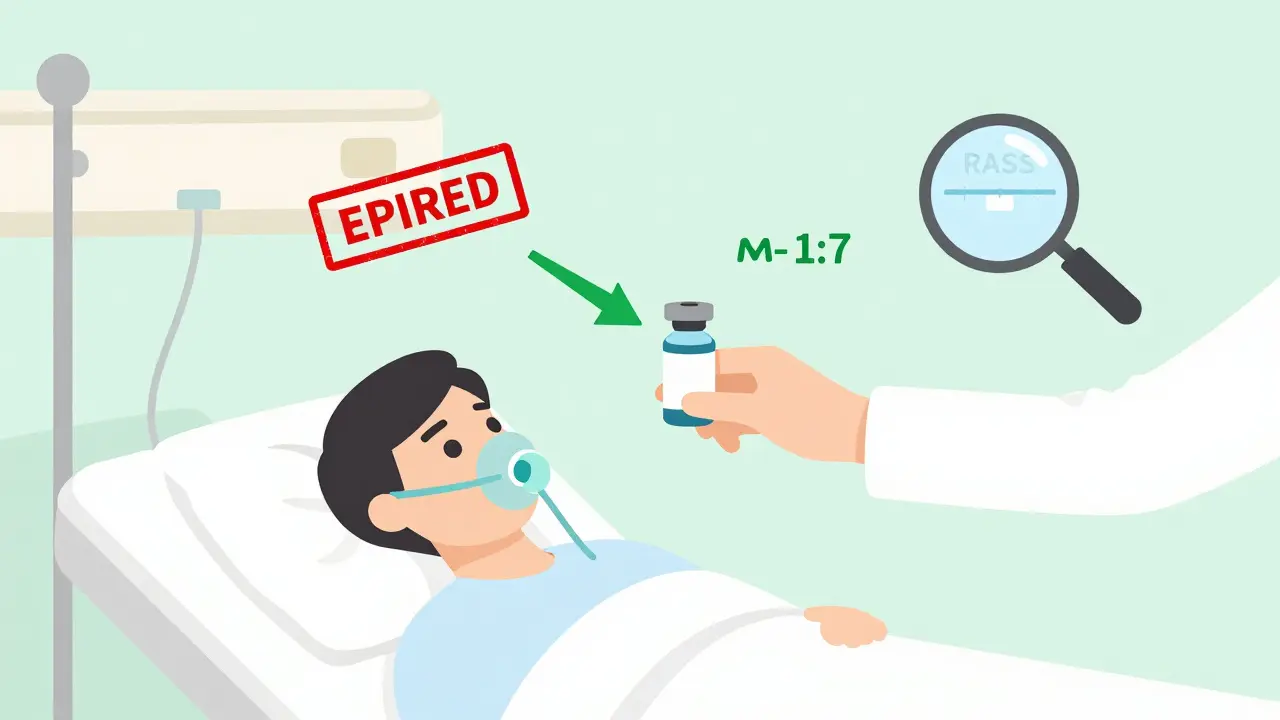
When a critical medication expires, it’s not just a paperwork issue-it’s a patient safety emergency. Imagine a ventilated ICU patient on fentanyl who suddenly needs a new painkiller because the vials in the automated dispensing cabinet are now labeled expired. No time for delays. No room for guesswork. If you don’t act fast and smart, you risk withdrawal, agitation, or even cardiac instability. This isn’t hypothetical. In 2024, 42.3% of active drug shortages in the U.S. involved critical care medications, and expiration is one of the top three causes-alongside manufacturing delays and raw material shortages.
Why Expired Medications Are Different From Shortages
People often treat expired meds like any other shortage. But they’re not. A shortage means you can’t get the drug at all. An expiration means you had it, you stocked it, you trusted the label-and now it’s useless. The difference matters because you’re not waiting for a shipment. You’re staring at a full shelf of unusable inventory. You need to swap out the drug now, for patients who can’t wait.The Three-Tier Replacement System (ASHP Standard)
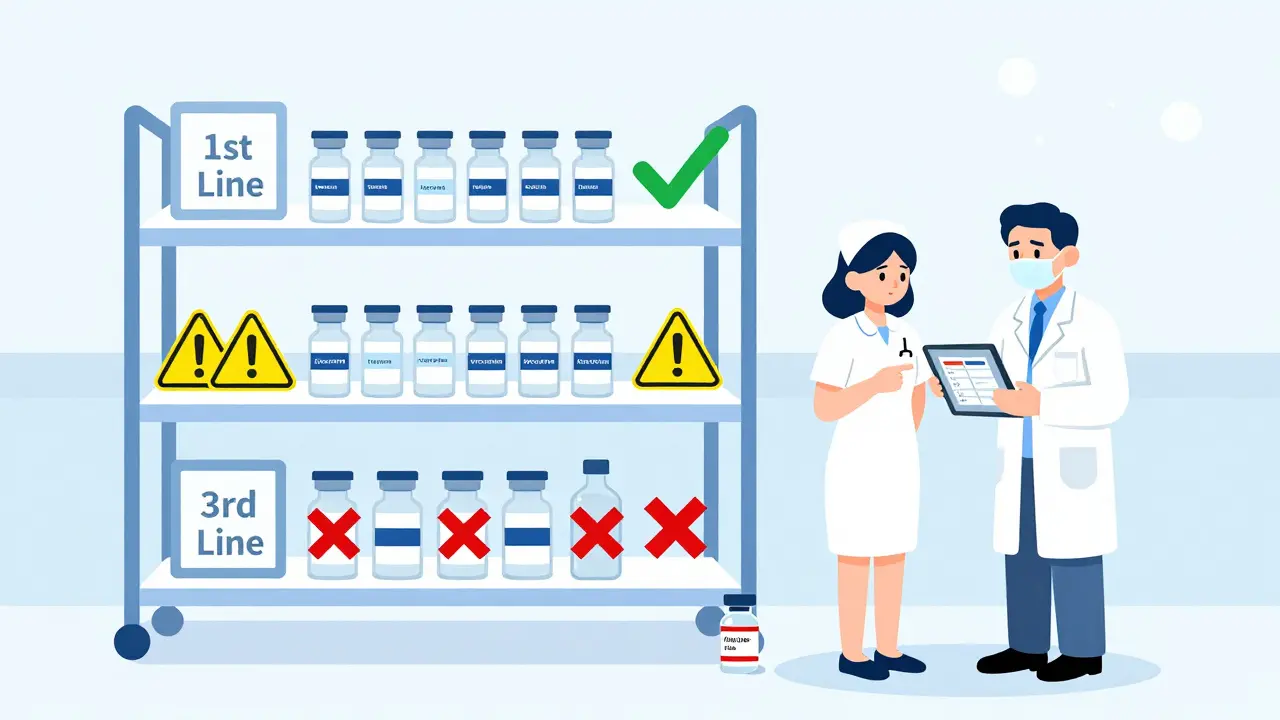
The American Society of Health-System Pharmacists (ASHP) created a clear, evidence-based framework for prioritizing replacements. It’s called the three-tier system, and it’s built for speed and safety. Here’s how it works:- 1st line: The best, most clinically equivalent alternative. Proven in studies, same route, same half-life, same monitoring needs.
- 2nd line: A solid option, but with minor differences-maybe a different metabolism, or requires more frequent dosing.
- 3rd line: A fallback. Higher risk, more side effects, or less data. Only use if the first two aren’t available.
For example, if your neuromuscular blocker (like cisatracurium) expires:
- 1st line: Rocuronium
- 2nd line: Vecuronium
- 3rd line: Atracurium or pancuronium
These aren’t arbitrary. They’re based on pharmacokinetic data, ICU outcome studies, and years of clinical experience. Don’t improvise. Use your hospital’s pre-approved tier list-every ICU should have one.
Step-by-Step Protocol When a Critical Med Expires
There’s no time for chaos. Follow this seven-step process, used by top-performing hospitals:- Confirm the expiration. Check the lot number, expiration date, and quantity. Is it just one vial? Or the entire stock? Use your automated inventory system if you have one.
- Identify affected patients. Who’s on this med right now? How many? Are they stable? In respiratory distress? On a ventilator? This determines urgency.
- Check your tier list. Pull up your institution’s approved alternatives. Don’t rely on memory. If you don’t have one, call pharmacy immediately.
- Calculate the dose conversion. Never assume 1:1 equivalence. Hydromorphone isn’t fentanyl. Midazolam isn’t propofol. Use published conversion tables from ASHP or UpToDate. A 10% overdose in a sedated ICU patient can stop breathing.
- Update the order set. Change the electronic order in the EHR. Flag it as a therapeutic substitution. Notify the nurse in charge. Don’t just rely on verbal handoffs.
- Monitor closely for 24-48 hours. Watch for withdrawal signs (tachycardia, hypertension, agitation), over-sedation, or new side effects. Use RASS scores for sedation, CPOT for pain. Document everything.
- Debrief with pharmacy. Why did this happen? Was the expiration date misread? Was inventory not rotated? Fix the system so it doesn’t happen again.
This process takes 45-60 minutes per patient. That’s why having a dedicated critical care pharmacist on shift is non-negotiable. In hospitals with full-time ICU pharmacists, medication errors from expired drugs dropped by 32.6%, and ICU stays shortened by an average of 2.3 days.
What Happens When You Don’t Have a Pharmacist
About 68.4% of community hospitals don’t have a dedicated critical care pharmacist. That’s a problem. In those places, nurses and doctors are left to make high-stakes decisions without the right training.One intensivist in rural Ohio told me: “We ran out of vasopressin last winter. We had norepinephrine, but we weren’t sure how to titrate it for septic shock. We lost two patients in 36 hours because we delayed switching.”
If you’re in a resource-limited setting:
- Keep a printed, laminated one-page cheat sheet for top 5 critical meds (vasopressors, sedatives, neuromuscular blockers, analgesics, anticonvulsants).
- Save the ASHP tier lists on your phone. Bookmark the ASHP Drug Shortages Resource Center.
- Call your regional hospital pharmacy for advice-many offer free 24/7 consult lines.
- Never guess. If you’re unsure, hold the dose and get help.
Technology That’s Changing the Game
The best hospitals aren’t just using paper lists anymore. They’re using tech:- Automated expiration alerts: Systems that flag meds with 30 days left to expire. Used by 68.2% of hospitals with under 5% expired medication incidents.
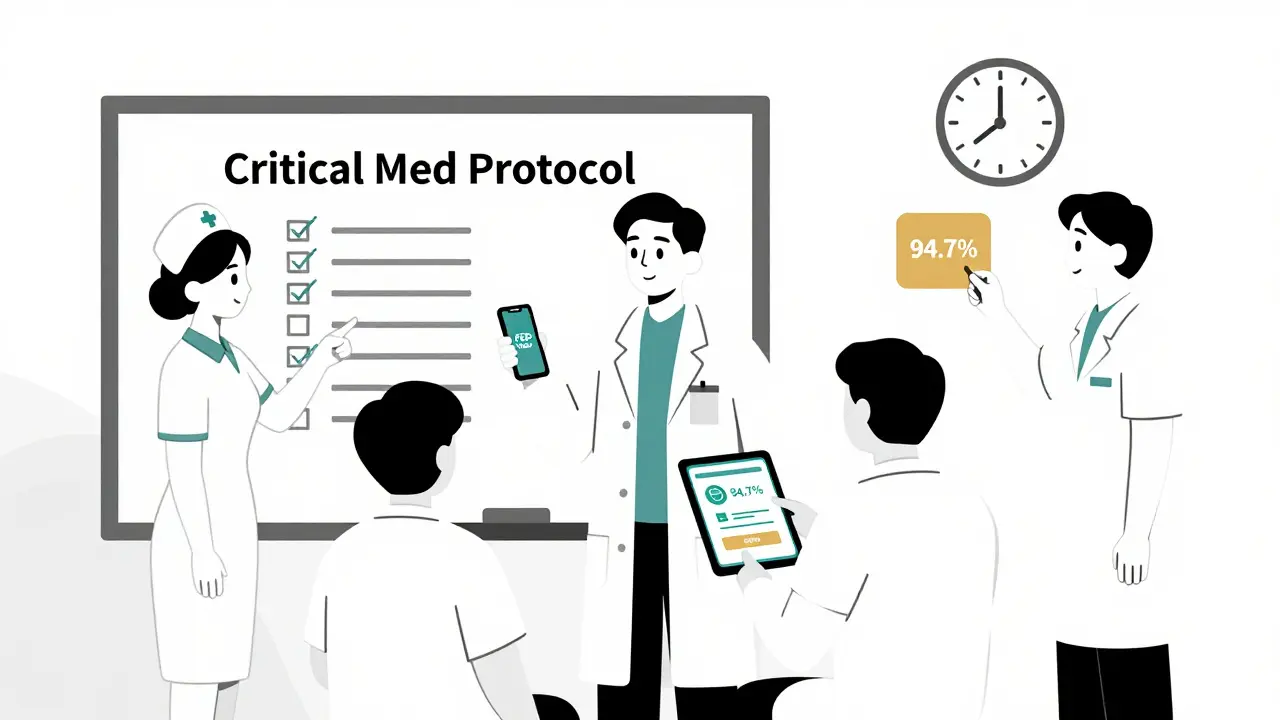
- AI substitution tools: CU Anschutz’s new AI model analyzes 147 patient variables-renal function, liver enzymes, weight, comorbidities-and recommends the safest alternative. It matches expert pharmacist choices 94.7% of the time.
- Barcode scanning: Ensures the right drug is given, even if it’s a substitute. Reduces wrong-drug errors by 41%.
These tools aren’t luxury items-they’re safety nets. The global medication safety tech market is growing at nearly 20% per year. If your hospital doesn’t have these systems, you’re playing Russian roulette with patient outcomes.
Why This Isn’t Just a Pharmacy Problem
This is a team issue. Nurses, doctors, pharmacists, and administrators all have roles:- Nurses: Spot early signs of withdrawal. Report missing meds immediately.
- Doctors: Don’t override pharmacy’s recommended alternative without justification.
- Pharmacists: Lead the tiered selection, monitor conversions, educate the team.
- Admins: Fund inventory systems, hire pharmacists, support protocols.
Top hospitals run daily interdisciplinary medication rounds. 76.4% of high-reliability units do this. It’s not a meeting-it’s a safety checkpoint. If your unit doesn’t do this, start tomorrow.
What’s Changing in 2026
The FDA is moving toward extending expiration dates for stable drugs based on real-world stability data-potentially cutting waste by 20%. ASHP is releasing updated guidelines in early 2026 that will treat expired medications as a distinct category from shortages for the first time. And AI-driven substitution tools are entering pilot phases in 12 major U.S. health systems.This isn’t about being perfect. It’s about being prepared. Every expired medication is a warning sign. The system is breaking. The solution isn’t more stockpiling-it’s better processes, better people, and better tech.
If you’re reading this and your hospital doesn’t have a clear replacement protocol for expired critical meds-you have work to do. Start with the ASHP tier lists. Talk to your pharmacy team. Build the checklist. Train your staff. One expired vial shouldn’t cost a life.
What’s the most common mistake when replacing an expired critical medication?
The biggest mistake is assuming dose equivalence. Many clinicians think 1 mg of hydromorphone = 10 mg of morphine, then give it without adjusting for renal function or age. That’s dangerous. Always use validated conversion tables from ASHP or UpToDate, and start at the lower end of the range. Monitor closely.
Can I use a medication that expired yesterday?
No. Even one day past expiration can reduce potency or create harmful breakdown products. For critical meds like vasopressors, sedatives, or neuromuscular blockers, there’s zero margin for error. The FDA and ASHP both state that expired medications should never be used, regardless of storage conditions.
How do I know if my hospital has a proper replacement protocol?
Ask: Do we have a written, tiered list for top 10 critical meds? Is it posted in the ICU and accessible on mobile? Is pharmacy involved in every substitution? Do we track errors from expired meds? If you can’t answer yes to all four, you don’t have a real protocol.
What if the 1st-line replacement isn’t in stock either?
That’s why you have tiers. Move to the 2nd line. If that’s gone too, go to the 3rd. If none are available, escalate immediately to pharmacy leadership and your hospital’s drug shortage committee. Document everything. Never use an unapproved substitute just because it’s “close.”
Are there any legal risks if I use a non-approved alternative?
Yes. Using a non-approved substitute without documentation and consultation can lead to liability if a patient is harmed. Always follow institutional policy. If policy doesn’t exist, get written approval from pharmacy and document the reason in the chart. When in doubt, hold the dose and consult.




Gregory Parschauer
January 14, 2026 AT 00:52Let me just say this: if your hospital still doesn't have a formal tiered replacement protocol for critical meds, you're not just negligent-you're putting lives on the line. I've seen ICU nurses scrambling because someone 'thought' hydromorphone was a 1:1 swap for fentanyl. One patient coded. Two days later, the family sued. This isn't theoretical. The ASHP guidelines exist for a reason, and ignoring them is professional malpractice dressed up as 'clinical judgment.' And don't even get me started on the 'we're too busy' excuse-your patients don't care about your workload. They care about whether you knew the difference between rocuronium and vecuronium. If you didn't, you shouldn't be near a ventilator.
Kimberly Mitchell
January 15, 2026 AT 14:06This whole post reads like a pharmacy textbook with extra steps. Everyone knows you don't use expired meds. The real issue is that hospitals don't stock enough backups, and admin won't fund proper inventory systems. Stop blaming the nurses for not knowing pharmacokinetics when they're running 12-hour shifts with no pharmacist on-site. The system is broken. The post just describes the symptoms.
Angel Molano
January 16, 2026 AT 15:01Don't guess. Use the tier list. That's it. Everything else is noise.
Vinaypriy Wane
January 18, 2026 AT 05:20Thank you for writing this-really. I work in a rural ER in India, and we don't have automated systems, or even reliable power for barcode scanners. But I printed the ASHP tier list on laminated cardstock, and I keep it in my pocket. Last week, when the fentanyl expired, I used it to guide the team. We didn't lose anyone. I'm not a pharmacist, but I know that when you're holding a vial past its date, you don't just hope for the best. You follow the list. And if you don't have one? Make one. Today. Please.
Diana Campos Ortiz
January 18, 2026 AT 11:20i just wanted to say thank you for mentioning the daily interdisciplinary rounds-my unit started doing them last month and honestly? it’s changed everything. we’ve had zero expired-med errors since. also, i accidentally misspelled ‘neuromuscular’ in my first email about this and felt so bad, but my pharmacist just laughed and said ‘we’ve all been there.’ small wins, right? 🙏
Jesse Ibarra
January 19, 2026 AT 08:26Oh wow. Another one of those 'I read a 2024 ASHP whitepaper and now I'm an expert' posts. Let me guess-you’ve never held a dying patient’s hand while their blood pressure crashes because you didn’t have vasopressin and your pharmacy ‘forgot’ to rotate stock? You think a checklist fixes systemic underfunding? AI tools? Please. The only thing that saves lives here is a full-time pharmacist who shows up at 3 a.m. and doesn’t care about your EHR workflow. Stop fetishizing tech and start hiring people.
Randall Little
January 19, 2026 AT 22:14So… the FDA is going to extend expiration dates based on real-world data? That’s… actually kind of brilliant. But I’m curious-does that mean we’ll start seeing expiration dates printed as ‘stable until 2030’ on vials? Or will we get a QR code that links to a blockchain-verified stability report? Because if it’s just a new sticker, I’m calling it ‘greenwashing with a pharmacopeia.’ Also, who’s auditing the AI substitution models? Because if it’s trained on data from hospitals that still use paper charts, we’re just automating bias. I’m not against innovation-I just want to know who’s responsible when it fails.
jefferson fernandes
January 19, 2026 AT 22:16Hey everyone-this is a huge topic, and I want to make sure we’re all on the same page. I’ve been in critical care for 18 years, and I’ve seen this play out too many times. The tier system isn’t just a suggestion-it’s your legal and ethical backstop. If you’re a nurse and you’re unsure, ask the pharmacist. If you’re a doctor and you override the tier list, document why-and then call the pharmacy to confirm. If you’re an admin and you haven’t funded the automated alert system? You’re not saving money-you’re gambling with malpractice claims. I’ve trained teams in 14 hospitals. The ones with the lowest error rates? They didn’t have the fanciest tech. They had a culture where asking ‘Is this right?’ wasn’t weakness-it was professionalism. So: if you’re reading this and you’re not sure where to start? Start by asking your pharmacy team: ‘Do we have a tier list?’ If the answer is no-don’t wait. Build it. Together.