
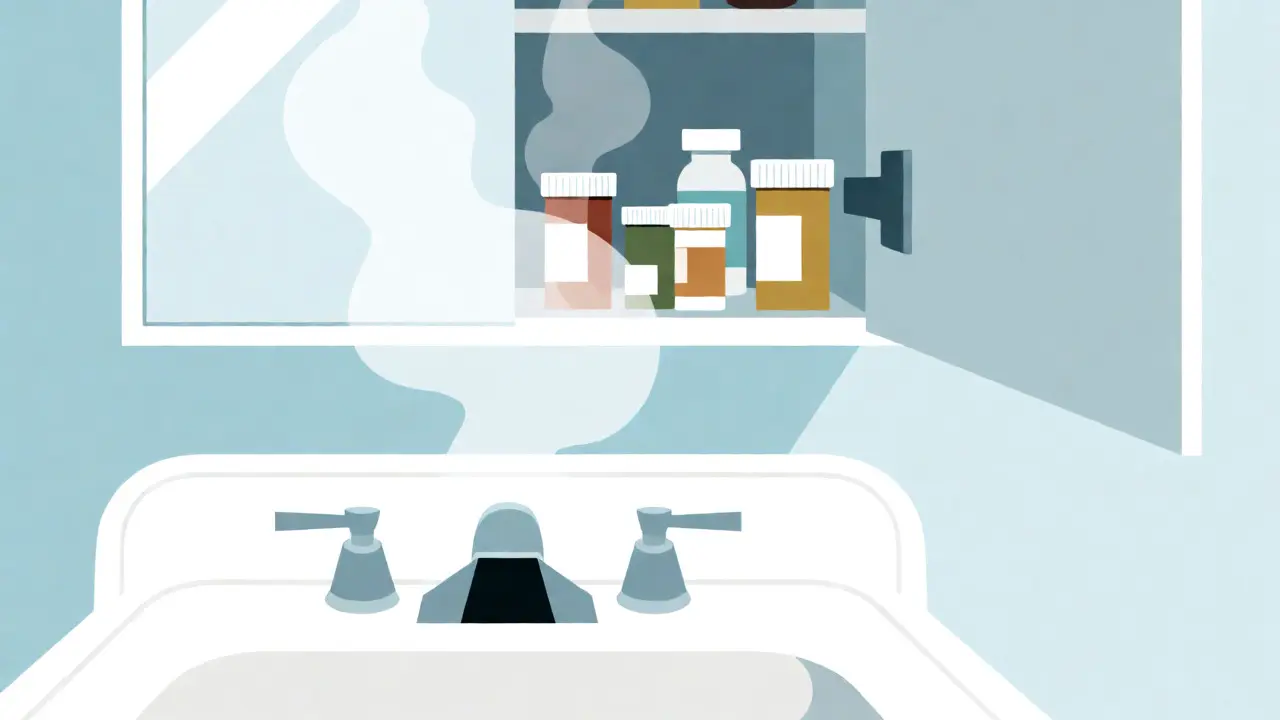
You probably have a small cabinet above your sink or toilet. It’s convenient. It’s where you grab your toothbrush, your face wash, and maybe that bottle of painkillers for your headache. But here is the uncomfortable truth: that cabinet is likely ruining your medicine. We’ve been trained since childhood to put pills in the bathroom, but modern pharmaceutical science tells us this habit is dangerous. If you are taking blood pressure meds, antibiotics, or heart medications, storing them in the steamy air of your bathroom could mean you aren’t getting the full dose you paid for.
The Humidity Problem: Why Your Pills Are Dissolving
Think about what happens when you take a hot shower. The mirror fogs up. The walls get damp. That moisture doesn’t just hang in the air; it seeps into everything. Medications are chemical compounds designed to be stable under specific conditions. When they meet high humidity, they start to break down. This process is called hydrolysis. Basically, water molecules attack the active ingredients in your pills, breaking their chemical bonds. For tablets, this might mean they become sticky or crumble when you try to swallow them. For capsules, the gelatin shell can soften and stick together. Even if they look fine, the potency-the strength of the drug-drops.
A study published in Circulation found that patients who stored beta-blockers (common heart meds) in improper environments saw inconsistent blood pressure control in over 30% of cases. That’s not a minor inconvenience; that’s a health risk. If your pill has lost 20% of its strength because it sat next to a steaming shower for three months, you’re effectively under-dosing yourself every single day.
Temperature Swings: The Invisible Killer
Bathrooms are not temperature-controlled zones. They are wild swings waiting to happen. One minute, the room is at a comfortable 70°F (21°C). Ten minutes later, after a hot shower, it might hit 90°F (32°C) with near-100% humidity. Then, when the fan kicks on, it drops back down. Most prescription drugs require a stable "room temperature" range, typically between 59°F and 77°F (15°C-25°C).
| Medication Type | Vulnerability Factor | Consequence of Bathroom Storage |
|---|---|---|
| Insulin | Heat > 86°F (30°C) | Protein structure denatures; becomes ineffective for glucose control. |
| Nitroglycerin Tablets | Humidity & Light | Rapid loss of potency; fails to stop angina attacks quickly. |
| Birth Control Pills | Hormonal Degradation | Up to 35% reduction in effectiveness; higher risk of unintended pregnancy. |
| Antibiotics (Liquid) | Bacterial Growth | Suspension spoils faster; may cause stomach upset or fail to clear infection. |
These fluctuations accelerate the breakdown of sensitive drugs. Insulin, for example, is a protein-based medication. Proteins are fragile. Heat cooks them, much like an egg white turning solid. Once insulin is exposed to repeated heat spikes in a bathroom, it loses its ability to lower blood sugar reliably. You might think you’re managing your diabetes well, but your body isn’t responding to the degraded hormone.
Safety Risks: Kids, Pets, and Theft
Let’s move beyond chemistry and talk about access. Bathrooms are often unlocked. They are accessible to guests, children, and pets. The CDC reports that 70% of misused prescription opioids originate from home medicine cabinets. If you store strong painkillers or sedatives in an unlocked bathroom drawer, you’re rolling the dice on accidental ingestion by a toddler or a curious dog.
A study funded by the NIH surveyed 220 households and found that 63% of homes with minors kept high-risk medications within easy reach. That’s terrifying. A child doesn’t know the difference between a colorful vitamin gummy and a potent opioid tablet. To them, they both taste sweet. Furthermore, bathrooms are humid breeding grounds for bacteria. While your pills are sealed in bottles, the exterior surfaces can harbor mold and mildew, which is another reason to keep food-grade hygiene separate from personal care products.
Where Should You Actually Store Your Meds?
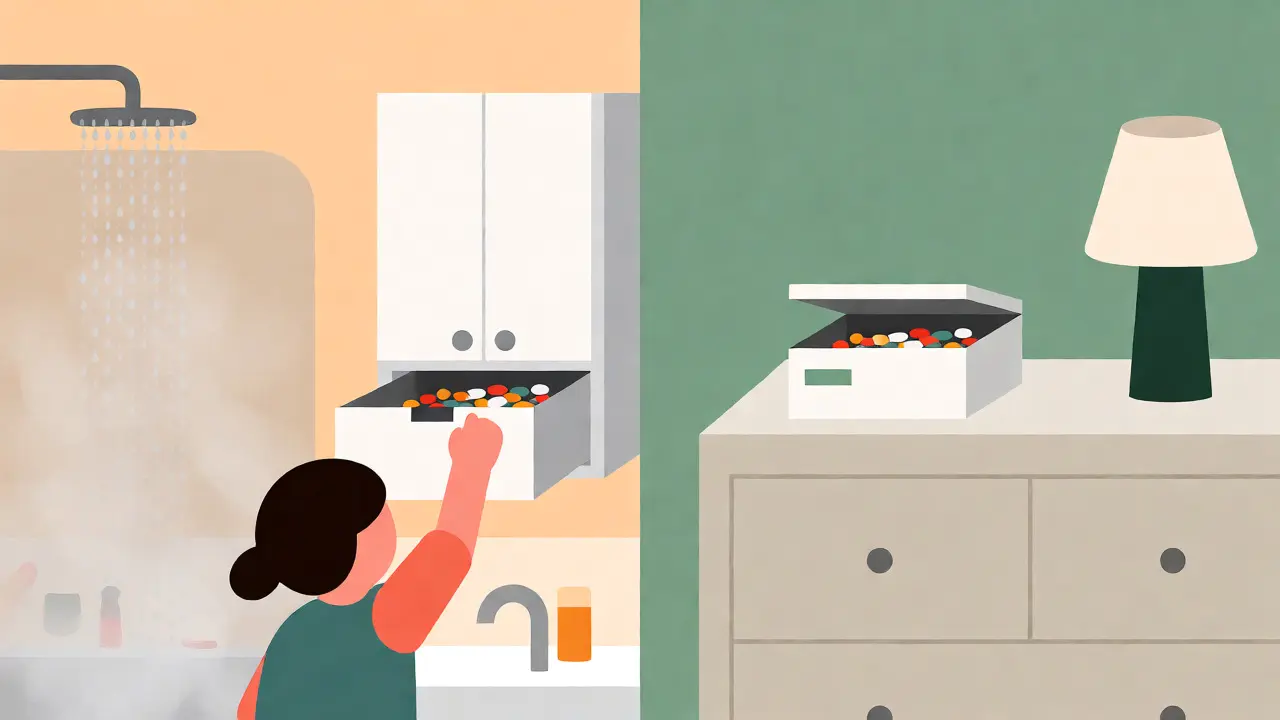
If not the bathroom, then where? The answer is boring but effective: a cool, dry place away from sunlight. Think about your bedroom dresser, a linen closet in a hallway, or a kitchen pantry that isn’t right next to the stove or dishwasher.
- Bedroom Dresser: Usually maintains a stable temperature and low humidity. Just ensure it’s out of reach of kids if necessary.
- Linen Closet: Often located in interior hallways, these spaces rarely experience extreme temperature shifts.
- Kitchen Pantry: Good option, provided it’s not above the oven or near the sink where steam rises.
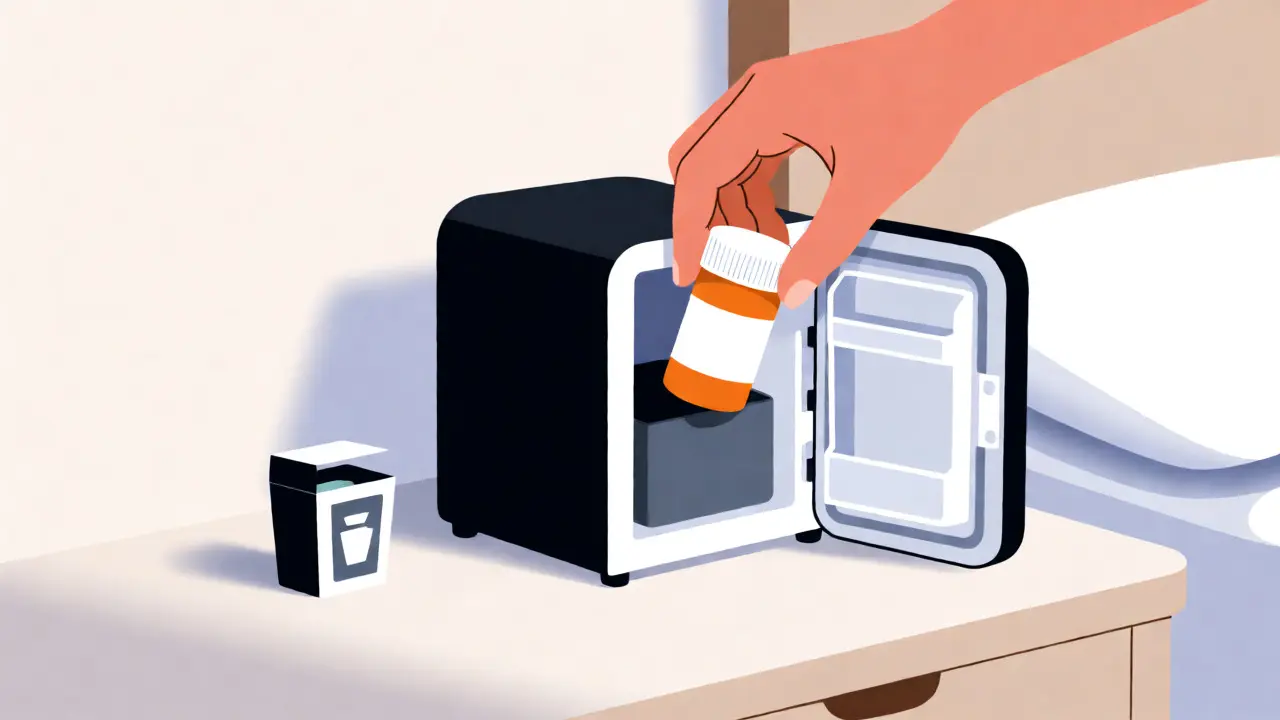
For medications requiring refrigeration (like some insulins or eye drops), use a dedicated mini-fridge rather than the main kitchen fridge. Kitchen fridges get opened constantly, causing temperature dips that can freeze sensitive liquids or raise temperatures too high. A small, dedicated unit keeps the environment stable.
How to Spot Degraded Medication
You don’t need a lab test to know if your meds are compromised. Use your senses. Check the expiration date, obviously, but also look for physical changes.
- Color Changes: Has a white tablet turned yellow or brown? This indicates oxidation.
- Texture Shifts: Are tablets crumbling, sticking together, or becoming powdery? Capsules should slide apart easily, not fuse into a blob.
- Smell: Aspirin, for instance, develops a distinct vinegar-like smell as it breaks down into salicylic acid. If your pills smell off, toss them.
- Discoloration of Liquids: Suspensions should remain uniform. If you see separation that doesn’t mix back in, or cloudiness where there was clarity, discard it.
A verified nurse shared on Reddit that 42% of patients’ home medications showed physical degradation signs when stored in bathrooms versus only 8% in proper storage locations. That’s a massive difference. Trust your eyes and nose.
The Disposal Dilemma
Once you realize your bathroom stash is compromised, what do you do? Don’t just flush them down the toilet unless the label says so. Flushing drugs contaminates our waterways. The EPA estimates that billions of dollars worth of unused medications end up in wastewater treatment plants, which aren’t always equipped to filter out complex pharmaceutical compounds. Fish and aquatic life are showing effects of human medication exposure.
The best way to dispose of old meds is through a take-back program. Many pharmacies and police stations offer drop-off boxes. In Australia, Chemist Warehouse and other major chains often participate in national take-back schemes. Check with your local pharmacist. They can guide you on how to render the medication unappealing (mixing with coffee grounds or cat litter in a sealed bag) if no take-back option is nearby.
Breaking the Habit
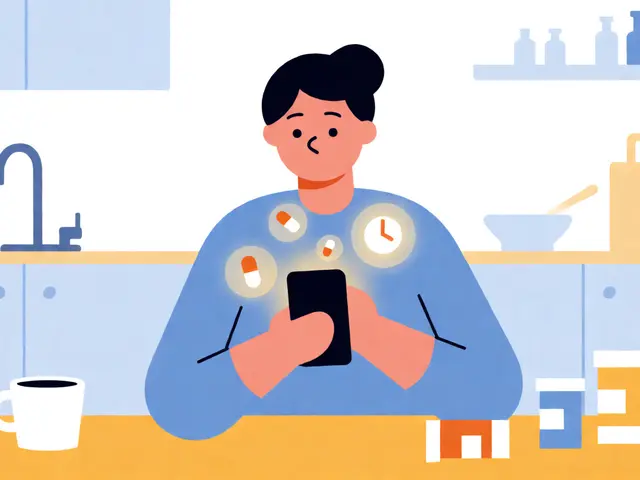
It’s hard to change muscle memory. You walk into the bathroom, brush your teeth, and pop a pill. It feels natural. But consider setting up a new routine. Keep your daily essentials in a small, portable case on your bedside table. Or, if you prefer the kitchen, set a reminder on your phone. Technology helps here; apps with storage reminders increased proper storage practices by 47% in a recent study.
Your health depends on the integrity of your medication. A degraded pill is not just less effective; it can be unpredictable. By moving your medicine cabinet out of the steam zone, you’re ensuring that when you take that dose, your body gets exactly what it needs.
Is it really bad to keep vitamins in the bathroom?
Yes, especially for softgels and liquid vitamins. Heat and humidity can degrade oils and cause capsules to melt or stick together. While hard tablets might survive better, the potency can still decrease. It’s safer to store all supplements in a cool, dry place like a bedroom or pantry.
Can I store my emergency nitroglycerin in the bathroom?
No. Nitroglycerin is extremely sensitive to heat and light. It loses potency rapidly in humid environments. Since it’s used for life-threatening chest pain, you need it to work instantly. Keep it in a pocket, purse, or a cool, dark place like a nightstand drawer.
What about eye drops? Do they need special storage?
Many eye drops require refrigeration after opening, while others are shelf-stable. However, even shelf-stable drops can grow bacteria if the tip touches contaminated surfaces in a humid bathroom. Always check the label. If it says "refrigerate," use a dedicated medical fridge, not the bathroom counter.
How often should I clean out my medicine cabinet?
Experts recommend checking your supply every three months. Look for expired dates, physical changes in texture or color, and any bottles that have been open longer than recommended. Regular audits prevent you from accidentally taking degraded medication.
Does keeping meds in the car count as bad storage?
Absolutely. Cars act like greenhouses. In summer, interior temperatures can exceed 140°F (60°C), far above the safe limit for most drugs. In winter, freezing can ruin liquid suspensions. Never leave medication in a parked car for extended periods.
Aliyu Summaiyya
September 5, 2026 AT 17:19every single time i see this i wanna scream. ppl are so lazy they cant walk 10 feet to a drawer? its not rocket science humidity kills meds. stop being stupid and put them in the bedroom like normal humans.
Emily Hinckley
September 7, 2026 AT 01:03🙄 Honestly, this is basic hygiene 101. 🤦♀️ If you cannot manage your own storage, perhaps you should reconsider your adulting skills entirely. 💅
Michelle Wright
September 7, 2026 AT 12:02actually its fine if u have good ventilation. most ppl r just scared of nothing.
James Clarke
September 8, 2026 AT 02:01I think it’s wonderful that we’re having this conversation!! It really helps people understand why small changes can make such a big difference for their health... I know my mom always kept hers by the sink and she never had issues but maybe luck was on her side!!! We should all be grateful for these tips because knowledge is power and sharing it makes our community stronger... :)
Paige! :) Bremer
September 9, 2026 AT 09:21i totally agree with everyone here about moving things out of the bathroom because it is so important to keep our medicine safe and strong so that when we take it we feel better faster and do not get sick again from bad pills that lost their power because of the wet air and hot showers which happen every morning when we wash our faces and brush our teeth so it is best to find a cool place like a closet or a shelf in the living room where it stays dry and dark and safe for long periods of time without changing temperature too much or getting too humid which breaks down the chemicals inside the tablets and capsules making them weak and useless for helping us heal properly when we need them the most during times of pain or illness so please move yours today and check the dates on the bottles too just to be sure everything is fresh and ready to help you stay healthy and happy every day!
Will Ryan
September 9, 2026 AT 21:08The entropy of domestic order collapses under the weight of convenience. We trade stability for proximity. A tragic alchemy.
James Ego
September 11, 2026 AT 14:31Good points. I moved mine last year and noticed fewer issues with stickiness.
Equipment Strategy Strategy
September 13, 2026 AT 06:33It is imperative that one acknowledges the logistical inefficiencies inherent in current residential pharmaceutical management protocols Furthermore the psychological dependence on immediate accessibility overrides rational environmental controls leading to suboptimal therapeutic outcomes
Mike Murphy
September 15, 2026 AT 04:13my grandma kept them in the fridge door and lived to 90 so who knows right